
Klimt here feels personal, and this 90-minute Upper Belvedere walk turns the art into a story of Vienna Secession and the people behind it. I especially loved seeing The Kiss and learning how Klimt’s style grew, not just what it looks like. The only catch: with limited time, the tour focuses on highlights instead of every single Klimt painting in the building.
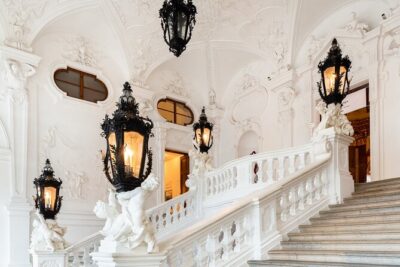
I also liked the smart meeting setup inside the Upper Belvedere—right in the entrance hall in front of the grand imperial staircase—so you’re oriented fast. From there, you get the kind of high, open-city view that makes the whole fin-de-siècle story feel more real, not like something trapped behind glass.
And because the guide is a Ph.D. art historian (Kolja Kramer is named as the provider), you don’t just hear facts—you get context. If you want a quick, story-driven art lesson in plain language, this works. If you need a long, museum-strolling self-guided marathon, you may want more time on your own.
In This Review
- Key takeaways before you go
- First stop: Upper Belvedere’s grand staircase and a city view
- Prince Eugen’s palace background: why the building is part of the lesson
- Klimt’s most important works here: The Kiss and the collection you came for
- Vienna Secession (founded in 1897): the art scene behind the paintings
- More than Klimt: Schiele, Hoffmann, and the wider circle around 1900
- How the 90-minute pacing actually works (and why it can feel either perfect or short)
- Price and logistics: what $53 gets you (and the ticket timing that can trip you)
- Who this Klimt & Vienna around 1900 tour suits best
- Should you book this Klimt & Vienna around 1900 tour?
- FAQ
- Do I need an entrance ticket for the Upper Belvedere?
- Is the Lower Belvedere ticket required?
- Where do we meet for the tour?
- How long is the tour?
- What languages is the guide available in?
- Who is the guide?
- What if I booked the wrong time slot for my ticket?
- Is this tour wheelchair accessible?
- Is there free cancellation?
Key takeaways before you go
- Upper Belvedere meeting spot: entrance hall by the grand imperial staircase, inside—not at the Lower Belvedere.
- The Kiss plus the top Klimt set: you’ll see major works, including The Kiss, in the place that holds the largest collection.
- A Ph.D. historian guide (Kolja Kramer): art history explained with historical context, not just descriptions.
- Vienna around 1900, connected: Vienna Secession (founded in 1897) and influences from artists across Europe.
- A mix of movements: symbolism, impressionism, and expressionism show up in the way the guide frames what you see.
More time with Klimt's Kiss at the Belvedere
- Vienna Belvedere Palace Skip-the-line Tour & Official Guide★ 4.9 · 390 reviews
- Vienna: Lower Belvedere Entry Ticket & Temporary Exhibitions★ 4.1 · 275 reviews
- Vienna: Belvedere Palace Skip-the-Line Tour★ 4.9 · 197 reviews
- Vienna 3, 4 or 5-Attraction Pass: Schönbrunn, Belvedere, Bus★ 4.2 · 124 reviews
First stop: Upper Belvedere’s grand staircase and a city view
This tour starts inside the Upper Belvedere Palace, not the Lower Belvedere. You meet in the entrance hall, lined up in front of the grand imperial staircase—an easy landmark for arriving early and getting your bearings. Once you’re inside, you’re not wasting the first minutes finding your way. You’re pointed straight at what matters: the art and the story around it.
The palace setting helps. Before you start zoning in on paintings, you get a look outward at Vienna from the palace grounds. That matters more than it sounds. Vienna around 1900 wasn’t just about artists living among artworks—it was about a city with ambitions, new ideas, and a high-stakes cultural scene. Seeing the city from this high vantage gives you a better sense of why the art felt so urgent and modern.
Expect the guide to link the visual style to the moment. That’s the big difference between a tour that tells you what you’re looking at and one that explains why it looked that way. In this case, you’re set up to understand Klimt and his circle as part of a wider shift in taste—where traditional rules were being challenged right in the middle of imperial Vienna.
If you’re the type who gets restless during long museum tours, this format is a relief: it’s 90 minutes. You’re guided, you’re focused, and you’re not stuck wandering for hours without a thread.
Prince Eugen’s palace background: why the building is part of the lesson
The Upper Belvedere wasn’t built as an art museum for tourists. It began as a grand statement—Prince Eugen Belvedere’s summer palace. Knowing that changes how you interpret the space. You start to notice how power, wealth, and cultural fashion were built into the setting itself.
The guide ties that setting to what happens in Vienna around 1900. When you’re in a palace connected to elite life, it’s easier to understand why new art movements needed both confidence and strategy. Artists like Gustav Klimt and his contemporaries weren’t creating in a vacuum. They were reacting to the taste systems of the day—who decided what was acceptable, who got seen, and whose work got financed or rejected.
This is also where the Vienna Secession story becomes more than a name. The Secession was a break from old ways. The members of the Secession displayed works by young and upcoming artists, and they brought international art into Vienna—things like Impressionists such as Monet, plus other avant-garde voices like Munch, Hodler, Segantini, and van Gogh. When you hear that while standing in a palace, the whole “art vs. establishment” tension clicks.
And yes, it’s still beautiful. The Upper Belvedere has the kind of visual presence that makes you want to slow down. The tour helps you slow down in the right places—on the works and the themes, not on endless background noise.
Klimt’s most important works here: The Kiss and the collection you came for
If Klimt is your main reason to visit Vienna, the Upper Belvedere is one of your best stops. This tour zeroes in on the palace’s major Klimt holdings—described as the largest collection of Klimt paintings—and it includes The Kiss. That alone is worth building your day around.
Here’s what I like about seeing Klimt with a guide. You notice details you’d miss on your own, but you also notice the bigger pattern: Klimt’s artistic development and how his personal life connects to his themes. The guide doesn’t just point and move on. You get a framework for what you’re seeing—how Symbolism fits alongside other influences, and why his figures feel both decorative and emotionally charged.
Symbolism is especially useful in this museum. Klimt’s world doesn’t always work like a simple portrait. The meanings can sit between realism and dreamlike suggestion. With the guide’s background as an art historian, you’re more likely to understand why certain choices—pose, gaze, pattern, and atmosphere—feel intentional rather than random.
You should also set expectations correctly. This tour is 90 minutes, so it can’t be a full museum survey of every Klimt piece in the entire complex. If your goal is to see every Klimt painting at your own pace for a deep, long comparison, you’ll still want extra time before or after. But if your goal is to get the essentials—plus the story that makes those essentials land—this tour does that very efficiently.
Vienna Secession (founded in 1897): the art scene behind the paintings
One of the best parts of this experience is how it links Klimt to the Vienna Secession, founded in 1897. That date isn’t just trivia. It explains the mood of the era: artists weren’t merely painting new styles; they were reorganizing who had a voice and where that voice was allowed to appear.
The guide explains how Secession members supported younger artists and circulated international influences. This is where you start to understand why Vienna around 1900 looks like a conversation, not a single storyline. The tour frames the scene as a place where Impressionists like Monet were part of the new language, and where other bold innovators—Munch, Hodler, Segantini, and van Gogh—helped widen what art could be.
You’ll also see how different movements connect through the same time and place. Expect talk that touches symbolism, impressionism, and expressionism. That doesn’t mean you’ll get a lecture separated from the artworks. It’s more like: you look at the painting, and the guide shows you how the era’s competing ideas show up in form and mood.
This kind of context is what makes the paintings feel less “famous-but-frozen.” Instead of Klimt being treated like a single genius in isolation, you see him as someone operating inside a network of creative tension. That’s when his work starts to make more emotional sense—why he chose certain visuals, why he was drawn toward certain themes, and why audiences of the day reacted the way they did.
And because this is Vienna, the stakes feel cultural and social, not just aesthetic. Art here is tied to identity: the city reinventing itself while old systems still hold power.

More than Klimt: Schiele, Hoffmann, and the wider circle around 1900
Even if your focus is Klimt, you can’t fully understand his impact without seeing the broader cast. The tour introduces major players of the Vienna art world around 1900, including Egon Schiele and Josef Hoffmann. It also places Klimt inside the circle that helped shape the Vienna Secession, where style, design, and social change moved together.
This part is valuable because it helps you avoid the common mistake: seeing Klimt as an isolated superstar. In reality, the era’s artistic identity was shaped by people experimenting with modern form and modern subject matter. Schiele brings a sharper edge and a different kind of intensity. Hoffmann connects you to the design-minded side of modern taste. When the guide threads these names into what you’re looking at, you start to feel how the era’s visual language evolved in multiple directions at once.
The guide also focuses on Klimt’s personal life alongside his artistic development. That’s not an excuse to gossip; it’s offered as a way to understand what shaped his work and how his career moved over time. If you like art that feels human rather than purely academic, this is one of the strongest aspects.
Kolja Kramer is described as friendly, warm, and engaging, with good humor, which helps the whole lesson stay lively. One visitor even highlighted that on a tough day, the guide’s kindness and empathy made a real difference. That matters more than it sounds. When a tour guide’s tone is supportive, you’re more likely to stay present and actually look at the paintings instead of rushing through.
How the 90-minute pacing actually works (and why it can feel either perfect or short)
Ninety minutes is a sweet spot for many people—but it can also be the point where expectations clash. Here’s the practical reality: you’ll cover a meaningful set of highlights, with the guide explaining historical context and connecting movements and people to what you see. You won’t be able to linger for an hour in front of a single painting with total freedom to read every label.
That’s why this tour works best if you want structure. You want someone to point you toward what matters first, then explain it in a way that sticks. The guide format is live and in English or German, and the group size can vary depending on booking. You might even find the experience turns more one-on-one if there aren’t many people scheduled.
The trade-off is also clear. One visitor noted they didn’t get to see all Klimt works in Vienna during the tour. That’s not a “gotcha.” It’s simply the time limit doing its job. Think of this as your focused kickoff. After the guided portion, you can decide which rooms deserve your personal time.
If you prefer a slower museum experience—wandering room to room with no rush—then you’ll still love the palace, but you may want extra solo time before or after your guided slot.
Price and logistics: what $53 gets you (and the ticket timing that can trip you)
The price is $53 per person for the guided portion lasting 90 minutes. What’s included is the guided tour with a certified guide / Ph.D. art historian. What’s not included is your entrance ticket for the Upper Belvedere Palace.
That separate ticket piece is the main logistics factor. You need a valid ticket with the right time slot for the Upper Belvedere only—not the Lower Belvedere. If you show up without the correct timed entry, there are no refunds mentioned for issues like no valid ticket, wrong time slot, or delay.
The best value move is boring but effective:
- Buy your Upper Belvedere ticket online early with a time slot that starts before the tour begins.
- Don’t plan a slow arrival, because the palace is highly frequented and queues can happen.
- Bring your ticket confirmation so nothing gets delayed at check-in.
One more money-saver: online tickets cost less, according to the tour info. So even if you’re used to buying tickets onsite, it’s usually smarter here to handle it online first.
Is $53 a good deal? For me, yes—because you’re paying for a Ph.D.-level explanation and a tight, meaningful walkthrough of a major Klimt collection. If you were going anyway, this turns your museum time into something you can understand, not just something you can look at.
Who this Klimt & Vienna around 1900 tour suits best
I’d book this when you want the “why” behind the “wow.” This is ideal if you like art but don’t want to piece together Vienna’s late-19th to early-20th century art scene by yourself. The tour connects Klimt to the Secession, links major movements like symbolism and expressionism to the way paintings feel, and adds key names like Egon Schiele and Josef Hoffmann so the era isn’t one straight line.
It’s also a strong choice if you enjoy a guide who’s not just factual, but personable. Kolja Kramer is described as warm, friendly, and engaging, with humor that keeps you listening. If you’re visiting with limited time in Vienna and you want your museum visit to feel intentional, this is a good fit.
You might skip this (or add extra time) if you’re a hardcore Klimt completist. With 90 minutes, you’ll get key highlights and context, but not a full, exhaustive inventory of every Klimt painting on display.
Also, if you’re sensitive to tours that move quickly, arrive early enough that you don’t feel behind. The tour experience depends on you starting calm, not rushing at the last second.
Should you book this Klimt & Vienna around 1900 tour?
If you want Klimt explained in a clear, human way—and you like having the Vienna Secession context placed directly in front of the paintings—then book it. It’s a focused, high-value 90 minutes inside one of the best settings in Vienna for Klimt fans.
My advice: lock in your timed Upper Belvedere ticket early, plan a buffer for entry, and treat the guided portion as your foundation. Then, if you still want more Klimt afterward, you’ll know exactly where to spend your extra time.
FAQ
Do I need an entrance ticket for the Upper Belvedere?
Yes. Entrance ticket for the Upper Belvedere Palace is not included in the tour price. You need a valid ticket with the right time slot for the Upper Belvedere.
Is the Lower Belvedere ticket required?
No. The tour information says you only need a ticket for the Upper Belvedere, not the Lower Belvedere.
Where do we meet for the tour?
You meet inside the Upper Belvedere Palace in the entrance hall, in front of the grand imperial staircase.
How long is the tour?
The duration is 90 minutes.
What languages is the guide available in?
The live guide is available in English and German.
Who is the guide?
The tour is led by a certified guide / Ph.D. art historian. Kolja Kramer is listed as the experience provider.
What if I booked the wrong time slot for my ticket?
The tour notes that you need a ticket with the right time slot. There are no refunds mentioned for having a wrong time slot, in case of delay, or if you don’t have a valid ticket.
Is this tour wheelchair accessible?
Yes, it is listed as wheelchair accessible.
Is there free cancellation?
Free cancellation is offered up to 24 hours in advance for a full refund.
More Tour Reviews in Vienna
- Vienna: Vivaldi’s Four Seasons Concert in Karlskirche
★ 4.7 · 14,951 reviews - Vienna: Schönbrunn Palace & Gardens Skip-the-Line Tour
★ 4.7 · 7,739 reviews - Vienna: Light of Creation Votive Church Immersive Light Show
★ 4.8 · 6,779 reviews - Vienna Spanish Riding School Guided Tour
★ 4.7 · 6,765 reviews - Vienna: Classical Concert in the World-Famous Musikverein
★ 4.6 · 6,673 reviews
The Belvedere and Klimt, Continued
- Entry Ticket Upper Belvedere, Klimt’s Kiss & Permanent Collection
★ 4.5 · 831 reviews - Vienna Belvedere Palace Skip-the-line Tour & Official Guide
★ 4.9 · 390 reviews - Vienna: Lower Belvedere Entry Ticket & Temporary Exhibitions
★ 4.1 · 275 reviews - Vienna: Belvedere Palace Skip-the-Line Tour
★ 4.9 · 197 reviews - Vienna 3, 4 or 5-Attraction Pass: Schönbrunn, Belvedere, Bus
★ 4.2 · 124 reviews
Just In: New Vienna Reviews



Belvedere & Klimt Tours, compared.
 ★ 4.5Entry Ticket Upper Belvedere, Klimt’s Kiss & Permanent CollectionFrom $23831 reviews
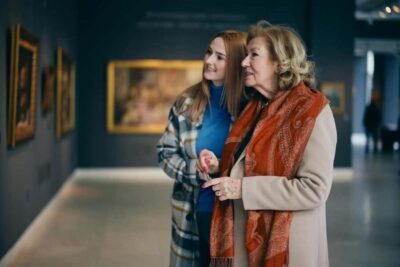 ★ 4.9Vienna Belvedere Palace Skip-the-line Tour & Official GuideFrom $50390 reviews
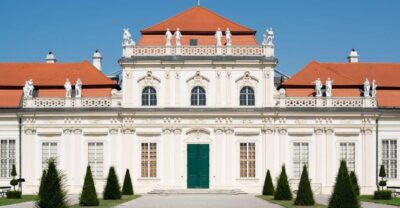 ★ 4.1Lower Belvedere Entry Ticket & Temporary ExhibitionsFrom $17275 reviews
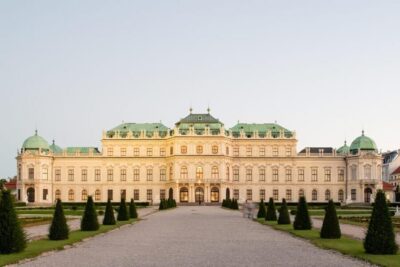 ★ 4.9Belvedere Palace Skip-the-Line TourFrom $62197 reviews
 ★ 4.2Vienna 3, 4 or 5-Attraction Pass: Schönbrunn, Belvedere, BusFrom $106124 reviews
 ★ 4.6Klimt Villa (Gustav Klimt Atelier & Museum) TicketFrom $1497 reviews
 ★ 5.0Belvedere Palace and Museum TourFrom $18171 reviews
 ★ 5.0Skip-the-line Upper Belvedere Tickets and Guided Tour ViennaFrom $7868 reviews
Browse the lists this tour appears in