
Reviewed · KUNSTHISTORISCHES & ART MUSEUMS
Kunsthistorisches Museum Wien Guided Tour including admission
Two hours, one art powerhouse. This small-group Kunsthistorisches Museum tour turns priority entry into a focused hit list, from Bruegel’s Tower of Babel to Vermeer’s Art of Painting. You also get time in the museum afterward, so you’re not stuck sprinting through 500 rooms.
I especially like the way the guide connects stories to what you’re seeing. Guides such as Dietr and Cornelia have been praised for balancing solid art context with a pace that works for both adults and families.
One caution: this tour isn’t for wheelchairs or people with walking disabilities, and you’ll need to leave umbrellas, backpacks, and raincoats in the cloakroom before you go in.
In This Review
- Key Takeaways
- Where This Tour Fits in Your Vienna Plan
- Getting In Fast: Maria-Theresien-Platz and Priority Access
- Picture Gallery Focus: Bruegel and Vermeer’s Master-Class Works
- Peter Bruegel the Elder: Tower of Babel
- Vermeer: The Art of Painting
- The pacing trick
- Kunstkammer Curiosities: The Golden Saliera and Madonna of Krumau
- Cellini’s golden Saliera
- The Madonna of Krumau
- Seats, Earpieces, and How Guides Keep It Under Control
- After the Tour: A Guided Launchpad for Greek, Roman, and Egyptian Art
- Price and Value: Is $119 Worth It?
- Who This Tour Suits Best (and Who Might Skip It)
- Should You Book This Kunsthistorisches Guided Tour?
- FAQ
- How long is the Kunsthistorisches Museum guided tour?
- Is admission included in the ticket price?
- What are the main artworks or exhibits included in the guided portion?
- Where do I meet for the tour?
- Is the tour offered in English?
- Can I take photos inside the museum?
- Is this tour accessible for wheelchairs?
Key Takeaways
- Priority entry helps you start strong and avoid the worst waiting
- Small group size (max 15) keeps the tour from feeling like a cattle drive
- Picture Gallery highlights focus on top works like Bruegel and Vermeer
- Kunstkammer curiosities include odd delights such as Cellini’s golden Saliera
- Admission is included, so what you pay covers the key entry fees
- You keep exploring after the tour, including ancient Greek, Roman, and Egyptian art
Cool galleries for a grey Vienna afternoon
- Tickets for the Albertina Exhibitions★ 4.7 · 2,126 reviews
- Combo Ticket: Kunsthistorisches Museum & Imperial Treasury★ 4.7 · 785 reviews
- Skip the Line: Kunsthistorisches Museum Vienna Entrance Ticket★ 4.5 · 466 reviews
- Leopold Museum Vienna Entrance Ticket★ 4.5 · 440 reviews
Where This Tour Fits in Your Vienna Plan
The Kunsthistorisches Museum is the kind of place that can swallow a whole day. That’s great if you have it. If you don’t, this guided option is a smart fix: you get a tight plan for the museum’s most famous works and the more unusual objects people often miss.
I like that the tour is designed like a guided shortlist. You won’t spend your time figuring out which hall to start in. You also won’t leave with the usual feeling of seeing the building but not the art. The goal here is clarity fast: big paintings first, then a shift into objects and craftsmanship.
And because it’s English and limited to no more than 15 people, the guide can actually react to questions without the whole group falling off the rails.
Getting In Fast: Maria-Theresien-Platz and Priority Access
You meet at Maria-Theresien-Platz 1 (1010 Wien) at 10:15 am, and the tour ends back at the same meeting point. That matters more than it sounds. Vienna can be confusing at street level, and a clean start point means you’re not burning time mapping your way to the museum.
The ticket includes priority entry, which is the single biggest practical advantage. Museums like this can be busy, and “priority” usually means you can spend your energy looking instead of hovering by a line. You still need to follow museum rules, though.
Plan on the cloakroom. You’ll have to leave umbrellas, backpacks, and raincoats there, and you can’t take them into the galleries. If you’re doing Vienna in rainy season (common enough), wear light layers and keep essentials easy to carry—so you don’t feel like you’ve hauled your life to a coat check.
Photography is allowed without flash. So yes, you can grab reference shots for later. Just don’t try to light the room like it’s a film set.
Picture Gallery Focus: Bruegel and Vermeer’s Master-Class Works
The heart of the tour is built around two key stops in the museum’s Picture Gallery. This is where the guide really earns their fee: turning giant names into something you can actually see and remember.
Peter Bruegel the Elder: Tower of Babel
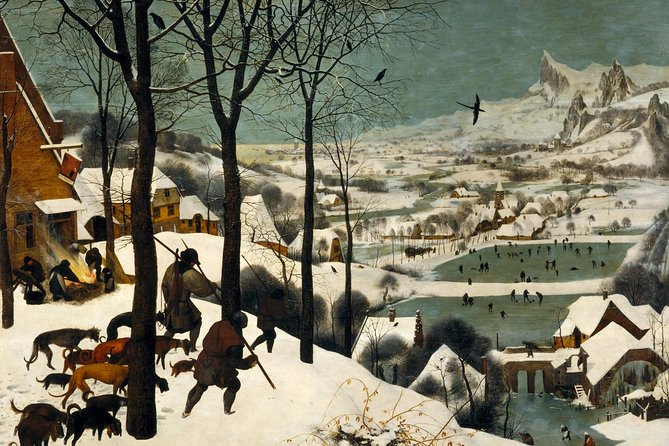
Bruegel’s Tower of Babel is the kind of painting that rewards being shown how to look. A guide helps you notice how the scene is organized, how details create the story, and why this artwork matters in the wider history of European painting.
What I like about this choice is the payoff. You get one famous, complex work early, which gives you a “visual anchor” for the rest of the collections. Once you can place Bruegel in your mind, everything else becomes easier to sort.
A Vienna guide to carry the details




Vermeer: The Art of Painting
Then you shift to Vermeer, specifically Art of Painting. Vermeer is all about control—light, surfaces, and the sense that something quiet is happening right in front of you.
In a short tour, that transition is smart. It stops the experience from becoming only loud spectacle. You go from a sprawling, detail-heavy scene to a more focused, subtle kind of artistry.
For me, this is one of the strongest ways to spend 2 to 2.5 hours at the museum. You’re not just collecting names—you’re practicing looking at different styles and techniques back-to-back.
The pacing trick
The time is tight: about 2 to 2.5 hours total. So the guide has to choose what to explain and what to leave for later. Expect a guided “big ideas” approach rather than a minute-by-minute explanation of every frame.
If you’re someone who loves to ask questions, this format usually works well because the small group keeps the flow from turning into a lecture with no oxygen.
Kunstkammer Curiosities: The Golden Saliera and Madonna of Krumau
After the main painting highlights, the tour moves into the Kunstkammer, where the museum gets playful in the best way. This is where you see why court collections weren’t just about paintings. They were about power, science, craftsmanship, and curiosity—sometimes all in one object.
Cellini’s golden Saliera
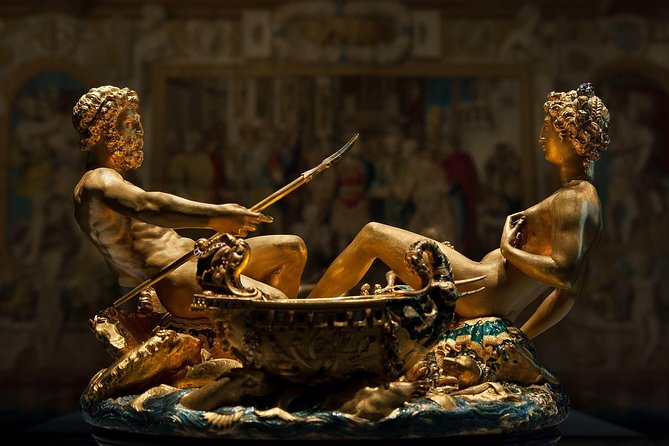
One of the standout items is the golden Saliera by Cellini. It’s famous for a reason: it looks like luxury turned into engineering. In this section of the tour, a good guide helps you move from “Wow, it’s gold” to “Now I understand why this artifact exists and what it signals.”
The Madonna of Krumau
You’ll also see the Madonna of Krumau, which fits the Kunstkammer vibe: religious art and unusual provenance (the kind of story that makes you slow down). Even if you’re not usually drawn to icons, the guided context makes the object feel less like a display and more like a historical artifact with a life.
Here’s the real value: the Kunstkammer portion teaches you to look at materials and form. That skill carries over when you return to the main galleries on your own after the tour.
Seats, Earpieces, and How Guides Keep It Under Control
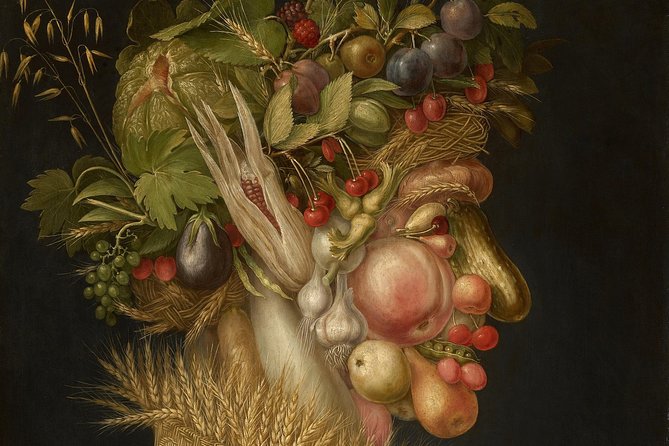
The best part of a short museum tour is not what you see—it’s whether you feel rushed while you’re seeing it. The reviews for this experience repeatedly point to guides who keep things clear, lively, and well-paced.
You might also get earpieces (one guide experience mentioned provided audio), which is a big deal in a large museum. Even with a great guide, hearing matters, especially when galleries echo or when the group stops in busy areas.
Another practical detail: some galleries have seating. Guides who are practiced at pacing will often let you sit while they explain, which is a kindness for anyone who doesn’t want to stand for two hours straight. If you’re older or your feet get tired fast, it’s worth noting this is a format where rest can be built in.
After the Tour: A Guided Launchpad for Greek, Roman, and Egyptian Art
Once the tour ends, you’re free to stay and explore more of the museum. That’s a big advantage over “just the guided portion” tours. You can use what you learned as a map for your own wandering.
The info you’re given doesn’t just point to paintings—it also sets you up to head toward other major wings, including galleries covering ancient Greek, Roman, and Egyptian art.
This matters because the museum isn’t only one vibe. It’s a whole building of worlds. If you start your visit with European painting and a Kunstkammer detour, you’ll often find the shift into classical civilizations more enjoyable. Your brain has already warmed up to the idea that art is both culture and craftsmanship.
My advice: don’t try to “finish” everything. Use the tour like a compass. Pick 1 or 2 additional areas after you’ve had the main highlights explained.
Price and Value: Is $119 Worth It?
At $119.09 per person, you’re paying for more than a walking tour. You’re getting:
- a professional guide
- entrance fees included
- a small group (max 15)
- priority entry
- about 2 to 2.5 hours of structure
For a major museum, admission alone can add up. The value here is that you don’t have to assemble the day yourself. You show up at the meeting point, you get in faster, and you get a curated route that hits major works plus the Kunstkammer objects most people don’t know how to prioritize.
Is it pricey for a “tour”? Sure. But it’s not priced like a discount gallery stroll. You’re buying time, guidance, and reduced friction. If you only have half a day, that trade is usually worth it.
If you have all day and you already know exactly which galleries you want, you might save money by visiting independently. But you’d be giving up the priority entry and the focused explanation that helps you enjoy what you see.
Who This Tour Suits Best (and Who Might Skip It)
This experience makes sense if you want a high-quality overview without spending your day charting your own course.
You’ll likely love it if:
- you want the museum’s top masterpieces explained (Bruegel and Vermeer)
- you prefer small groups and a guided pace
- you want to add hands-on context to craftsmanship objects in the Kunstkammer
- you can spend a little extra time after for ancient art
I’d be cautious if:
- you’re using a wheelchair or need accessibility support for walking disabilities (this tour isn’t available for that)
- you hate coat checks (umbrellas and backpacks must stay in the cloakroom)
- you want temporary exhibitions included (they aren’t part of this tour)
It also works well for families. One guide experience highlighted patience and kid-friendly interaction, including ideas for creative art projects afterward. It’s still a serious museum, but the format can handle mixed ages.
Should You Book This Kunsthistorisches Guided Tour?
Yes, if your goal is a smart, time-saving start at the Kunsthistorisches Museum. This is the kind of tour that helps you turn seeing into understanding—especially because you hit both major paintings and the Kunstkammer’s “wait, what is that?” objects.
Book it if:
- you want priority entry and don’t want to spend your visit wrestling with queues
- you’d rather learn how to look at art than just check boxes
- you’re planning to explore on your own afterward (Greek, Roman, Egyptian areas are a great follow-up)
Skip it if:
- you have mobility/access needs the tour can’t accommodate
- you only care about temporary exhibitions or you want every gallery in one day
- you prefer a fully independent museum day with no guided structure
FAQ
How long is the Kunsthistorisches Museum guided tour?
The tour runs about 2 to 2.5 hours.
Is admission included in the ticket price?
Yes. The tour price includes entrance fees.
What are the main artworks or exhibits included in the guided portion?
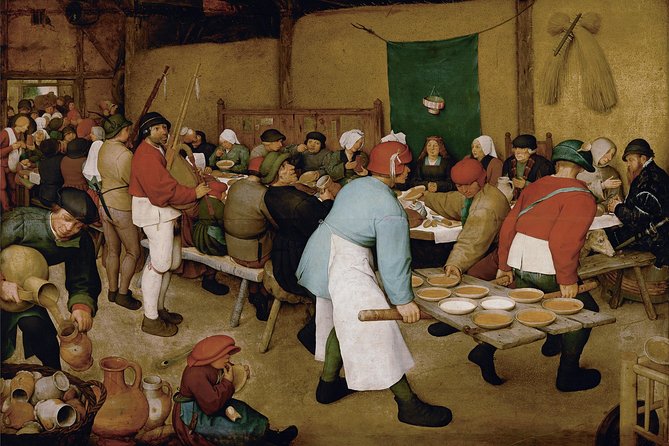
The guided portion focuses on key highlights such as Peter Breugel the Elder’s Tower of Babel, Vermeer’s The Art of Painting, and Kunstkammer items including Cellini’s golden Saliera and the Madonna of Krumau.
Where do I meet for the tour?
The meeting point is Maria-Theresien-Platz 1, 1010 Wien, Austria, and the tour ends back at the meeting point.
Is the tour offered in English?
Yes, the tour is offered in English.
Can I take photos inside the museum?
Yes, you can take photos without flash.
Is this tour accessible for wheelchairs?
No. The tour is not available for those with walking disabilities or using a wheelchair.
More Tours in Vienna
- Vienna: Schönbrunn Palace & Gardens Skip-the-Line Tour
★ 4.7 · 7,739 reviews - Vienna Spanish Riding School Guided Tour
★ 4.7 · 6,765 reviews - Vienna: Skip-the-Line Sisi Museum, Hofburg and Gardens Tour
★ 4.8 · 5,918 reviews - Vienna: Skip-the-Line Schönbrunn Palace & Gardens Tour
★ 4.8 · 5,411 reviews - Vienna: Guided Walking Tour of City Center Highlights
★ 4.7 · 4,989 reviews
More Tour Reviews in Vienna
- Vienna: Vivaldi’s Four Seasons Concert in Karlskirche
★ 4.7 · 14,951 reviews - Vienna: Schönbrunn Palace & Gardens Skip-the-Line Tour
★ 4.7 · 7,739 reviews - Vienna: Light of Creation Votive Church Immersive Light Show
★ 4.8 · 6,779 reviews - Vienna Spanish Riding School Guided Tour
★ 4.7 · 6,765 reviews - Vienna: Classical Concert in the World-Famous Musikverein
★ 4.6 · 6,673 reviews
Vienna Indoors: More Galleries
- Vienna Kunsthistorisches Museum Day Admission Ticket
★ 4.6 · 3,690 reviews - Tickets for the Albertina Exhibitions
★ 4.7 · 2,126 reviews - Combo Ticket: Kunsthistorisches Museum & Imperial Treasury
★ 4.7 · 785 reviews - Skip the Line: Kunsthistorisches Museum Vienna Entrance Ticket
★ 4.5 · 466 reviews - Leopold Museum Vienna Entrance Ticket
★ 4.5 · 440 reviews
Just In: New Vienna Reviews



Kunsthistorisches & Art Museums, compared.
 ★ 4.6Vienna Kunsthistorisches Museum Day Admission TicketFrom $253,690 reviews
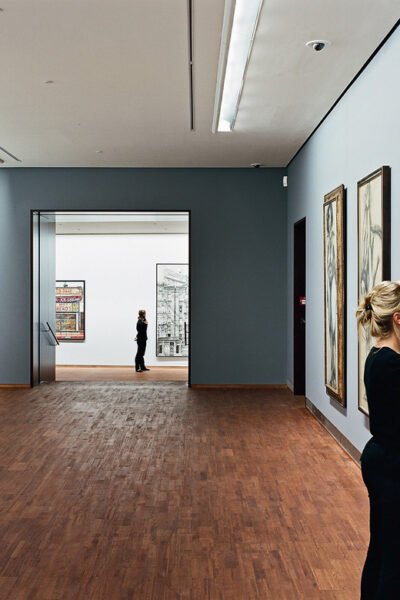 ★ 4.7Tickets for the Albertina ExhibitionsFrom $232,126 reviews
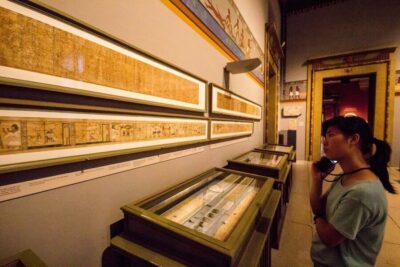 ★ 4.7Combo Ticket: Kunsthistorisches Museum & Imperial TreasuryFrom $37785 reviews
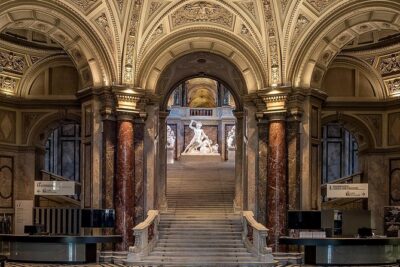 ★ 4.5Skip the Line: Kunsthistorisches Museum Vienna Entrance Ticket466 reviews
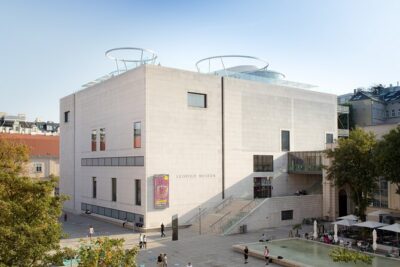 ★ 4.5Leopold Museum Vienna Entrance TicketFrom $22440 reviews
 ★ 4.6Kunsthistorisches and Leopold Museum Combo TicketFrom $43352 reviews
 ★ 4.3MAK – Museum of Applied Arts – TicketsFrom $21101 reviews
 ★ 4.5Kunsthistorisches Museum Vienna and Imperial Treasury of ViennaFrom $3899 reviews
Browse the lists this tour appears in