
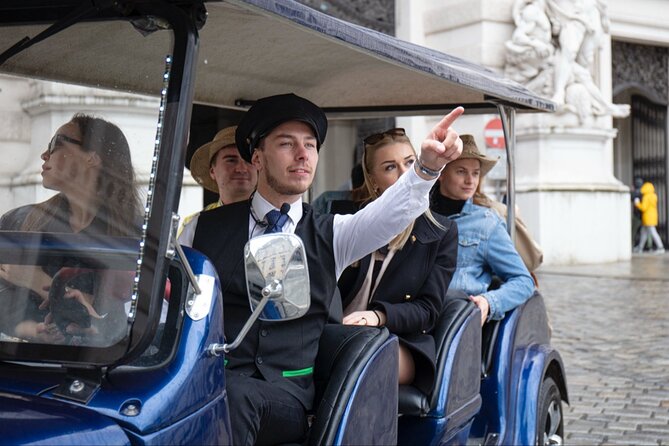
Reviewed · CITY TOURS
Panoramic Vienna City Tour Passing by the Most Famous Landmarks
Vienna can feel like a grand museum with street traffic. This one-hour panoramic city tour turns that problem into a win: you get the big sights in an order that makes the city easier to revisit later. The route focuses on the historic core around the Hofburg and the Ringstraße, so you start recognizing buildings as a pattern, not random backdrops.
I especially like two things. First, the guides bring the stories down to street level, with pacing that stays comfortable even when you are moving past major landmarks. Second, it is a small-group setup, with private groups up to 7, so you can actually ask questions and get practical recommendations; Constanze and Hannah have both been singled out for exactly that kind of friendly, attentive guiding.
The main catch is also the nature of the experience: you see a lot of exteriors fast. If you want to linger inside museums or churches for long stretches, you will still need extra time after the tour.
In This Review
- Key highlights to know before you go
- A one-hour panoramic tour that helps you map Vienna fast
- Hofburg and Maria-Theresien-Platz: the Habsburg spine of the city
- Natural History Museum Vienna: science, not just sightseeing
- Ringstraße power sites: Parliament, Burgtheater, and Vienna City Hall
- University of Vienna and the Austrian National Library: old learning, still alive
- The historic café opened in 1876: where ideas really met
- Spanish Riding School: the Hofburg connection and classic dressage
- Albertina, State Opera, and the Musikverein: Vienna’s art and sound you can plan for
- Karlskirche and the closing loop: ending on a memorable church
- Who should book this panoramic Vienna city tour?
- Should you book it?
- FAQ
- How long is the Panoramic Vienna City Tour?
- What does it cost?
- Is it private or shared?
- What language is the tour offered in?
- Do I get a mobile ticket?
- Where do we meet, and where does it end?
- Is service animals allowed?
- Is this tour near public transportation?
- Is the tour suitable for most people?
- Can I get a refund if I cancel?
Key highlights to know before you go
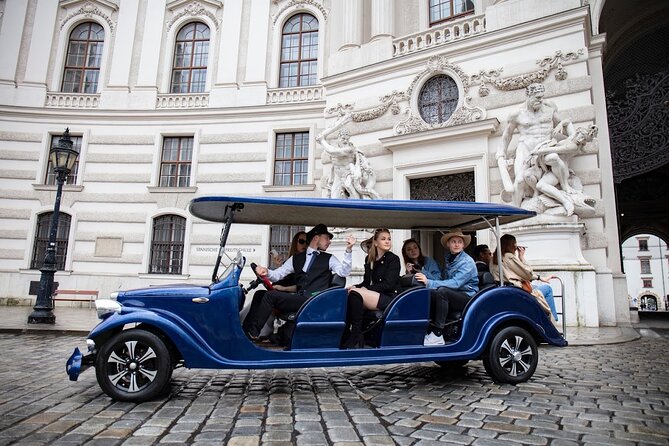
- Small private group (up to 7) so the guide can slow down for your questions
- English mobile-ticket experience designed for an easy, low-stress start
- Hofburg to Ringstraße route that helps you understand Vienna’s layout fast
- Real cultural anchors you can plan follow-ups around: opera, concert hall, library, and prints
- Short, story-led moments that point out details most people would miss while rushing
Wider circles around the Ring and beyond
- Vienna: Guided Walking Tour of City Center Highlights★ 4.7 · 4,989 reviews
- Vienna: City Cruise with Optional Lunch★ 3.4 · 3,982 reviews
- Vienna: City Cruise★ 3.3 · 2,978 reviews
- Vienna: Guided Walking Tour of City Highlights & Hidden Gems★ 4.9 · 2,180 reviews
A one-hour panoramic tour that helps you map Vienna fast
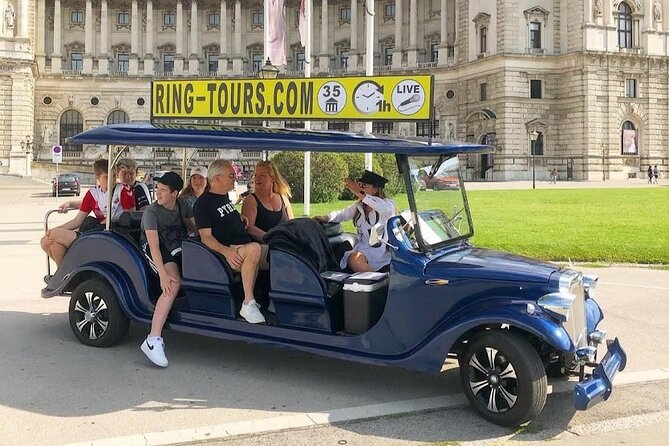
If you only have a day or two in Vienna, this kind of tour does a smart job: it helps you build a mental map in under 2 hours of total effort. You are not trying to conquer everything. You’re learning where everything sits—so later, you can choose what deserves the longer visit.
This is also a good first or early stop on your trip. The tour gives you that fast reality check: which buildings look best from the outside, which areas feel walkable, and what you might want to revisit with tickets and more time. With an approximate 1-hour duration, you can pair it with a morning of wandering or an afternoon of museum plans without feeling like you lost the whole day.
You start at Führichgasse 8, 1010 Wien, and it ends back near the same meeting point. That round-trip matters. Vienna streets can be confusing when you are tired, and ending where you began makes your next step simpler. The tour is offered in English, with a mobile ticket, and it is listed as suitable for most travelers.
One more practical note: you will be outside around major central sites. Comfortable shoes help, because even when you are not in a full-on walking tour, you still want to move smoothly through busy areas.
Hofburg and Maria-Theresien-Platz: the Habsburg spine of the city
The tour’s core energy starts with the Hofburg, the former principal imperial palace of the Habsburg dynasty. The important point for you is not just that it is old—it is that it explains why Vienna feels like power made architecture. This palace grew from earlier origins in the 1200s and expanded over centuries, so it is a timeline you can see.
Next comes the monument to Empress Maria Theresa. The story here is surprisingly relevant for travelers today: she inherited Habsburg lands that were not in a great position, and her reign turned them into something far more successful. The monument also sits in the broader construction boom of late 1800s Vienna, when planners filled space left behind after the city’s fortifications were removed.
Right across Maria-Theresien-Platz, you get the sense of Vienna’s museum “face-off.” The two museum buildings facing each other—Kunsthistorisches and Naturhistorisches—help you understand the city’s grand idea of culture as civic identity. Even if you do not go inside both museums, the square layout makes the city’s planning logic click. It is the kind of orientation that later makes you say, Oh, that’s why that street bends the way it does.
Natural History Museum Vienna: science, not just sightseeing
The Naturhistorisches Museum Vienna is presented here as more than a pretty facade. It is one of Austria’s largest natural history institutions and also a non-university research center—meaning it is not purely decorative. In other words, this is where Vienna puts its money on knowledge.
For you, that matters because it changes how you decide what to do next. If natural science museums are your thing, you now have a clear candidate for a deeper visit later. If they are not your priority, you still benefit from having it pointed out: the building becomes a landmark you can recognize again, rather than something you only half-noticed while passing.
This stop also fits the tour’s bigger purpose. Vienna’s center can feel like it repeats—palaces, churches, monuments. The Natural History Museum adds variety. It’s a different kind of authority: not imperial power, but research and classification of the natural world.
If you do add a museum day later, I’d use this tour as your compass. Identify this museum first, then choose your second priority based on your time and ticket interest.
Ringstraße power sites: Parliament, Burgtheater, and Vienna City Hall
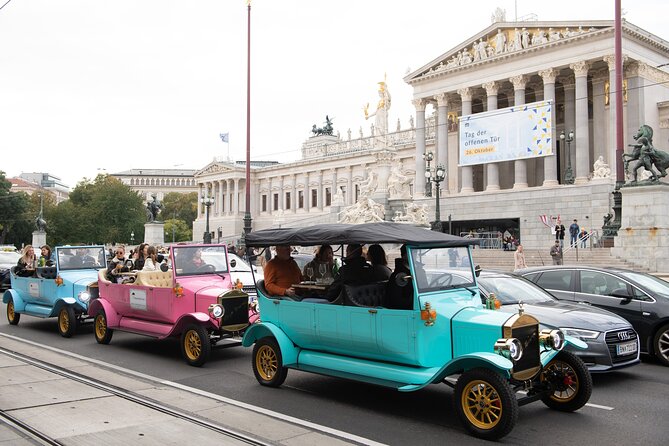
As the route swings into major civic landmarks, you start seeing Vienna’s public life written in stone. The Austrian Parliament Building sits on the Ringstraße, near the Hofburg and the Palace of Justice. What I like about this stop on a panorama tour is that it frames government as part of everyday city design, not a distant institution.
Then comes Burgtheater Court Theater, Austria’s national theater and a major German-language stage institution. Vienna takes theater seriously, and the building’s importance makes the whole area feel like more than a backdrop. Even if you are not planning tickets right away, it helps to see how prominent performing arts are in the city’s identity.
The Vienna City Hall adds the local government layer. It is a Gothic Revival building built between 1872 and 1883, designed by Friedrich von Schmidt. The practical takeaway for you: this is one of those buildings that looks different depending on where you stand. A panorama tour gives you a first look at its scale, so later you know what angles are worth hunting.
A nice effect of covering these three in one sequence is that your brain starts grouping them: Hofburg equals empire, Ringstraße equals civic identity, and theater equals public culture. That structure is exactly what makes self-guided exploring less stressful.
University of Vienna and the Austrian National Library: old learning, still alive
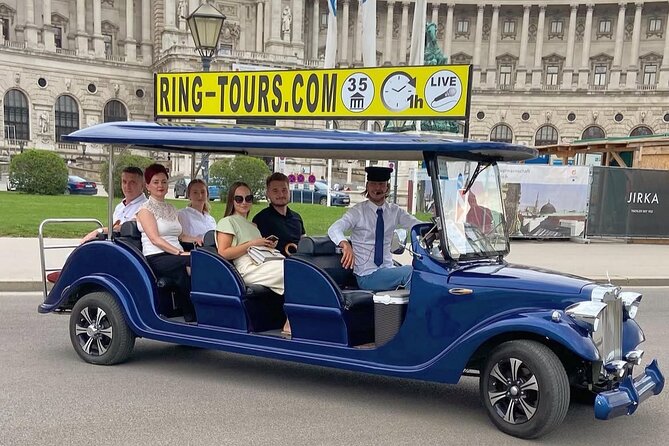
Vienna’s intellectual reputation is not a slogan. It is built into the city’s geography, and this tour points to two anchors: the University of Vienna and the Austrian National Library.
The University of Vienna dates to 1365, founded by Duke Rudolph IV, and it is described as the oldest university in the German-speaking world. That age is the headline, sure. But the practical reason to notice it is where it sits in your day. When a guide flags the university area, it helps you understand why nearby streets feel full of students, books, and long conversations even when you are not looking for them.
The Austrian National Library adds scale. It has more than 12 million items across collections, making it the largest library in Austria. It also sits in the Hofburg’s Neue Burg Wing. One detail that sticks: since 2005, some collections have been relocated within the Baroque structure of the Palais Mollard-Clary. That means the library is not just a single room you walk past. It is a living institution adapting over time.
For your planning, this is gold. If you love archives, manuscripts, or quiet reading spaces, you now have a clear target beyond the famous museum names.
The historic café opened in 1876: where ideas really met
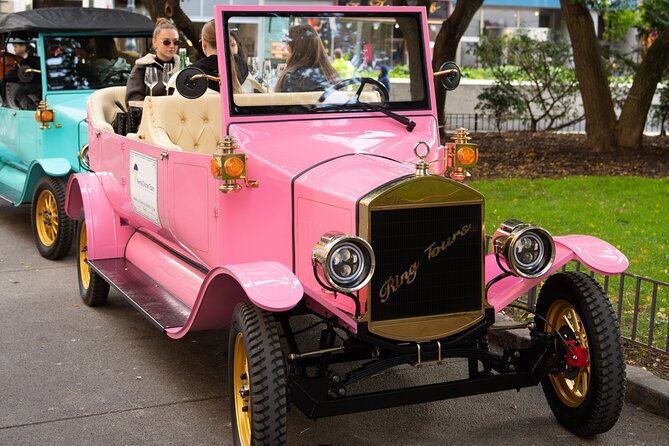
Vienna’s café culture is famous for good reason, but it becomes real when you hear who actually sat at the tables. This stop covers a café that opened in 1876 and became a key meeting place for the Viennese intellectual scene in the late 1800s.
The list of regulars is the best part. Names like Peter Altenberg, Theodor Herzl, Alfred Adler, Egon Friedell, Hugo von Hofmannsthal, Anton Kuh, Adolf Loos, Leo Perutz, Robert Musil, Stefan Zweig, and Alfred Polgar show how broad the world was—from literature to psychology to architecture. The information even notes that in January 1913, patrons included Josip Broz Tito, Sigmund Freud, and Stalin.
Then there is the social detail that I really like for travelers: Tarock games were played regularly, and Tapp Tarock was especially popular between the wars. That tells you the café was not only for serious talks—it was also for regular nights, friendly competition, and a routine locals could count on.
This is the kind of stop that makes Vienna feel human. If you take nothing else from the tour, take this: you are not only touring monuments. You are visiting a city where conversation is part of the culture map.
Spanish Riding School: the Hofburg connection and classic dressage
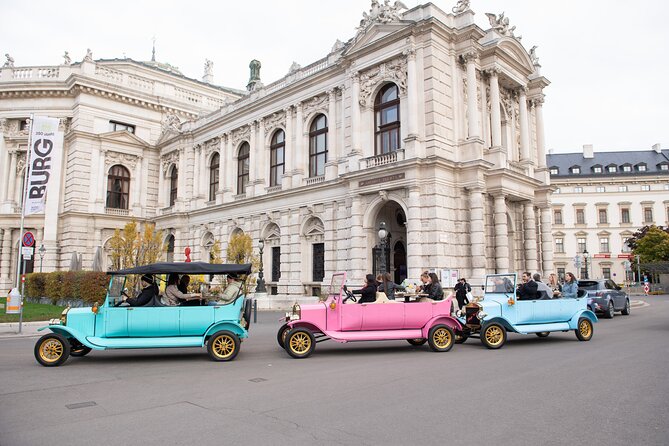
The Spanish Riding School is an institution dedicated to classical dressage and training Lipizzaner horses, with performances taking place in the Hofburg. Even when you are mostly passing by, this matters because it is one of those Vienna brands you can feel across the city.
The practical value on this route: the guide links the school to the Hofburg performances, so you understand why the area makes sense. If you later decide to get tickets for a show, you already know where the connection sits geographically. That reduces decision fatigue.
It is also a good stop for non-horse people. Vienna’s charm is how it preserves traditions without pretending time stopped. Classical dressage is exactly that kind of living history: structured training, ritual performances, and an audience that keeps coming back.
If your interests are centered on art and architecture, you might skip a dedicated visit later. But if you want at least one performance moment in your trip, this is a clear candidate.
Albertina, State Opera, and the Musikverein: Vienna’s art and sound you can plan for
By the time you reach Albertina, the tour shifts from palaces and governance to visual arts. The Albertina houses print rooms with about 65,000 drawings and around 1 million old master prints, plus modern graphic works, photographs, and architectural drawings. For planning, that means this is not a small side museum—it is a serious print destination.
Next is the Vienna State Opera. The building is described as a 1,709-seat Renaissance Revival venue and the first major building on the Vienna Ring Road. Even if you do not take an opera night, this exterior has a way of telling you Vienna’s scale. Opera here is not a niche hobby; it is a major part of public life.
Then comes Wiener Musikverein, home of the Vienna Philharmonic. The building opened in 1870 and is widely known as a concert hall landmark. The value of this stop is that it gives you a second kind of culture anchor besides opera. If you are a music person, you can later choose between opera, concert, and a museum day based on what you crave.
This cluster—prints, opera, concert hall—does something smart. It broadens Vienna beyond imperial storylines. If you plan your follow-up wisely, you can build an itinerary that feels balanced: art by day, music in the evening, architecture in between.
Karlskirche and the closing loop: ending on a memorable church
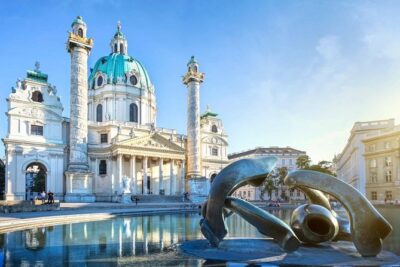
The final major landmark on the route is Karlskirche, a Baroque church dedicated to Saint Charles Borromeo, a leading figure in the Counter-Reformation. That detail matters, because Baroque architecture often carries an argument. It was meant to inspire belief, awe, and attention.
Located at Karlsplatz, on the border of Wieden and Innere Stadt, it also gives you a sense of how far the city’s center reaches. Even if you are ending back near the meeting point, this church helps you remember the tour as more than a line drawn on a map—it felt like you traveled through different layers of Vienna.
A tip for getting the most out of the last stop: take a few seconds to look from a distance, then move closer if the area allows. Baroque churches change with your viewing angle. A quick panoramic pass gives you the big impression; a later return lets you see details.
Who should book this panoramic Vienna city tour?
This tour is a strong match if you want:
- A fast orientation around Hofburg and the Ringstraße
- A guided route in English with a guide who can help you decide where to spend your next hours
- A small private group experience, up to 7 people
It is also a good fit if you like your travel with structure. Vienna has a lot to see, and a tight loop helps you avoid zigzagging yourself into exhaustion.
You might choose something longer instead if your priority is deep museum time. Because the route is built to cover many famous names in a short window, you are not getting hours inside buildings on this format.
If you enjoy asking questions and getting thoughtful suggestions for what to do next, this is exactly the kind of tour that pays off quickly. And if you are planning an early-day city reset, it gives you a clear starting point for the rest of your trip.
Should you book it?
Yes, I’d book it if you want the practical Vienna starter kit: Hofburg, Ringstraße civic icons, opera and music venues, plus cultural stops that help you choose follow-ups. At $212.93 per group up to 7 for about an hour, the value is in how much orientation you gain—especially if you split the group cost among friends or family.
Skip or supplement it if you already know you want to spend the day in specific museums or want long indoor time. In that case, treat this as your pre-planning step, then build the rest of your itinerary around the places that pulled you in.
FAQ
How long is the Panoramic Vienna City Tour?
It lasts about 1 hour.
What does it cost?
The price is $212.93 per group (up to 7).
Is it private or shared?
It is a private tour/activity, and only your group participates.
What language is the tour offered in?
It is offered in English.
Do I get a mobile ticket?
Yes, the tour includes a mobile ticket.
Where do we meet, and where does it end?
You meet at Führichgasse 8, 1010 Wien, Austria, and the activity ends back at the meeting point.
Is service animals allowed?
Yes, service animals are allowed.
Is this tour near public transportation?
Yes, it is listed as near public transportation.
Is the tour suitable for most people?
The tour notes that most travelers can participate.
Can I get a refund if I cancel?
Yes. It offers free cancellation up to 24 hours in advance for a full refund. If you cancel less than 24 hours before the start time, the amount paid is not refunded.
Vienna, Ring to Suburb
- Vienna: Guided Walking Tour of City Center Highlights
★ 4.7 · 4,989 reviews - Vienna: City Cruise with Optional Lunch
★ 3.4 · 3,982 reviews - Vienna: City Cruise
★ 3.3 · 2,978 reviews - Vienna: Guided Walking Tour of City Highlights & Hidden Gems
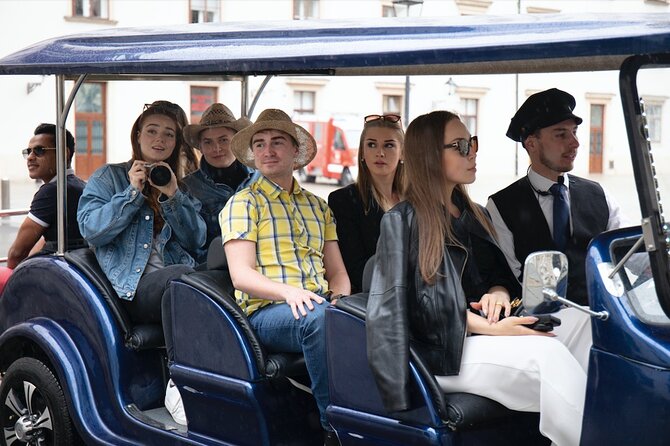
★ 4.9 · 2,180 reviews - Vienna: City Sightseeing Tour in an Electro Vintage Car
★ 4.7 · 1,085 reviews
More Tours in Vienna
- Vienna: Schönbrunn Palace & Gardens Skip-the-Line Tour
★ 4.7 · 7,739 reviews - Vienna Spanish Riding School Guided Tour
★ 4.7 · 6,765 reviews - Vienna: Skip-the-Line Sisi Museum, Hofburg and Gardens Tour
★ 4.8 · 5,918 reviews - Vienna: Skip-the-Line Schönbrunn Palace & Gardens Tour
★ 4.8 · 5,411 reviews - Vienna: Guided Walking Tour of City Center Highlights
★ 4.7 · 4,989 reviews
More Tour Reviews in Vienna
- Vienna: Vivaldi’s Four Seasons Concert in Karlskirche
★ 4.7 · 14,951 reviews - Vienna: Schönbrunn Palace & Gardens Skip-the-Line Tour
★ 4.7 · 7,739 reviews - Vienna: Light of Creation Votive Church Immersive Light Show
★ 4.8 · 6,779 reviews - Vienna Spanish Riding School Guided Tour
★ 4.7 · 6,765 reviews - Vienna: Classical Concert in the World-Famous Musikverein
★ 4.6 · 6,673 reviews
Just In: New Vienna Reviews



City Tours, compared.
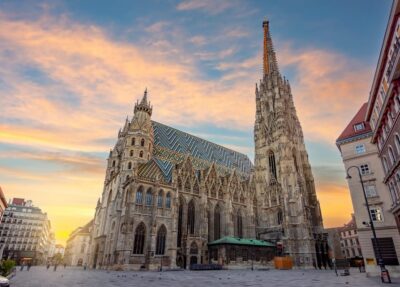 ★ 4.9Guided Walking Tour of City Highlights & Hidden GemsFrom $272,180 reviews
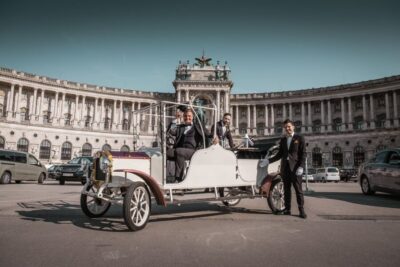 ★ 4.7City Sightseeing Tour in an Electro Vintage CarFrom $1161,085 reviews
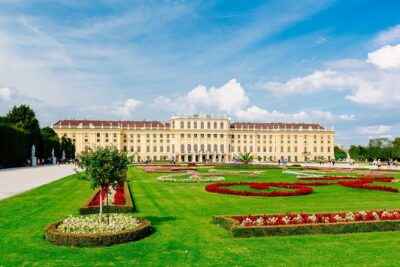 ★ 3.5Skip-the-Line Schonbrunn Palace Guided Tour and Vienna Historical City TourFrom $82940 reviews
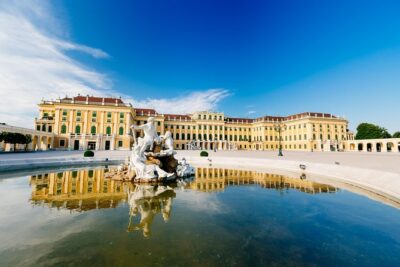 ★ 3.5Vienna Hop On Hop Off City TourFrom $42884 reviews
 ★ 4.5Vienna City Card: Public Transport incl. 200+ discountsFrom $22854 reviews
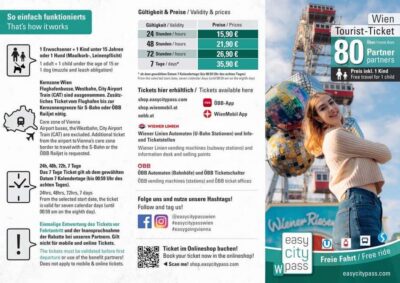 ★ 4.5EasyCityPass | City Card | Bus Metro Tram | SavingsFrom $21796 reviews
 ★ 4.8Vienna City Segway TourFrom $116638 reviews
 ★ 4.5Vienna City Bike TourFrom $59599 reviews
Browse the lists this tour appears in