
Reviewed · BELVEDERE & KLIMT TOURS
Private Tour of Viennese Art in the Leopold Museum: Klimt, Schiele, Kokoschka
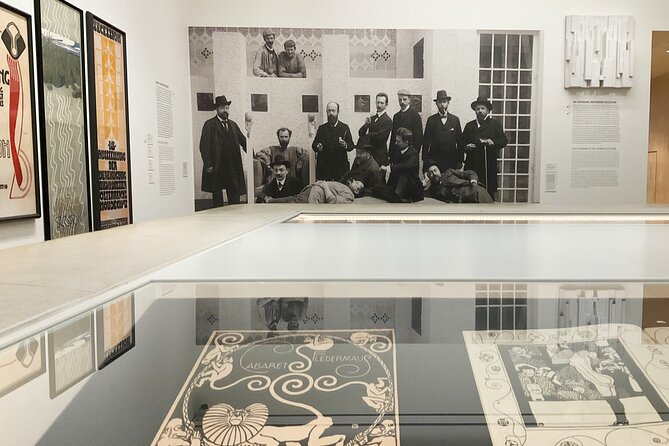
Vienna’s art gets personal fast. A private tour focused on Klimt, Schiele, and Kokoschka gives you a guided way to read the city through what shaped its modern art scene—history, science, and the shock value that still sparks debate.
I like the professional art historian guide approach here because it turns “seeing paintings” into understanding ideas and the arguments around them. I also love that the Leopold Museum anchors the experience with Egon Schiele’s permanent exhibition, so you’re not just skimming famous names. One possible drawback: museum admission is not included, so you’ll want to plan for that extra ticket cost before you go.
In This Review
- Key Points Worth Marking on Your Map
- Why This Private Leopold Museum Tour Feels Different
- Meeting at Museumsplatz: Start Smart, Skip the Stress
- Inside the Leopold Museum: Schiele, the Scandal, and the “Now” Question
- Klimt and Kokoschka: Seeing Three Artists as One Vienna Story
- History and Science in Vienna: Why This Context Changes What You See
- The Nowness of Art: Why Old Works Keep Causing New Arguments
- MuseumsQuartier Wien: A Short Finish in the Right Neighborhood
- Duration, Group Size, and What It Means for Your Focus
- Price and Value: What You’re Really Paying For
- Who This Tour Is Best For (And Who Should Rethink It)
- Should You Book This Private Tour?
- FAQ
- How long is the private tour?
- What’s the group size for this tour?
- Is the tour offered in English?
- Where does the tour start?
- Do I need to buy museum admission separately?
- What’s included in the tour price?
- Is the tour near public transportation?
- Will I receive a ticket on my phone?
- Can I cancel for free?
Key Points Worth Marking on Your Map
- Private format for up to 6 means more time for your questions and less rushing
- Professional art historian guide keeps the connections clear between artists and their era
- Leopold Museum’s Schiele focus gives the tour a strong, coherent center
- Learn the link between art and Vienna’s history and science (not just styles and dates)
- A “nowness of art” lens helps you understand why older works still trigger strong reactions
- Easy finish in MuseumsQuartier Wien since the Leopold Museum sits in the middle
More time with Klimt's Kiss at the Belvedere
- Vienna Belvedere Palace Skip-the-line Tour & Official Guide★ 4.9 · 390 reviews
- Vienna: Lower Belvedere Entry Ticket & Temporary Exhibitions★ 4.1 · 275 reviews
- Vienna: Belvedere Palace Skip-the-Line Tour★ 4.9 · 197 reviews
- Vienna 3, 4 or 5-Attraction Pass: Schönbrunn, Belvedere, Bus★ 4.2 · 124 reviews
Why This Private Leopold Museum Tour Feels Different
If you like art history but you also like to talk back a little, this style of tour fits well. The Leopold Museum experience is designed around a single place and a small group, so you don’t spend your time playing museum whack-a-mole with other visitors.
The big win is the private setup: it’s for one group of up to six people, in English, with a professional art historian guide. That matters more than people think. Art museums can be quiet and beautiful, but left alone you can miss the point. With a guide who can explain what to look for and why it mattered in Vienna, you get a framework you can carry with you while you walk.
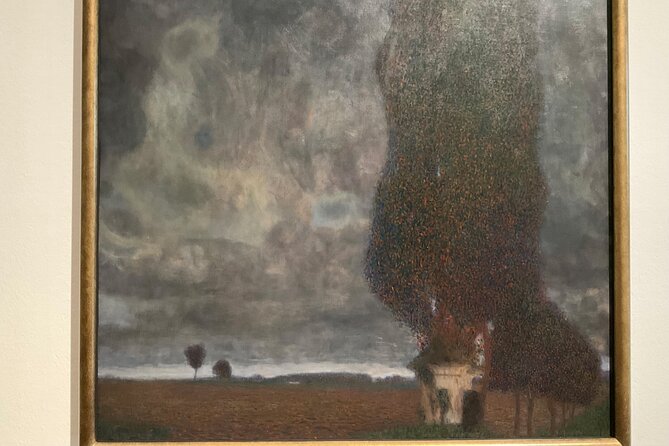
And the topic choices pull you in for a reason. The tour highlights Klimt, Schiele, and Kokoschka together, then frames Vienna’s art scene as something defined by history and science as much as aesthetics. That’s not just “context for context’s sake.” It changes how you read the works in front of you—especially the ones that still make people uncomfortable.
One practical note: the tour runs about 2 hours 15 minutes. That’s long enough to actually form opinions, but short enough that you won’t need to treat the museum like a full-day quest.
Meeting at Museumsplatz: Start Smart, Skip the Stress
You start at the Leopold Museum at Museumsplatz 1, 1070 Wien. The good part is that the location is described as being near public transportation, so you’re not forced into a long walk across Vienna just to begin.
You’ll also use a mobile ticket. That’s handy because you’re not juggling printed papers in a jacket pocket. Do remember one key detail: museum admission tickets are not included. So while the guide experience is covered, you’ll still need the entry ticket for the Leopold Museum itself to actually get in.
Because the tour ends back at the meeting point, it’s also easy to plan your next stop nearby—food, coffee, or just an extra wander around the area.
Inside the Leopold Museum: Schiele, the Scandal, and the “Now” Question
The Leopold Museum is where this tour finds its spine. It’s presented as the best place in Vienna to see the most scandalous artworks ever created in the city, and to understand the principle of the nowness of art—meaning older art can still land like it’s happening today.
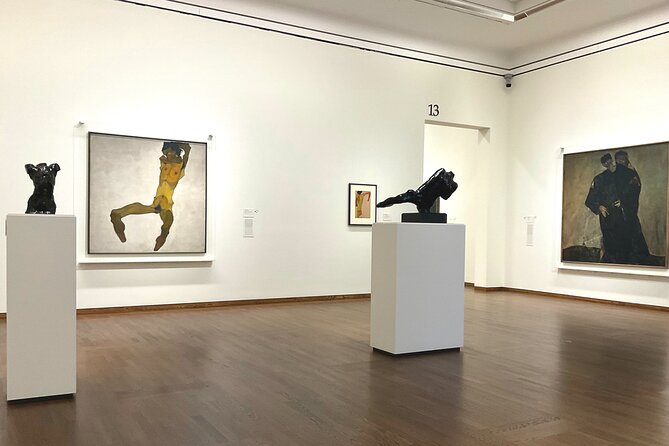
That’s a bold promise, and the reason it works here is simple: the museum has a permanent exhibition of Egon Schiele’s works. This matters for you because it means the tour isn’t dependent on what’s temporary. Schiele is always there as a foundation, which helps the guide build a coherent story as you move through the collection.
The guide also focuses on why Schiele’s work can still cause “dubious reactions,” especially around the line between pornography and art. Those themes are still debated now, not just during his lifetime. That’s the kind of discussion where a guide really earns their pay.
Here’s the practical value: without guidance, it’s easy to reduce controversial art to one hot take—too shocking, too sexual, too moral, too political, whatever your first reaction is. With an art historian leading the conversation, you get tools to separate your initial feelings from deeper meaning: what the work is doing, what it’s arguing, and why it provokes strong reactions.
Also, because the tone is specifically linked to ongoing heated discussions, you’re not asked to treat the subject like history class. You’re invited to treat it like a question that still matters.
Possible consideration: if you’re very sensitive to explicit or sexual themes, Schiele’s material may not be comfortable. The tour doesn’t try to “soften” that point—so it’s worth thinking honestly about what you can handle before you book.
Klimt and Kokoschka: Seeing Three Artists as One Vienna Story
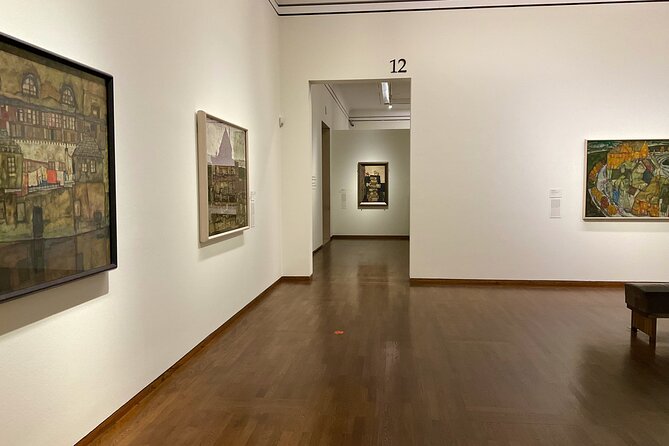
The highlights promise you’ll see the work of Klimt, Schiele, and Kokoschka during the tour. The real value isn’t just name recognition. It’s how the guide connects them to the broader forces shaping Vienna’s art scene.
You’re told the tour will cover how history and science defined that art scene. That’s important because Vienna wasn’t creating art in a vacuum. The city’s ideas about the human body, perception, modern life, and knowledge influenced what artists tried to express and how bold they were willing to be.
So when you’re looking at Klimt alongside Schiele and then Kokoschka, you should expect the guide to frame these as linked conversations. Not identical styles, not a checklist of facts—more like different answers to the same big questions. What should art show? What should it question? How much can it challenge public comfort?
This is where private tours shine. You can ask questions as they come up, like:
- How did the city’s intellectual climate push artists toward risk?
- Why do these works trigger debate even now?
- Where do you draw the line between art and something else?
Even if you don’t consider yourself a “serious art person,” the tour’s structure gives you an easy way to participate. You’re not expected to already know the artists’ entire biographies. You’re guided to understand the relationships.
And because the group is limited to up to six, you’re less likely to get stuck in a queue of opinions you can’t respond to. It’s a more conversational rhythm.
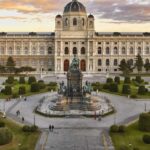
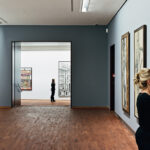
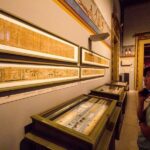
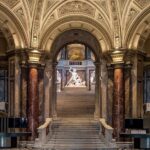
Cool galleries for a grey Vienna afternoon
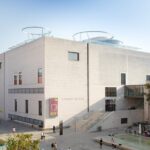
History and Science in Vienna: Why This Context Changes What You See
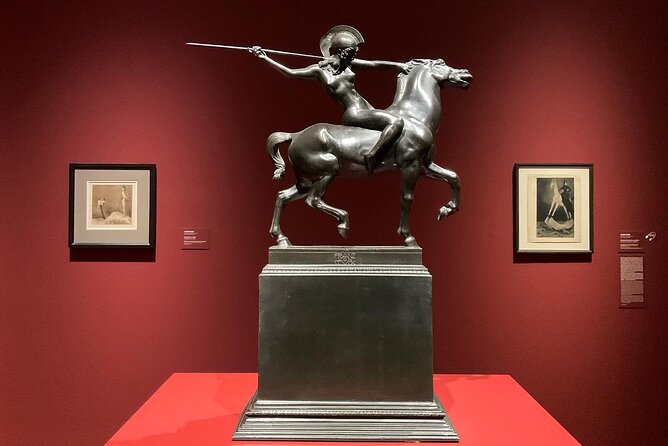
A lot of art tours list dates and labels. This one aims for something more useful: a way to understand what shaped the art scene.
You’re told that history and science defined Vienna’s art scene, and that becomes a theme you can carry from room to room. That approach helps you stop thinking of the artworks as isolated objects and start thinking of them as part of a city’s thinking.
For you, this can turn a museum visit into a clearer experience. Instead of trying to memorize what you see, you learn how to interpret it. It also makes the controversial aspects make more sense. When art draws fire, it’s usually because it touches something the society wants to keep controlled—ideas about bodies, society, morality, knowledge, or behavior.
With a guide, you also learn what to pay attention to beyond the obvious. You might focus more on how the art communicates tension, how it pushes boundaries, or why the themes that shocked people then can still feel charged now.
The “nowness of art” concept ties directly into this. You’re not just being told that these works were once scandalous. You’re being encouraged to ask why they still feel like a current issue.
The Nowness of Art: Why Old Works Keep Causing New Arguments
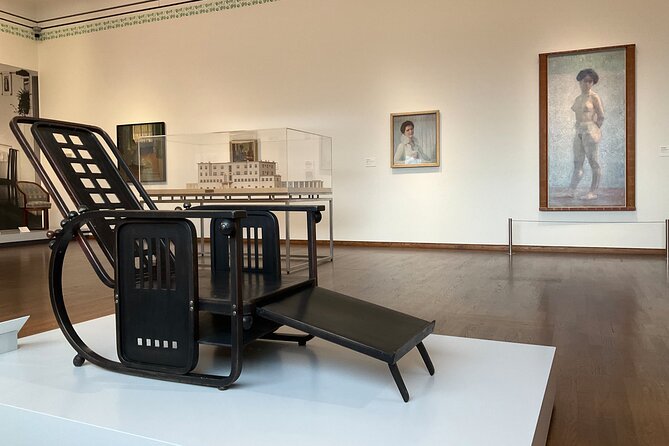
One of the most interesting ideas in the tour is the principle of the nowness of art. It’s not a poetic slogan tossed in for effect; it’s tied to the way the guide discusses Schiele’s themes and how they’re still debated today.
This is the kind of theme that can frustrate people if it stays vague. But because this tour is anchored in Schiele’s permanent exhibition, you have something concrete to work with. You’re not having a philosophical conversation in the air. You’re walking through a collection where the controversy has real form.
For your experience, that means you can connect your own reaction to an actual art-historical question. You can sit with discomfort without pretending it isn’t there. And you can notice when your opinion is about the work itself versus when it’s about what you’ve been told art is allowed to do.
A small warning, honestly: if you want art tours that keep everything polite and light, this one may feel too blunt. It’s built around the fact that certain works still stir heated debate. That can be intellectually exciting, but not everyone wants that energy.
If you do like a little friction, you’ll probably leave with stronger, more personal takeaways.
MuseumsQuartier Wien: A Short Finish in the Right Neighborhood
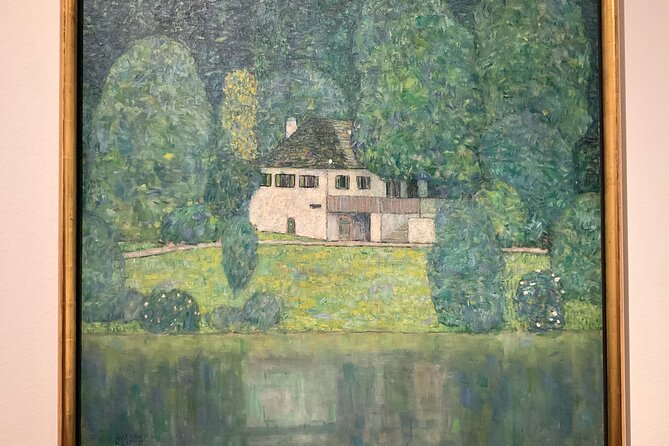
After the Leopold Museum time, the tour includes a short stop at MuseumsQuartier Wien. The key detail is that the Leopold Museum is situated in the middle of MuseumsQuartier, so this isn’t a long transfer. It’s more like a quick sense of place.
This is useful for you if you want your museum experience to connect to the city around it. MuseumsQuartier is the kind of area where you can keep exploring after the guided portion ends—without committing to another long commute.
Since the tour ends back at the meeting point, you can also use that final moment to plan your next step: another nearby museum, a meal, or simply a walk to process what you just learned.
Duration, Group Size, and What It Means for Your Focus
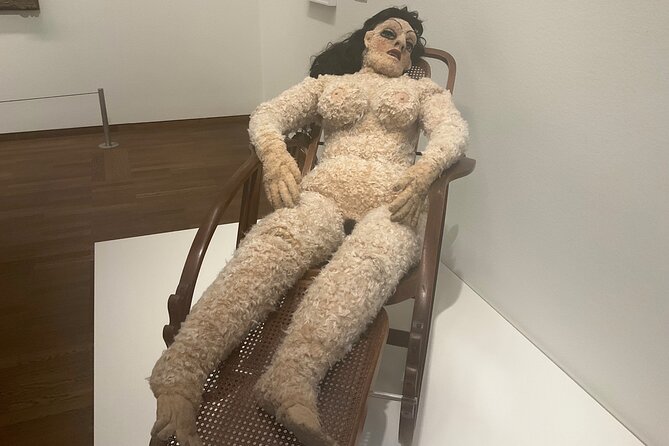
The tour runs about 2 hours 15 minutes. For most people, that’s a sweet spot. You get time to see works by multiple artists and still have enough room for the guide’s explanations to land.
Group size is also key: it’s private for up to six people. In practice, that usually means:
- less time waiting
- more time actually looking
- more chance to ask follow-up questions when something feels confusing or provocative
It also affects how much you can absorb. A crowded group can turn art into a blur. A small group keeps it slow enough for your brain to catch up.
And because it’s offered in English, you can keep the discussion at a comfortable pace rather than translating your way through key ideas.
Price and Value: What You’re Really Paying For
The price is $378.71 per group (up to 6), for a guided experience with a professional art historian. That can sound like a lot until you look at it from the right angle.
If you fill the group with the maximum of six people, the cost works out to about $63 per person. If you book with fewer people, the per-person cost rises, since it’s priced per group rather than per person.
So the value calculation depends on you:
- If you have 3–6 people who genuinely want to talk art and ask questions, this becomes a strong deal.
- If it’s just you or one other person, it can still be worth it if you care about the private art historian angle more than the savings.
The reason it’s good value is that you’re paying for guided interpretation, not just entry to rooms. The tour’s focus on themes like scandal, ongoing debate, and “nowness” is exactly the kind of thing a guide can explain better than a phone audio app.
Also, because museum admission tickets are not included, factor that in when you budget. The guide time is the cost; entry is a separate line item.
Who This Tour Is Best For (And Who Should Rethink It)
This tour is a strong fit if you:
- love art history but want it explained with clear, human reasoning
- enjoy discussion and context—especially when works provoke debate
- want to see major Viennese modern artists in a focused setting rather than hopping randomly between museums
- like the idea of Schiele being a centerpiece through a permanent exhibition
It might be a less ideal fit if:
- you prefer art tours that avoid controversial themes
- you want a purely aesthetic visit with minimal discussion of provocative boundaries
- you’re only in Vienna for a quick museum hit and don’t plan to sit with the art’s meaning
One more thought: the tour says most travelers can participate, and it’s near public transportation. That’s helpful if you’re planning your day without complicated logistics. Just remember admission is not included, so you’ll still need to handle that part.
Should You Book This Private Tour?
Book it if you want a guided, small-group art history experience that treats Schiele’s controversy as a serious conversation, not just shock value. The combination of a private format, a professional art historian guide, and a museum visit anchored by Schiele’s permanent exhibition makes it likely you’ll leave with clearer questions—and stronger opinions.
Skip or reconsider if you want a gentle, low-stimulation museum day. This tour is built around works that can still cause heated debate, and you shouldn’t expect it to tiptoe around uncomfortable themes.
If you’re the kind of person who likes your art with argument attached, you’ll probably really enjoy this one.
FAQ
How long is the private tour?
It’s approximately 2 hours 15 minutes.
What’s the group size for this tour?
It’s a private tour/activity for your group only, up to 6 people.
Is the tour offered in English?
Yes, it’s offered in English.
Where does the tour start?
The meeting point is at the Leopold Museum, Museumsplatz 1, 1070 Wien, Austria.
Do I need to buy museum admission separately?
Yes. Museum admission tickets are not included.
What’s included in the tour price?
A professional art historian guide is included.
Is the tour near public transportation?
The meeting point is described as near public transportation.
Will I receive a ticket on my phone?
Yes, the tour includes a mobile ticket.
Can I cancel for free?
Yes. Free cancellation is available up to 24 hours in advance for a full refund. If you cancel less than 24 hours before the start time, the amount you paid is not refunded.
Yours Alone Across Vienna
- Vienna: Private Walking Tour with a Local
★ 4.6 · 1,446 reviews - Vienna: Private Walking Tour with a Guide
★ 4.7 · 962 reviews - Vienna: Wine Tasting Experience in a Private Wine Cellar
★ 4.8 · 413 reviews - Private Day Tour Trip Salzburg Hallstatt and Melk from Vienna
★ 5.0 · 388 reviews - Private Day Tour of Hallstatt and Salzburg from Vienna
★ 5.0 · 263 reviews
Vienna Indoors: More Galleries
- Vienna Kunsthistorisches Museum Day Admission Ticket
★ 4.6 · 3,690 reviews - Tickets for the Albertina Exhibitions
★ 4.7 · 2,126 reviews - Combo Ticket: Kunsthistorisches Museum & Imperial Treasury
★ 4.7 · 785 reviews - Skip the Line: Kunsthistorisches Museum Vienna Entrance Ticket
★ 4.5 · 466 reviews - Leopold Museum Vienna Entrance Ticket
★ 4.5 · 440 reviews
The Belvedere and Klimt, Continued
- Entry Ticket Upper Belvedere, Klimt’s Kiss & Permanent Collection
★ 4.5 · 831 reviews - Vienna Belvedere Palace Skip-the-line Tour & Official Guide
★ 4.9 · 390 reviews - Vienna: Lower Belvedere Entry Ticket & Temporary Exhibitions
★ 4.1 · 275 reviews - Vienna: Belvedere Palace Skip-the-Line Tour
★ 4.9 · 197 reviews - Vienna 3, 4 or 5-Attraction Pass: Schönbrunn, Belvedere, Bus
★ 4.2 · 124 reviews
Just In: New Vienna Reviews



Belvedere & Klimt Tours, compared.
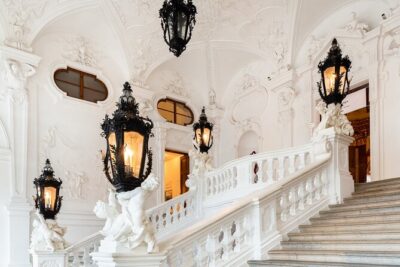 ★ 4.5Entry Ticket Upper Belvedere, Klimt’s Kiss & Permanent CollectionFrom $23831 reviews
 ★ 4.9Vienna Belvedere Palace Skip-the-line Tour & Official GuideFrom $50390 reviews
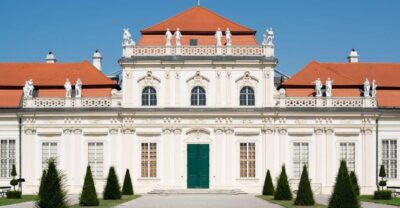 ★ 4.1Lower Belvedere Entry Ticket & Temporary ExhibitionsFrom $17275 reviews
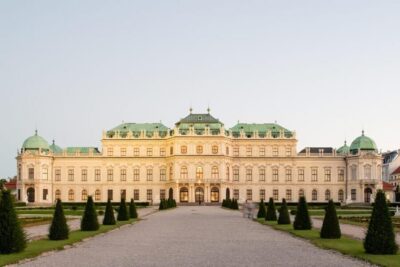 ★ 4.9Belvedere Palace Skip-the-Line TourFrom $62197 reviews
 ★ 4.2Vienna 3, 4 or 5-Attraction Pass: Schönbrunn, Belvedere, BusFrom $106124 reviews
 ★ 4.6Klimt Villa (Gustav Klimt Atelier & Museum) TicketFrom $1497 reviews
 ★ 5.0Belvedere Palace and Museum TourFrom $18171 reviews
 ★ 5.0Skip-the-line Upper Belvedere Tickets and Guided Tour ViennaFrom $7868 reviews
Browse the lists this tour appears in