
Reviewed · CITY TOURS
Terrible crimes in Vienna, hidden secrets of the inner city
Vienna has a dark walk. This offbeat 2-hour route turns the inner city into a true-crime timeline, from medieval executions to a royal spy shocker. You also get a smartphone audio guide so the stories stick as you move street to street.
I love how the guide connects the crimes to specific people and eras, so you’re not just hearing gore. I also love the pace: short stops (often around 10 minutes) that keep you moving, plus the tour is built around sights marked with no extra admission listed.
One caution: the cases include gruesome violence and execution details, so it’s not a light, postcard-only stroll.
In This Review
- Key things that make this tour worth your time
- A 2-hour inner-city crime walk with an audio guide
- Price and what you actually get for $46.13
- Where you start, where you end, and how the walk feels
- Stop 1–3: capuchin dungeons, a murder case tied to an actress, and the Bathory legend
- Stop 4–6: Demel square fraud, medieval mass murder, and Colonel Redl’s spy-ending suicide
- Stop 7–9: Danube fragments, 1848 political violence, and the Hannakenkönig scam
- Stop 10–11: the last wheeled death penalty, and a torture case built on jealousy
- Stop 12–14: St. Stephen’s baker punishments, the Steffl executioner’s dungeon, and a monastery wall-in
- The guide style: research-heavy, fast-moving, and built for real street walking
- Who should book this Vienna crime walk?
- Should you book this tour?
- FAQ
- How long is the Vienna crime walking tour?
- What language is the tour offered in?
- Do I need a smartphone to use the guide?
- Is it mostly walking, and how big are the pauses?
- Where does the tour start and end?
- How many people are on the tour?
Key things that make this tour worth your time
- True-crime storytelling in real locations instead of generic history slides
- Short, focused stops that keep the walk lively for the full ~2 hours
- Smartphone audio guide included, so you can follow along at your own speed
- Big-name figures across centuries, from Joseph II to Colonel Redl
- Many stops with free entry noted, which helps the value
Wider circles around the Ring and beyond
- Vienna: Guided Walking Tour of City Center Highlights★ 4.7 · 4,989 reviews
- Vienna: City Cruise with Optional Lunch★ 3.4 · 3,982 reviews
- Vienna: City Cruise★ 3.3 · 2,978 reviews
- Vienna: Guided Walking Tour of City Highlights & Hidden Gems★ 4.9 · 2,180 reviews
A 2-hour inner-city crime walk with an audio guide
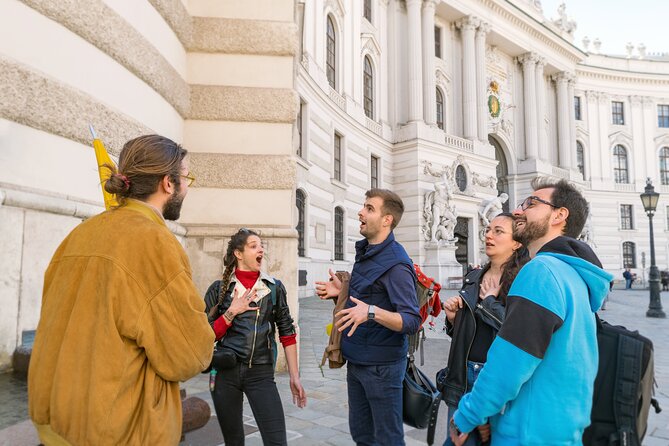
If Vienna is a city of polished façades, this tour is the crack in the varnish. You walk through the center and hear stories that most guidebooks skip: dungeons, murders, fraud, torture, and political violence. The effect is surprisingly practical. Once you know what happened at a corner, the building stops being background and starts being evidence.
The added smartphone audio guide makes the experience easier to manage. I like having audio as backup when streets are busy or when you want to slow down and take in what’s in front of you. It also helps the tour feel less like an info dump and more like a guided walk you can actually keep up with.
Price and what you actually get for $46.13
At about $46.13 per person for roughly 2 hours, the value comes from three things: you’re paying for a guided narrative, you get the smartphone audio guide, and you don’t hit a parade of paid attractions at each stop. Many of the listed hotspots are marked as free entry, which matters if you’re trying to keep a Vienna trip budget-friendly.
Also, this is a small-group style outing, with a maximum size of 20. That’s big enough that it won’t feel like you’re trapped in a tiny room, but small enough that questions and pacing are more realistic than with huge bus-tour herds.
Where you start, where you end, and how the walk feels
You start near Helmut-Zilk-Platz / Albertina (Albertinaplatz 2–3) and finish at Rauhensteingasse. Both are in the core, so you can plug this into a normal day of seeing monuments without needing a long transit plan.
This is a walking tour through the old center. Expect mostly city-center pavement and frequent short pauses. That 10–15 minute rhythm shows up at lots of stops, which helps if you’re the type who gets bored when a tour turns into one long lecture.
Two practical notes before you go:
- Good weather matters. If conditions are poor, the tour can be rescheduled or refunded.
- The topic is dark. Even if you’re okay with history, go in knowing the stories include graphic violence and execution.
Stop 1–3: capuchin dungeons, a murder case tied to an actress, and the Bathory legend
The tour begins at Tegetthoffstraße 2, where the mood shifts fast. You’re directed to the Capuchin monastery area and a story about a dungeon associated with Father Innocentius. The detail that stuck with me is how the incarcerations weren’t always framed as grand crimes. Some punishments were linked to things that sound absurdly petty: things like unauthorized afternoon walks or misconduct toward monastery officials. It’s a reminder that control, fear, and reputation were powerful in older institutions.
Then you move to Trattnerhof for the Jaroszynski murder case, with a major role played in the public narrative by actress Therese Krones. The twist here is about rumor versus reality. One version swirled around extravagant desires and despair; the other pins Jaroszynski’s downfall on gambling addiction and heavy debt. It’s a good lesson in how people try to explain violence with a simple story, even when the motivator is more ordinary and more tragic.
Next is Palais Bathory at Augustinerstraße 12. This is where the tour leans into one of Vienna’s most notorious names: Elisabeth Bathory, the so-called blood countess. The tour presents it in a balanced way: either the legend points to an exceptional serial killer, or the story is tied to a violent intrigue aimed at a countess with questionable loyalties. That uncertainty matters. It helps you understand why some cases become folklore: the facts may be complicated, but the rumor is vivid enough to survive.



Stop 4–6: Demel square fraud, medieval mass murder, and Colonel Redl’s spy-ending suicide
At Graben and Kohlmarkt, you pause near Place of the Demel, and the story turns toward 1970s-era crime: the Lucona affair and a figure tied to it, Udo Proksch. The scandal is described as an overinsured freighter planned for Asia, with an explosive charge hidden aboard. It ends with mass murder and massive insurance fraud—plus an investigation that dragged on, partly because the people involved had connections in many directions.
What I liked here is that the tour shows you the continuity of crime against the backdrop of a classy shopping and landmark area. Vienna can look neat on the surface. This stop argues that deception can be dressed up just as well.
From there, you move to Herrengasse for Palais Ferstel and the medieval site connected with Zu den Fünf Morden, the House of the Five Murders. The story is brutal: a mass murder case in medieval Vienna where the perpetrator was executed in an especially harsh way—impalement—and the execution took a long time because the executioner wasn’t experienced with that method. The case includes murders that were especially shocking in age and cruelty, including a seven-year-old.
Right opposite, you visit the former Hotel Klomser spot at Herrengasse, tied to Colonel Redl. This is the spy story part—Vienna’s monarchy era at its most tense. Redl’s suicide is framed as the end point of the greatest spy affair of the monarchy, with consequences that could have shifted the lead-up to the First World War. The story also points to the reputational damage to the army and the vulnerability of an underfunded secret service, the Evidenzbureau.
If you like true crime, this is a strong pairing: one stop is medieval court brutality; the next is intelligence failure in a world full of uniforms and secrets.
Stop 7–9: Danube fragments, 1848 political violence, and the Hannakenkönig scam
At Molker Bastei, you get the case of Anna Gaugisch, murdered in 1861 and dismembered by her boyfriend Raimund Lewisch. The story is told through locations where parts of her body were found, including the Danube and the area around this stop. The motivation is framed as controlling a pregnancy and eliminating an obstacle, with additional disturbing detail about prior behavior before the murder.
Next is Am Hof, where the tour addresses a lynch murder tied to the revolution year 1848. The target is war minister Theodor Baillet de Latour, and the story places this violence in the chain of events leading to the Wiener October Revolution. There’s also a practical street-level connection: the civil arsenal nearby was looted during the unrest.
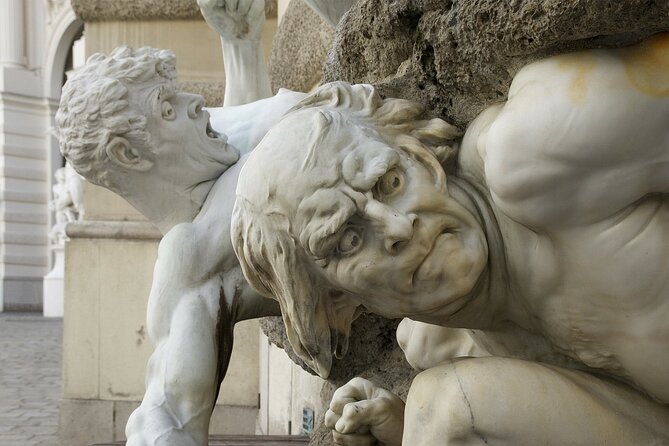
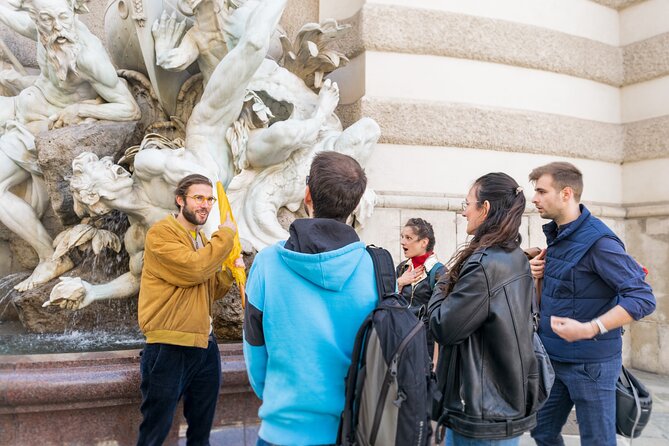
Then the tour pivots again into a darker kind of con artistry at Hannaken-Brunnen. Here you hear about the Hannakenkönig, a surgeon figure who allegedly caused broken bones by setting trip hazards, then profited by healing the victims. The fountain scene shown at the stop features two men bringing an injured comrade to this surgeon. It’s less about high politics and more about exploitation—and it lands differently because it’s framed around petty tactics, not grand conspiracies.
Stop 10–11: the last wheeled death penalty, and a torture case built on jealousy
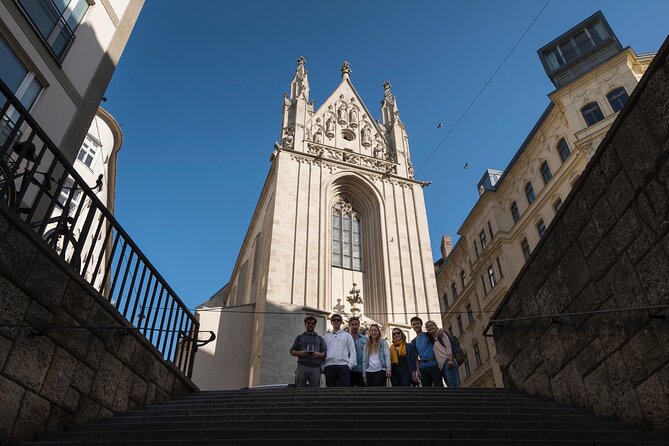
At Maria Am Gestade, the tour points you to a section of city wall and connects it to the Zahlheim case. This is where the death penalty becomes the story: the tour mentions that it was the last wheeled execution in Vienna, described as extremely cruel. It also ties the case to Joseph II, who usually rejected the death penalty, with this set of events forcing him to make an exception.
Even if you don’t love gruesome details, this stop is useful because it shows how a political philosophy can be pressured by specific facts. You’re not just hearing that Joseph II was good or bad; you’re seeing how real cases tested the line between ideals and decisions.
Then you head to Hoher Markt for the story of Thekla Riener. The tale centers on torture and a confusion at the heart of it: she was supposed to betray a supposed lover, but that lover wasn’t real. The motive is presented as jealousy tied to imagined relationships, and the outcome becomes tragic and chaotic—she’s killed during the events, and her parents are described as driven to insanity.
This is one of those stops where the guide’s tone matters. Done well, it turns the story into a lesson about how mental obsession can produce irreversible harm.
Stop 12–14: St. Stephen’s baker punishments, the Steffl executioner’s dungeon, and a monastery wall-in
At St. Stephen’s Cathedral, you hear a story about medieval punishment tied to bread quality—linked to the idea of a so-called standard loaf and the city enforcing standards through extreme measures. The detail that makes this stick is the legend of the baptism of bakers: bakers put in a cage and dipped into the Danube for bad bread. The tour also notes that similar punishments existed in English-speaking contexts for women in dispute (as a parallel idea, not as a Vienna-specific event).
Next is Steffl, where the focus is the former Malefizspitzbubenhaus, an executioner’s apartment and dungeon. You hear about the only witch burned in Vienna, the Plainacher, held and tortured here. The charge is tied to an accusation that an epileptic granddaughter was bewitched and that demons were summoned. The tour adds an important nuance: witch persecutions weren’t common in Vienna, but here public pressure was something the judge had to manage.
Finally, at Himmelpfortgasse, the tour lands on a monastery story with a Romeo-and-Juliet vibe. At a former Himmelpfort monastery, a nun was walled in in 1319 because she wouldn’t give up her love—described as a family conflict with political enemies. The “why” is framed through the mayor and his archenemy, their children who were good friends, and the father’s hard decision when the mayor’s son asks for Anna’s hand.
It’s dark. But it also shows how love stories can become laws and walls.
The guide style: research-heavy, fast-moving, and built for real street walking
One of the highest-praise aspects of this experience is the way the guide handles research and narration. In my case, the guide Ben did the research himself and brought the cases to life with a clear sense of era-by-era logic: crimes of passion and greed mapped to different centuries, with lots of story transitions that feel planned rather than random.
Short version: it’s not just telling you what happened. It’s explaining why it happened in that time and why the legend or fallout mattered.
Who should book this Vienna crime walk?
Book it if you:
- Like true crime but want it grounded in real buildings and real places
- Enjoy history that’s messy and human, not just polished dates
- Want a walking tour that stays active and doesn’t drag
Skip it if you:
- Want a gentle, family-friendly outing
- Are sensitive to stories involving torture, executions, and graphic violence
- Prefer straightforward sightseeing without the darker framing
Should you book this tour?
I think it’s a smart choice if you’re already planning to spend time in Vienna’s core and you want your history to come with teeth. The big value is the combination of a guided narrative, a smartphone audio guide, and a route that puts notorious cases onto actual street corners instead of keeping them in a book.
If you like the idea of seeing Vienna’s major landmarks and then getting the unsettling stories behind them, go for it. If that sounds like too much, stick with classic architecture tours and save this one for a later mood.
FAQ
How long is the Vienna crime walking tour?
It runs for about 2 hours.
What language is the tour offered in?
The tour is offered in English.
Do I need a smartphone to use the guide?
Yes. It includes a complimentary smartphone audio guide, and you’ll have a mobile ticket.
Is it mostly walking, and how big are the pauses?
It’s a walking route through the inner city with many stops where you spend about 10 to 15 minutes each.
Where does the tour start and end?
It starts near Helmut-Zilk-Platz / Albertina (Albertinaplatz 2–3) and ends at Rauhensteingasse, both in Vienna’s 1010 area.
How many people are on the tour?
The group size is capped at a maximum of 20.
Vienna, Ring to Suburb
- Vienna: Guided Walking Tour of City Center Highlights
★ 4.7 · 4,989 reviews - Vienna: City Cruise with Optional Lunch
★ 3.4 · 3,982 reviews - Vienna: City Cruise
★ 3.3 · 2,978 reviews - Vienna: Guided Walking Tour of City Highlights & Hidden Gems
★ 4.9 · 2,180 reviews - Vienna: City Sightseeing Tour in an Electro Vintage Car
★ 4.7 · 1,085 reviews
More Tour Reviews in Vienna
- Vienna: Vivaldi’s Four Seasons Concert in Karlskirche
★ 4.7 · 14,951 reviews - Vienna: Schönbrunn Palace & Gardens Skip-the-Line Tour
★ 4.7 · 7,739 reviews - Vienna: Light of Creation Votive Church Immersive Light Show
★ 4.8 · 6,779 reviews - Vienna Spanish Riding School Guided Tour
★ 4.7 · 6,765 reviews - Vienna: Classical Concert in the World-Famous Musikverein
★ 4.6 · 6,673 reviews
Just In: New Vienna Reviews



City Tours, compared.
 ★ 4.9Guided Walking Tour of City Highlights & Hidden GemsFrom $272,180 reviews
 ★ 4.7City Sightseeing Tour in an Electro Vintage CarFrom $1161,085 reviews
 ★ 3.5Skip-the-Line Schonbrunn Palace Guided Tour and Vienna Historical City TourFrom $82940 reviews
 ★ 3.5Vienna Hop On Hop Off City TourFrom $42884 reviews
 ★ 4.5Vienna City Card: Public Transport incl. 200+ discountsFrom $22854 reviews
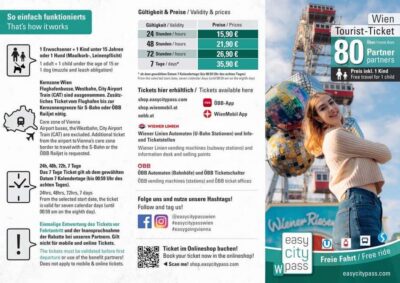 ★ 4.5EasyCityPass | City Card | Bus Metro Tram | SavingsFrom $21796 reviews
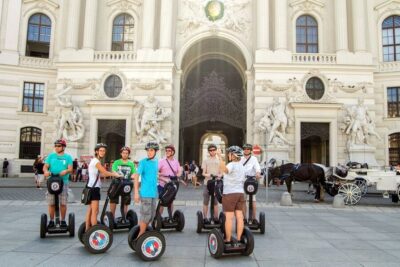 ★ 4.8Vienna City Segway TourFrom $116638 reviews
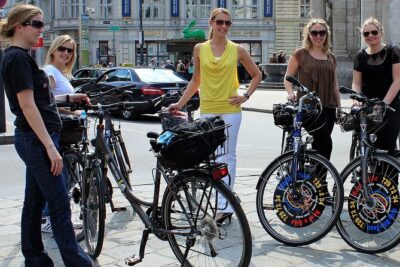 ★ 4.5Vienna City Bike TourFrom $59599 reviews
Browse the lists this tour appears in