Reviewed · WINE TAVERNS & HEURIGEN
Vienna: Austrian Wine Tasting
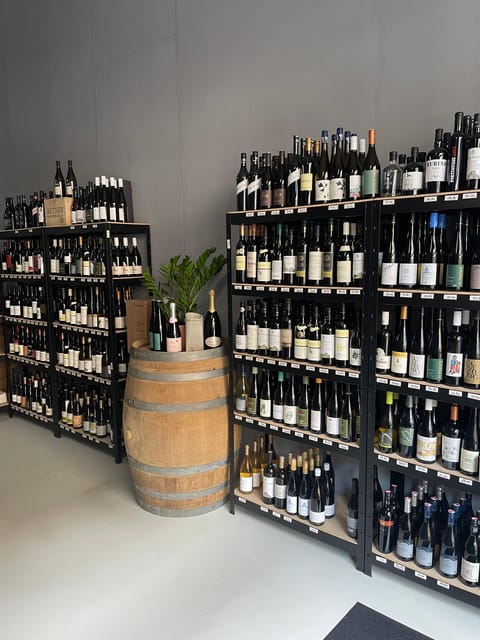
Vienna turns wine-school serious in a friendly shop setting. This Austrian Wine Tasting at Weinrudi is a smart, efficient way to learn how the country’s grapes and regions work, without getting lost in jargon. I really like the small group size, and I also like that you get a guided tastings-style approach with real bottles from Austria’s best-known styles and areas.
One thing to consider: while the experience runs smoothly for most people, there’s at least one reported instance of last-minute closure and delayed communication. If you’re coming on a tight schedule, I’d give yourself a little buffer and double-check the day-of.
In This Review
- Key things I’d pay attention to
- Entering Weinrudi in Vienna’s Second District
- What the 2-hour tasting really teaches you
- The lineup: Vienna, Wachau, and Kremstal on your glass
- Food, water, and the welcome frizzante
- Small group dynamics (and why they help you learn)
- Price and value: is $81 worth it?
- Logistics that make the day easier
- The cancellation caution you should know
- Who this tasting suits best
- Should you book Vienna: Austrian Wine Tasting?
- FAQ
- FAQ
- How long is the Austrian wine tasting experience?
- How many wines will I taste?
- What’s included in the price?
- Where do I meet the guide?
- Is pickup included?
- What languages are available?
- Is it wheelchair accessible?
- Can I cancel and get a full refund?
Key things I’d pay attention to
- Six wine tastings plus a frizzante welcome: you’re tasting enough to learn, not just sipping for fun.
- Academy-trained guidance: the host is a graduate of the Wine Academy, so explanations stay grounded.
- A real Vienna connection: one of the wines is a Wiener Gemischter Satz DAC that ties directly to the city’s own viticulture.
- Wachau and Kremstal represented: you sample big-name styles linked to Wachau (Grüner Veltliner) and Kremstal (Riesling).
- You’ll likely get food support: bread, snacks, and water keep things comfortable through multiple pours.
- Limited to 8 participants: expect more conversation than the big-tour kind.
Up to the Heurigen for another glass
- Wachau Valley Wine Tasting Bike Tour from Vienna★ 5.0 · 829 reviews
- Countryside Half Day Wine Tour near Vienna★ 5.0 · 545 reviews
- Wachau Valley Small-Group Tour and Wine Tasting from Vienna★ 5.0 · 540 reviews
- From Vienna: Half-day Countryside Wine Tour with Meal★ 4.7 · 526 reviews
Entering Weinrudi in Vienna’s Second District
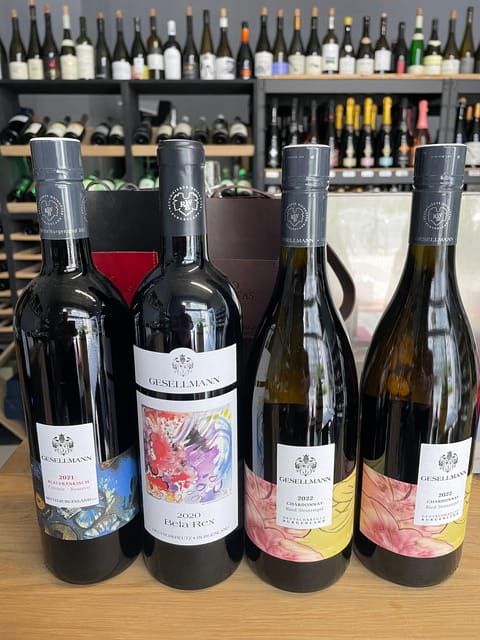
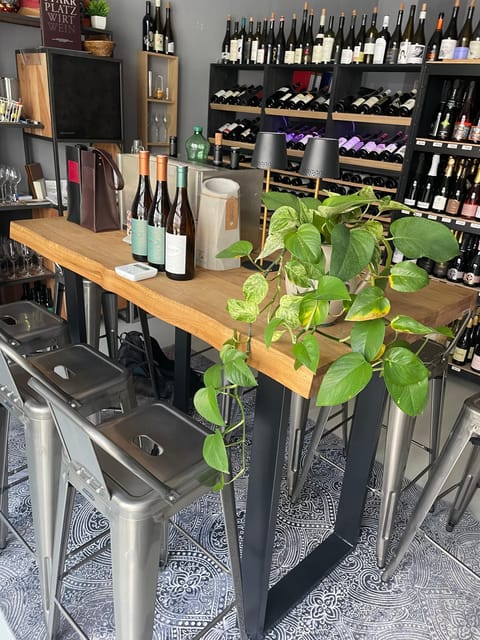
This tasting is built for convenience and walkability. You meet at Weinrudi, address Bruno-Marek-Allee 11, in Vienna’s second district. It’s a practical base if you’re planning time around the Prater area—especially since the shop sits near the Prater and the Giant Ferris Wheel.
The format matters here. This isn’t a loud bar crawl pretending to teach you anything. It’s a proper shop-based tasting where you can ask questions and actually connect a flavor to a grape, a style, or a place.
What the 2-hour tasting really teaches you
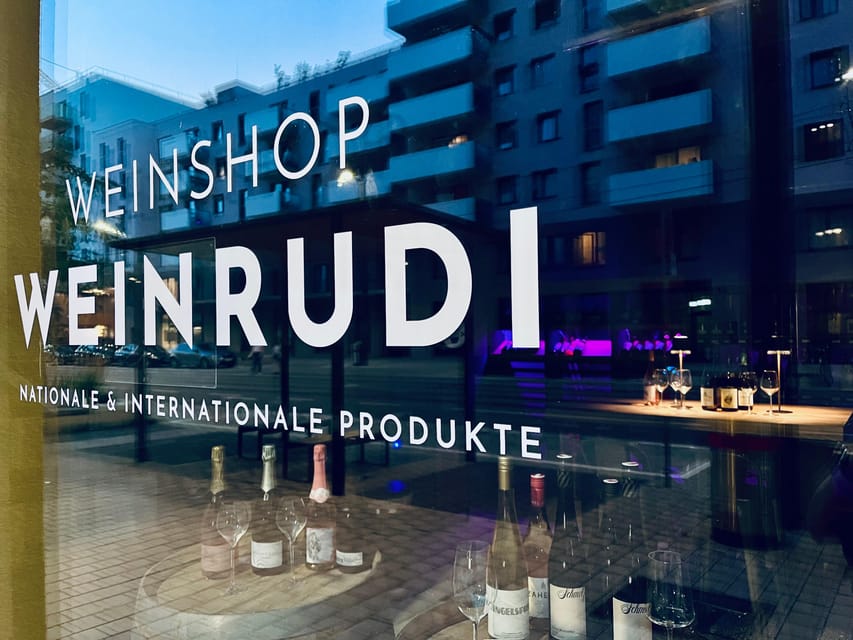
The presentation and tastings run about two hours, and the idea is simple: Austria is diverse, so you taste your way through the country’s major varieties and styles. You start with an introductory look at Austrian wine and the regions, then you move into tasting mode with six quality wines from recognized producers.
You’ll learn tasting techniques along the way. That’s important because it changes how you drink later. Instead of hoping you like something, you start noticing structure: acidity, body, aromatic intensity, and how the wine finishes. It’s the difference between tasting and getting it.
Also, you’re not stuck with only Austria’s most famous names. One of the strengths of this setup is that the host can connect Austrian wines to what you might already know from other countries. In one account, when the group mentioned a trip to Saint-Émilion, the host stepped sideways into French context. The same happened with a Spanish wine suggestion. That’s how you learn faster: comparisons make the patterns obvious.
The lineup: Vienna, Wachau, and Kremstal on your glass
You’ll taste a representative selection of flagship Austrian varieties and styles. The tasting includes wines such as:
- Wiener Gemischter Satz DAC from Vienna
This is one of the most compelling “city wine” experiences you can have. Vienna isn’t just pastries and palaces—it has its own wine identity, and this wine reflects that.
- Grüner Veltliner Ried Pichl Point from the Wachau
Wachau Grüner Veltliner is a classic for a reason. Expect it to show that distinct balance—freshness and character that can feel both crisp and textured depending on the wine.
- Riesling Handwerk from the Kremstal
Kremstal Riesling is a great counterpoint to Grüner Veltliner. It helps you understand how acidity behaves differently across white grapes in Austria.
Even if you don’t remember the exact label later, you’ll remember the “aha” moments. Like: how one region’s style tends to smell and taste one way, while another region pushes the profile in a different direction. That mental map is the real souvenir.
Food, water, and the welcome frizzante
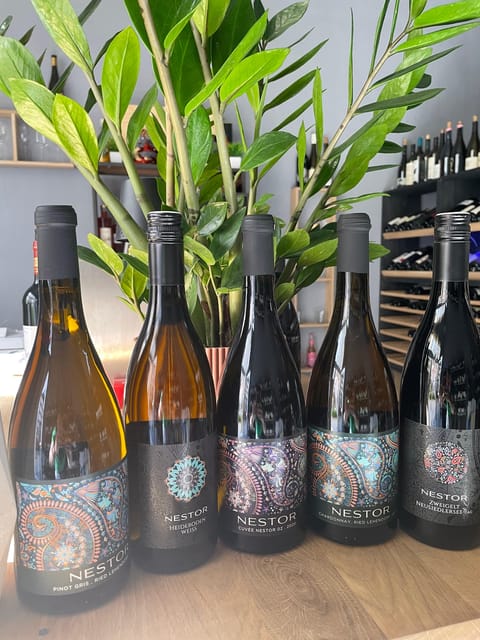
This is a tasting that respects your stomach. Included in the price you get a welcome glass of Frizzante, plus bread, snacks, and water. That matters because six wine tastings can turn into a strain if you’re running on an empty stomach.
Also, Frizzante at the beginning sets the tone. It’s lighter and less heavy than many still reds. It helps you settle in and start tasting without feeling like you’re already in the deep end.
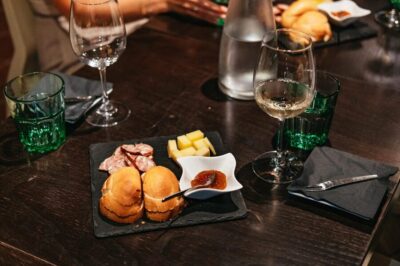
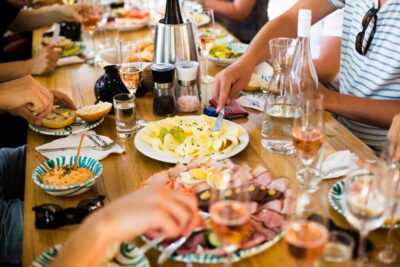
In at least one account, the host paired wine with a platter-style setup—bread, meats, and cheese—served alongside the tastings. Even if the exact snacks vary slightly, the point stays the same: you’re not just pouring wine, you’re giving you enough food to keep tasting enjoyable.
More Viennese plates and glasses to line up
Small group dynamics (and why they help you learn)
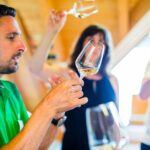
You’re capped at 8 participants. That small size changes the whole mood. You can ask questions without shouting. You can compare your impressions to someone else’s. And when a host makes an offhand connection—like discussing other European wine styles—it doesn’t feel like trivia dumping.
There’s also a practical side: smaller groups move through explanations faster. You don’t spend 30 minutes waiting for your turn to taste. The pacing stays tight enough to keep your interest.
One detail worth knowing: in one instance, the session moved to another room for the last wine after about five pours. That suggests the shop layout supports a natural pacing shift. You might not experience the exact same steps, but you should expect the tasting to be structured rather than chaotic.
Price and value: is $81 worth it?
At $81 per person for a roughly one-day experience, you’re paying for guided wine education plus actual tastings. The value comes from three things working together:
- Six generous tastings rather than small sample pours
- Food and water included, so you’re set up to enjoy the tasting instead of surviving it
- An academy-trained host who explains not just what you’re drinking, but why it tastes the way it does
If you’ve done wine tastings elsewhere where you pay for “a few sips” and then get sent on your way, this setup feels more like a lesson with real wine. You leave with more than preferences—you leave with a clearer sense of how to interpret Austrian bottles you might buy later.
And if you’re someone who wants to shop intelligently, tasting at this level helps you spot what you like and what you’re paying for. That alone can offset the price if you’re planning to bring a bottle back with you.
Logistics that make the day easier
There’s no pickup included, so plan to get to the shop yourself. The good news: the meeting point is in the second district, near major sights around the Prater zone. If you’re doing other things that day, you can treat this like a flexible anchor activity—start with sightseeing, then shift into tasting mode.
Languages are English and German, so you’ll be fine unless you only speak a different language. The tour guide is live, not recorded audio.
Group size is small, and the experience is wheelchair accessible. If you use mobility assistance, this is a helpful detail to filter on.
One more important filter: it’s not suitable for children under 18, pregnant women, or people with a cold. That’s fairly strict, but it’s also a sign they’re handling the session as a tasting environment, not a casual family event.
The cancellation caution you should know
Here’s the one part I’d be honest about. One account reports the tasting being closed due to a medical emergency, with the group having to return after seeing the shop closed. The refund came later, but the communication wasn’t what it should have been.
You can’t control emergencies. But you can control your planning style. If you’re visiting Vienna around other time-sensitive plans, give yourself a little extra room that day. And if you’re booking close to the activity start, it doesn’t hurt to double-check the day-of status.
Who this tasting suits best
This is a great match if you:
- want an intro to Austrian wine that stays practical and not overly academic
- like learning by taste, not by reading
- want to understand Vienna’s wine identity alongside Austria’s bigger names
- prefer small-group conversation over a crowd
It’s also a smart pick for couples and solo visitors who want something social but not loud.
If you already know a lot about Austrian wine and you want deep technical blind tasting drills, you might find this too introductory. But for most people, the mix of regions, varieties, and guided technique hits the sweet spot.
Should you book Vienna: Austrian Wine Tasting?
I’d book it if you want a high-value, low-stress way to learn Austria in one sitting—especially if you’re curious about Vienna wine (Wiener Gemischter Satz DAC) and the contrast between Wachau Grüner Veltliner and Kremstal Riesling.
Skip it if you need a very fixed schedule with zero flexibility or if you fall into the groups the experience states it’s not suitable for. Also, if you hate tasting multiple pours, know that six wines plus a welcome glass is the point of the format.
FAQ
FAQ
How long is the Austrian wine tasting experience?
It’s about 2 hours for the presentation and tastings.
How many wines will I taste?
You’ll taste six wines, plus a welcome glass of Frizzante.
What’s included in the price?
A welcome drink, six wine tastings, bread, snacks, and water are included.
Where do I meet the guide?
Meet directly at the wine shop Weinrudi, Bruno-Marek-Allee 11, in Vienna’s second district.
Is pickup included?
No, pickup is not included.
What languages are available?
The live tour guide speaks English and German.
Is it wheelchair accessible?
Yes, the experience is wheelchair accessible.
Can I cancel and get a full refund?
You can cancel up to 24 hours in advance for a full refund.
Vienna, Plate and Glass
- Vienna for Food Lovers: Cafés, Markets & Austrian Cuisine
★ 5.0 · 1,063 reviews - Wachau Valley Wine Tasting Bike Tour from Vienna
★ 5.0 · 829 reviews - Vienna: Gerstner KuK Hofzuckerbäcker Baking Show & Tasting
★ 4.8 · 823 reviews - Authentic Vienna Food Tour inc. lunch, street food, 3 drinks
★ 5.0 · 749 reviews - Wachau Valley Small-Group Tour and Wine Tasting from Vienna
★ 5.0 · 540 reviews
More Tour Reviews in Vienna
- Vienna: Vivaldi’s Four Seasons Concert in Karlskirche
★ 4.7 · 14,951 reviews - Vienna: Schönbrunn Palace & Gardens Skip-the-Line Tour
★ 4.7 · 7,739 reviews - Vienna: Light of Creation Votive Church Immersive Light Show
★ 4.8 · 6,779 reviews - Vienna Spanish Riding School Guided Tour
★ 4.7 · 6,765 reviews - Vienna: Classical Concert in the World-Famous Musikverein
★ 4.6 · 6,673 reviews
Up to the Heurigen
- Wachau Valley Wine Tasting Bike Tour from Vienna
★ 5.0 · 829 reviews - Countryside Half Day Wine Tour near Vienna
★ 5.0 · 545 reviews - Wachau Valley Small-Group Tour and Wine Tasting from Vienna
★ 5.0 · 540 reviews - From Vienna: Half-day Countryside Wine Tour with Meal
★ 4.7 · 526 reviews - Vienna: Wine Tasting Experience in a Private Wine Cellar
★ 4.8 · 413 reviews
Just In: New Vienna Reviews



Wine Taverns & Heurigen, compared.
 ★ 5.0Wachau Valley Wine Tasting Bike Tour from ViennaFrom $163829 reviews
 ★ 5.0Countryside Half Day Wine Tour near ViennaFrom $145545 reviews
 ★ 5.0Wachau Valley Small-Group Tour and Wine Tasting from ViennaFrom $230540 reviews
 ★ 4.7From Vienna: Half-day Countryside Wine Tour with MealFrom $141526 reviews
 ★ 4.8Wine Tasting Experience in a Private Wine CellarFrom $22413 reviews
 ★ 4.8From Vienna: Wachau Valley Day Tour with Wine TastingFrom $234399 reviews
 ★ 4.2Heurigen Cruise with Viennese Songs and BuffetFrom $74320 reviews
 ★ 4.8Schlumberger Wine Cellar Guided or Self-Guided TourFrom $15285 reviews
Browse the lists this tour appears in