
Vienna to two other capitals in one day sounds like a stunt, but the flow here is what makes it work. I like the small-group size (max 16) because it keeps things human when the schedule gets full, and I like that the day is built around big, memorable sights instead of wandering aimlessly. You’ll hit major landmarks in Budapest and Bratislava with guided context, plus time to breathe and explore on your own.
The main drawback is also the main point: it’s a long, packed 12–14 hour day. If you prefer slow travel, plan for a lot of walking at a fast pace, and remember meals aren’t included (snacks are).
In This Review
- Key things I’d plan around
- A 12–14 hour sprint that still feels organized from Vienna
- Pickup, vehicle comfort, and how the day starts smoothly
- Budapest in four hours: Parliament, Danube memorials, and Buda Castle views
- Bratislava in two hours: UFO Tower, castle core, and the old theater
- Why the guide style matters: Simeon and Paul make context stick
- Food and timing: snacks help, but you still plan meals yourself
- Value check: what $164.59 really covers
- Should you book this 3-capitals day trip?
- FAQ
- How long is the Vienna, Budapest and Bratislava day trip?
- What is the meeting time and where do we meet?
- How many travelers are on this tour?
- Are meals included?
- What sights are included in Budapest?
- What sights are included in Bratislava?
- Is WiFi and transportation comfort included?
- What if the weather is poor?
Key things I’d plan around
- Small group cap of 16: easier questions, better pace control, and less standing around.
- Two city stops with guided highlights: Budapest gets about 4 hours, Bratislava about 2.
- Private, air-conditioned transport plus WiFi: a big win for comfort on the road day.
- Guide-driven context: the stops are explained, not just pointed at.
- Photo help and a small gift: nice extras for a day trip that moves quickly.
Over the border to Bratislava
- Bratislava Day Trip from Vienna With Catamaran Cruise on Danube★ 3.5 · 723 reviews
- From Vienna: Bratislava Day Trip Like a Local★ 4.1 · 528 reviews
- Day trips from Vienna: Bratislava and Budapest with Guide★ 4.7 · 306 reviews
- DayTrip to Budapest and Bratislava, two capitals★ 4.5 · 191 reviews
A 12–14 hour sprint that still feels organized from Vienna
This is a “see a lot, but don’t feel chaotic” kind of day. You start at 8:00 am from Vienna, then the day focuses on Budapest first and Bratislava second, before returning to Vienna. Based on the pacing shared in past departures, expect substantial driving time plus multiple short breaks along the way.
I think this format is ideal if you want a strong first impression fast. Budapest and Bratislava are both very walkable, but trying to manage transit, ticketing, and timing on your own can steal attention from what matters. Here, private transportation handles the hard part: getting you between cities on schedule.
One practical note: because it’s a long day, your comfort choices matter. Wear shoes you can walk in for hours. Bring a light layer for the vehicle and possible cooler evening conditions if you’re still moving around near the end of the day.
Pickup, vehicle comfort, and how the day starts smoothly
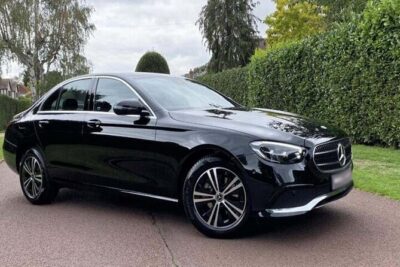
Pickup is part of the deal. The driver calls you and provides the license plate number and vehicle color, and you meet them in your hotel lobby or at the entrance at your address. If you don’t love waiting around outdoors, this is the kind of setup that keeps your morning calmer.
You’ll be in an air-conditioned vehicle with WiFi on board, plus bottled water and snacks. That sounds small, but on a day trip this length, it helps you avoid the low-energy spiral that usually hits mid-afternoon.
This tour is offered in English, and it uses a mobile ticket. The day is also run with a maximum of 16 travelers, which tends to keep the group flexible when someone needs an extra minute for a photo or the restroom.
Budapest in four hours: Parliament, Danube memorials, and Buda Castle views
Budapest is the star of the show here, with about 4 hours of guided time and key stops that cover both the riverfront and the hill views.
You start with the Soviet War Memorial, a reminder of how politics shaped the landscape. From there, you head to the Hungarian Parliament Building, one of the city’s most recognizable landmarks. Even if you’ve seen it in photos, it hits differently when you’re there in person and a guide puts the building in context.
Then comes one of the most memorable moments of the day: Shoes on the Danube Bank. This is the kind of memorial that makes you slow down, look closely, and absorb the meaning of what’s in front of you instead of treating it like another photo stop.
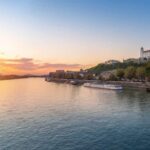
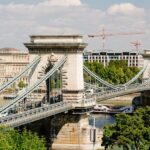
Next is the Chain Bridge—the classic link across the Danube, great for understanding how the city spreads and how the river divides and connects neighborhoods.
After that, you shift to Buda’s viewpoint zone with:
- St. Stephen’s Basilica (a major church landmark)
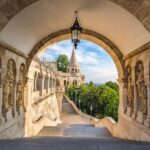
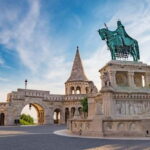
- Fisherman’s Bastion (famous terrace views)
- Church of Our Lady of Buda Castle (part of the castle district atmosphere)
Here’s the practical value of clustering these sites: you get the big-name sights plus a coherent walk from the civic river line up into the castle hill area. The drawback is obvious—4 hours goes quickly—so come prepared to move.
A good strategy: decide in advance which two or three places you want the longest photos at. Let the guide handle the rest, then use your free time for meals and extra wandering around the areas you liked best.
Bratislava in two hours: UFO Tower, castle core, and the old theater
Bratislava gets about 2 hours, so this portion is best thought of as a highlight sampler with a strong “old city” payoff.
You begin at Most SNP (UFO Tower), which is the standout skyline landmark people associate with Bratislava. Even if you don’t go up inside (the day schedule may not focus on that), it’s still the easiest way to get oriented.
From there, it’s on to Bratislava Castle, where the setting gives you instant perspective on why this town looks the way it does. The castle area is where the photos feel most natural, because you’re capturing the city from above.
Finally, you see the Slovak National Theatre (Historical Building). This is a great ending stop because it’s not just a view—it’s architecture that signals cultural life, not only politics or fortifications.
Two hours can be tight, but it’s a reasonable time slice if your goal is to understand Bratislava’s shape and atmosphere rather than exhaust it. If you like slower museum time, you’ll want a second visit. If you want orientation plus memorable sights, you’ll be happy with how the day wraps here.
Downriver to Budapest for the day

Why the guide style matters: Simeon and Paul make context stick
The quality leap on this tour comes from the guides—especially Simeon, and Paul also shows up as part of the guiding team on some days.
What I like about this setup is the balance between structure and freedom. The stops are explained with historical and sociological context, but you still get time to look around independently and not feel herded every two minutes. The best part is that the guidance isn’t only facts. It’s about connecting the buildings and memorials to real stories, so the city doesn’t feel like a checklist.
Simeon’s style stands out in how he talks about what feels authentic versus what feels overly touristy. That matters on a day trip because you only get so many hours. If you learn which corners are worth your attention—and where to eat or what to do during free time—you leave with more than photos.
There’s also a practical, human side. In past tours, the guides helped with questions patiently and offered flexible timing when needed. One tour description even notes that extra destinations could be added with no additional charge, depending on what you asked for. If you’re the type who likes to adjust the plan on the fly, that flexibility is a real value.
Food and timing: snacks help, but you still plan meals yourself
Meals are not included. That’s the trade-off for the tight schedule and the focus on sights.
The good news: you do get snacks and bottled water, which helps you avoid getting hungry at exactly the wrong time. Plus, the day includes guided stops and free time for exploring, eating, and buying souvenirs. In at least one account, the guide recommended where to eat for lunch and even suggested a coffee stop in Budapest, which is the kind of local guidance that saves you from guessing when you’re tired.
My advice: eat before you meet the driver. Then use the snacks strategically (not as a full meal). During free time in Budapest, pick one planned lunch spot rather than trying to shop around for 45 minutes.
Also, bring cash or a payment method for meals and souvenirs. Nothing in the tour details suggests the day covers more than snacks and drinks.
Value check: what $164.59 really covers
At $164.59 per person, the headline price looks reasonable once you break down what’s included versus what you’d pay for on your own.
Included basics that matter on a long day:
- Private transportation
- WiFi on board
- Air-conditioned vehicle
- Bottled water and snacks
- Photographer (extra help getting group shots or landmark photos)
- Small gift from the company
On top of that, the itinerary lists admission ticket free for the main Budapest and Bratislava segments. While you should still double-check the exact on-the-ground inclusions for your date, that tag is a strong value signal because ticketing is often what bloats day-trip costs.
What’s not covered is meals. So your true budget becomes: tour price + lunch/dinner + any optional add-ons you choose to pay for.
In my view, this tour is best value if you care about getting the big sights plus contextual storytelling without investing extra planning energy. If you’re already comfortable organizing buses, guides, and entry tickets yourself, you could replicate parts of the day—but you’d probably spend time figuring it out instead of enjoying the places.
Should you book this 3-capitals day trip?
Book it if:
- You want a first-timer overview of Budapest and Bratislava without the stress of transit planning.
- You like history that’s explained through the actual landmarks, including memorials along the Danube.
- You’re okay with a long day and moving efficiently between top sights.
Skip it (or consider another format) if:
- You hate tight schedules and want a slower, deeper pace in either city.
- You rely on meals being fully included and don’t want to manage lunch timing.
- You prefer fewer stops and more time in one neighborhood.
If you’re visiting Vienna and want one day to “get bearings fast” across the region, this is a practical way to do it—especially with a guide like Simeon shaping how the day feels.
FAQ
How long is the Vienna, Budapest and Bratislava day trip?
The duration is approximately 12 to 14 hours.
What is the meeting time and where do we meet?
The start time is 8:00 am. If pickup is included, the driver calls with the vehicle details, and you wait in the hotel lobby or at your address entrance.
How many travelers are on this tour?
The group size is capped at a maximum of 16 travelers.
Are meals included?
No. The tour includes snacks and bottled water, but meals are not included.
What sights are included in Budapest?
Key stops are Soviet War Memorial, Hungarian Parliament Building, Shoes on the Danube Bank, Chain Bridge, St. Stephen’s Basilica, Fisherman’s Bastion, and Church of Our Lady of Buda Castle.
What sights are included in Bratislava?
Key stops are Most SNP (UFO Tower), Bratislava Castle, and the Slovak National Theatre (Historical Building).
Is WiFi and transportation comfort included?
Yes. You get private transportation, an air-conditioned vehicle, and WiFi on board, along with bottled water and snacks.
What if the weather is poor?
The tour requires good weather. If it’s canceled due to poor weather, you’ll be offered a different date or a full refund.
More Tour Reviews in Vienna
- Vienna: Vivaldi’s Four Seasons Concert in Karlskirche
★ 4.7 · 14,951 reviews - Vienna: Schönbrunn Palace & Gardens Skip-the-Line Tour
★ 4.7 · 7,739 reviews - Vienna: Light of Creation Votive Church Immersive Light Show
★ 4.8 · 6,779 reviews - Vienna Spanish Riding School Guided Tour
★ 4.7 · 6,765 reviews - Vienna: Classical Concert in the World-Famous Musikverein
★ 4.6 · 6,673 reviews
Downriver to Budapest
- Budapest Day Trip from Vienna
★ 3.5 · 725 reviews - Budapest Small-Group Day Trip from Vienna
★ 5.0 · 545 reviews - Day trips from Vienna: Bratislava and Budapest with Guide
★ 4.7 · 306 reviews - From Vienna: Guided Day Trip to Budapest
★ 4.3 · 262 reviews - From Vienna: Budapest Small-Group Guided Day Tour
★ 4.8 · 195 reviews
Across to Bratislava
- From Vienna: Guided Tour to Bratislava with Speed Boat Ride
★ 4.2 · 1,404 reviews - Bratislava Day Trip from Vienna With Catamaran Cruise on Danube
★ 3.5 · 723 reviews - From Vienna: Bratislava Day Trip Like a Local
★ 4.1 · 528 reviews - Day trips from Vienna: Bratislava and Budapest with Guide
★ 4.7 · 306 reviews - DayTrip to Budapest and Bratislava, two capitals
★ 4.5 · 191 reviews
Just In: New Vienna Reviews


Bratislava Day Trips, compared.
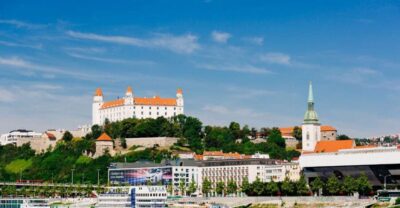 ★ 4.2From Vienna: Guided Tour to Bratislava with Speed Boat RideFrom $1111,404 reviews
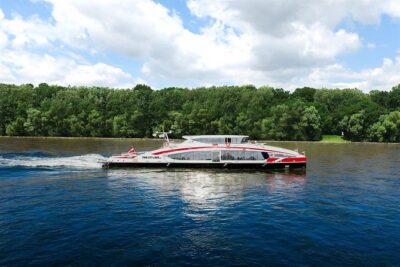 ★ 3.5Bratislava Day Trip from Vienna With Catamaran Cruise on DanubeFrom $115723 reviews
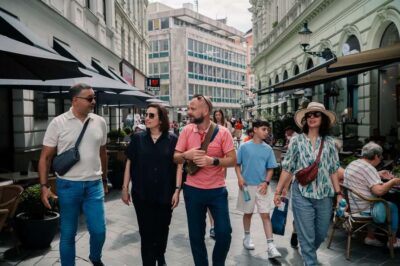 ★ 4.1From Vienna: Bratislava Day Trip Like a LocalFrom $77528 reviews
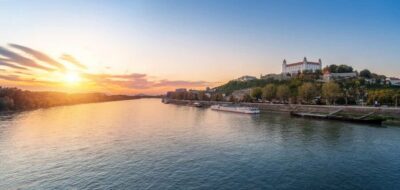 ★ 4.7Day trips from Vienna: Bratislava and Budapest with GuideFrom $197306 reviews
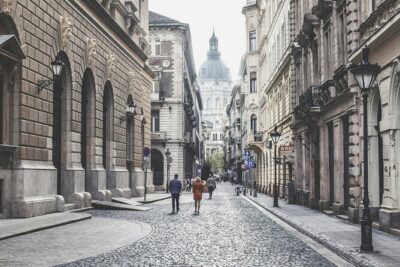 ★ 4.5DayTrip to Budapest and Bratislava, two capitalsFrom $228191 reviews
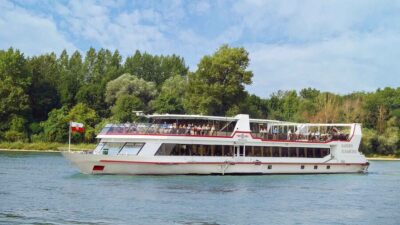 ★ 3.9From Vienna: Day Cruise to BratislavaFrom $116178 reviews
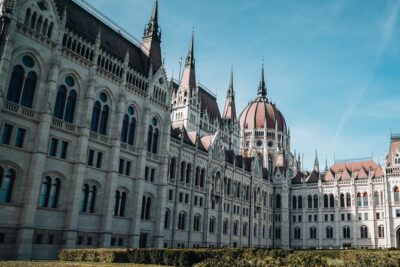 ★ 4.5Day Trip to Budapest and Bratislava From ViennaFrom $18096 reviews
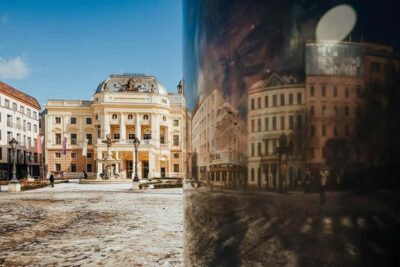 ★ 4.6Guided Bratislava & Devín Castle Tour via HainburgFrom $6888 reviews
Browse the lists this tour appears in