
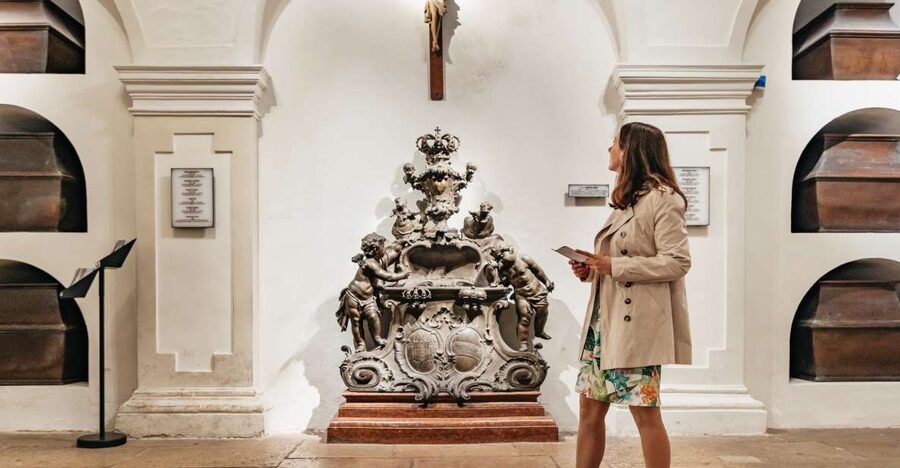
Reviewed · TICKETS
Vienna: Imperial Crypt Entrance Ticket
Four centuries of power sit under Vienna’s feet. In the Imperial Crypt (Kaisergruft), you walk through a vault system run for centuries by the Capuchin Order and see the burial place of major Habsburg rulers and family. I love the stunning craftsmanship of the sarcophagi and funerary monuments, and I also like how the visit stays serious and peaceful, not ghoulish. The main drawback to plan around: this is mostly a self-guided entrance ticket experience, and the on-site info may feel thin if you need lots of English explanation.
I also like that this isn’t a quick “photo stop.” You’re given time to read the materials, notice details, and take in how the crypt expanded over more than four centuries into a system of ten vaults. One more practical note: photography/video rules are strict, so set your expectations before you go.
For €17-ish value in Vienna, it’s hard to beat. This ticket gets you into a rare, central-city site where the Habsburg story is literally preserved in metalwork and monuments—and you can add a Combo Ticket to connect the crypt visit with the A Little Night Music concert afterward.
In This Review
- Key highlights at a glance
- Imperial Crypt Entrance Ticket: What You’re Actually Walking Into
- The Habsburg Tomb Rooms: Franz Joseph and Sisi Up Close
- Why the Design Feels So “Imperial”: Grand Rooms, Long History
- Your Visit Plan: How Long to Stay and What Helps
- Accessibility and Group Size: Small Group Comfort
- Combo Ticket: Adding A Little Night Music After the Crypt
- Price and Value: Is $17 Worth It?
- Who Should Book This Imperial Crypt Entrance Ticket?
- Should You Book the Imperial Crypt Entrance Ticket?
- FAQ
- How long does the Imperial Crypt visit take?
- Where is the Imperial Crypt located in Vienna?
- What will I see inside?
- Is the entrance ticket self-guided?
- Is the site wheelchair accessible?
- Are pets allowed?
- Can I bring luggage or large bags?
- Is video recording allowed?
- Is there a concert included with the ticket?
- What if I need to cancel?
Key highlights at a glance
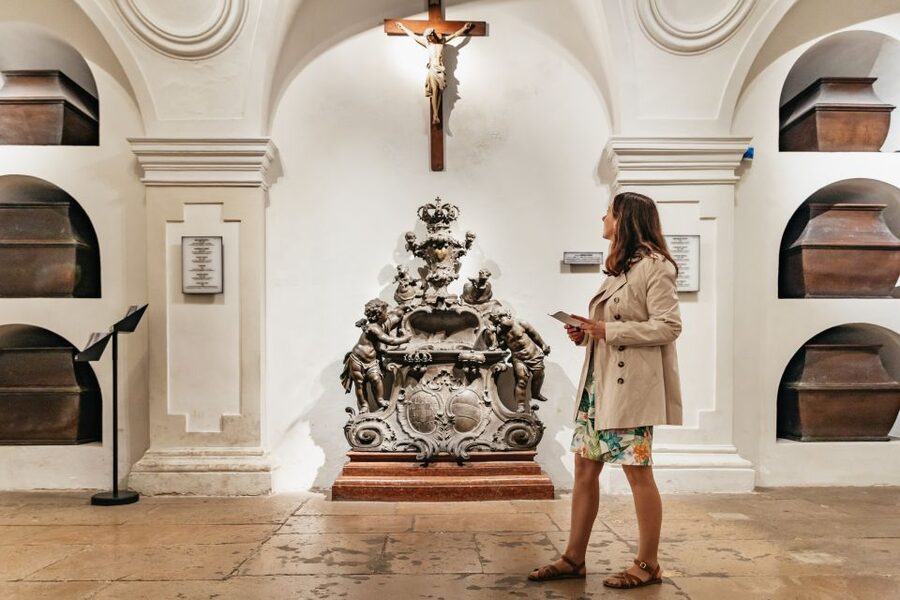
- Kaisergruft under the Capuchin Church: The entrance puts you right in the heart of the Capuchins’ vault system.
- Ten vaults, 150 Habsburg personalities: You’ll see sarcophagi, urns, and funerary monuments for a huge spread of the dynasty.
- Franz Joseph and Sisi are here: The “must-see” names sit among many other family burials.
- Rooms designed to project imperial power: The crypt spaces are meant to feel grand, not casual.
- Peaceful, respectful atmosphere: Expect solemn quiet more than spooky theatrics.
- Optional guided add-on: If you want more context, there’s an opportunity to book a guided tour for a small extra fee.
Worth a look before you book this Vienna tour:
- Vienna Kunsthistorisches Museum Day Admission Ticket★ 4.6 · 3,690 reviews
- Vienna: Tickets for Mozarthaus Vienna with Audio Guide★ 4.2 · 2,344 reviews
- Vienna: Skip-the-Line Entrance Ticket to the Danube Tower★ 4.5 · 2,303 reviews
- Tickets for the Albertina Exhibitions★ 4.7 · 2,126 reviews
Imperial Crypt Entrance Ticket: What You’re Actually Walking Into
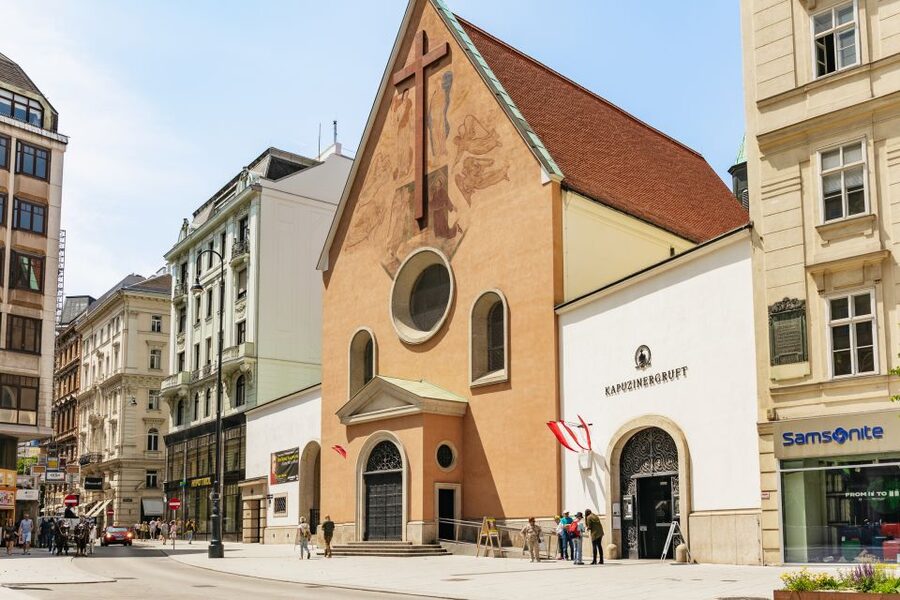
The Imperial Crypt (Kaisergruft) sits in central Vienna, right below the humble Capuchin church and monastery. That contrast matters. On the surface, the setting is modest. Under it, you find the burial infrastructure that supported one of Europe’s most powerful dynasties.
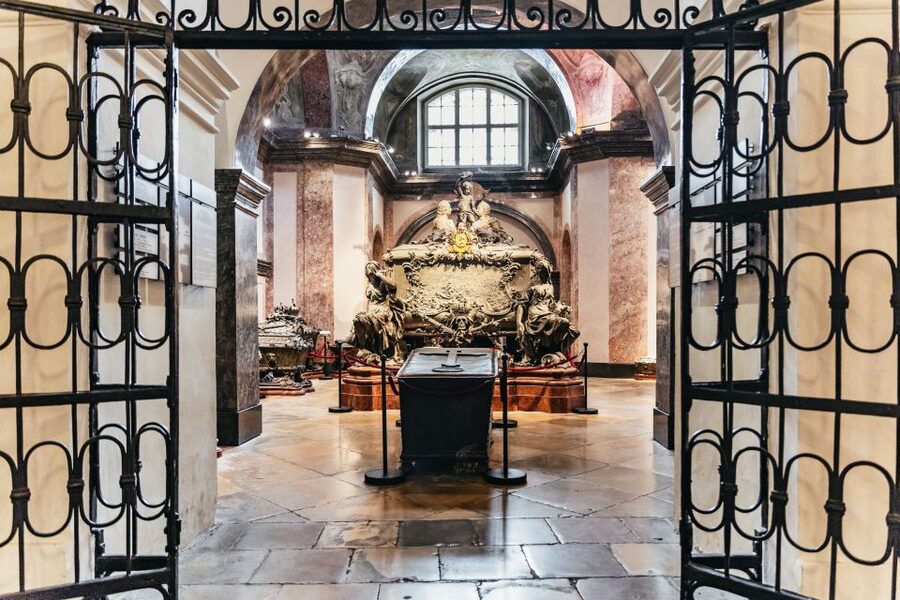
What you’re paying for with this entrance ticket is direct access to a vault system that’s been extended and modified for over 400 years. Today, it’s organized as ten vaults, holding the sarcophagi, urns, and funerary monuments of the Habsburg family. The key point for your expectations: this is not one single chamber. It’s a sequence of spaces, and the overall effect is like walking through how power wanted to be remembered.
You’ll also see that the custody still belongs to the Capuchin Order. That gives the visit a very grounded tone. People tend to slow down here, read, and look longer than they expect—one reason this site earns such consistently high ratings.
And yes, you’ll see the “headline” figures, but you’ll also notice there are many other family members represented. The crypt holds the mortal remains of about 150 Habsburg personalities, including Empress Maria Theresia, Emperor Franz Joseph, his wife Empress Elisabeth (known as Sisi), and their son Rudolph. If you’ve ever wondered how the Habsburgs stayed culturally present even after the empire’s political power faded, this is where you can feel that continuity.
The Habsburg Tomb Rooms: Franz Joseph and Sisi Up Close
If you come to Vienna thinking the Habsburgs are just names from textbooks, the Imperial Crypt has a way of correcting that. The monuments are built to be seen in person, with materials and detailing designed to signal rank, legitimacy, and dynasty.
Franz Joseph is one of the major anchors of the visit. Likewise, Empress Elisabeth (Sisi) draws constant attention—partly because she’s famous, and partly because the crypt handles her story with the same respect as the emperors. Empress Maria Theresia is another major presence, and she’s often a turning point for first-timers. Once you recognize how the crypt presents her, the rest of the family becomes more coherent. The same goes for Rudolph, whose place in the dynasty’s arc is hard to understand without being physically in the environment where the family is memorialized.
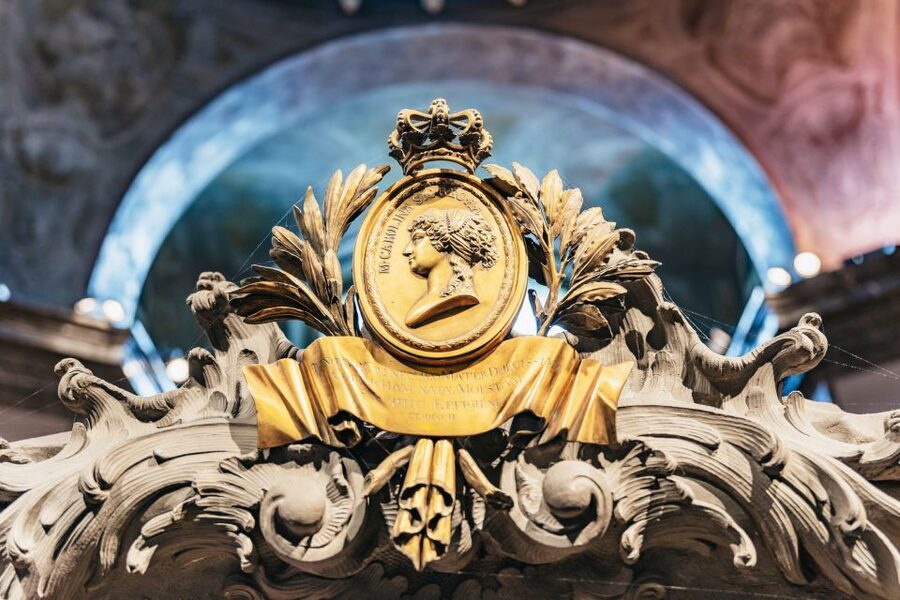
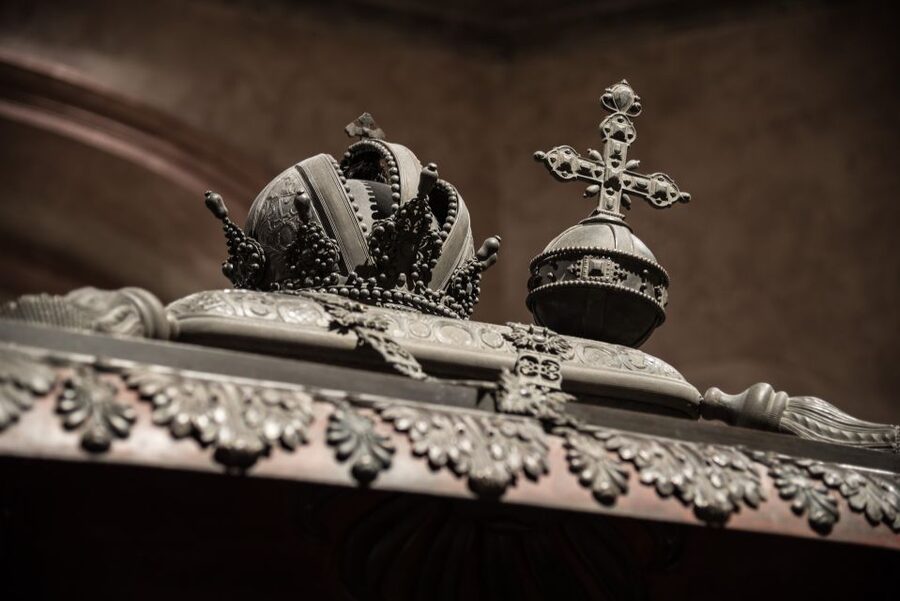
One detail I’d encourage you to watch for: the crypt’s metalwork and coffin artistry can look almost impossibly ornate. In some of the descriptions you’ll find references to richly made sarcophagi—materials and finishes that aim for majesty. Even if you’re not the type to study funerary art, you’ll still probably catch yourself lingering over the craftsmanship.
Also, the atmosphere stays respectful. It’s not trying to shock you. One reason people love this is that it’s a peaceful visit, not overcrowded, and not set up as a macabre gimmick.
Why the Design Feels So “Imperial”: Grand Rooms, Long History
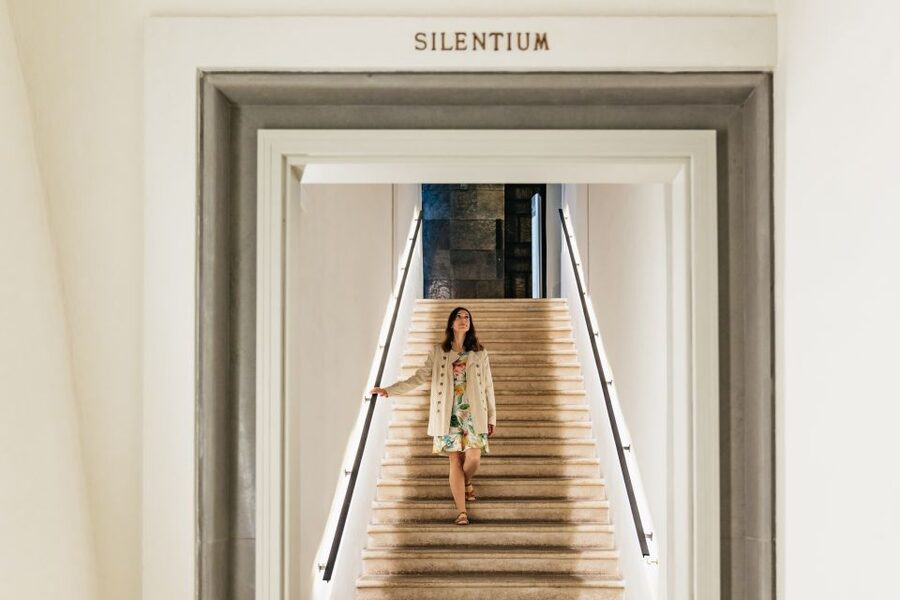
The Imperial Crypt isn’t just a holding place for remains. It’s a curated environment shaped over time. The information you’ll encounter explains that multiple extensions and modifications were made across four-plus centuries, and that the result is a vault system with rooms that evoke the dynasty’s power and grandeur.
That “imperial” feeling isn’t accidental. The crypt includes rooms that are meant to communicate status. For me, that’s the real educational value: you’re seeing how the Habsburgs wanted to be remembered—through scale, materials, and symbolic display.
You can also pick up how the crypt was designed and created. The visit notes the designers and creators behind the crypt’s rooms, which helps you see it as architecture and art, not just storage. It’s a reminder that dynastic history in Europe often involved craftsmen, sculptors, architects, and patrons working together to build lasting public meaning.
One interesting aside you might hear or read there: the hearts of the Habsburgs were not placed within the crypts, but inside the monastery. Even if that detail doesn’t change your visit plan, it adds context. It suggests the burial story is more layered than a single location can capture.
Your Visit Plan: How Long to Stay and What Helps
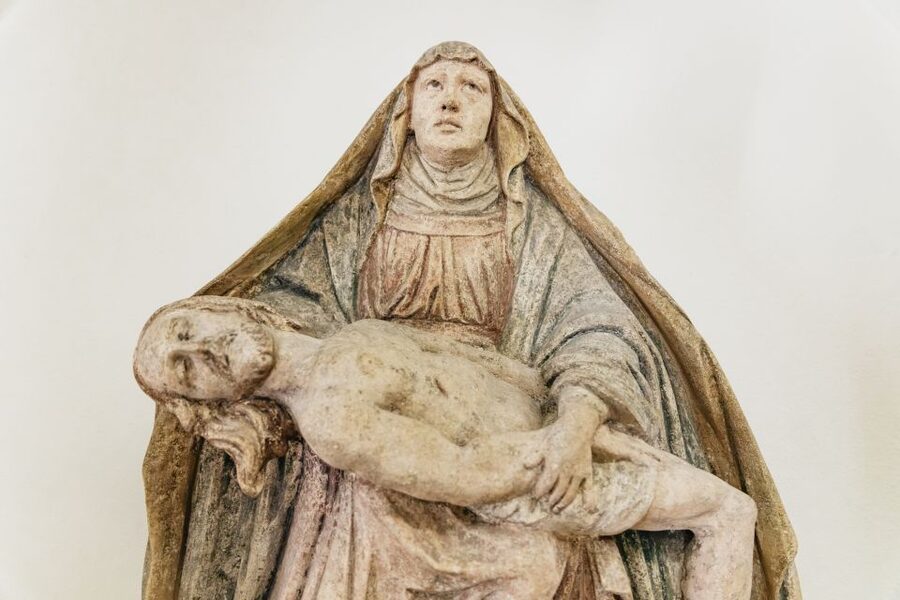
This ticket gives you a one-day window, with available starting times. But here’s the practical part: you don’t necessarily have to treat your booked time like a strict appointment. On-site guidance you might receive indicates that the time slot booked through the ticket can be flexible during the day—though the site closes at a set time.
So plan like this:
- Give yourself about 1 to 1.5 hours if you want to read and look slowly.
- If you’re more comfortable skimming, 30 minutes can work, but you’ll miss some of the context.
- If you’re a history or art person, expect to settle in longer.
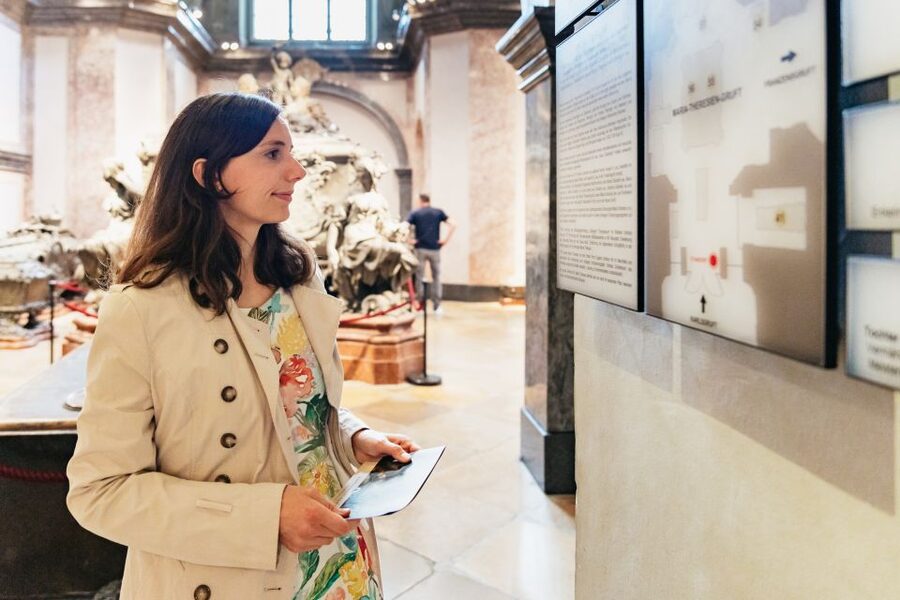
Because it’s self-guided, your own pace matters more than a fixed itinerary. That’s good news if you hate being rushed. It’s also why the materials on the walls and in the booklets matter a lot.
Dress and rules matter too. The visit doesn’t allow sleeveless shirts, and it also doesn’t allow pets or luggage/large bags. Video recording is not allowed. If you’re tempted to bring a big daypack, plan to travel light and use the lockers if you need them.
On that subject, some visitors note that toilets and lockers are available, with lockers operated via small coins that you get back. I’d bring the coin change if you can, or at least be ready to handle it on-site.
Finally, keep photography expectations realistic. The on-site guidance is about respecting the dead, and you should follow whatever restrictions are posted when you arrive.




Accessibility and Group Size: Small Group Comfort
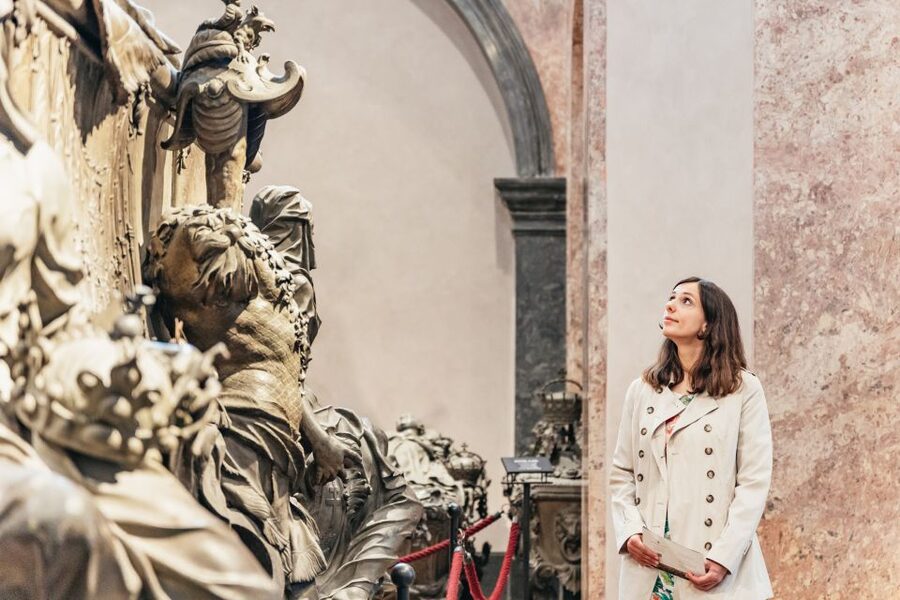
The experience is wheelchair accessible. That’s a big deal here, because many older European sites can be awkward to navigate. Also, the group size is limited to up to 9 participants. In practice, that small limit helps keep the crypt calm. You get room to step aside, read, and look without constant foot traffic in your face.
Even though it’s small, remember this is still a burial site. So you’ll be happier if you treat it like a museum that happens to be solemn, not a social attraction where you power through.
If you’re visiting with kids, teens, or anyone who doesn’t like quiet places, you might want to decide in advance. This is designed for respect and attention. It’s not meant to be a thrill ride.
Combo Ticket: Adding A Little Night Music After the Crypt
One of the nice value adds here is the Combo Ticket idea: you can visit the Imperial Crypt and then go to the “A Little Night Music” concert after. That pairing actually makes sense.
The crypt slows you down and gives you a sense of how the Habsburg era wanted to last. Then the concert shifts you into a Vienna rhythm—music and atmosphere—so your day doesn’t feel heavy all the way through.
If you’re planning your Vienna day around classic sights, this combo can help you avoid a common problem: doing one serious historical site and then wandering with no structure. The concert gives you a built-in next chapter.
Price and Value: Is $17 Worth It?
At about $17 per person, this ticket sits in the “good value” category for Vienna. Not because it’s cheap—but because the experience is unusual.
Think about what you’re getting:
- a rare burial place of a major European dynasty
- direct access to an extensive underground vault system
- the chance to see famous figures like Franz Joseph and Empress Elisabeth
- monuments and funerary design you can’t replicate elsewhere
If you only spend 30 minutes, you’ll still see the core tombs. But if you stretch your visit and read, the price feels even more reasonable. It becomes a one-site lesson in how power, art, and memory worked together in the Habsburg world.
And if you want a bit more context, there’s an optional guided tour mentioned as available at the ticket office for an extra fee. Reviews indicate the guided tour can last around an hour. I’d treat that as an add-on when you know your history interests are strong—or when English interpretation is what you need to enjoy the details.
Who Should Book This Imperial Crypt Entrance Ticket?
I’d book this if you:
- care about Habsburg history and want it in a physical, sensory way
- enjoy architecture and craftsmanship, not just famous names
- like calm, respectful sites where you can read at your own pace
- want a central Vienna stop that’s compact but meaningful
You might reconsider (or plan differently) if:
- you’re hoping for lots of narration in your preferred language throughout (the experience is primarily self-guided)
- you dislike solemn spaces or strict photo rules
- you need an easy, fast “tick the box” attraction without time for looking
This isn’t for everyone—and that’s okay. But if the Habsburgs or funerary art matter to you, it’s hard to imagine skipping it once you understand what’s down there.
Should You Book the Imperial Crypt Entrance Ticket?
Yes, with a simple condition: go with the right mindset. Treat it as a serious, art-and-history visit, not a quick sightseeing stop. If you do that, the $17 entrance ticket becomes an easy win—especially because the vault system holds the remains of so many Habsburg personalities and the tomb craftsmanship is the star.
If you know you’ll want more explanations, add the guided tour option if it’s available in English when you visit. And plan your timing so you’re not stressed by closing time. Give yourself an hour, keep your shoulders cool (no sleeveless shirts), follow the on-site respect rules, and you’ll leave with a very clear sense of how Vienna’s imperial story is preserved below the church.
FAQ
How long does the Imperial Crypt visit take?
The ticket is valid for 1 day, and most people spend roughly 30 minutes to 1.5 hours depending on how much reading and looking they do.
Where is the Imperial Crypt located in Vienna?
It’s in the city center of Vienna, directly below the Capuchin church and monastery.
What will I see inside?
You’ll see the Imperial Crypt vault system with sarcophagi, urns, and funerary monuments connected to the Habsburg rulers and family members. The crypt holds remains of about 150 Habsburg personalities across ten vaults.
Is the entrance ticket self-guided?
The included item is an entrance ticket. A guided tour option may be available at the ticket office for an extra fee, but the standard experience is not described as fully guided.
Is the site wheelchair accessible?
Yes, it is wheelchair accessible.
Are pets allowed?
No, pets are not allowed.
Can I bring luggage or large bags?
No, luggage or large bags are not allowed.
Is video recording allowed?
No, video recording is not allowed.
Is there a concert included with the ticket?
A combo ticket option can add a visit to the A Little Night Music concert after the crypt.
What if I need to cancel?
Free cancellation is offered up to 24 hours in advance for a full refund, and there’s also a reserve now & pay later option to keep plans flexible.
More Tickets in Vienna
- Vienna: Classic Ensemble Vienna in St. Peter’s Church Ticket
★ 4.7 · 4,819 reviews - Vienna Kunsthistorisches Museum Day Admission Ticket
★ 4.6 · 3,690 reviews - Vienna: Tickets for Mozarthaus Vienna with Audio Guide
★ 4.2 · 2,344 reviews - Vienna: Skip-the-Line Entrance Ticket to the Danube Tower
★ 4.5 · 2,303 reviews - Tickets for the Albertina Exhibitions
★ 4.7 · 2,126 reviews
More Tour Reviews in Vienna
- Vienna: Vivaldi’s Four Seasons Concert in Karlskirche
★ 4.7 · 14,951 reviews - Vienna: Schönbrunn Palace & Gardens Skip-the-Line Tour
★ 4.7 · 7,739 reviews - Vienna: Light of Creation Votive Church Immersive Light Show
★ 4.8 · 6,779 reviews - Vienna Spanish Riding School Guided Tour
★ 4.7 · 6,765 reviews - Vienna: Classical Concert in the World-Famous Musikverein
★ 4.6 · 6,673 reviews
Just In: New Vienna Reviews



Tickets, compared.
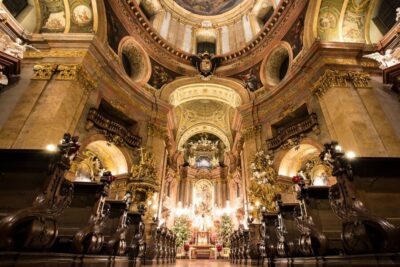 ★ 4.7Classic Ensemble Vienna in St. Peter’s Church TicketFrom $454,819 reviews
 ★ 4.6Vienna Kunsthistorisches Museum Day Admission TicketFrom $253,690 reviews
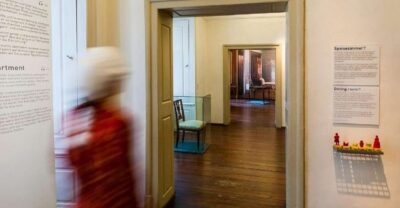 ★ 4.2Tickets for Mozarthaus Vienna with Audio GuideFrom $182,344 reviews
 ★ 4.5Skip-the-Line Entrance Ticket to the Danube TowerFrom $212,303 reviews
 ★ 4.7Tickets for the Albertina ExhibitionsFrom $232,126 reviews
 ★ 4.6Sigmund Freud Museum TicketFrom $181,668 reviews
 ★ 4.5St. Stephen’s Cathedral & Dom Museum Wien TicketsFrom $341,652 reviews
 ★ 4.6Haus des Meeres Entry TicketFrom $271,260 reviews