
Reviewed · HOFBURG & SISI TOURS
Vienna: Imperial Treasury in the Hofburg Palace
Crown jewels and strange relics, all in one room. In the Swiss Wing of Vienna’s Hofburg Palace, the Imperial Treasury (Schatzkammer) lays out centuries of Habsburg power in glass cases and dark, dramatic light.
What I like most is how the display mixes royal regalia with everyday human stories, like Empress Elisabeth’s jewelry surviving inside a vault of empire. You’ll also see both the political and religious sides of the Habsburg world without needing a PhD.
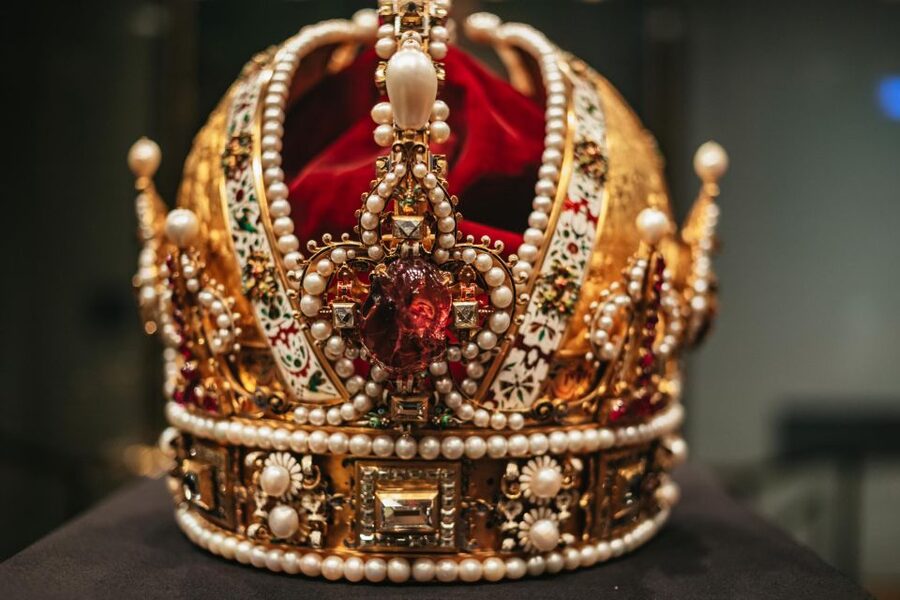
Two things I really love: the Austrian Imperial Crown is breathtaking in person, and the mix of gemstones and glittering symbolism makes even a short visit feel packed. I also appreciate the way legendary items like the Holy Lance or the Holy Grail agate bowl add surprise, not just shiny-thing decoration.
One possible drawback: plan for a bit of friction around tickets. A printed voucher is required, and some visitors report waiting in line to exchange codes.
In This Review
- Key highlights to watch for
- Why the Hofburg’s Swiss Wing matters more than you think
- How long this visit really takes (and how to not rush it)
- The power display: the Austrian Imperial Crown and Holy Roman regalia
- Gemstones with backstories: Elisabeth, emeralds, and jewelry you can feel
- Golden Fleece, Burgundy pieces, and the King of Rome’s cradle
- Relics and the stories that cling to them: Holy Lance, Holy Grail, unicorn horn
- Audio guide and live guidance: how to make the labels matter
- Ticket lines, printed vouchers, and the small-group setup
- What to watch for inside the museum (so you don’t get lost)
- Who this experience is best for
- Should you book the Imperial Treasury in the Hofburg?
- FAQ
- Where does the Imperial Treasury visit start?
- How much does it cost?
- How long is the visit?
- What’s included in the ticket price?
- Is an audio guide included?
- Is a guided tour included?
- Do I need to bring a printed voucher?
- Is the attraction wheelchair accessible?
- Is it suitable for kids and teens?
- How big are the groups?
Key highlights to watch for
- Austrian Imperial Crown: one of the most beautiful crowns in the world, displayed with the surrounding regalia.
- Holy Roman Empire objects: you’ll get the connection between crowns, authority, and ceremony.
- Empress Elisabeth jewelry: parts of her original jewelry are on view, which makes the gemstones feel personal.
- Giant gemstones: including the largest cut emerald in the world.
- Relics and legends: Holy Lance, Holy Grail agate bowl, and even a unicorn horn.
- A visit length that fits real life: expect around an hour to an hour and a half if you move steadily.
Deeper into the Habsburgs' winter palace
- Vienna: Skip-the-Line Sisi Museum, Hofburg and Gardens Tour★ 4.8 · 5,918 reviews
- Vienna: Hofburg and Empress Sisi Museum Guided Tour★ 4.7 · 1,460 reviews
- Vienna: Skip-the-Line Hofburg and Empress Sisi Museum Tour★ 4.8 · 801 reviews
- Vienna: “Sisi’s Amazing Journey” Virtual Reality Experience★ 4.5 · 673 reviews
Why the Hofburg’s Swiss Wing matters more than you think
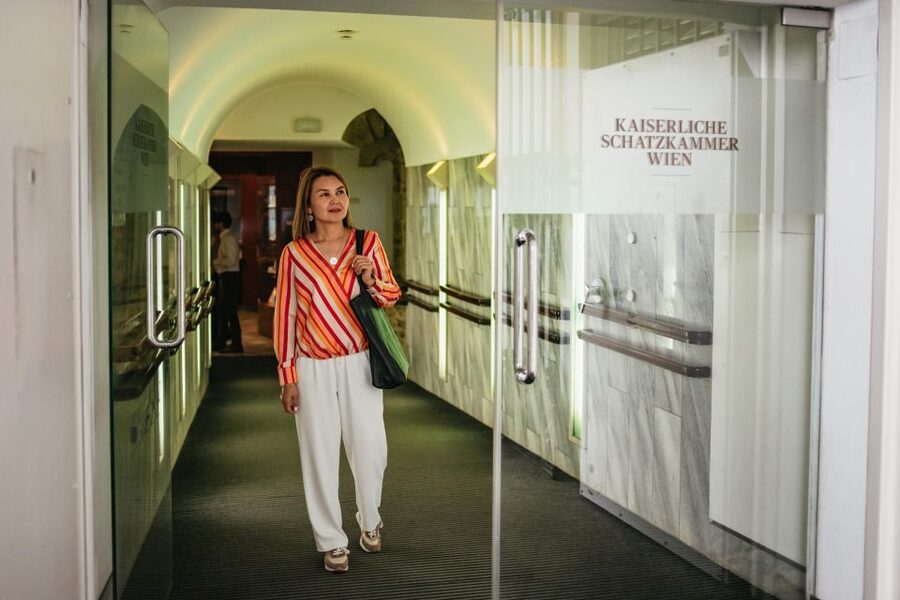
The Imperial Treasury isn’t just a random museum stop inside the Hofburg. It’s in the palace’s oldest area, the Swiss Wing, and that setting changes how you feel about what you’re seeing. You’re not walking through a modern gallery trying to match labels to objects. You’re walking through a royal space built for power and protection, where treasure was meant to feel untouchable.
The overall experience also has a clear rhythm. You start with the “big” authority pieces, then you move into jewels, then into smaller, stranger objects—religious relics and legendary items included. That structure helps because the collection is huge. It would be easy to get lost. Here, the rooms and cases guide you toward a sensible path.
And yes, the star is the bling: crowns, diamonds, and show-stopping stones. But what keeps this place interesting is the constant shift between politics and personal identity. A crown is a system of rule. Jewelry is also a system of identity. Relics add a third system: divine approval.
How long this visit really takes (and how to not rush it)
The activity is sold as a 1-day experience, but the actual museum time is what matters. Most people can see the highlights in about an hour, and many manage 90 minutes if they stop and read. The glass cases hold enough detail that you can’t just glance and move on unless you’re doing the speed-run.
Here’s a practical approach: give yourself time in two passes. On your first pass, focus on the centerpieces—crown jewels, the biggest gemstone pieces, and the most famous relic-like objects. On a second pass (if you have the energy), slow down for the jewelry details and the smaller sections that tell specific stories.
Lighting can be dim in this kind of treasury display style, and one review specifically flagged that the light made some items harder to see clearly. If you’re sensitive to that—or you have trouble reading tiny labels—your best defense is simple: lean in close for the key objects and don’t plan to read every label.
The power display: the Austrian Imperial Crown and Holy Roman regalia
The Austrian Imperial Crown is the kind of object that makes you stop walking. Even if crowns aren’t your thing, you’ll feel the craftsmanship and the sheer intention behind it. It’s displayed with regalia that connects directly to the Holy Roman Empire story, so you see more than just one crown sitting there for photography.
What I like about this section is the way it makes authority visible. The collection doesn’t treat monarchy as abstract history. It shows how ruling families used symbols—metal, stones, ceremonial pieces—to make power look permanent.
A detail that helps you read the room: look at how pieces are grouped. The crown isn’t isolated. It’s presented like the centerpiece of a system, with surrounding objects that reinforce the message: legitimacy is crafted, worn, protected, and performed.
If you’re coming with kids or teens, this is also the section most likely to hook them fast. It’s the clearest “wow” moment, and it sets you up to enjoy the rest.
Gemstones with backstories: Elisabeth, emeralds, and jewelry you can feel
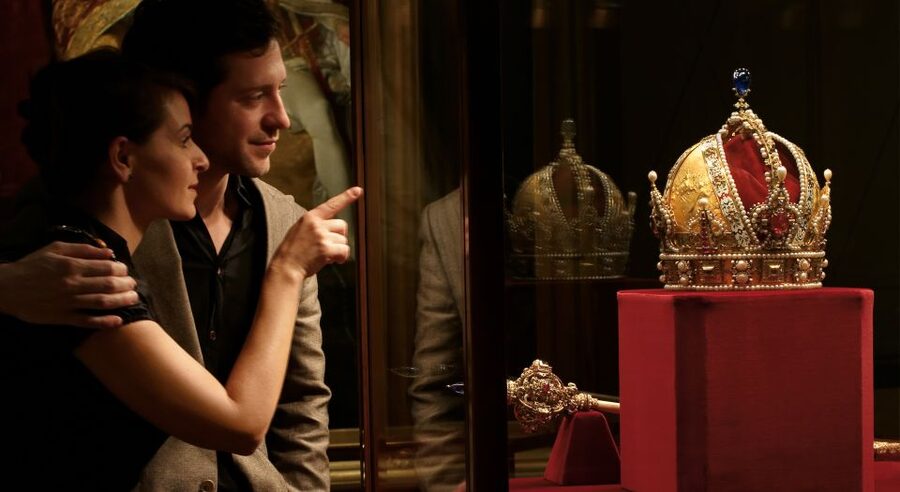
The treasury’s jewel rooms are where the visit goes from impressive to unexpectedly emotional. You get parts of the original jewelry of Empress Elisabeth (Sisi), and that detail changes the tone. Instead of gemstones feeling like generic luxury, they become connected to a real person.
And then there are the stones that pull you forward before you even read a label. The display includes one of the largest emeralds in the world, described as the largest cut emerald in the world. That’s the type of gemstone that looks almost unreal behind glass—too saturated, too bright, too precise.
The collection also points out that the Habsburgs didn’t just own jewels; they owned a whole vocabulary of display. Jewelry becomes message-making: wealth, status, continuity, and family identity. When you’re looking closely, you start spotting why court jewelry mattered so much in an era where your appearance could signal your position instantly.
Practical tip: don’t try to photograph everything in this section. Pick a few stones and crown details. Then spend your time reading what you actually care about—especially anything tied to Elisabeth.



Golden Fleece, Burgundy pieces, and the King of Rome’s cradle
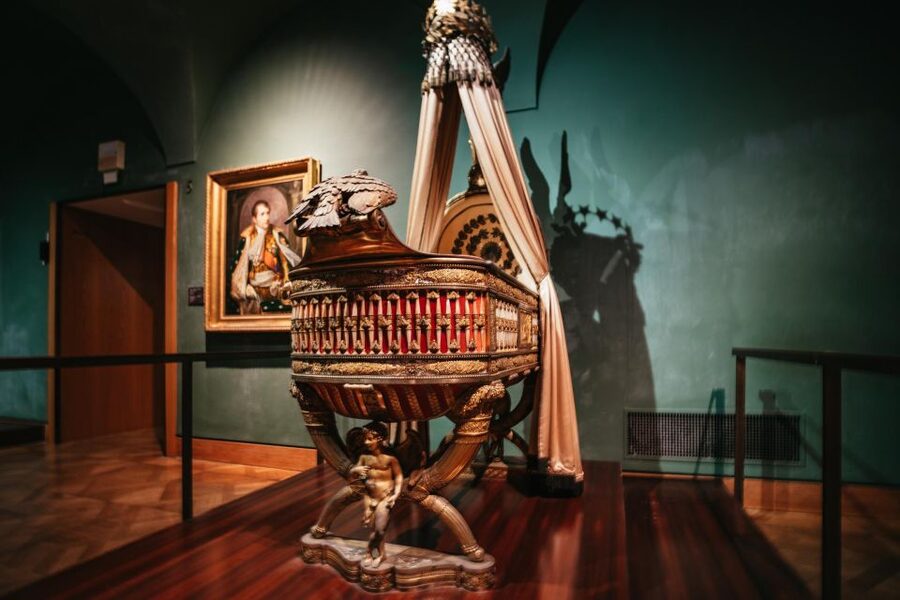
Not every treasure here is built for spectacle. Some objects are fascinating because they connect to institutions and historical crosscurrents.
You’ll find the treasure of the Order of the Golden Fleece—a key symbol for elite chivalric identity. Even without deep background, you’ll likely sense why this mattered: it’s a visible marker of belonging, honor, and political alignment.
There’s also a section tied to 15th-century Burgundy, which adds a sense that the Habsburgs weren’t working in isolation. They moved through Europe’s networks—through marriage, alliances, and inheritance—collecting objects along the way.
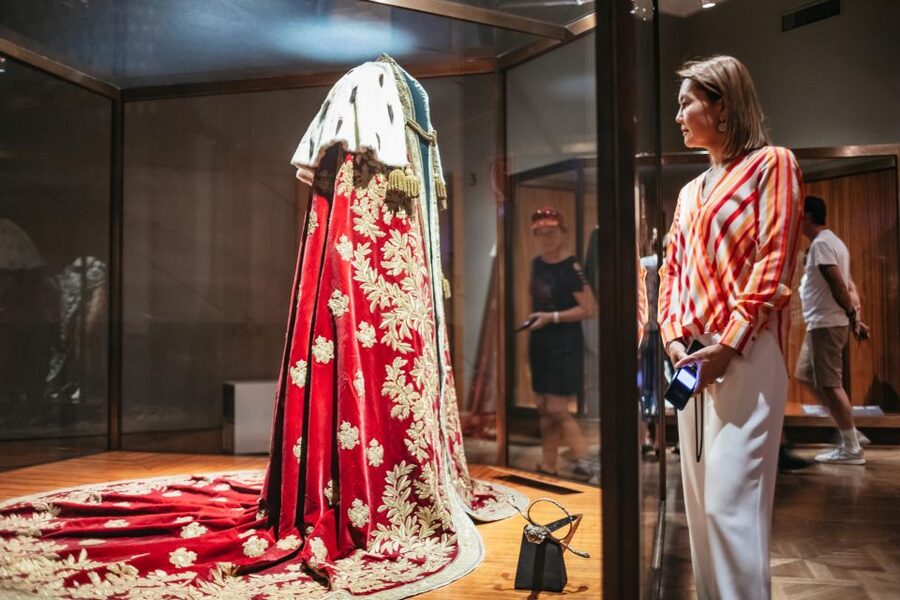
And one detail that surprised me as a visitor type: the cradle of the King of Rome (Napoleon II). That single object forces a bigger thought. This treasury isn’t only medieval and baroque grandeur. It holds a later layer of European upheaval and dynastic claims, too. In other words, the collection spans different eras of who considered themselves legitimate rulers.
Relics and the stories that cling to them: Holy Lance, Holy Grail, unicorn horn
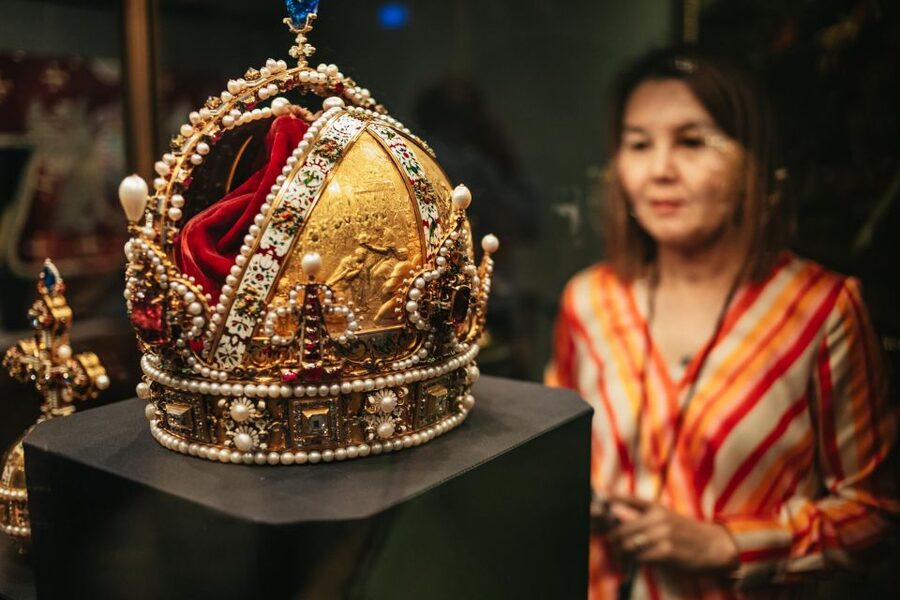
This is where the Imperial Treasury gets fun. You’re not only looking at regalia and jewelry—you’re also seeing relic-like objects and legendary items that have been part of European imagination for centuries.
The highlights include:
- the Holy Lance from the 8th century
- the world’s largest agate bowl, known as the Holy Grail
- the horn of a unicorn
Even if you treat these legendary objects as symbolism rather than literal history, they still do something important in the display: they show how belief, politics, and wealth intertwined. In a court treasury, a relic isn’t just spiritual. It can also be used to legitimize authority, create a public story, and turn faith into something you can point to.
What to do here: don’t rush. Spend a minute looking at how the museum presents each item and what surrounds it. These objects can feel like they belong to myths, but the setting makes them feel like curated state artifacts—treated with the same seriousness as crowns.
Audio guide and live guidance: how to make the labels matter
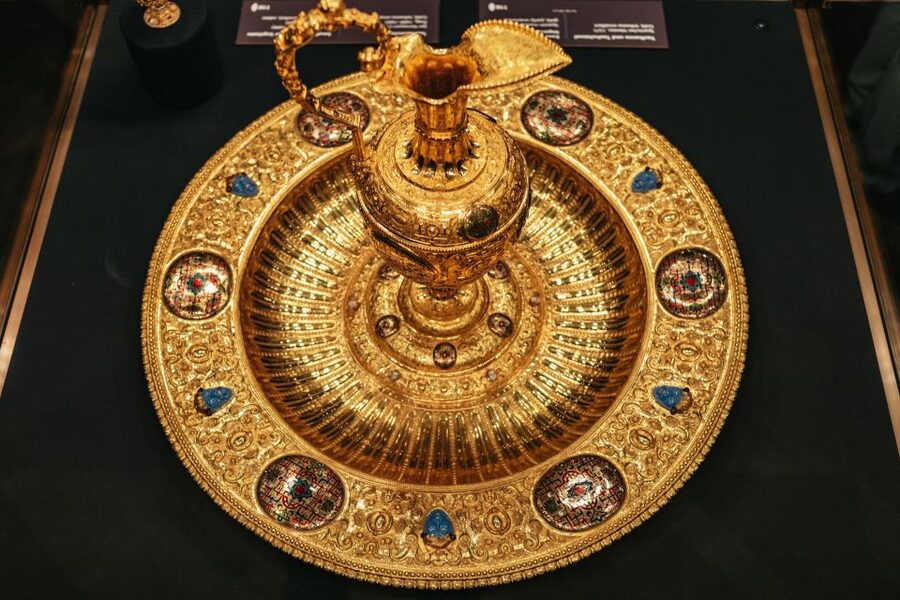
The ticket includes entry, but an audio guide is not included in the basic price. Still, this is one of those museums where an audio option can seriously upgrade your experience—especially if you like context.
Some people recommend the audio guide because it gives detailed information, but there’s a practical trade-off: if you listen to everything carefully, it can take longer. One visit length estimate floating around is that full listening can stretch the experience to hours, while a highlight pass can still land around an hour.
If you prefer human interaction, you can come with your own guide. And in the kinds of guided setups that exist around this museum, I’ve seen positive mentions of specific guides like Petee and Alex for explaining major figures such as Franz Joseph and Sisi. If you’re going with a guide, look for someone who can connect objects to people, not just list names.
My rule for this museum: use the audio (or a guide) to choose your reading path. Let someone else explain what matters, so you can focus your eyes on the pieces that have the strongest story.
Ticket lines, printed vouchers, and the small-group setup
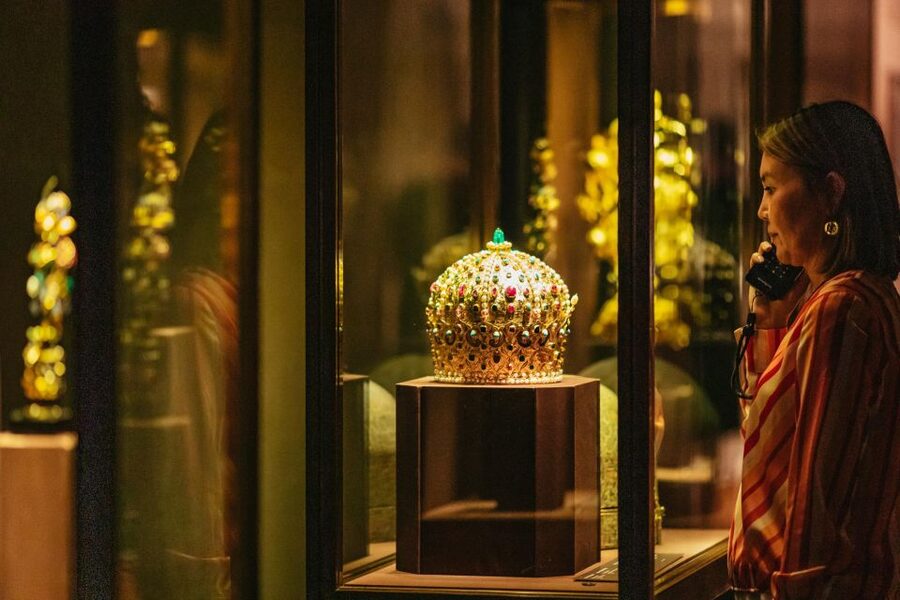
The price is $18 per person, and the value depends on how you like to travel. If you want a straightforward ticket-and-walk-through visit, it’s a solid value because the collection is dense and designed for focused viewing. You’re not paying for a long day on a bus. You’re paying for entry into one of Vienna’s signature “treasure vault” experiences.
A couple of realities to plan for:
- You’ll need a printed voucher. If you arrive without it, expect some extra stress while you sort it out at the counter.
- Even with a reservation, some visitors report exchanging codes at a ticket counter and standing in a line.
The group size is small, limited to 10 participants. That’s a big plus in a museum like this, because the rooms are better when you don’t have 30 people clustering around every case. You’ll generally get a more breathable experience, with space to stop and stare.
What to watch for inside the museum (so you don’t get lost)
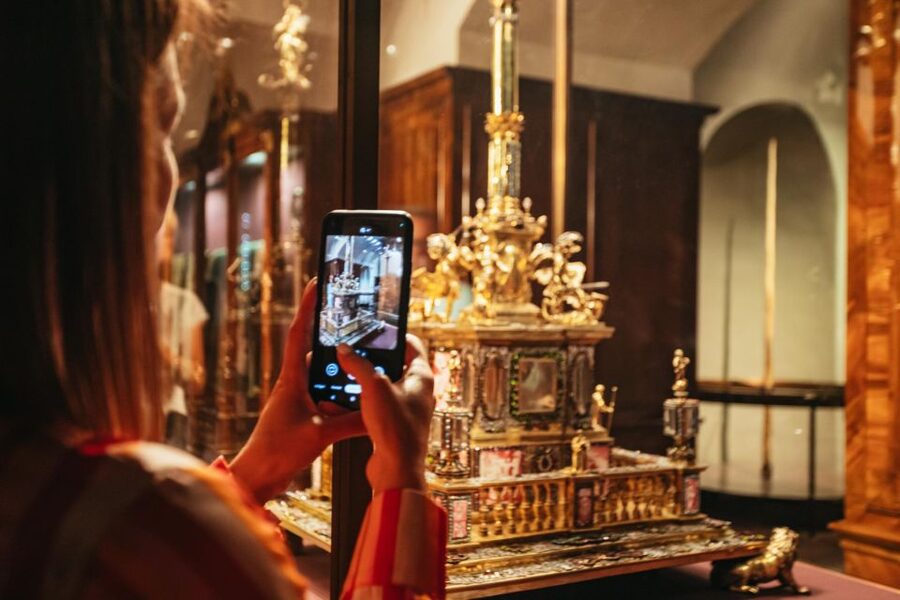
This collection is well organized enough to navigate, but the palace layout around it can be confusing at first glance. One reviewer even called out that the layout felt confusing until they figured it out, and others mention ticketing direction can be unclear once you arrive in the Hofburg area.
Your best strategy is simple:
- Decide what your must-sees are before you go (for example: the Austrian Imperial Crown, Elisabeth’s jewelry, the biggest emerald, and one major legend/relic like the Holy Grail).
- Keep moving until you’ve found your first couple of targets.
- Then slow down and read.
Also, don’t overlook the “less obvious” items. One set of notes highlights things like chamberlains’ keys and tabards as being surprisingly interesting. Those smaller objects help connect the treasury to daily court life—people wore symbols, carried authority, and used ceremonial gear as part of governance.
Who this experience is best for
You’ll probably love this if:
- you want royal and religious artifacts in one compact visit
- you enjoy seeing how power and faith were visually represented
- you like high-impact objects where a short time still feels meaningful
You might not love it as much if:
- you hate dim lighting and prefer bright, open galleries
- you need lots of space and long strolling time (this place is built for careful looking, not wandering)
- you want an all-in-one guided narrative included in the price (a guided tour is not included)
Should you book the Imperial Treasury in the Hofburg?
If your time in Vienna is limited, this is one of the best bets for a concentrated, high-impact museum hit. For $18, you’re getting access to a standout collection inside a real palace setting, with enough variety—crowns, gemstones, orders, and relics—to keep your attention for an hour or so.
I’d book it if you’re the kind of traveler who likes iconic objects you can point to later in other parts of Vienna. Seeing the imperial jewelry makes a lot of palace and historical context suddenly feel more concrete. And if you’re the planning type, bringing a printed voucher and choosing your must-sees ahead of time will help you dodge most of the common annoyances.
If you want a simple visit with minimal thinking, buy your entry and go straight for the crown and the biggest jewels. If you want deeper meaning, add an audio guide or bring a guide, then let the stories steer your eyes.
FAQ
Where does the Imperial Treasury visit start?
It starts at the Swiss Wing in the Vienna Hofburg Palace.
How much does it cost?
The price listed is $18 per person.
How long is the visit?
The experience is set for 1 day. Typical time inside is about one to one and a half hours if you focus on the highlights.
What’s included in the ticket price?
The ticket includes the entrance ticket.
Is an audio guide included?
An audio guide is not included.
Is a guided tour included?
A guided tour is not included. You can come with your own guide.
Do I need to bring a printed voucher?
Yes, a printed voucher is required.
Is the attraction wheelchair accessible?
Yes, it is wheelchair accessible.
Is it suitable for kids and teens?
Children and young people under 19 generally enjoy free admission.
How big are the groups?
It’s a small group, limited to 10 participants.
More Tour Reviews in Vienna
- Vienna: Vivaldi’s Four Seasons Concert in Karlskirche
★ 4.7 · 14,951 reviews - Vienna: Schönbrunn Palace & Gardens Skip-the-Line Tour
★ 4.7 · 7,739 reviews - Vienna: Light of Creation Votive Church Immersive Light Show
★ 4.8 · 6,779 reviews - Vienna Spanish Riding School Guided Tour
★ 4.7 · 6,765 reviews - Vienna: Classical Concert in the World-Famous Musikverein
★ 4.6 · 6,673 reviews
Inside the Hofburg and Sisi's Rooms
- Vienna: Skip-the-Line Sisi Museum, Hofburg and Gardens Tour
★ 4.8 · 5,918 reviews - Vienna: Hofburg and Empress Sisi Museum Guided Tour
★ 4.7 · 1,460 reviews - Vienna: Skip-the-Line Hofburg and Empress Sisi Museum Tour
★ 4.8 · 801 reviews - Vienna: “Sisi’s Amazing Journey” Virtual Reality Experience
★ 4.5 · 673 reviews - Vienna: Imperial Treasury & New Hofburg Palace Combo Ticket
★ 4.3 · 614 reviews
Just In: New Vienna Reviews





Hofburg & Sisi Tours, compared.
 ★ 4.7Hofburg and Empress Sisi Museum Guided TourFrom $561,460 reviews
 ★ 4.8Skip-the-Line Hofburg and Empress Sisi Museum TourFrom $55801 reviews
 ★ 4.5“Sisi’s Amazing Journey” Virtual Reality ExperienceFrom $14673 reviews
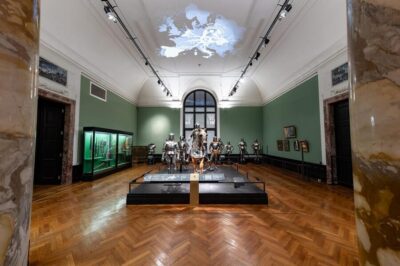 ★ 4.3Imperial Treasury & New Hofburg Palace Combo TicketFrom $40614 reviews
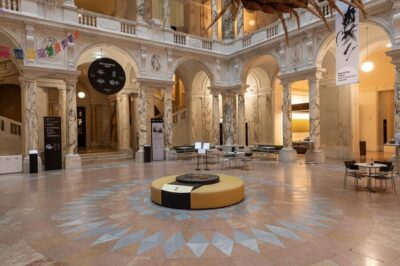 ★ 4.1New Hofburg Palace Audio-Guided Tour & Entry TicketFrom $27566 reviews
 ★ 4.5Skip-the-Line Sisi Museum, Hofburg and Gardens Tour ViennaFrom $57449 reviews
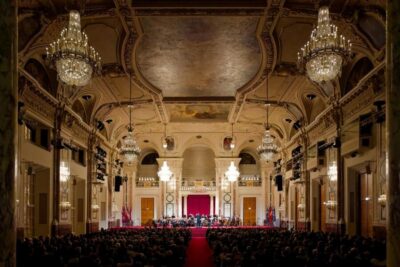 ★ 4.5Concert Tickets for Vienna Hofburg OrchestraFrom $63330 reviews
 ★ 4.7Hofburg Palace and Sisi Museum Skip-the-Line TourFrom $249223 reviews
Browse the lists this tour appears in