
Reviewed · KUNSTHISTORISCHES & ART MUSEUMS
Vienna: mumok Museum of Modern Art Entry Ticket
Modern art in a basalt cube sounds unusual. mumok turns that idea into a real outing: you get a world-class modern art museum inside Vienna’s MuseumsQuartier, spread across 4,800 m². I love the sheer architecture-as-art factor, and I also like the way the collection moves across Pop Art, Fluxus, Conceptual Art, and Vienna Actionism, with film and media in the mix.
Your main consideration: there’s a lot here, and some people may find certain temporary exhibitions feel lighter than they hoped. Since your ticket is self-directed (no included guide), you’ll want to pace yourself and make sure you actually line up at least one special exhibition you care about.
In This Review
- Key things to know before you go
- Where mumok fits in Vienna’s museum world
- The basalt cube: part museum, part experience design
- A simple 1-day plan that actually works on your feet
- Block 1: Orientation and the permanent collection starter hit
- Block 2: Pick one theme inside the temporary exhibitions
- Block 3: Use the museum tools—programs, library, and café
- Permanent collection: how to look at Pop, Fluxus, and Actionism without getting lost
- Temporary exhibitions: get value by choosing well, not by chasing everything
- Interactive programs for adults and kids: a built-in rhythm
- Price and value: is $15 worth it?
- Practical tips for planning your mumok day
- Who should book this ticket?
- Should you book mumok for your Vienna day?
- FAQ
- What is included in the mumok entry ticket?
- How long is the visit valid for?
- Where is mumok located?
- When is mumok closed?
- Is the museum free for children and young people?
- Are students or seniors eligible for reduced tickets?
- Are guided tours included with the entry ticket?
- Is mumok wheelchair accessible?
- Is food included with the ticket price?
Key things to know before you go
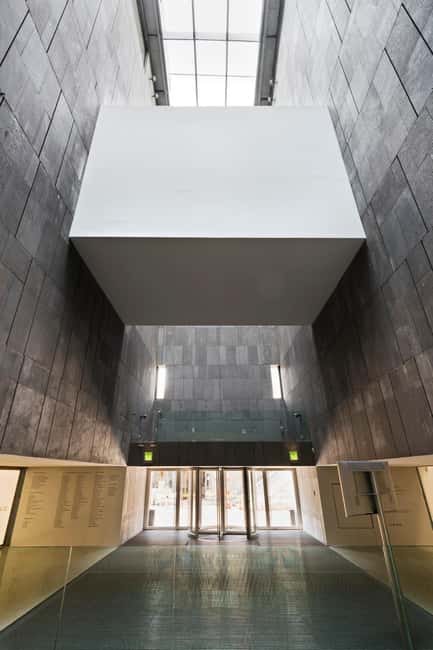
- Basalt cube setting: A dark-gray, cube-shaped building makes the first half of your visit feel like part of the show.
- Huge gallery space (4,800 m²): Plenty of room to wander without feeling forced into one rushed loop.
- Big-name modern and contemporary artists: You’ll see works linked to Warhol, Picasso, Yoko Ono, and VALIE EXPORT.
- Temporary exhibitions change the feel: Plan to catch at least one special exhibition during your 1-day window.
- Programs for adults and children: mumok isn’t just for silent art stares; it has educational activities built in.
- Café and library on site: Easy way to reset without leaving the MuseumsQuartier area.
Cool galleries for a grey Vienna afternoon
- Tickets for the Albertina Exhibitions★ 4.7 · 2,126 reviews
- Combo Ticket: Kunsthistorisches Museum & Imperial Treasury★ 4.7 · 785 reviews
- Skip the Line: Kunsthistorisches Museum Vienna Entrance Ticket★ 4.5 · 466 reviews
- Leopold Museum Vienna Entrance Ticket★ 4.5 · 440 reviews
Where mumok fits in Vienna’s museum world
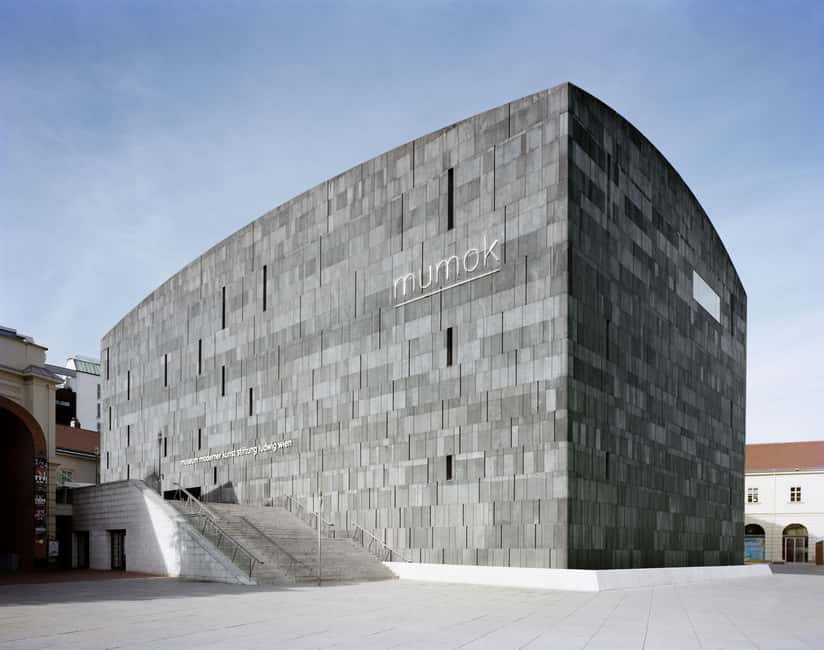
If you’re already doing Vienna’s museum circuit, mumok is a smart pivot. It’s not trying to compete with palaces or baroque churches. Instead, it gives you modern and contemporary art in a setting that feels intentionally bold. The museum sits right in MuseumsQuartier, the big cultural complex where you can stack museums, cafés, and people-watching without trekking across town.
The standout visual is the building itself: a dark-gray basalt cube that rises at the heart of the quarter. It’s not a background. It’s an object lesson in modern design, and it helps you shift your mindset the moment you arrive—less “quiet monuments,” more “ideas in motion.”
And the museum’s role isn’t frozen in time. Exhibitions and programming evolve, so even if you’ve read about mumok before, your visit can still feel different on the day you go. That matters if you’re trying to get value out of a single entry ticket.
The basalt cube: part museum, part experience design
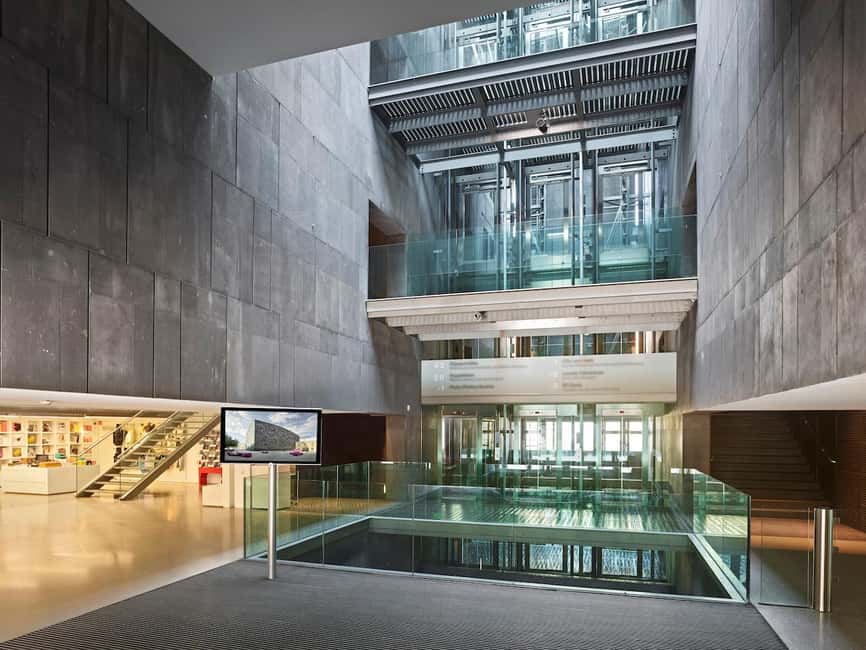
First-time visitors often underestimate how much the architecture shapes the visit. With mumok, the building is a statement: a basalt cube with 4,800 m² of galleries. That scale means you’re not stuck in a tiny maze of rooms. You can move, reorient, and choose where you want to focus.
Here’s the practical payoff: the cube structure makes it easier to pick a direction and settle in for a while. I like museums where you can do a “headlines first” approach—get oriented fast, then decide what to slow down for. mumok supports that style of visit.
Also, because it’s in MuseumsQuartier, you’re not trapped into only museum time. If you need a break, the area around the museum works well for a quick reset before you go back in. You’ll find that helpful with modern art, which often asks for a bit more patience and second looks.
A simple 1-day plan that actually works on your feet
Your ticket is valid for 1 day, so think of this as a flexible visit rather than a timed tour. Since starting times can vary based on availability, pick a slot that matches your energy level. Then build a visit around three “blocks” instead of trying to see everything.
Block 1: Orientation and the permanent collection starter hit
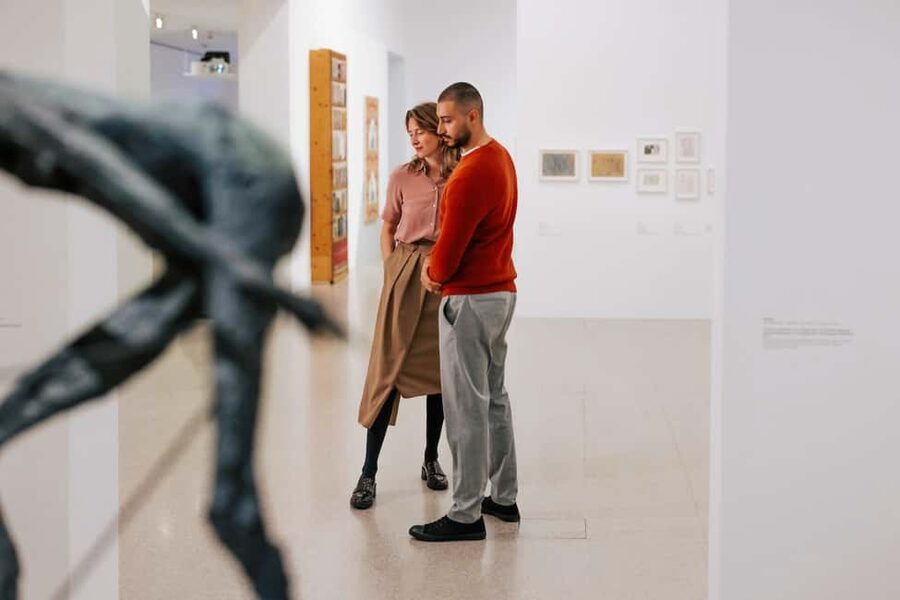
Start with the permanent collection so you have a foundation for what you’re seeing. mumok’s permanent holdings cover a wide arc of modernity and include works tied to names you’ll recognize, like Warhol, Picasso, Yoko Ono, and VALIE EXPORT. Even if you don’t know every artist, this is the kind of museum where the movements help you connect dots.
As you move through, keep an eye on the big categories named for mumok’s identity: Pop Art, Fluxus, Conceptual Art, and Vienna Actionism. Those labels aren’t just marketing. They’re a practical map for understanding why certain works look the way they do—why some pieces feel playful, some feel confrontational, and some feel like they’re asking you to question what art even is.
Worth a look before you book this Vienna tour:

Block 2: Pick one theme inside the temporary exhibitions
Temporary exhibitions are where the museum gets current. The museum is known for changing encounters that push boundaries, including international artists and work in newer formats like film and media (as part of the museum’s broader collection focus).
Here’s my advice to make this part pay off: before you commit to a route, choose one temporary exhibition to prioritize. Then let the rest be bonus time. If you go trying to see every display equally, it’s easy to end the day feeling like you sprinted instead of explored.
A short note from reality: one review experience called out that an exhibition felt thin on works. I can’t judge what’s on view on your dates, but it’s a reminder to check the current exhibition lineup before you arrive—so you’re not banking your expectations on a show that doesn’t hit for you.
Block 3: Use the museum tools—programs, library, and café
One thing I genuinely like about mumok is that it doesn’t treat education as an afterthought. It offers educational programs for both adults and children. Even when you’re just visiting as an adult, those programs can add context and reduce that frustrating feeling of not knowing how to look at something.
If you’re visiting with kids, this is especially relevant. You’ll have a better chance of keeping attention without forcing the day into a purely adult museum format.
And yes, there’s an on-site café and a library. It’s not a luxury perk—it’s a strategy. Take breaks. Modern art can be draining in a good way, but you’ll enjoy it more if you don’t run your brain dry before you hit your last rooms.
Permanent collection: how to look at Pop, Fluxus, and Actionism without getting lost
You’ll see mumok’s identity in the permanent collection: Pop Art, Fluxus, Conceptual Art, Vienna Actionism, and related works spanning into film and media. That’s a lot of territory, so the secret is not to “memorize.” It’s to compare how each movement uses art to challenge norms.
Here’s a practical way to approach it:
- With Pop Art, watch for how everyday culture gets turned into artwork, often with a sense of irony or familiarity.
- With Fluxus, look for the idea that art can be action, event, or something playful and strange rather than a traditional object.
- With Conceptual Art, pay attention to the thinking behind the work—sometimes the idea is the art, not just the finished piece.
- With Vienna Actionism, notice the intensity and the push against polite distance.
You don’t need to be an expert to do this. What you need is a method that turns “I’m not sure what I’m looking at” into “I’m looking for what the artist is trying to disrupt.” That’s where mumok shines: it puts you in the right room for that kind of questioning.
And seeing works associated with big names like Warhol, Yoko Ono, and Picasso gives you familiar anchors. Then you can use those anchors to widen your comfort zone and follow what feels unfamiliar.
Temporary exhibitions: get value by choosing well, not by chasing everything
Temporary exhibitions are part of what makes mumok feel alive. The museum keeps offering fresh encounters, with international artists and new presentations. But value comes from selectivity.
Because you’re working with a 1-day entry, I’d rather you choose one special exhibition to treat as a priority and then let the rest be flexible. That way, you get a complete experience of something specific, instead of collecting half-facts across many rooms.
If you’re the type who likes structure, you can also create a personal checklist before entering:
- Which exhibition theme fits what you want to understand today?
- Do you feel curious about film and media formats that day, or do you want to focus on the more object-based works?
That checklist helps protect you from the one downside that comes with modern museums: it’s easy to feel like you visited a space full of art and still not feel like you experienced much. Good choices fix that.
Interactive programs for adults and kids: a built-in rhythm
Not every modern museum provides educational programming in a way that works for families. mumok does. You’ll find interactive programs for both adults and children, and that can change the whole texture of your day.
For families, it’s a big deal: kids often do better when the museum gives them prompts, activities, or a reason to look closely. For adults, programs can act like an interpretive shortcut—something that turns confusion into engagement.
Even if you don’t plan your day around a specific program session, knowing they exist means you can shift your schedule if you get tired. When you’re ready, use the museum’s learning offerings to regain momentum.
Price and value: is $15 worth it?
At about $15 per person, this ticket price is appealing because it covers access to both the permanent collection and temporary exhibitions. That combination is what makes the value work. You’re not paying only for one show. You’re paying for a full modern art museum day, with enough range to make the visit feel complete even if one exhibition isn’t your style.
You also get access to educational programs, plus an on-site café and library. Food itself isn’t included, so you’ll still want to budget for drinks or lunch if you plan to eat there. But the fact that the café and library are onsite helps your day flow: you can take breaks without leaving the museum circuit.
Bottom line: if you’re visiting on a day when MuseumsQuartier is active and you’ll actually spend time inside (not just pop in for an hour), $15 can be a very fair deal.
Practical tips for planning your mumok day
A few details can make your visit smoother:
- Check the day: the museum is closed on Mondays. If your trip schedule includes Monday, move your visit.
- Don’t overpack the day: mumok’s size and focus reward a slower pace. If you cram three major museums back-to-back, you’ll feel it.
- Use the building: the basalt cube and 4,800 m² layout make it easy to build a route with breaks rather than sprinting.
- Expect modern art to be uneven: even in a great museum, some exhibitions will hit harder than others. Your best protection is choosing a priority show plus a permanent collection base layer.
- Take advantage of programs if you need context: it’s one of the museum’s strengths, and it can improve how the art lands.
Who should book this ticket?
I think mumok is best for you if:
- you want modern and contemporary art that covers big movements, not just one narrow style
- you like museums with strong architecture and a sense of design thinking
- you’re traveling with kids or teens who may do better with interactive programming
- you enjoy self-guided museum time and don’t need a guided narrative to enjoy art
It may not be your best fit if:
- you prefer heavily structured tours with a guide translating everything
- you want the museum experience to revolve around a single iconic masterpiece rather than a broad, movement-based collection
- you’re arriving mainly hoping for a very large temporary exhibition on your exact dates (temporary displays vary, and at least one experience noted disappointment)
Should you book mumok for your Vienna day?
Yes, I’d book it—especially if you’re aiming for a modern art anchor in your Vienna itinerary. For $15, you get a serious amount of space (4,800 m²), both permanent and temporary exhibitions, and educational programs for adults and children. The basalt cube setting also turns an ordinary museum stop into something you remember.
Just go in with the right expectation: this is modern art, so your enjoyment will come from pacing, selection, and looking with curiosity. If you check what’s on view for temporary exhibitions and then commit to one priority show plus the permanent collection, you’ll get a full day out of it.
FAQ
What is included in the mumok entry ticket?
The ticket includes access to mumok’s permanent collection, access to temporary exhibitions, educational programs for all ages, and access to the on-site café and library.
How long is the visit valid for?
The ticket is valid for 1 day. Starting times can vary, so you’ll need to check availability for the time slot you want.
Where is mumok located?
mumok is in Vienna, in the MuseumsQuartier area.
When is mumok closed?
mumok is closed on Mondays.
Is the museum free for children and young people?
Yes. There is free admission for children and young people under 19.
Are students or seniors eligible for reduced tickets?
Yes. Reduced admission applies to students under 27, seniors, unemployed people, and disabled persons.
Are guided tours included with the entry ticket?
No. Guided tours are not included.
Is mumok wheelchair accessible?
Yes. The museum is wheelchair accessible.
Is food included with the ticket price?
No. Food and drinks are not included, but there is an on-site café where you can buy refreshments.
More Tickets in Vienna
- Vienna: Classic Ensemble Vienna in St. Peter’s Church Ticket
★ 4.7 · 4,819 reviews - Vienna Kunsthistorisches Museum Day Admission Ticket
★ 4.6 · 3,690 reviews - Vienna: Tickets for Mozarthaus Vienna with Audio Guide
★ 4.2 · 2,344 reviews - Vienna: Skip-the-Line Entrance Ticket to the Danube Tower
★ 4.5 · 2,303 reviews - Tickets for the Albertina Exhibitions
★ 4.7 · 2,126 reviews
More Tour Reviews in Vienna
- Vienna: Vivaldi’s Four Seasons Concert in Karlskirche
★ 4.7 · 14,951 reviews - Vienna: Schönbrunn Palace & Gardens Skip-the-Line Tour
★ 4.7 · 7,739 reviews - Vienna: Light of Creation Votive Church Immersive Light Show
★ 4.8 · 6,779 reviews - Vienna Spanish Riding School Guided Tour
★ 4.7 · 6,765 reviews - Vienna: Classical Concert in the World-Famous Musikverein
★ 4.6 · 6,673 reviews
Vienna Indoors: More Galleries
- Vienna Kunsthistorisches Museum Day Admission Ticket
★ 4.6 · 3,690 reviews - Tickets for the Albertina Exhibitions
★ 4.7 · 2,126 reviews - Combo Ticket: Kunsthistorisches Museum & Imperial Treasury
★ 4.7 · 785 reviews - Skip the Line: Kunsthistorisches Museum Vienna Entrance Ticket
★ 4.5 · 466 reviews - Leopold Museum Vienna Entrance Ticket
★ 4.5 · 440 reviews
Just In: New Vienna Reviews




Kunsthistorisches & Art Museums, compared.
 ★ 4.6Vienna Kunsthistorisches Museum Day Admission TicketFrom $253,690 reviews
 ★ 4.7Tickets for the Albertina ExhibitionsFrom $232,126 reviews
 ★ 4.7Combo Ticket: Kunsthistorisches Museum & Imperial TreasuryFrom $37785 reviews
 ★ 4.5Skip the Line: Kunsthistorisches Museum Vienna Entrance Ticket466 reviews
 ★ 4.5Leopold Museum Vienna Entrance TicketFrom $22440 reviews
 ★ 4.6Kunsthistorisches and Leopold Museum Combo TicketFrom $43352 reviews
 ★ 4.3MAK – Museum of Applied Arts – TicketsFrom $21101 reviews
 ★ 4.5Kunsthistorisches Museum Vienna and Imperial Treasury of ViennaFrom $3899 reviews
Browse the lists this tour appears in