
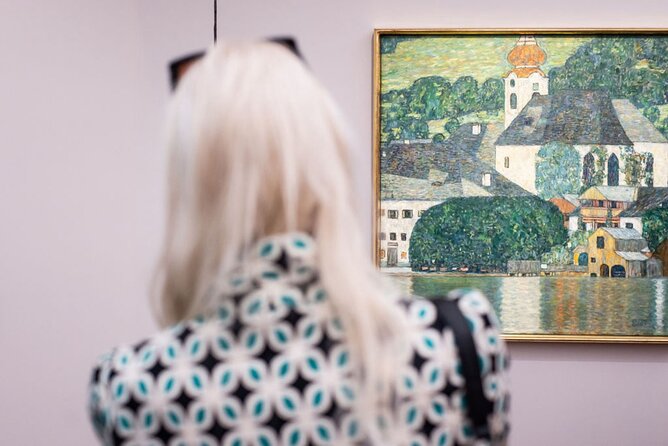
Reviewed · TICKETS
Entrance ticket Heidi Horten Collection Vienna
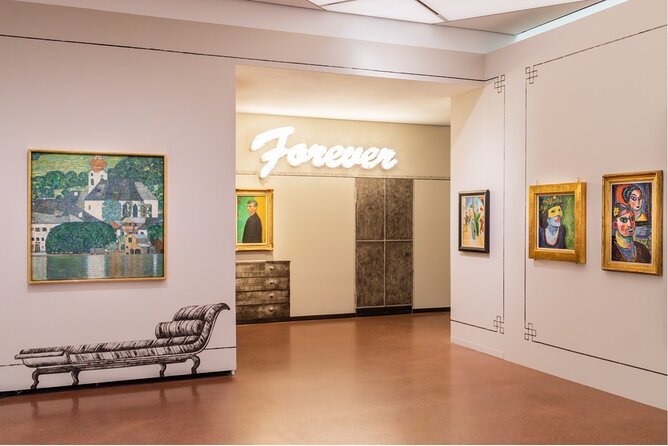
Vienna’s art museum plays with sightlines. The Heidi Horten Collection is set inside an open, showpiece-style building, and I love how that architecture turns the visit into more than just walking from room to room. I also love that the permanent KLIMT ⇄ WARHOL exhibition makes big-name modern art feel approachable, with artists such as Klimt and Warhol (plus plenty of other major names) presented in a single, easy circuit.
If you want a quiet, traditional museum with a strict, chronological flow, you should know this place can feel a bit playful and sensory—so expect some installations that may distract from a calmer vibe.
In This Review
- Key things to know before you go
- Heidi Horten Collection: the building sets the tone
- Ticket value: what you actually get for $14.38
- Your visit route: stop-by-stop what to expect
- Stop 1: KLIMT ⇄ WARHOL on the ground floor
- The special exhibition: THE LINE (your art-logic workout)
- Audio guide: the secret to understanding faster
- How long should you plan? (and how to avoid “too much art” fatigue)
- Where this fits in a Vienna day: near major sights
- Sensory and photo-friendly moments: decide if that’s your style
- Should you worry about funding controversies?
- Who will enjoy this most
- Should you book the Heidi Horten Collection entrance ticket?
- FAQ
- How long does the Heidi Horten Collection entrance ticket take?
- Is the museum visit offered in English?
- Do I get an audio guide with the ticket?
- Is the ticket mobile-friendly?
- What special exhibition is included during the listed period?
- How much does it cost?
- Is free cancellation available?
- Is the location easy to reach by transit?
Key things to know before you go
- Open architecture helps you keep your bearings fast while you move between galleries
- KLIMT ⇄ WARHOL is the ground-floor anchor, mixing icons of modern and contemporary art
- THE LINE (19 Sep 2025–8 Mar 2026) connects mark-making in art from around 1900 to today
- Audio guide included, and you can access it conveniently through SMARTIFY
- Compact but time-friendly layout, so 1 hour can turn into 2 if you like to linger
- Mobile ticket + English option makes it simple if you’re fitting this into a busy Vienna day
Worth a look before you book this Vienna tour:
- Vienna Kunsthistorisches Museum Day Admission Ticket★ 4.6 · 3,690 reviews
- Vienna: Tickets for Mozarthaus Vienna with Audio Guide★ 4.2 · 2,344 reviews
- Vienna: Skip-the-Line Entrance Ticket to the Danube Tower★ 4.5 · 2,303 reviews
- Tickets for the Albertina Exhibitions★ 4.7 · 2,126 reviews
Heidi Horten Collection: the building sets the tone
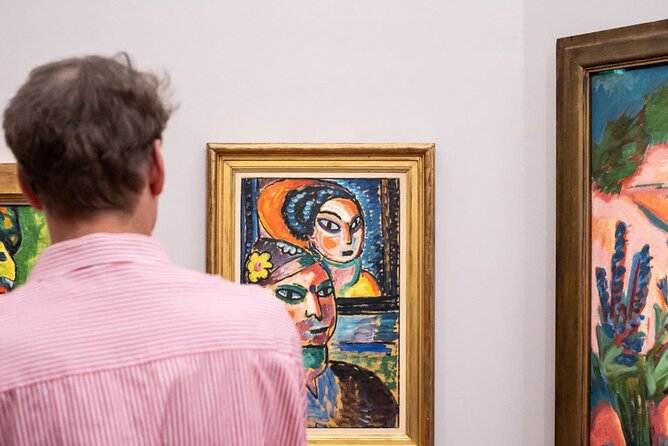
The Heidi Horten Collection doesn’t try to hide its personality. The architecture is the first attraction because it’s designed with open sightlines, not closed-off corridors and windowless corners. That matters in practice: you spend less energy figuring out where you are, and more energy looking at the art.
It also makes the whole experience feel closer to a well-designed private home gallery than a black-box museum. That sounds fancy, but the payoff is simple—you can move smoothly and still see how different areas relate to each other.
Ticket value: what you actually get for $14.38
At $14.38 per person, what makes the value work is what’s included. Your ticket covers entrance to the Heidi Horten Collection, plus an audio guide, and it lists all fees and taxes as included.
The visit time is listed as about 1 to 2 hours, which is perfect for Vienna planning. You can pair it with other central sights without turning your day into a museum marathon.
One small note: this is an entrance ticket experience, so you’re not buying a long, guided walking tour. You’ll get the structure and the exhibition flow, but you’ll control your pace with the audio guide.
Your visit route: stop-by-stop what to expect
Stop 1: KLIMT ⇄ WARHOL on the ground floor
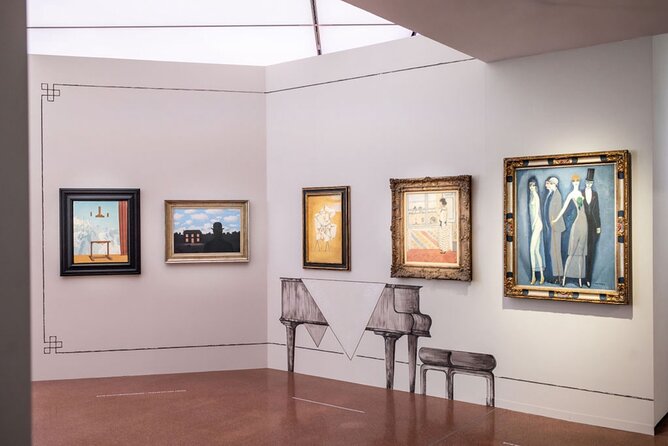
The ground-floor permanent exhibition is the centerpiece: KLIMT ⇄ WARHOL. Think of it as the museum’s “greatest hits” logic, but not in a lazy way. The idea is that modern and contemporary icons can be read side-by-side, and your eye can make those connections fast.
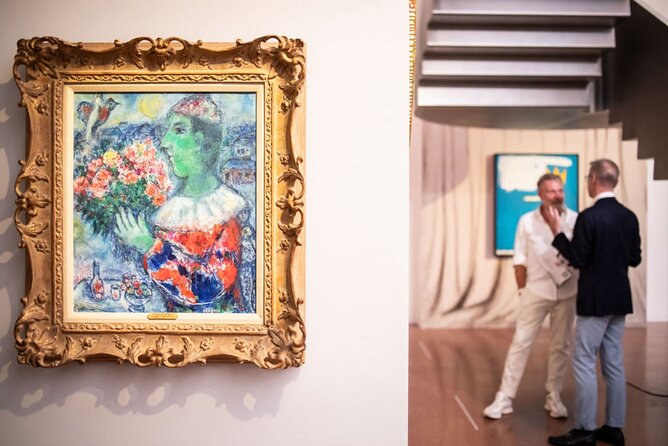
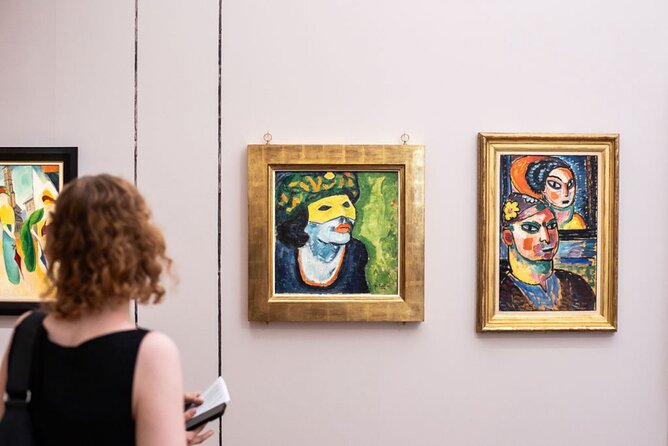
The museum highlights major artists you’ll recognize, including Klimt and Warhol, plus other big names such as Bacon, Baselitz, Basquiat, Chagall, Fontana, Haring, Klee, Klein, Lichtenstein, Magritte, Nolde, Picasso, Rothko, and more. If you’re trying to get a solid snapshot of 20th-century and early 21st-century art, this is the part that gives you the quickest payoff.
What I like about this section: it’s easy to start. Even if contemporary art isn’t your everyday comfort zone, seeing landmark artists in one coherent run helps you decide what you personally react to—figurative, abstract, pop, and everything between.
Possible drawback: the museum’s style is more open and playful than a strict white-cube vibe. If you expected a quiet, museum-pure experience, you might find some installations feel a little too “look at me,” especially if you’re sensitive to light, sound, or staged photo moments.



The special exhibition: THE LINE (your art-logic workout)
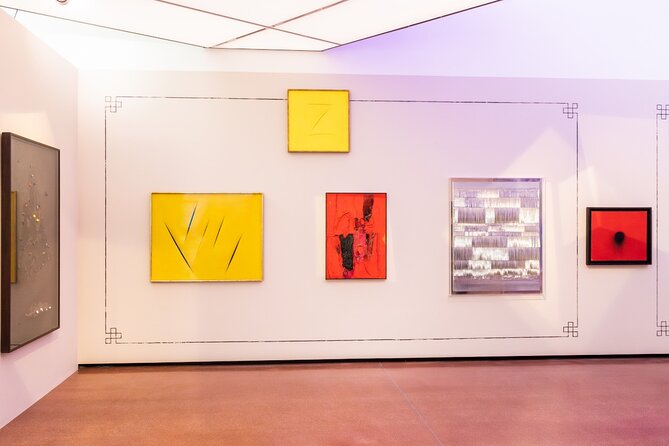
On 19 September 2025 to 8 March 2026, your ticket ties in with the special show THE LINE. This exhibition is built around a smart premise: the line is a basic art tool, and it can behave like a pencil sketch, an expressive gesture, a structural element, or even a concept.
The exhibition is presented as a journey—from Vienna around 1900, through the 1960s art world, and then into art up to the present day. That’s useful because it gives you a thread to follow, instead of trying to understand a museum solely as a collection of unrelated masterpieces.
You can expect works by artists such as Paul Klee, Lucio Fontana, Roy Lichtenstein, Egon Schiele, Jackson Pollock, Agnes Martin, Andy Warhol, and Chiharu Shiota, among others. The point isn’t just name-dropping. It’s that you’re asked to notice how line quality changes when the era, medium, and intent shift.
What to watch for: if you tend to think you only like one type of art, THE LINE often stretches that. It helps you see how the same basic tool can produce very different emotional results depending on scale, rhythm, and context.
Timing note: because you’re buying an entrance ticket with access to what’s on view during your date, THE LINE is the key “extra” reason to go during its run. If you’re visiting outside those dates, you’ll want to check what special exhibition is currently included with your ticket.
Audio guide: the secret to understanding faster
Your ticket includes an audio guide, and the museum notes it can be accessed via SMARTIFY. That’s handy because you can get your bearings before you’re even inside—then use the in-museum version to keep your attention from drifting.
I like audio guides most when they help you look in the right direction instead of narrating every detail. Here, the audio guide is especially valuable because this museum isn’t trying to be a textbook. It’s more about relationships—between eras, styles, and artistic goals.
A practical tip: give yourself permission to listen in short bursts. If you listen to everything start-to-finish, you can miss the visual stuff that makes the art click. If you listen only when something catches your eye, the audio guide becomes a tool, not a chore.
How long should you plan? (and how to avoid “too much art” fatigue)
The schedule is listed at 1 to 2 hours. That range is realistic because the museum can be compact enough to feel fast, yet interesting enough to slow you down.
If you want a strong visit without exhausting yourself, aim for:
- About 45–60 minutes on KLIMT ⇄ WARHOL
- About 20–45 minutes on THE LINE (more if you like to compare artists closely)
If you’re the type who reads labels carefully and pauses often, 2 hours will feel right. If you’re more of a “scan, react, and move” person, you can make it fit into a tighter schedule.
One more practical thing: there can be areas where movement feels constrained, with posted boundaries and close room-to-room traffic. If you don’t like bottlenecks, go early in the day or late afternoon when you can still keep your flow.
Where this fits in a Vienna day: near major sights
A big reason people enjoy this museum is location. One of the most practical perks is that it sits next to the State Opera in central Vienna and is easy to combine with other highlights like the Albertina.
That’s not just convenient for your feet. It helps your brain. You go from grand, famous museum rooms to a smaller, more experimental space, and you get a contrast effect. Vienna days often feel repetitive if everything is the same style.
Since the museum is listed as near public transportation, you can also build it into an itinerary without committing to long walks across multiple neighborhoods.
Sensory and photo-friendly moments: decide if that’s your style
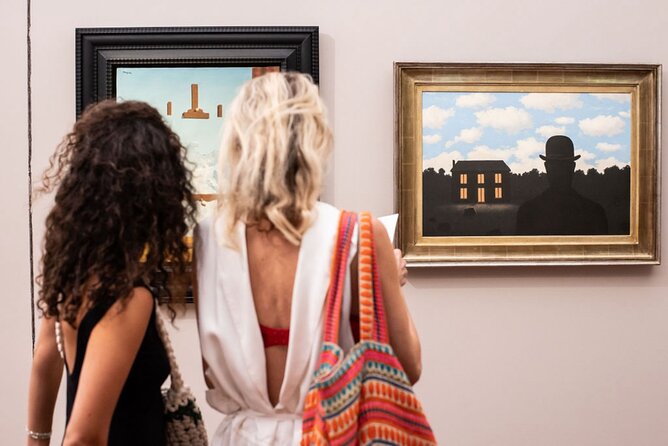
Here’s the honest balance: this museum can lean toward installations that are more sensory than traditional. In recent exhibitions, there have been sound/light elements and even scent-related experiences reported in the show format. That kind of presentation can be fun, but it can also feel distracting if you’re trying to focus purely on paintings.
Also, some rooms are clearly designed to be visually dramatic. If you like taking photos, you’ll probably enjoy that side of the experience. If you don’t, you’ll still be able to enjoy the art, but you might want to spend more time in the permanent exhibition rather than lingering in the most staged corners.
My advice: treat sensory rooms as optional pacing choices. If something starts feeling too loud or too performance-like, you’re allowed to move on. Great art doesn’t require you to endure a distraction.
Should you worry about funding controversies?
This is a fair question. Some visitors have criticized the museum for limited transparency about how the collection and the building were financed. The museum’s response, in turn, emphasizes that it’s financed through admission revenue, museum shop, and other services, and it says the founder’s private foundation covers a significant portion so the museum can stay accessible.
If transparency matters to you—more than it does to most art lovers on a time budget—you can quickly check what’s explained on the museum’s own site before you go. If you’re mostly there for the art, the museum also does a good job of keeping your focus on what’s in the galleries once you arrive.
Who will enjoy this most
This is a strong pick if you:
- like modern and contemporary art and want a one-stop Vienna overview
- enjoy seeing major artists named in one continuous experience
- want a museum that doesn’t drag you through endless rooms
It may feel less ideal if you:
- want a strictly traditional, calm museum experience only
- dislike sensory installations or staged photo moments
- prefer a museum that explains everything in a highly academic, chronological order
For me, the best fit is the traveler who wants a smart hit of modern art, with enough structure from the audio guide to make it feel coherent.
Should you book the Heidi Horten Collection entrance ticket?
Yes—if your dates match THE LINE (19 Sep 2025 to 8 Mar 2026) or if you simply want a modern-art fix in a beautiful central setting. The combination of KLIMT ⇄ WARHOL, the included audio guide, and the reasonable 1 to 2 hour timing makes it easy to justify.
I’d book it especially if you want something different from Vienna’s classic palaces and grand churches. This museum gives you a smaller, more contemporary experience in the middle of a big-city itinerary—and that’s a nice change of pace.
If you’re unsure, here’s the quick decision rule: if you like modern art and you’re okay with a museum that plays with presentation, you’ll probably leave satisfied. If you want quiet and strictly traditional, consider setting expectations and spending most of your time in KLIMT ⇄ WARHOL.
FAQ
How long does the Heidi Horten Collection entrance ticket take?
The experience is listed as about 1 to 2 hours.
Is the museum visit offered in English?
Yes, the experience is listed as offered in English.
Do I get an audio guide with the ticket?
Yes. An audio guide is included with the entrance ticket.
Is the ticket mobile-friendly?
Yes. The ticket is listed as a mobile ticket.
What special exhibition is included during the listed period?
The special exhibition is THE LINE, running 19 September 2025 to 8 March 2026.
How much does it cost?
The price is listed as $14.38 per person.
Is free cancellation available?
Yes. Free cancellation is available up to 24 hours in advance for a full refund.
Is the location easy to reach by transit?
Yes. The museum is listed as near public transportation, and service animals are allowed.
More Tickets in Vienna
- Vienna: Classic Ensemble Vienna in St. Peter’s Church Ticket
★ 4.7 · 4,819 reviews - Vienna Kunsthistorisches Museum Day Admission Ticket
★ 4.6 · 3,690 reviews - Vienna: Tickets for Mozarthaus Vienna with Audio Guide
★ 4.2 · 2,344 reviews - Vienna: Skip-the-Line Entrance Ticket to the Danube Tower
★ 4.5 · 2,303 reviews - Tickets for the Albertina Exhibitions
★ 4.7 · 2,126 reviews
More Tour Reviews in Vienna
- Vienna: Vivaldi’s Four Seasons Concert in Karlskirche
★ 4.7 · 14,951 reviews - Vienna: Schönbrunn Palace & Gardens Skip-the-Line Tour
★ 4.7 · 7,739 reviews - Vienna: Light of Creation Votive Church Immersive Light Show
★ 4.8 · 6,779 reviews - Vienna Spanish Riding School Guided Tour
★ 4.7 · 6,765 reviews - Vienna: Classical Concert in the World-Famous Musikverein
★ 4.6 · 6,673 reviews
Just In: New Vienna Reviews




Tickets, compared.
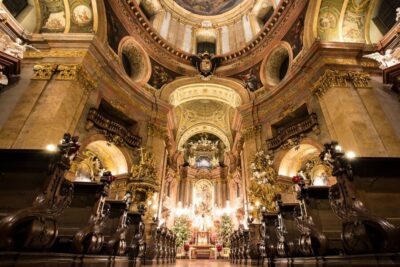 ★ 4.7Classic Ensemble Vienna in St. Peter’s Church TicketFrom $454,819 reviews
 ★ 4.6Vienna Kunsthistorisches Museum Day Admission TicketFrom $253,690 reviews
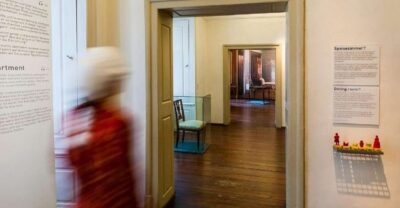 ★ 4.2Tickets for Mozarthaus Vienna with Audio GuideFrom $182,344 reviews
 ★ 4.5Skip-the-Line Entrance Ticket to the Danube TowerFrom $212,303 reviews
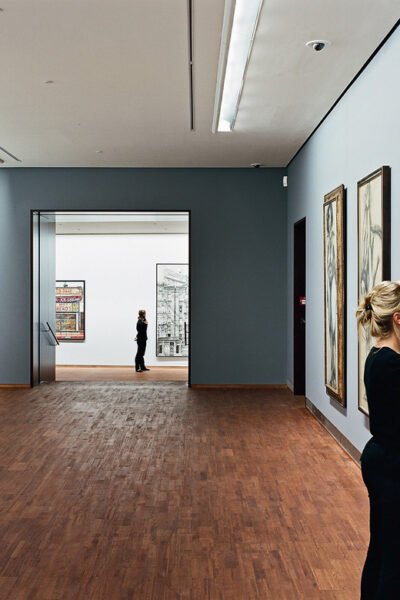 ★ 4.7Tickets for the Albertina ExhibitionsFrom $232,126 reviews
 ★ 4.6Sigmund Freud Museum TicketFrom $181,668 reviews
 ★ 4.5St. Stephen’s Cathedral & Dom Museum Wien TicketsFrom $341,652 reviews
 ★ 4.6Imperial Crypt Entrance TicketFrom $171,507 reviews