
Reviewed · ESCAPE GAMES & SCAVENGER HUNTS
Explore the Hidden Gems of Vienna with CityRiddler
Vienna can feel big and busy, but this route stays human-sized. What makes it special is the way you follow clues at your own speed while learning why several very specific landmarks matter, from Blood Alley to the Anker Clock. I like that the format is playful without being childish, and I love that many of the key stops are free-entry, so you’re not constantly checking ticket counters.
One thing to keep in mind: a handful of later stops have admission costs not included, so your final day budget may depend on which sights you choose to enter fully.
If you’re the type who wants to wander with purpose, this city-center scavenger hunt is a smart match. It works best when you’re happy to look up, read signs, and let a phone guide you through narrow streets for about 2 hours.
In This Review
- Key things I’d circle before you go
- Entering the Vienna hunt: Annagasse 10 to your first clue
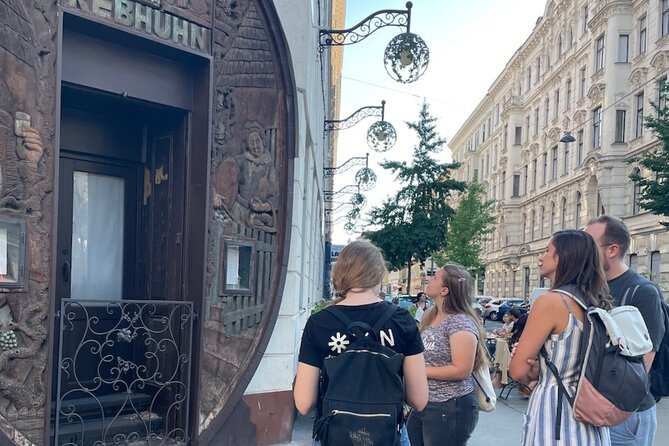
- Stop 1: Blutgasse and the idea of solving history first
- Stop 2: Basiliskenhaus and the question behind the legend
- Stop 3: Ruprechtskirche and Vienna’s oldest church lesson
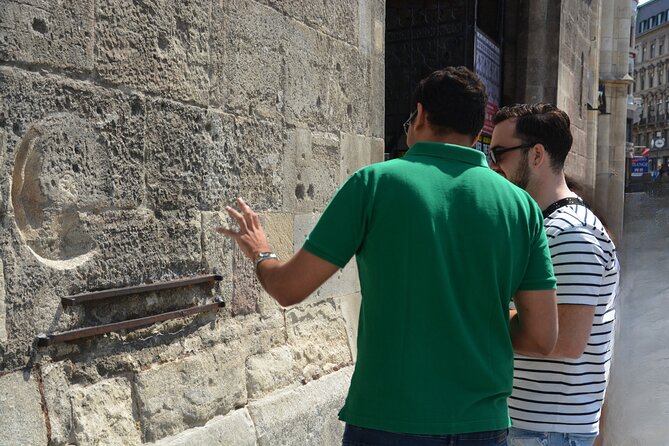
- Stop 4: Anker Clock and what it represents
- Stop 5: Rauhensteingasse and how streets got their names
- Stops 6 to 7: Backerstrasse No. 2 and the Fleischmarkt stories
- Stop 8: Judenplatz Holocaust Memorial with a needed reset
- Time, pace, and value: does $23.67 make sense?
- Who should book CityRiddler, and who should skip it
- Should you book this Vienna puzzle tour?
- FAQ
- How long is the Vienna CityRiddler tour?
- Where does the tour start and end?
- What language is the experience offered in?
- What is the price per person?
- Are tickets included for the attractions?
- Is there a maximum group size?
- What weather conditions does the tour require?
- Is free cancellation available?
Key things I’d circle before you go
- Phone-guided puzzles that keep you moving street-to-street instead of just reading plaques
- Free-entry time at the first five stops, so you get a lot of value early in the route
- A mix of quirky and serious stops, from legends to the Judenplatz Holocaust Memorial
- Short 15-minute stop blocks that make the walk feel manageable
- Easy pacing options, since you can pause if you need a break
- Small-group feel within a capped size (up to 50), which helps the hunt stay orderly
Puzzle your way across the old town
- Vienna: Scavenger Hunt Self-Guided Tour★ 4.7 · 83 reviews
- Vienna: The Great Plague Exploration Game★ 4.5 · 60 reviews
- Private City Discovery walk – Historical Treasure hunt★ 5.0 · 18 reviews
- Fun & mobile scavenger hunt through Vienna★ 4.5 · 17 reviews
Entering the Vienna hunt: Annagasse 10 to your first clue
The experience starts at Annagasse 10 in Vienna’s 1010 district. It ends in Freyung, also in 1010, so you’re basically staying in the historic core instead of crisscrossing the city. The total time is about 2 hours, and the route is structured around short stop windows of roughly 15 minutes each, which is ideal if you want variety without feeling dragged along.
The biggest practical advantage here is the app-led flow. You don’t have to fight for a spot near a guide, and you’re not stuck waiting at a busy corner while someone else catches up. Instead, you solve a riddle first, then the app gives you context and facts tied directly to what you’re looking at. That order matters: it turns your attention on before the information arrives, which makes the learning stick better than a standard walk-up lecture.
A heads-up: because this is phone-based, you’ll want your battery charged and your signal stable. Also, the tour requires good weather. If the forecast turns ugly, the operator can switch dates or offer a full refund, so plan to keep one flexible window in your Vienna schedule.
Stop 1: Blutgasse and the idea of solving history first
Your first moment is Blutgasse, also known as Blood Alley. The app approach starts with a riddle connected to the alley itself and the nearby lanes, so you’ll quickly learn to read the small details—what street it is, what’s around it, and why the name has lasting power.
What I like about starting here is that it sets the tone. You’re not beginning with a famous cathedral. You’re beginning with a smaller alley, where Vienna’s layers show up fast. After you solve the puzzle, you get the history tied to this particular passage plus fun facts. That structure is a nice way to avoid the typical problem of “I saw something, but I forgot it five minutes later.”
This stop is listed as free in terms of admission, which is a subtle but real value boost. In a short tour, saving money early makes the rest of the route feel less like a ticket-tracking exercise and more like a guided stroll.
Stop 2: Basiliskenhaus and the question behind the legend
Next up is Basiliskenhaus, where the big draw is the mystery of who killed the Basilisk—and the story built around that claim. Even if you don’t know anything about it going in, the app-style format helps you approach it the right way: you’ll be hunting for clues first, then you’ll get the explanation afterward.
I find these legend-based stops particularly satisfying because they teach you how people in a city turn architecture and local lore into shared memory. You’re not just staring at a building. You’re learning how narratives attach to places.
It’s also only a short stop, about 15 minutes, so you get the payoff without the “museum fatigue” that can hit on tours with too many long indoor moments. Like Blutgasse, this one is also free regarding admission, which keeps the tour’s early pace upbeat.
Stop 3: Ruprechtskirche and Vienna’s oldest church lesson
Then you head to St. Rupert’s Church (Ruprechtskirche). The standout here is that it’s presented as the oldest church in Vienna—and the tip is that it isn’t St. Stephen’s Cathedral. That small correction alone is worth the stop for many visitors, because it pushes you past the obvious postcard choice and toward a landmark that tends to be less crowded.
This is the kind of stop that works especially well in the app puzzle format. When you’re not being rushed, you can take a slower look at what makes an older church feel different—materials, layout, and the general sense of age in the details. You also get a focused time slot, so you’re not tempted to spend the whole afternoon here when you’re still trying to see other sights.
Admission is free for this stop too, which again supports the tour’s value. In a 2-hour walking experience, stacking free entry points helps you spend your time on stories rather than ticket logistics.




Stop 4: Anker Clock and what it represents
After the church, the route takes you to the Anker Clock. The pitch is simple: discover the most beautiful clock in Vienna and what it represents. The app doesn’t just point you at the clock face. It sets you up to notice what matters and then explains the meaning afterward.
Clocks sound oddly specific—until you’re standing in front of one and realize Vienna loves symbolic craftsmanship. A clock like this is basically storytelling in metal: numbers, shapes, and positioning that convey ideas you wouldn’t guess from a quick photo. The riddle-first approach helps you look longer than you otherwise would, which is the whole point.
This stop is also free on admission, so it’s another clean win for value. Plus, a clock stop is a great change of pace after churches and legends. It gives your brain a different kind of puzzle: reading visual cues instead of street lore.
Stop 5: Rauhensteingasse and how streets got their names
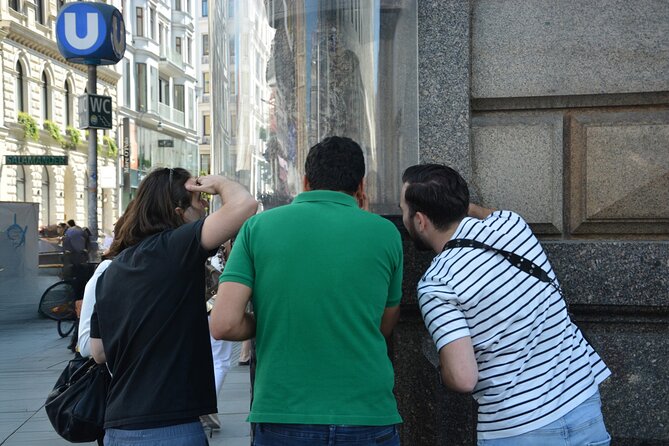
Rauhensteingasse is where the tour turns from landmarks to language—specifically, how Vienna’s street names were chosen centuries ago. This is an underrated kind of sightseeing, and it’s one of the reasons I like this style of tour for first-time visitors.
Street names in old cities often preserve trades, geography, landowners, or historical events. Even without needing to memorize every detail, you’ll start to see the logic behind the maze. And because this is handled as a short stop, you leave with better “city reading skills” instead of information overload.
As with the previous stops, admission is listed as free for this one. That matters because it keeps your tour costs predictable through the middle portion.
Stops 6 to 7: Backerstrasse No. 2 and the Fleischmarkt stories
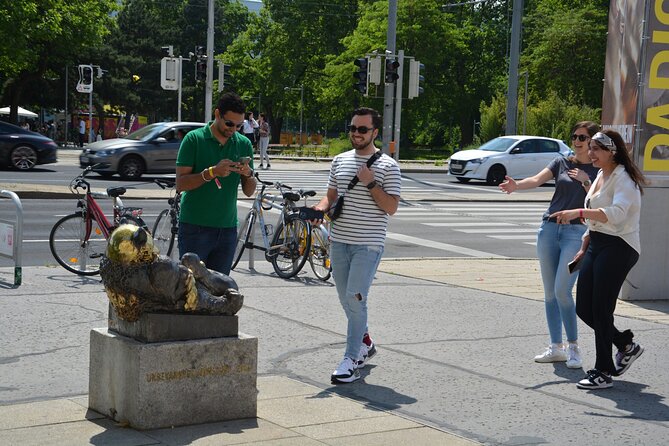
The route then moves into two areas where admission is not included. That doesn’t mean they’re necessarily expensive, but it does mean you should be ready to pay separately if you want full access at those points.
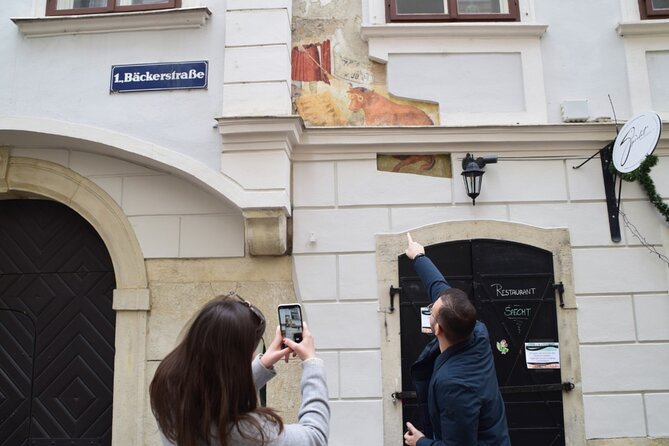
Backerstrasse No. 2 focuses on an interesting medieval story and legends from medieval ages. I like this segment because it broadens the tone of the tour. You’ve had Blood Alley, a Basilisk story, and a church. Now you get something more myth-and-time flavored—something that reminds you that medieval Vienna wasn’t only about palaces and big monuments. It was also about rumor, survival, and local storytelling.
Then comes the Fleischmarkt District, described as home to one of the oldest restaurants in Vienna, plus a well-known story of Augustin. Again, even if you’re not a heavy food-history person, this is a smart way to experience old Vienna as a living place rather than a set of buildings. You’re connecting the city’s daily life to its built environment.
These are also roughly 15-minute stops, so even with admission costs, the time investment stays modest. If you’re trying to control spending, you can also use the app to decide how deeply you want to go at each point.
Stop 8: Judenplatz Holocaust Memorial with a needed reset
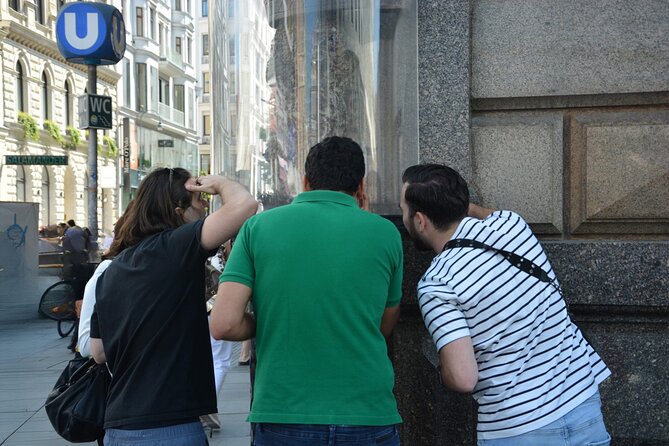
Judenplatz Holocaust Memorial is the serious final note of the route. The focus here is the history of the Jewish community in Vienna. It’s not framed as a puzzle for fun; it’s presented as important context, and that difference matters.
This stop can feel like a reset, especially after legend-heavy stretches. It gives you a more complete view of Vienna—not only the stories that entertain, but the histories that define a place’s responsibility to remember. If you’re the type who appreciates that balance, you’ll likely leave feeling that the tour offered more than atmosphere.
Admission is noted as not included for this stop, so be prepared for a possible extra cost depending on what entry you choose.
Time, pace, and value: does $23.67 make sense?
The price is $23.67 per person for approximately 2 hours, offered in English. For a short city-center walk, this is strong value when you consider what you’re getting: structured stops, app-based guidance, and educational content at each location.
Here’s the real value math as I see it:
- Many stops early on have admission tickets free, which reduces the chances of “surprise costs” right when you’re already paying the base fee.
- Later stops may have admission not included, so you’ll want to budget a bit extra if you plan to fully enter everything at those points.
- The capped maximum group size (50) helps keep the hunt from turning chaotic, even though the experience is app-led.
The biggest non-monetary value is the pacing. Roughly 15 minutes per stop makes it feel like a guided sampler platter. You don’t need to commit to a full half-day museum plan, and you don’t have to choose between “history” and “cool streets.” You get both, in smaller doses that stay manageable for most people.
One more practical point: the tour can run across a wide daily window (12:00 AM to 11:30 PM, seven days a week) within the stated operating dates. That means it’s easier to fit around your other plans, whether you’re starting after lunch or finishing your evening walk.
Who should book CityRiddler, and who should skip it
This works best if you like interactive city walking: you enjoy solving small puzzles, you’re okay using a phone for guidance, and you don’t mind learning in short bursts. It’s also great if you’re traveling with friends, because the app hunt format naturally turns into a shared activity rather than a “follow the leader” situation.
It’s also a practical pick for people who want flexibility. You can pause at any time and take a break, which helps if you’re tired, need coffee, or just want a moment to reset. And because it’s near public transportation and most travelers can participate, it’s easy to slot into a normal Vienna itinerary.
If you strongly prefer a live human guide at every stop, this may feel different. The experience is guided through the app, so the personality comes from the prompts and explanations rather than a person speaking to the group.
Also, if your travel style is super flexible about time but not about weather, keep in mind it requires good weather. Bad conditions can lead to cancellation with a date change or refund.
Should you book this Vienna puzzle tour?
I think this is an excellent booking choice when you want a light but meaningful way to see Vienna’s center without spending your entire day in lineups and big venues. The early stretch is especially good for value because multiple stops have free admission, and the route covers a clever mix: legend, local naming, a memorable clock, and then the solemn historical context at Judenplatz.
Book it if you:
- want a fun way to orient yourself in 1010 Vienna
- like app-based puzzles and short stop windows
- can pay a little extra if you decide to enter the later attractions with admission not included
Skip it if you:
- don’t want to rely on a phone for navigation
- need a fully traditional guided tour with no pauses or self-directed moments
- can’t adjust plans if the weather turns
FAQ
How long is the Vienna CityRiddler tour?
It lasts about 2 hours.
Where does the tour start and end?
It starts at Annagasse 10, 1010 Wien, Austria, and ends at Freyung, 1010 Wien, Austria.
What language is the experience offered in?
The tour is offered in English.
What is the price per person?
The price is $23.67 per person.
Are tickets included for the attractions?
Some stops have admission tickets free, while other stops have admission tickets not included.
Is there a maximum group size?
Yes. The tour/activity has a maximum of 50 travelers.
What weather conditions does the tour require?
The experience requires good weather.
Is free cancellation available?
Yes. You can cancel for a full refund if you cancel up to 24 hours in advance of the experience start time.
More Tour Reviews in Vienna
- Vienna: Vivaldi’s Four Seasons Concert in Karlskirche
★ 4.7 · 14,951 reviews - Vienna: Schönbrunn Palace & Gardens Skip-the-Line Tour
★ 4.7 · 7,739 reviews - Vienna: Light of Creation Votive Church Immersive Light Show
★ 4.8 · 6,779 reviews - Vienna Spanish Riding School Guided Tour
★ 4.7 · 6,765 reviews - Vienna: Classical Concert in the World-Famous Musikverein
★ 4.6 · 6,673 reviews
Solve the City: More Games
- Vienna: Scavenger Hunt Self-Guided Tour
★ 4.7 · 83 reviews - Vienna: The Great Plague Exploration Game
★ 4.5 · 60 reviews - Private City Discovery walk – Historical Treasure hunt
★ 5.0 · 18 reviews - Fun & mobile scavenger hunt through Vienna
★ 4.5 · 17 reviews - Vienna: Freud, Mozart & Beethoven Exploration Game
★ 4.0 · 14 reviews
Just In: New Vienna Reviews



Escape Games & Scavenger Hunts, compared.
 ★ 4.7Scavenger Hunt Self-Guided TourFrom $5283 reviews
 ★ 4.5The Great Plague Exploration GameFrom $760 reviews
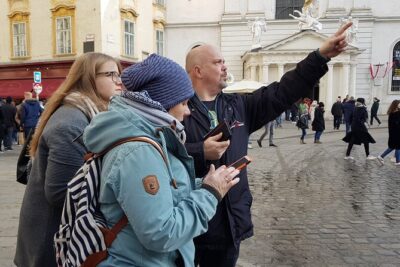 ★ 5.0Private City Discovery walk – Historical Treasure huntFrom $3418 reviews
 ★ 4.5Fun & mobile scavenger hunt through ViennaFrom $3117 reviews
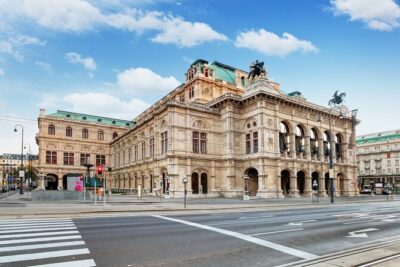 ★ 4.0Freud, Mozart & Beethoven Exploration GameFrom $714 reviews
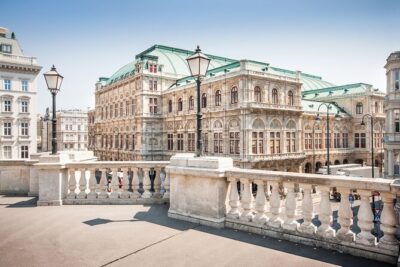 ★ 4.5Vienna Scavenger Hunt and Highlights Self Guided Audio TourFrom $913 reviews
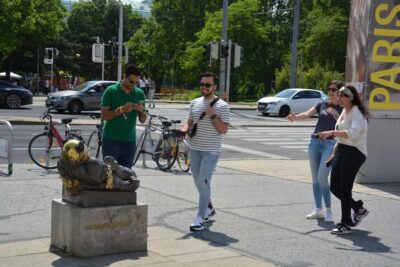 ★ 4.1Riddle Tour: Explore the Hidden Gems of ViennaFrom $237 reviews
 ★ 5.0The Vienna Augmented Reality Puzzle RallyFrom $577 reviews
Browse the lists this tour appears in