
Reviewed · MOZART & STRAUSS EVENINGS
Vienna: Freud, Mozart & Beethoven Exploration Game
A phone game in Vienna that actually gets you walking.
This Freud, Mozart & Beethoven exploration turns classic sights into a route of clue-solving stops, with short lessons at each one. You get offline play on your phone, plus the freedom to start when you want and stop whenever your feet demand it.
What I like most: it’s an easy way to add fun structure to sightseeing, and it nudges you into parts of the city many tourists skip. It’s also designed as a private experience with no human contact, so you can wander at your group’s pace.
One thing to consider: you’re reading clues on-screen while you’re outdoors, and Vienna’s center can get hectic—bright sun can make that harder. If you go on a super sunny day, bring sunglasses and consider starting earlier or later.
In This Review
- Key Highlights You’ll Feel on the Walk
- What This Vienna Puzzle Game Really Is
- Price and Value: Paying $7.21 for a Plan, Not Just Content
- Starting at St. Stephen’s Cathedral: A Big Opening Point
- The Clue Stops Through Central Vienna (Where the Game Gets You Walking)
- Sisi Museum Stop: A Short Break With a Ticket Caveat
- Finishing at Sigmund Freud Museum on Berggasse 19
- Offline on Your Phone: The Real Convenience Factor
- Getting It Right in a Busy City: Timing and Reading Tips
- Who Should Do This: Families, Couples, and Self-Guided Fans
- A Quick Practical Checklist Before You Start
- Should You Book This Vienna: Freud, Mozart & Beethoven Exploration Game?
- FAQ
- Do I need internet to play the Vienna game?
- What is the meeting point and end point?
- How long does the game take?
- Is there a physical tour guide with you?
- Is admission to Sisi Museum included?
- Can I start at any time and pause?
- Is this a private experience?
- Can I cancel for a full refund?
- What language is the experience in?
Key Highlights You’ll Feel on the Walk
- Offline-first city game: download once, then play without internet.
- Start any hour: you’re not locked into a single departure time.
- No human contact: private, safer-feeling self-guided format.
- Puzzles that keep you moving: clues help you find the next place.
- Ends at Sigmund Freud Museum: a satisfying closer to the story.
- Sisi Museum stop included in the route: short visit time, but admission is not included.
More Mozart and Strauss after dark
- Vienna: Mozart Concert at the Musikverein – Golden Hall★ 4.6 · 5,194 reviews
- Vienna: Mozart and Strauss Concert at Schönbrunn★ 4.5 · 2,967 reviews
- Vienna: Classical Concert at Mozart’s First House2,423 reviews
- Vienna Mozart Concert in Historical Costumes at the Musikverein★ 4.5 · 888 reviews
What This Vienna Puzzle Game Really Is

Think of this as a self-guided “story walk.” You start at a major landmark, then every few minutes your phone asks you to follow a clue and solve a puzzle to continue. At each stop, you don’t just hunt for the next waypoint—you also get a bit of context about the place you’ve reached, tied to the game’s themes (Freud, Mozart, and Beethoven).
This matters because it changes the feel of your visit. With a regular tour, you wait for the next fact. With this, the information appears right when you’re at a relevant spot, so it actually sticks. It also gives you a built-in reason to look up, not just forward at your map.
It’s also practical. The tour is flexible: you can begin at any hour, take a break, then resume later. That’s a big deal in Vienna, where sightseeing plans often collide with coffee stops, tram waits, and surprise museum lines.
Finally, you’re not dealing with a group of strangers. It’s private for your group only.
Price and Value: Paying $7.21 for a Plan, Not Just Content
At $7.21 per person, you’re paying for a route and an activity wrapper. You’re not paying for a professional guide. There’s no physical person walking with you, which is why this price works: you’re buying time-savers and momentum.
The duration is listed as about 1 to 2 hours, and the experience is available to book whenever you want. For many visitors, that means you can fit this into an afternoon even if your main museum plan falls apart. And because the game works offline, you’re not burning data or relying on spotty signal in older streets and buildings.
It’s also good value for families. One review specifically called it out as highly recommended, with puzzles that felt manageable and a story that kept kids engaged. That lines up with the format: short challenges, clear next steps, and frequent “arrive here, learn a bit, continue” moments.
Just keep your expectations aligned: you’re getting an app-guided walk with puzzles and place-based learning—not a deep, slow museum lecture.
Starting at St. Stephen’s Cathedral: A Big Opening Point
Your game begins at St. Stephen’s Cathedral (Stephansplatz 3, 1010 Wien). Starting here is smart. You’re at a visual anchor that’s easy to find, easy to orient around, and close enough to multiple central streets that your puzzle route doesn’t feel random.
Practically, it’s also a comfortable place to get your bearings before the game pulls you into smaller lanes. If you’re traveling with kids or you’re simply not in “wandering mode” yet, this start helps you ease in rather than sprinting into the city right away.
From here, you’ll follow the game’s first clue and puzzle. The pattern repeats throughout: solve something small, receive direction, reach a place, then learn a bit about what you’re looking at. That structure is part of the value. It turns a walk from “where should we go?” into “we know what to do next.”
Tip: arrive a few minutes early so you can start calmly, adjust screen brightness, and read the first instructions without rushing.
The Clue Stops Through Central Vienna (Where the Game Gets You Walking)

After the cathedral, expect a chain of stops reached by clue-following and puzzle-solving. The itinerary description is consistent: at each stop, you’ll get indications for how to continue, and you’ll learn about the place you’ve discovered.
That’s the key “feel” of the experience. You’re not just ticking off attractions. You’re moving through the city in short segments, and the game’s story gives you a reason to pay attention to details you might otherwise miss—street layouts, nearby landmarks, and the character of different neighborhoods between major sights.
One review flagged a real-world concern: in busy city-center conditions, the time spent reading clues and looking for answers can lead to awkward doddling through tourist-heavy areas. That doesn’t mean the game is bad. It means you should plan your approach.
Here’s how to make it smoother:
- Pick a time of day when you can breathe. Earlier or later often means fewer people.
- If sun glare is strong, consider lowering phone brightness slightly and using sunglasses for the reading portions.
- Don’t force speed. If the puzzle isn’t clicking instantly, step to the side and take a moment. You’re playing a game, not trying to win a footrace.
The offline mode is a major advantage here. You can keep moving without hunting for signal. And because you can pause and resume later, you’re not stuck “finishing now.”
On the trail of Beethoven and Haydn



Sisi Museum Stop: A Short Break With a Ticket Caveat
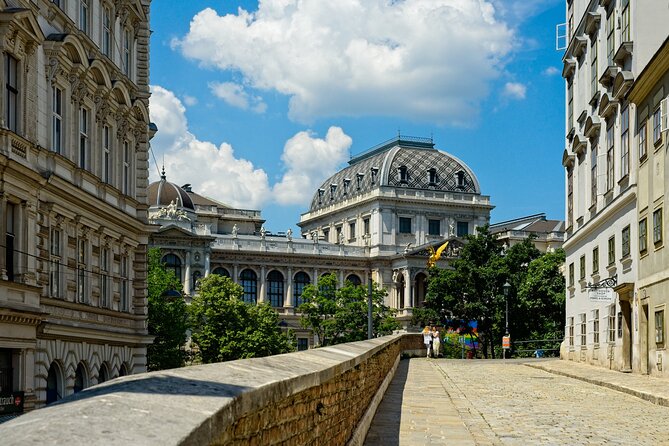
One of the named stops is the Sisi Museum, and it’s timed at about 10 minutes. That suggests the game treats this as a quick narrative pause rather than a full museum session. You’ll get the game’s instruction-led visit moment, then continue your route afterward.
Important detail: the admission ticket is not included. So if you want more than the game’s quick interaction—extra rooms, longer reading, deeper exhibits—you’ll need to purchase museum entry separately.
This matters for planning. Many people assume a “stop in the itinerary” means the ticket is covered. Here, it doesn’t work that way at least for Sisi Museum. You can still enjoy the game even if you do a lighter visit, but you should budget time and money if you want the full museum.
The good part: a short stop is often easier for families and for travelers who don’t want a 2-hour museum detour inside a walking game.
Finishing at Sigmund Freud Museum on Berggasse 19
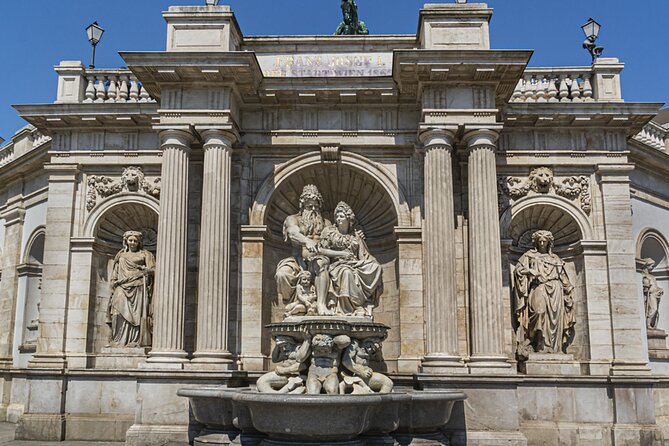
The route ends at the Sigmund Freud Museum (Berggasse 19, 1090 Wien). Closing at Freud makes the whole walk feel like it has an emotional arc: you start at a monumental public landmark, then gradually follow clues through the city, and you finish at the place strongly tied to the Freud theme.
Even if you’re not the world’s biggest Freud fan, this ending location helps you connect the game’s story content to a real destination. It turns the experience into more than a puzzle route—it becomes a lead-in to a museum visit you can choose to continue after the game finishes.
Also, the museum’s opening hours are listed from 5:00 AM to 9:30 PM (Monday–Sunday) for the stated date range. That gives you flexibility to fit it into your day. If you end earlier, you can still linger nearby; if you end later, you might be able to enter before closing.
Offline on Your Phone: The Real Convenience Factor
One of the best features is that you don’t need internet to play. You can run the city game offline after you’ve downloaded the necessary content. That’s a big deal in Vienna, where signal can be inconsistent and where you don’t want to waste time tapping around trying to reconnect.
For the smoothest experience, do this:
- Download before you start walking (not in the middle of a puzzle).
- Keep the phone charged, since you’ll use it for reading clues the whole time.
- Plan for glare. Sun reflects off screens, and reading becomes frustrating when the phone is bright and the sky is bright.
The experience is also described as a “mobile ticket” style setup. So your phone isn’t optional—it’s the control center.
If you’ve ever had apps glitch when you’re already in a foreign city, you’ll appreciate the format being mostly self-contained. Still, one review did mention an issue purchasing directly with the platform, where a person had to repurchase due to access problems. That’s not something you can prevent every time, but it’s a good reminder to double-check you have your game access before you leave your hotel.
Getting It Right in a Busy City: Timing and Reading Tips
Vienna can be crowded, especially around big attractions. One review pointed out that the combination of sunny weather and needing to read clues on a phone screen made gameplay less enjoyable, and that the time spent searching for answers led to awkward wandering in touristy areas.
Here’s how I’d protect your experience:
- Choose a time with softer light. Morning and late afternoon often help both visibility and crowd levels.
- Don’t get tunnel vision. If you’re stuck, step aside from foot traffic first. Solve the puzzle, then move.
- Treat it like a scavenger hunt, not like a quiz. Your goal is the walk and the story stops, not perfect puzzle speed.
And remember: you can take breaks and resume later. If you hit peak crowd time, stop for a café break or reset your route, then continue when you can read comfortably.
Who Should Do This: Families, Couples, and Self-Guided Fans
This works best if you enjoy a light challenge and you like getting your information through doing. It’s not a “sit and listen” format. Instead, the game gives you small reasons to look around as you move between places.
Families tend to do well with this style. One review praised the puzzles as easy and the story as interesting and amusing, with kids enjoying the clue-finding. If you’re traveling with teens who like games (or younger kids who like missions), this can be a great way to break up museum time.
For couples or solo travelers, it also helps because it reduces decision fatigue. If you’re the type who likes to wander but hates choosing where to go, the clue system gives you a plan. And because it’s private, your group doesn’t have to match anyone else’s pace.
You might like it even more if you’re the sort of visitor who wants Vienna beyond the postcard shots. The experience is designed to get you into parts of the city many tourists miss, while still keeping you within reach of major destinations.
A Quick Practical Checklist Before You Start
You don’t need much, but these details matter:
- Bring headphones if you prefer audio, but the experience is described primarily as an offline game with instructions.
- Start with a phone that’s charged and bright enough to read clues.
- Wear comfortable shoes. It’s a walking game, and you’ll cover ground between the cathedral and Freud Museum.
- If you plan to fully visit Sisi Museum, budget for the admission ticket separately since it’s not included.
Also, double-check the endpoint you want after the game. The official finish is at the Freud Museum, but you can keep your day flexible depending on the time and your energy level.
Should You Book This Vienna: Freud, Mozart & Beethoven Exploration Game?
I’d book it if you want a fun, structured way to see Vienna in a short window. The biggest strengths are offline play, flexible start times, and the puzzle format that turns sightseeing into an activity. At about 1–2 hours, it’s also a low-commitment add-on that can make an otherwise plain stroll feel purposeful.
I’d hesitate if you know you struggle with reading small screens outdoors, or if you’re only traveling during the busiest, sunniest hours and you hate the idea of hunting for clues while moving through crowds. If that sounds like you, you can still make it work—just start at a calmer time of day and download everything before you begin.
Bottom line: for game-lovers, families, and self-guided explorers who want a story-driven walk from St. Stephen’s Cathedral to Sigmund Freud Museum, this is a solid, good-value bet.
FAQ
Do I need internet to play the Vienna game?
No. The experience is designed to be played offline on your phone, so you do not need an internet connection to use the game.
What is the meeting point and end point?
You start at St. Stephen’s Cathedral, Stephansplatz 3, 1010 Wien, Austria. The game ends at the Sigmund Freud Museum, Berggasse 19, 1090 Wien, Austria.
How long does the game take?
It’s listed as about 1 to 2 hours.
Is there a physical tour guide with you?
No. This is described as a private tour/activity with no human contact, and it’s played via mobile.
Is admission to Sisi Museum included?
No. The Sisi Museum stop notes that the admission ticket is not included.
Can I start at any time and pause?
Yes. You have full flexibility to start at any hour, take a break, and resume later.
Is this a private experience?
Yes. It’s private, and only your group will participate.
Can I cancel for a full refund?
Yes, free cancellation is available. You can cancel up to 24 hours in advance for a full refund.
What language is the experience in?
It’s offered in English.
Solve the City: More Games
- Vienna: Scavenger Hunt Self-Guided Tour
★ 4.7 · 83 reviews - Vienna: The Great Plague Exploration Game
★ 4.5 · 60 reviews - Private City Discovery walk – Historical Treasure hunt
★ 5.0 · 18 reviews - Fun & mobile scavenger hunt through Vienna
★ 4.5 · 17 reviews - Vienna Scavenger Hunt and Highlights Self Guided Audio Tour
★ 4.5 · 13 reviews
On the Composers' Trail
- Vienna: Haydn Quartet in the Brahms Hall of the Musikverein
★ 4.2 · 90 reviews - Haydn Quartett in the Musikverein (Brahms Hall)
★ 5.0 · 11 reviews - Vienna: Meet Beethoven Life Private Guided Walking Tour
★ 5.0 · 5 reviews - Vienna: Mozart, Beethoven, & Strauss Private Tour
★ 5.0 · 4 reviews
More Mozart and Strauss Evenings
- Vienna: Mozart Concert at the Musikverein – Golden Hall
★ 4.6 · 5,194 reviews - Vienna: Mozart and Strauss Concert at Schönbrunn
★ 4.5 · 2,967 reviews - Vienna: Classical Concert at Mozart’s First House
2,423 reviews - Vienna: Mythos Mozart Experience
★ 4.5 · 895 reviews - Vienna Mozart Concert in Historical Costumes at the Musikverein
★ 4.5 · 888 reviews
Just In: New Vienna Reviews



Mozart & Strauss Evenings, compared.
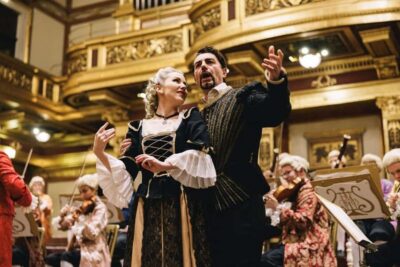 ★ 4.6Mozart Concert at the Musikverein – Golden HallFrom $815,194 reviews
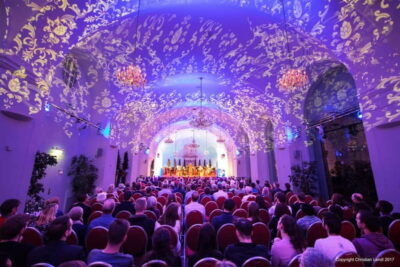 ★ 4.5Mozart and Strauss Concert at SchönbrunnFrom $422,967 reviews
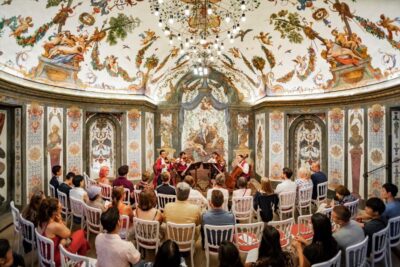 Classical Concert at Mozart’s First House2,423 reviews
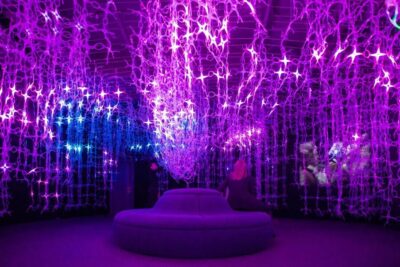 ★ 4.5Mythos Mozart ExperienceFrom $27895 reviews
 ★ 4.5Vienna Mozart Concert in Historical Costumes at the MusikvereinFrom $83888 reviews
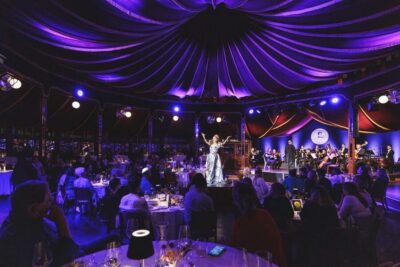 ★ 4.5Johann Strauss Dinner Show at the PraterFrom $93730 reviews
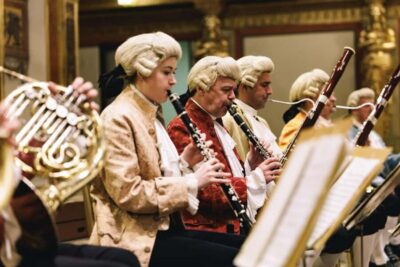 ★ 4.6Mozart Concert at the Vienna State OperaFrom $81461 reviews
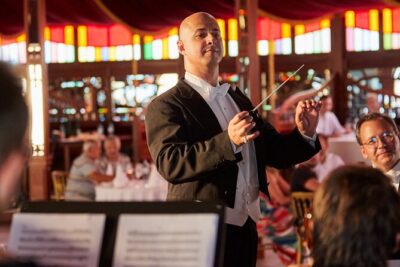 ★ 4.5Strauss Dinner ShowFrom $95395 reviews
Browse the lists this tour appears in