
Reviewed · MOZART & STRAUSS EVENINGS
Myth Mozart
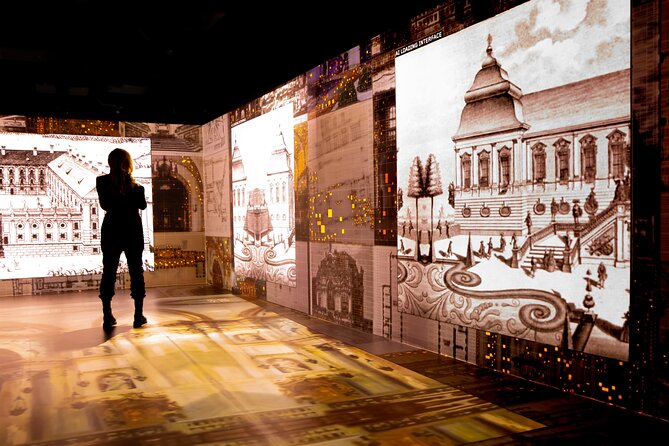
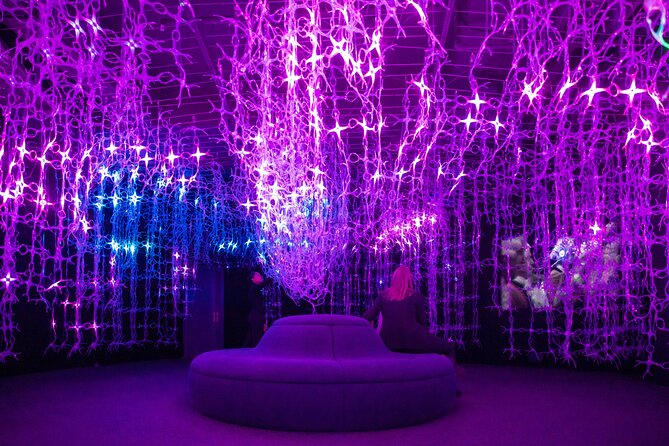
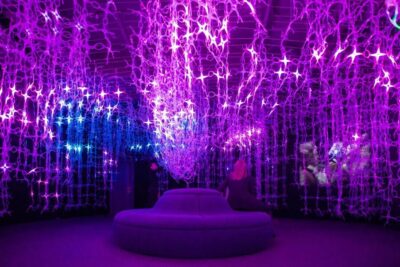
Mozart, but make it interactive. Mythos Mozart turns the composer’s life and music into a walk-through with five scenes and plenty of sound-and-light storytelling in the STEFFL Department Store basement. You’re not just reading facts; you’re hearing Mozart’s music in different rooms and picking up the timeline and the surprising bits that usually don’t make it into the standard tour talk.
I especially like how modern the presentation feels for a city packed with formal concerts and museum rooms. The price is also pretty reasonable for a timed, multimedia exhibition that includes admission and keeps moving for about 55 minutes. One thing to keep in mind: the whole show is under an hour, so if you want a long, slow museum-style visit, it may feel too short, and one guest noted a tech hiccup early on.
In This Review
- Quick hits before you go
- Where Mythos Mozart lives in Vienna
- How the five scenes actually play out
- What makes the multimedia presentation work (and for whom)
- A smart order for your Mozart day
- Price and value: what you get for $27.63
- Family-friendly, with one big caution
- Practical logistics: mobile ticket, timing, and getting there
- Should you book Mythos Mozart?
- FAQ
- Where is Mythos Mozart located?
- How long is Mythos Mozart?
- Is admission included in the ticket price?
- Do I get a mobile ticket?
- When will I receive confirmation after booking?
- Is it easy to reach with public transportation?
- Can most people participate?
- Is it suitable for families with young children?
- Can I cancel and get a full refund?
Quick hits before you go
- STEFFL basement setting: about 1,500 square meters under the department store, so it feels like a purpose-built show space.
- Five scenes / five rooms: the story is structured in chunks, which makes it easy to follow even on a tight Vienna schedule.
- Admission included: you’re paying for the experience ticket, not add-ons.
- Mobile ticket: you’ll use your phone, which is handy on a day when you’re already bouncing between sights.
- Good for kids (and adults): some families use it as a Mozart intro without committing to a full classical concert.
- Epilepsy listed as a consideration: if that applies to you or someone in your group, check before booking.
More Mozart and Strauss after dark
- Vienna: Mozart Concert at the Musikverein – Golden Hall★ 4.6 · 5,194 reviews
- Vienna: Mozart and Strauss Concert at Schönbrunn★ 4.5 · 2,967 reviews
- Vienna: Classical Concert at Mozart’s First House2,423 reviews
- Vienna Mozart Concert in Historical Costumes at the Musikverein★ 4.5 · 888 reviews
Where Mythos Mozart lives in Vienna
Mythos Mozart is in Vienna, in the basement space of the STEFFL Department Store. STEFFL is known as a premium shopping stop, but this venue side-steps the usual idea of a department store by turning part of the underground into an art-and-culture experience.
What I like about this location is the convenience. It’s near public transportation, and the show is self-contained, so you don’t need to line up for a separate museum entry hall or hunt for multiple rooms across town.
The scale matters too. The exhibition stretches across about 1,500 square meters, which helps explain why it doesn’t feel cramped or rushed in the way some smaller multimedia displays can.
How the five scenes actually play out
This isn’t a lecture. It’s built like a guided path through five different scenes tied to Mozart’s music, his time period, and lesser-known stories from his life.
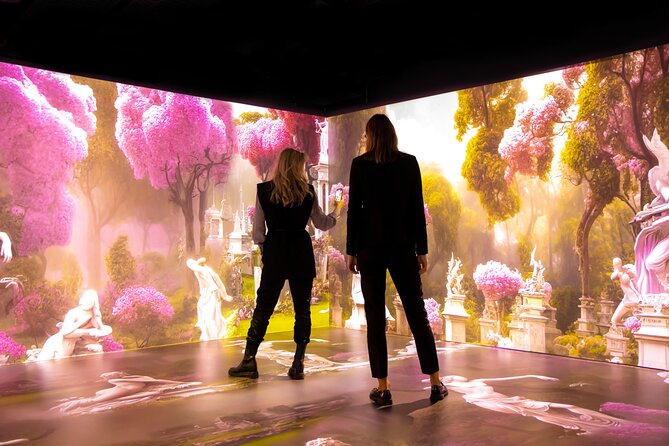
The concept is sensory as much as informational. In each scene, you’re meant to connect what you hear (Mozart’s music) with what you see (the visuals) and with what’s being explained (the context). The flow is designed for interaction, so you spend most of the time engaged with the environment rather than standing still to read.
And yes, it’s short. The timing is about 55 minutes, which is a sweet spot if you’re doing a big Vienna day with other stops. The tradeoff is that you may wish you had more time in your favorite scene.
One more practical point: the exhibition is arranged as a modern experience space, not a traditional exhibit with rows of artifacts. So if your idea of Vienna art is glass cases and placards, you’ll probably need a minute to shift gears.
What makes the multimedia presentation work (and for whom)
The strongest part of Mythos Mozart is the way the music is used across the rooms. Instead of treating Mozart as a name on a poster, the show builds learning around listening. You move through different settings while Mozart’s compositions are part of the atmosphere, and that helps your brain connect the dots faster.
There’s also a clear effort to make the explanations accessible. One detail I found promising from the feedback is that the explanations can work even when you don’t speak German well, which is exactly what you want in Vienna if your German is more of a wish than a tool.
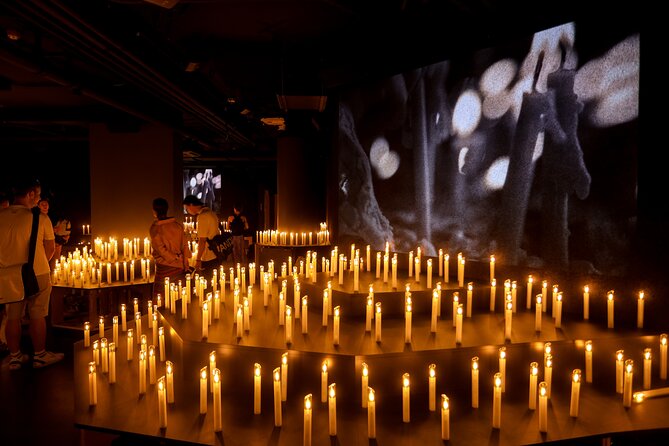
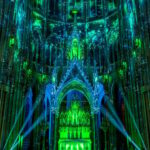
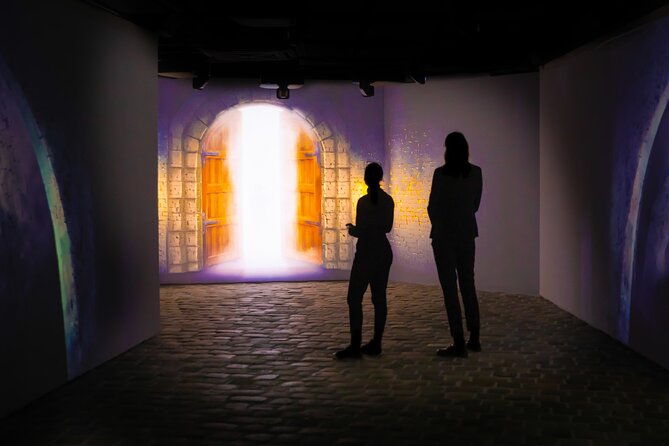
The first room gets special attention. More than one visitor highlighted the dramatic staging tied to the Requiem, including the use of many candles and recorded pieces. If you like theater lighting and mood-setting as much as you like composer facts, this is likely to be your favorite segment.
Who is it best for?
- Music fans who want a fresh way to experience Mozart without sitting through a long concert
- First-timers in Vienna who want a quick, high-impact story format
- Families who need something that works for shorter attention spans (more on that below)
A smart order for your Mozart day
If you plan to do other Mozart-focused activities, the order can make a difference in how much the show lands. A good strategy is to do a Mozart background visit first, then come to Mythos Mozart after you’ve got a few anchors in your head.
For example, doing something like Mozart House ahead of time can help you understand the references faster. I like planning this way because it turns the exhibition from interesting into satisfying—you’re not guessing who’s who, and the life story threads feel more connected.
You don’t have to go deep before you go. But if Mozart is new to you, spending a little time getting oriented in advance is a strong move.



Price and value: what you get for $27.63
At $27.63 per person for about 55 minutes, Mythos Mozart sits in a reasonable middle ground for Vienna. You’re not paying for a full-day museum. You’re paying for a timed, multimedia production with real space and real production value (sound, visuals, and scene changes), plus admission included in the ticket.
The value gets better if you’re comparing against ticketed classical options that can take up more time and energy. Some families treat this as an alternative to a classical concert because it delivers Mozart in a lighter, more interactive format.
For adults, the best justification is focus. You’ll get a concentrated dose of Mozart’s music and biography context without having to manage a long attention commitment. For kids, the value is less about scholarly depth and more about keeping everyone engaged and moving through different rooms.
If you hate anything staged with lights and audio effects, that’s the main reason you might feel the value isn’t for you. Otherwise, it’s a fair price for a well-made, time-efficient experience.
Family-friendly, with one big caution
This is one of those Vienna stops that can work for mixed ages. The feedback includes families with very young children, and the overall tone is that kids tend to enjoy the space and the sensory presentation.
I’d still plan it realistically. A five-scene show in under an hour means you’ll be moving at an exhibition pace. If your child needs lots of time to linger, you might want to choose a moment when you’re not rushing to the next appointment.
Now, the caution: the experience lists epilepsy as a consideration. Since multimedia shows often use light and sound effects, it’s smart to be careful here. If epilepsy applies to anyone in your group, I’d check directly with the provider before booking rather than assuming it’s a gentle, static exhibit.
Practical logistics: mobile ticket, timing, and getting there
The ticket is mobile, which makes the whole day easier. You won’t need to track a paper voucher or locate a printer before you head out.
You’ll also get confirmation at the time of booking, so you can lock it in without a waiting game. The experience is near public transportation, which matters in Vienna because distances add up quickly when you’re hopping between sights.
Timing is also important. With an approximate 55 minutes on the clock, you can fit it into the middle of a day. I like pairing it with something earlier for context, or with a meal nearby afterward so you can decompress after the sound-and-light intensity.
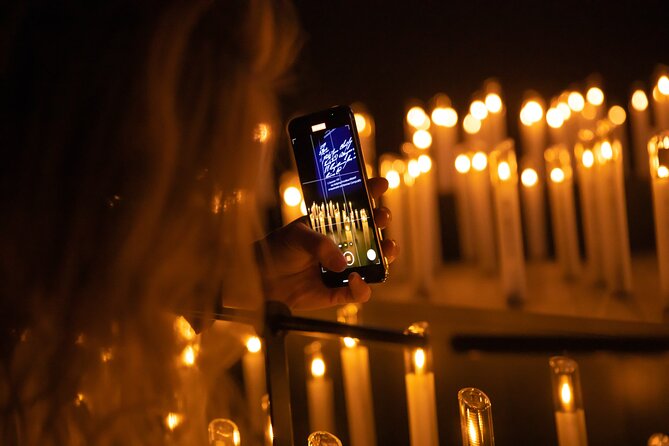
One extra note from the feedback: a visitor reported that an automated element failed in the first room for them, linked to phone-related issues. That’s not a reason to avoid the experience, but it’s a reminder to be patient if a device-based component acts up. Plan your expectations around it being an interactive production, not a guaranteed flawless machine.
Should you book Mythos Mozart?
Book it if you want a short, high-energy Mozart experience that’s built for listening, visuals, and scene-to-scene storytelling. It’s especially worth it if you’re traveling with family, or if you want Mozart without committing to a longer formal performance.
Skip it (or at least reconsider) if you expect a traditional museum with extensive artifacts and lots of reading, because the format is production-driven and timed. Also think twice if epilepsy is a concern for anyone in your party—this one is specifically flagged, and it’s best to confirm details before you go.
If you’re the kind of traveler who likes Vienna sights that feel like an experience, not just a stop, Mythos Mozart is a strong fit.
FAQ
Where is Mythos Mozart located?
It takes place in the basement of the STEFFL Department Store in Vienna, Austria.
How long is Mythos Mozart?
The experience lasts about 55 minutes.
Is admission included in the ticket price?
Yes. Admission is included.
Do I get a mobile ticket?
Yes. The ticket is mobile.
When will I receive confirmation after booking?
Confirmation is received at the time of booking.
Is it easy to reach with public transportation?
Yes. It is near public transportation.
Can most people participate?
Yes. Most travelers can participate.
Is it suitable for families with young children?
The feedback includes families saying young children enjoyed it, including a 15-month-old.
Can I cancel and get a full refund?
Yes. Cancellation is free up to 24 hours before the experience start time for a full refund.
More Tour Reviews in Vienna
- Vienna: Vivaldi’s Four Seasons Concert in Karlskirche
★ 4.7 · 14,951 reviews - Vienna: Schönbrunn Palace & Gardens Skip-the-Line Tour
★ 4.7 · 7,739 reviews - Vienna: Light of Creation Votive Church Immersive Light Show
★ 4.8 · 6,779 reviews - Vienna Spanish Riding School Guided Tour
★ 4.7 · 6,765 reviews - Vienna: Classical Concert in the World-Famous Musikverein
★ 4.6 · 6,673 reviews
More Mozart and Strauss Evenings
- Vienna: Mozart Concert at the Musikverein – Golden Hall
★ 4.6 · 5,194 reviews - Vienna: Mozart and Strauss Concert at Schönbrunn
★ 4.5 · 2,967 reviews - Vienna: Classical Concert at Mozart’s First House
2,423 reviews - Vienna: Mythos Mozart Experience
★ 4.5 · 895 reviews - Vienna Mozart Concert in Historical Costumes at the Musikverein
★ 4.5 · 888 reviews
Just In: New Vienna Reviews




Mozart & Strauss Evenings, compared.
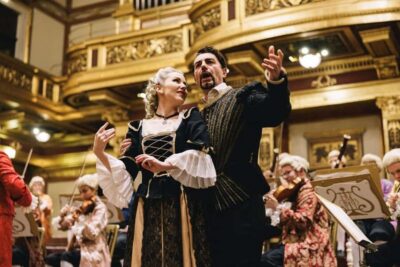 ★ 4.6Mozart Concert at the Musikverein – Golden HallFrom $815,194 reviews
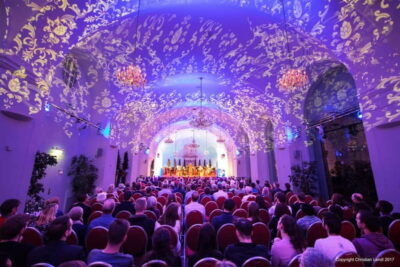 ★ 4.5Mozart and Strauss Concert at SchönbrunnFrom $422,967 reviews
 Classical Concert at Mozart’s First House2,423 reviews
 ★ 4.5Mythos Mozart ExperienceFrom $27895 reviews
 ★ 4.5Vienna Mozart Concert in Historical Costumes at the MusikvereinFrom $83888 reviews
 ★ 4.5Johann Strauss Dinner Show at the PraterFrom $93730 reviews
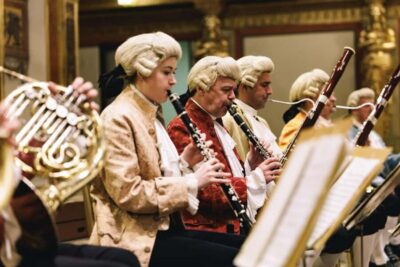 ★ 4.6Mozart Concert at the Vienna State OperaFrom $81461 reviews
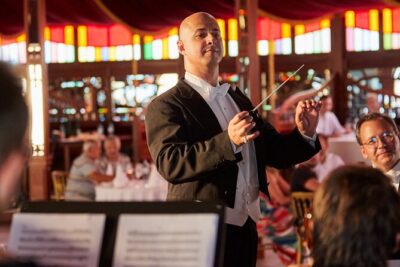 ★ 4.5Strauss Dinner ShowFrom $95395 reviews
Browse the lists this tour appears in