
Reviewed · TOURS
Taste and Tour Small Organic Wineries with a Winemaker
A good day of wine can start with a river. This private tour follows the Donau from Krems through small organic wineries, with winemaker-led tastings that feel personal and real. I love the craft focus at each stop, from hand-harvest choices to aging methods, and I love finishing with vineyard views instead of rushing back after the last pour. The main catch is physical comfort: you should expect some walking and you may need to go down into cellars in smaller rooms.
It’s built for people who like explanations that connect the vineyard to what’s in the glass. You get about 2.5 hours of touring and roughly 30 minutes of driving between locations, so you spend most of the time actually tasting and asking questions. The tour runs about 3 hours total, in English, and it’s private—your group only—so you’re not stuck waiting your turn.
If you’re staying in Vienna, you can pair this with the direct train to Krems (a scenic ride along the Donau), or even arrive by boat and meet your host there. With a perfect 5/5 average and 100% recommendation, this is one of those rare wine days where the logistics support the vibe, not the other way around.
In This Review
- Quick hits before you go
- Vienna-to-Krems Wine Country, Without the Big-Tour Feel
- How the 3-Hour Format Shapes the Day
- Stop 1: Kapitel Zwei in Kremsleithen (The Organic Amphora Experiment)
- Stop 2: Weingut Mantlerhof in Gedersdorf-Brunn im Felde (Organic Classics with Deep Roots)
- Stop 3: Weingut Feldtheorie at Schoenberg am Kamp (Natural Sciences to Natural Wine Style)
- Stop 4: WeinSchach in Langenlois (Pet Nat Experiments with Biological Production)
- Stop 5: Welterbesteig Viewing Point (A Quick Walk That Lands the Day)
- Price, Time, and Value: What $114 Really Buys
- Who This Tour Fits Best (And Who Might Be Happier Elsewhere)
- Should You Book This Kapitel Zwei to WeinSchach Winemaker Tour?
- FAQ
- How long is the tour?
- Where does the tour start and end?
- Is pickup available?
- Can I get there from Vienna by train?
- What language is the tour in?
- What should I expect in terms of walking?
- Is this a private tour?
- What’s the tasting focus?
- Are service animals allowed?
- Can I cancel for a full refund?
Quick hits before you go
- Private, winemaker style: You visit micro and family producers with direct stories behind the wine.
- Organic and sustainability themes: From organic vineyards to biologically produced sparkling experiments.
- Tastings across styles: Amphora-aged still whites, classic Austrian grapes, and a Pet Nat approach to sparkling.
- Donau rhythm: Most of the day is tasting (about 2.5 hours on-site), with only short drives between stops.
- A real vineyard walk: You end with a short hike and a viewing point over the region.
Still weighing this one? Line it up against a few Vienna favourites first.
- Vienna: Vivaldi’s Four Seasons Concert in Karlskirche★ 4.7 · 14,951 reviews
- Vienna: Schönbrunn Palace & Gardens Skip-the-Line Tour★ 4.7 · 7,739 reviews
- Vienna: Light of Creation Votive Church Immersive Light Show★ 4.8 · 6,779 reviews
- Vienna Spanish Riding School Guided Tour★ 4.7 · 6,765 reviews
Vienna-to-Krems Wine Country, Without the Big-Tour Feel
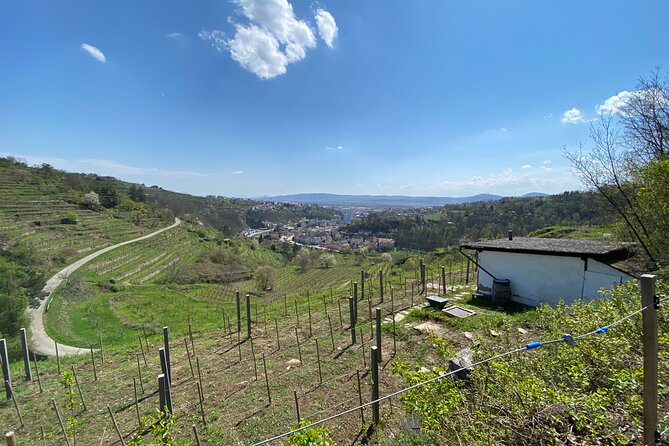
This tour is set up around the classic Lower Austria wine corridor near Krems, but the experience doesn’t feel like the usual bus-day loop. The structure is simple: five stops, each one small, each one with a reason to exist, and a good chunk of time at the places where wine is actually made.
At the center is the Donau River. It isn’t just scenery. The route makes it easy to understand why these slopes, elevations, and soils matter. You’re moving through vineyard country in short hops, which keeps the day relaxed enough to ask questions instead of just collecting souvenirs.
One practical plus for Vienna-based travelers: the meeting point is in Krems (Bahnhofpl. 2), and pickup is flexible if you coordinate. That means you can keep your morning simple—train in, meet your host, tour, then head back. You’re not forced into a complicated city-to-country transfer that steals your energy.
And yes, it’s a private tour. That matters for wine tastings because details come out faster when you’re not sharing the room with strangers. If you like asking how a wine is made—rather than only what it tastes like—you’ll probably love the pace.
How the 3-Hour Format Shapes the Day
The tour runs about 3 hours total. About 2.5 hours are spent on the tour itself, and around 30 minutes are driving between stops. That ratio is more than math. It changes how the day feels.
With shorter driving segments, you get fewer “transition moments” where everyone’s checking maps or trying to remember what they were just tasting. Instead, you stay in a wine-making mindset. It also means you’re less likely to feel rushed at each winery stop, which helps if you’re the type who wants to compare notes in real time.
You’ll also want to plan for a moderate level of walking. Some cellars can mean stairs or tight spaces, and the tour notes that it’s not recommended if you can’t walk down into a cellar. If small rooms bother you, think carefully. The day is intimate by design—this isn’t a wide open tasting hall situation.
Stop 1: Kapitel Zwei in Kremsleithen (The Organic Amphora Experiment)
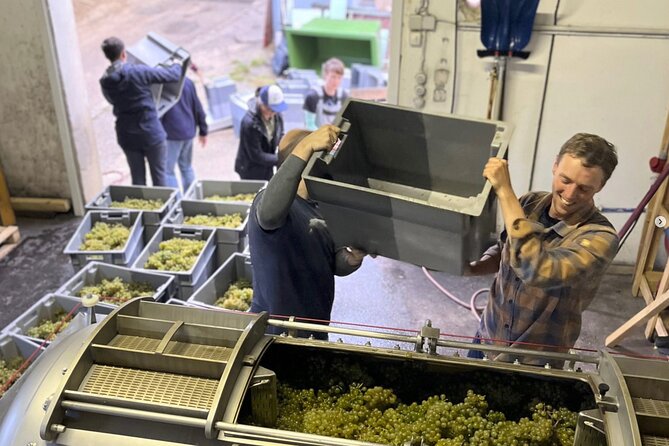
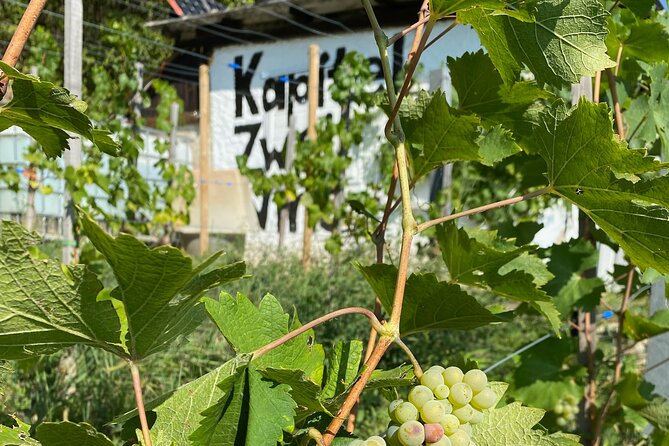
The first stop is Kapitel Zwei Wine in Kremsleithen, a micro-winery that leans hard into organic and sustainable farming. You drive up from near sea level about 400 meters to reach the vineyards, which immediately gives you that “why is the slope important?” feeling.
Kremsleithen is the ried (single-vineyard area) feeding this project. The ried was abandoned decades ago and then replanted in May 2022, which is a rare detail you can actually connect to the wines you taste. It’s not just a romantic story; it’s a reminder that vineyard life is long, patient, and sometimes experimental.
What I like about this stop is the clarity of the wine-making concept. Kapitel Zwei focuses on French grape varietals for Austria—Chenin Blanc, Roussanne, and Sémillon—and the wine aging happens in amphora and steel tanks. Amphora aging often signals a more textured, hands-on approach, while steel tends to keep things precise and fresh. Even if you’re not an expert, you’ll probably spot how those choices affect aroma and mouthfeel.
You also get the soil and altitude context: Kremsleithen sits around 300 meters above sea level, with loamy, sandy soil and clay. And yes, it’s historically grounded too—records mention it as far back as 1266. The result is a stop that feels both experimental and rooted.
The one practical consideration: this is a micro setting. Expect small spaces and close conversation, which is great if you enjoy that. It’s not ideal if you prefer bigger venues where you can spread out.
Stop 2: Weingut Mantlerhof in Gedersdorf-Brunn im Felde (Organic Classics with Deep Roots)
Next up is Weingut Mantlerhof, a family-owned winery with history going back to 1365, run by the Mantler family for over 200 years. This stop is a strong contrast to Kapitel Zwei because it feels more traditional in its setting, yet still modern in its organic direction.
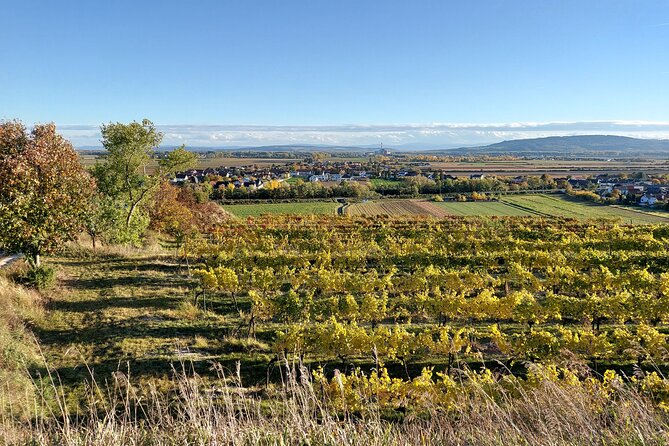
Mantlerhof is located in Gedersdorf, near the river Kamp before it merges with the Danube. The area comes with built-in context: you can look toward Krems in one direction and see towers of Grafenegg in another. That kind of orientation makes it easier to place the vineyards geographically, not just visually.
Once you arrive, the setting is charming and readable. There’s a pond in the village center, and nearby sits an old manor with an early classicist facade—Mantlerhof. For me, this matters because it helps you understand how wineries used to operate as part of village life, not just as a stand-alone business.
What you’ll take away is their organic production and focus on long-lasting wines. They work 15 hectares of vineyards, and the grape focus is Grüner Veltliner and Roter Veltliner. If you’ve only tried Austrian wine in a generic way, Grüner Veltliner is your chance to see why it’s such a signature grape here. Roter Veltliner adds a different character while keeping the same regional logic: vineyard site plus careful fermentation and aging choices.
This stop is likely one of the best for pairing wine taste with real-world history. If you want classics with a conscience, Mantlerhof is built for that.
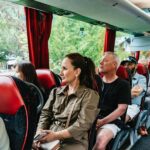
Stop 3: Weingut Feldtheorie at Schoenberg am Kamp (Natural Sciences to Natural Wine Style)
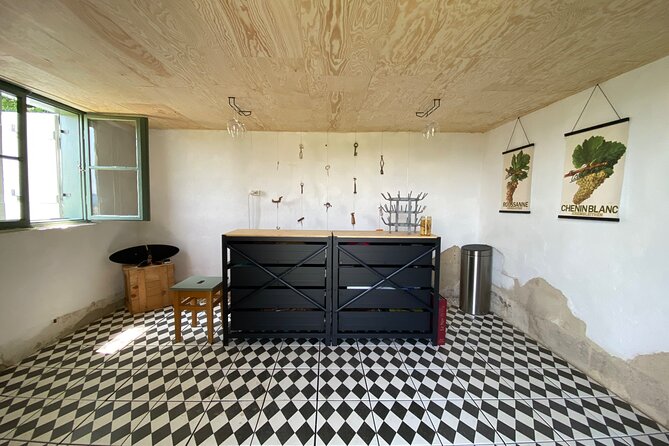
Then you move to Schoenberg am Kamp for Weingut Feldtheorie, run by Ulrike Filp and Robert Bormuth, along with friends and family. This is the stop where the “why” gets especially human.
They came to wine through natural sciences studies, then discovered their love for wine on a trip to New Zealand. After that, they did internships in Germany, Australia, and Austria before settling in Wachau. Later, they bought parcels in Kamptal and decided to stay the course—working both cellar and vineyards to translate the uniqueness of Kamptal into the wines.
What I like here is how the story matches the style. Feldtheorie’s angle is about expressing place. That usually leads to wines that feel less like a product trying to impress and more like a message from the vineyard—how it grew, how it was treated, and how it was handled after harvest.
In practical terms, you’ll likely find that this stop is great for asking questions. The founders’ background suggests they can explain choices clearly, from viticulture mindset to cellar decisions. If you enjoy connecting science (even loosely) to sensory results, this is your sweet spot.
The time here is shorter than some others, so I’d come with one or two focused questions. Examples: How does their approach show in the glass? What do they want you to notice first?
Stop 4: WeinSchach in Langenlois (Pet Nat Experiments with Biological Production)
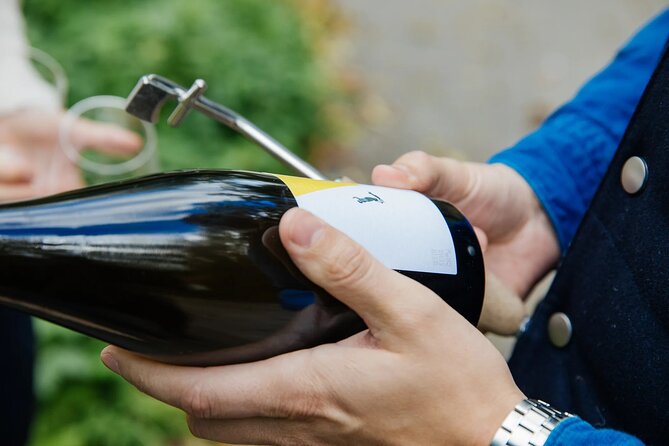
In Langenlois you visit WeinSchach, a sparkling winery that treats nature as the main ingredient. Their core idea is that wine should unfold freely in the bottle, then find balance through careful, biological production.
The big headline here is their goal for Pet Nat that they see on equal footing with world-class sparkling wines. That’s a specific philosophy, and it explains their willingness to experiment. Sometimes experiments mean going backward, starting over, and learning from what didn’t work. For wine lovers, that’s refreshing. It signals they’re not just following a recipe—they’re testing possibilities.
From a practical standpoint, you’ll want to pay attention to what they mean by biological work and hand harvesting. They harvest by hand and then de-gorge the sparkling wines. Even if you don’t know all the jargon, you can still ask how those steps connect to the final style.
If you’re the kind of traveler who only thinks of Austrian wine as still whites, this is a fun course correction. Pet Nat is a category that rewards curiosity. It’s not only about bubbles; it’s about texture, freshness, and the particular energy that comes from the process.
This stop also keeps the day varied. After Grüner/organic classics, seeing a sparkling approach based on experimentation helps you understand how flexible the region’s winemaking culture really is.
Stop 5: Welterbesteig Viewing Point (A Quick Walk That Lands the Day)
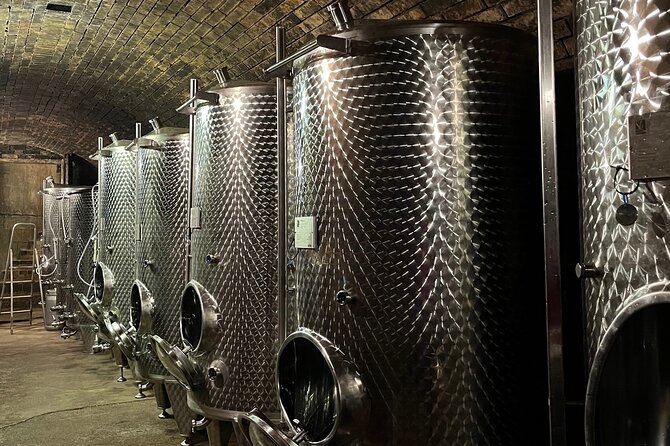
You finish with a short 7–10 minute walk through vineyards to a viewing point over the region, called Ausblick am Welterbesteig. This is one of those parts that seems small in the schedule but makes a bigger emotional difference than you’d expect.
Why it works: you’ve just tasted multiple interpretations of the same place logic—slopes, soils, grape choices, cellar methods. Now you get the physical context. You see how close vineyards are to river country and how the terrain shapes what’s planted.
Also, it’s a good reset. Tastings can blur your palate if you’re comparing several wines back-to-back. A short walk gives you a palate pause and a moment to decide which bottle you’ll actually remember later.
Price, Time, and Value: What $114 Really Buys
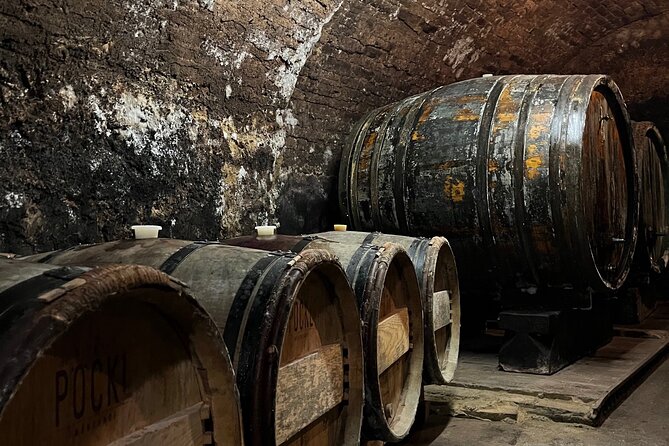
The price is $114.02 per person for about 3 hours. That’s not “cheap wine tourism,” but it’s also not the inflated price tag that sometimes comes with private experiences.
The value comes from three things you can actually feel during the day:
- Multiple stops with direct producer access. You’re not just watching someone talk from the tasting counter. You’re meeting small-scale operations where you can ask detailed questions.
- Organic and project-based winemaking. Kapitel Zwei’s amphora and amphora/steel aging, Mantlerhof’s organic vineyard work, Feldtheorie’s natural sciences-to-cellar path, and WeinSchach’s Pet Nat experiment each represent a real idea—not just a brand.
- Time efficiency. With only about 30 minutes of driving between stops, you’re paying for wine time, not bus time.
There’s also a subtle advantage for Vienna visitors: the tour is anchored in Krems, which you can reach by direct train or even by boat. That can save money and stress versus a tour that requires extra transportation from deep inside Vienna.
One more reality check: since it’s booked about 55 days in advance on average, popular slots can fill. If you want a specific day, don’t wait.
Who This Tour Fits Best (And Who Might Be Happier Elsewhere)
This is best for:
- People who like small, producer-led wine experiences rather than big-batch tastings.
- Anyone interested in organic viticulture and how it connects to what’s in the bottle.
- Wine lovers who want to ask questions about vineyard choices, aging vessels like amphora, and sparkling methods for Pet Nat.
You might want to rethink it if:
- You can’t walk down into a cellar or prefer not to deal with stairs and tight spaces.
- You don’t enjoy smaller rooms or very close conversation settings.
- You want a long scenic day with only light wine tasting. This tour is wine-forward and takes place inside real production settings.
Should You Book This Kapitel Zwei to WeinSchach Winemaker Tour?
If you want a Vienna-area wine day that feels like a conversation with actual winemakers and families—not a scripted parade—this is a strong yes.
Book it if you care about organic and sustainability themes, like tasting wines with a clear production story, and you’re comfortable with some walking (plus possible cellar time). The format, with its short drives and five focused stops, makes it a good use of limited vacation days.
Don’t book it if cellar access and small rooms would make you uncomfortable. And if you want a purely scenic outing with minimal winery time, you may prefer a different kind of wine tour that’s less hands-on.
But if you’re a wine traveler who likes details—grape choices, soils, amphora aging, Pet Nat experimentation—this Krems route is built to satisfy. It’s the kind of day that leaves you with a real sense of place, not just a few bottles.
FAQ
How long is the tour?
It’s about 3 hours in total.
Where does the tour start and end?
It starts at Bahnhofpl. 2, 3500 Krems an der Donau, Austria, and it ends back at the same meeting point.
Is pickup available?
Pickup is offered and the host says they can be flexible about when and where you meet.
Can I get there from Vienna by train?
Yes. If you’re staying in Vienna, you can take a direct train to Krems, and the host can meet you at the train station.
What language is the tour in?
The tour is offered in English.
What should I expect in terms of walking?
You should have a moderate physical fitness level. The tour notes that some hiking will be required, and you may need to walk down into a cellar at some point.
Is this a private tour?
Yes. It’s a private tour/activity, and only your group participates.
What’s the tasting focus?
The tour is wine-forward and focuses on organic and small-producer winemaking across multiple stops, including still wines and sparkling wine.
Are service animals allowed?
Yes, service animals are allowed.
Can I cancel for a full refund?
You can cancel up to 24 hours in advance for a full refund. If you cancel less than 24 hours before the experience’s start time, the amount paid is not refunded.
More Tours in Vienna
- Vienna: Schönbrunn Palace & Gardens Skip-the-Line Tour
★ 4.7 · 7,739 reviews - Vienna Spanish Riding School Guided Tour
★ 4.7 · 6,765 reviews - Vienna: Skip-the-Line Sisi Museum, Hofburg and Gardens Tour
★ 4.8 · 5,918 reviews - Vienna: Skip-the-Line Schönbrunn Palace & Gardens Tour
★ 4.8 · 5,411 reviews - Vienna: Guided Walking Tour of City Center Highlights
★ 4.7 · 4,989 reviews
More Tour Reviews in Vienna
- Vienna: Vivaldi’s Four Seasons Concert in Karlskirche
★ 4.7 · 14,951 reviews - Vienna: Schönbrunn Palace & Gardens Skip-the-Line Tour
★ 4.7 · 7,739 reviews - Vienna: Light of Creation Votive Church Immersive Light Show
★ 4.8 · 6,779 reviews - Vienna Spanish Riding School Guided Tour
★ 4.7 · 6,765 reviews - Vienna: Classical Concert in the World-Famous Musikverein
★ 4.6 · 6,673 reviews
Just In: New Vienna Reviews



Tours, compared.
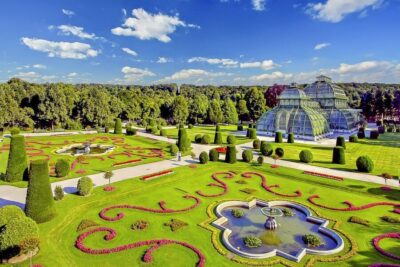 ★ 4.7Schönbrunn Palace & Gardens Skip-the-Line TourFrom $637,739 reviews
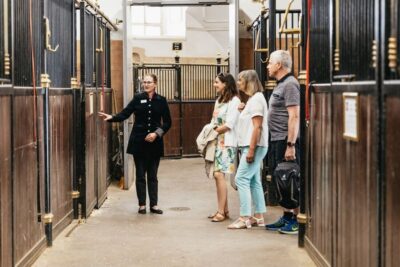 ★ 4.7Vienna Spanish Riding School Guided TourFrom $286,765 reviews
 ★ 4.8Skip-the-Line Schönbrunn Palace & Gardens TourFrom $765,411 reviews
 ★ 4.2Hop-On Hop-Off Sightseeing Bus Tour in 19 LanguagesFrom $414,518 reviews
 ★ 4.6Time Travel and Magic Vienna History TourFrom $273,879 reviews
 ★ 4.4Big Bus Hop-On, Hop-Off Tour by Open-Top BusFrom $363,529 reviews
 ★ 4.8Vienna Central Cemetery Guided Walking TourFrom $3353,307 reviews
 ★ 4.3Bus & Schönbrunn Palace Skip-the-Line Guided TourFrom $812,802 reviews