
Reviewed · HISTORICAL TOURS
Vienna: Time Travel and Magic Vienna History Tour
Time Travel Vienna packs 2,000 years into one high-energy hour. You’ll move through old monastery cellars and watch 5D and VR segments that turn Viennese history into something you can actually feel.
My favorite part is how the show jumps from courtly Habsburgs to World War II in a way that’s easy to follow, including Chancellor Figl’s relief message. The main drawback is practical: there’s no elevator, and the exhibition uses two levels with about 50 steps, so it’s not suitable for wheelchair users or people with mobility impairments.
In This Review
- Key things to know before you go
- A One-Hour Timeline of Vienna, from Vindobona to Today
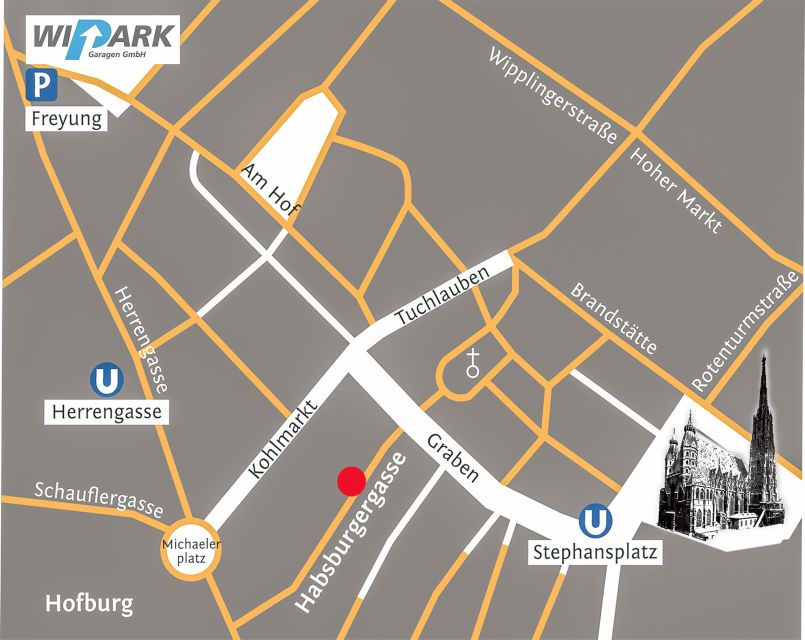
- Getting There: Meet at Habsburgergasse 10A in the Historic Center
- Monastery Cellars and the Roman Setup: Vienna’s 2,000-Year Starter Kit
- Portrait Gallery and Court Life: Meeting the People Behind the Crown
- 5D Cinema and VR Music History: Feeling the Sound of Vienna
- Bomb Shelter Chaos and Chancellor Figl’s Relief Moment
- Virtual Flight Over Vienna and the Horse-Drawn Carriage Finish
- Price and Value: What $27 Buys You (and What It Does Not)
- Who This Works Best For
- My Practical Tips for a Smooth Visit
- Should You Book Time Travel Vienna?
- FAQ
- How long does the Vienna Time Travel experience last?
- Where is the meeting point for Time Travel Vienna?
- What’s included with the ticket?
- Is there an elevator, and is it wheelchair accessible?
- What time is the last admission?
- How can I get there using public transport?
- Are pets or video recording allowed?
Key things to know before you go
- You cover Rome to WWII to modern Vienna in one compact route, so it’s great for a first day.
- 5D cinema + VR glasses do most of the heavy lifting for learning (less reading, more action).
- WWII bomb-shelter effects use dramatic audio/visual staging, including named segments like Enemy Aircraft and In Austria is free.
- The portrait gallery format is meant to connect important people to the story, not just list dates.
- It ends with a simulated rooftop flyover and a horse-drawn carriage scene over today’s city.
Vienna reimagined, screens and all
- Vienna: Time Travel and Magic Vienna History Tour★ 4.6 · 3,879 reviews
- Time Travel-Magic Vienna History Tour Ticket★ 4.5 · 1,099 reviews
- Vienna: “Sisi’s Amazing Journey” Virtual Reality Experience★ 4.5 · 673 reviews
- Vienna: Time Traveling Virtual Reality Sightseeing Tour★ 4.6 · 672 reviews
A One-Hour Timeline of Vienna, from Vindobona to Today
If Vienna is the big idea you want in your head—Romans, emperors, music, and modern life—this is a fast way to get it. Time Travel Vienna is designed like a story you walk through: you move from room to room, hit major eras, and get enough context that the city’s buildings make more sense later.
The “time travel” concept isn’t about a lecture hall. It’s about staged scenes and technology-driven moments. You’ll see history presented through interactive multimedia, including a 5D cinema segment and VR glasses for the music-history portion. That mix is why this works even if you don’t consider yourself a history person.
At $27 per person for a 1-hour experience, you’re paying for production value. It’s not a quiet museum stop where you linger with paintings. It’s closer to a cinematic timeline with real educational intent behind it.
Getting There: Meet at Habsburgergasse 10A in the Historic Center
Convenience is a real part of the appeal here. The meeting point is Habsburgergasse 10A, 1010 Vienna, and it’s in the Altstadt (historic center) area, about 200 meters from the Hofburg and roughly 100 meters from Graben, Kohlmarkt, and Stephansplatz.
Subway options are straightforward: you can use U1 (Stephansplatz) or U3 (Herrengasse). If you’re driving, there’s parking at the Freyung garage at a reduced price.
Tip: because it’s central, you can pair it with a classic day layout—start near Stephansplatz, do this early, then walk outward. Just keep an eye on the day’s time window: last admission is at 19:00, so late plans can cut it close.
Monastery Cellars and the Roman Setup: Vienna’s 2,000-Year Starter Kit
The atmosphere begins right away. The experience is set around extensive cellars of the St. Michael’s monastery, which helps a lot. Even before the high-tech scenes, you get the sense that you’re entering a “Vienna underground.” That physical setting makes the time-jumps feel less random.
The story starts as far back as the days of the ancient Roman camp of Vindobona. You’re not just told that Romans were here—you’re led through the idea using multimedia and staged scenes. The result is that later, when you read or hear about Roman Vienna, your brain has a reference point.
One detail that stands out from firsthand impressions: the early portion can include dramatic episodes such as a plague-themed segment. That’s the show’s style—big emotional moments tied to major historical turning points. If you’re traveling with kids, these high-impact moments are often what keep attention from drifting.
Portrait Gallery and Court Life: Meeting the People Behind the Crown
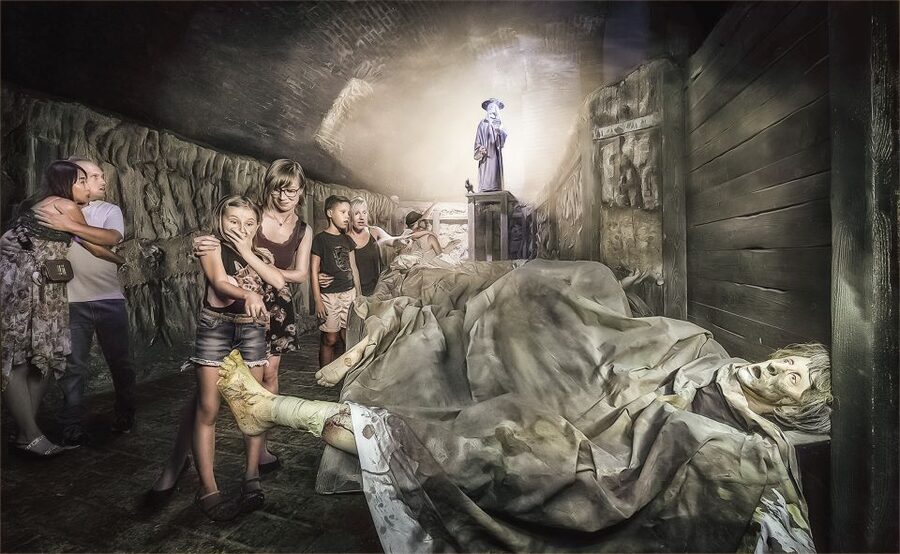
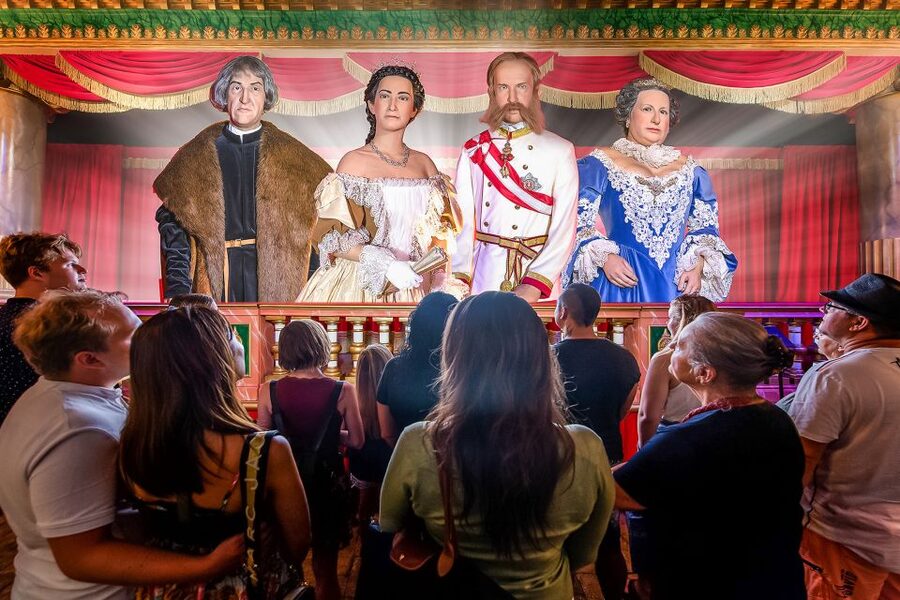
Once you’re past the opening era, the exhibition shifts into the “important people” phase. The show uses a portrait gallery format, where you learn about key figures in Viennese history and hear what they have to say. This is smart for a city like Vienna, where the names can blur together if you’re only looking at plaques.
You’ll also get a look at imperial Vienna and the nobility of the Viennese court, including a chance to meet members of the imperial family personally in the simulation-style presentation. It’s not the same as seeing the actual artifacts in a palace museum, but it gives you the social map: who had power, what court life was like, and why Vienna developed its distinctive identity.
If you love architecture and ceremonial spaces, the show’s visual style helps connect the dots. One small but telling theme that comes through in how the sets are presented is the idea of “Viennese color”—the ochre tones you see on many older facades. Even if you don’t think you care, it helps your eye learn the city faster.
Deeper into old Vienna

5D Cinema and VR Music History: Feeling the Sound of Vienna
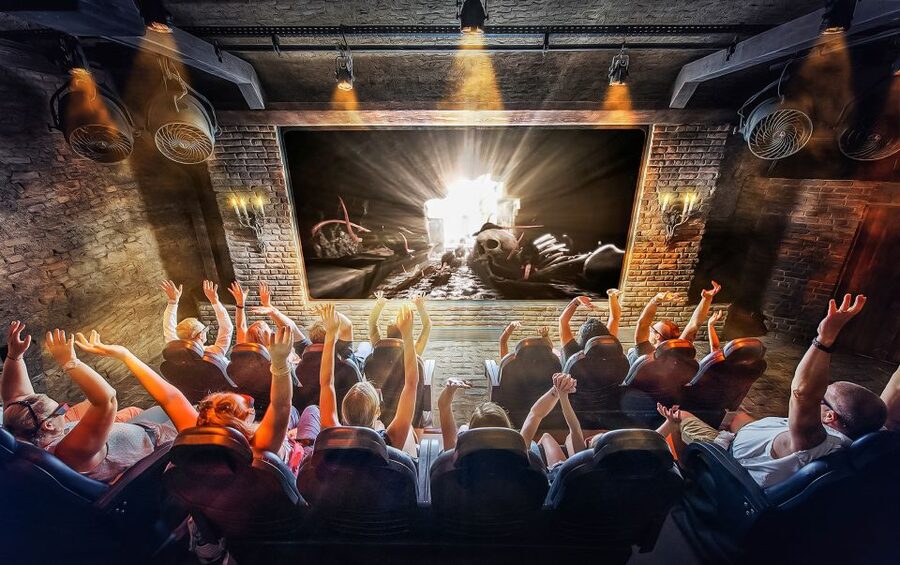
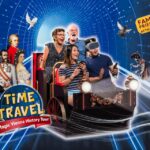
This is where the show really justifies its tech-forward approach. The 5D cinema uses spectacular effects to give you the sense of living in ancient Vienna. It’s designed for motion, sound, and sensory cues, so you don’t have to work to stay engaged. Reviews consistently flag this as a standout component, which makes sense for a one-hour program: it’s the moment that feels like a mini movie on a timer.
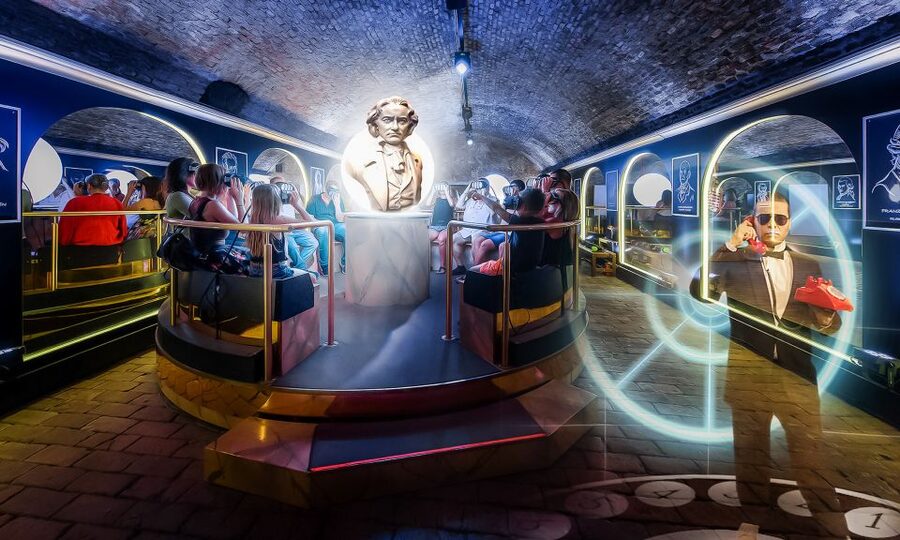
Then you get VR glasses for the course of Viennese music history, presented in a simulated world. The goal isn’t to teach music theory. It’s to show the story of how Vienna became a music center, with a guided sense of sequence and atmosphere. If you’re a fan of classical music, this is a useful warm-up. If you’re not, it’s still a fun way to understand why the city’s cultural reputation exists.
Practical note: if you get motion sickness easily, pay attention to how you personally handle VR and 5D-style effects. The experience is short, but it’s still sensory-heavy.
Bomb Shelter Chaos and Chancellor Figl’s Relief Moment
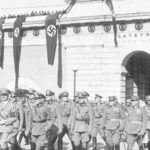
World War II is handled directly, and it’s the part that feels most emotionally serious. You’ll encounter a scene called Enemy Aircraft!, where you feel like WWII is raging and you’re inside a bomb shelter. The show uses sound and visual staging to create that claustrophobic feeling—again, not a documentary, but a dramatic simulation meant to make the era stick.
Then there’s the segment titled In Austria is free!, built around Chancellor Figl’s moving speech amid battered remnants of Vienna. This is the show’s pivot from destruction to recovery, and it gives the history a human finish: relief, aftermath, and what it meant to keep living after major trauma.
This section is also why I think the tour works best when you go in with an open mind. You’re not just collecting facts. You’re being reminded that history is lived, not just studied.
Virtual Flight Over Vienna and the Horse-Drawn Carriage Finish
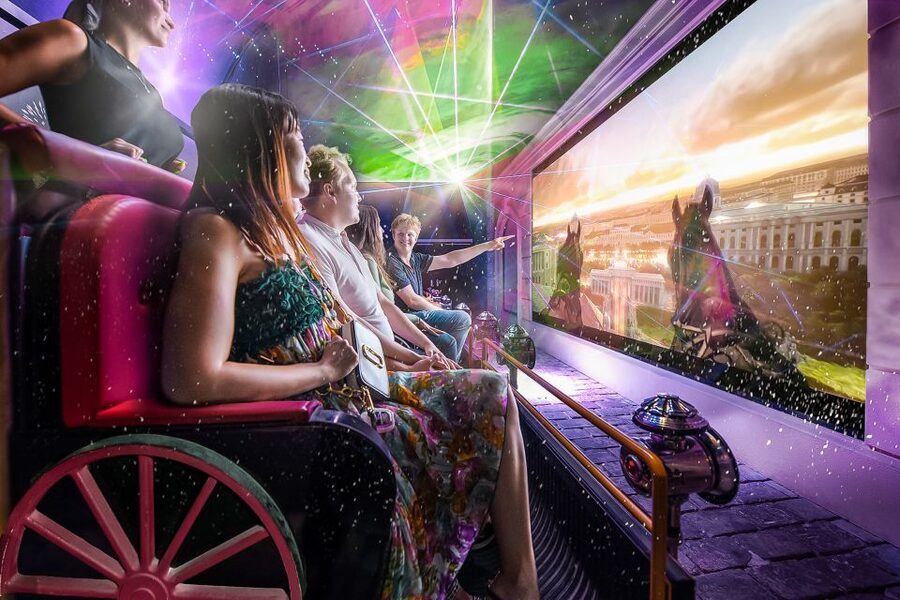
The ending is cinematic and very “Vienna.” You get a special treat: simulated flying over the roofs of Vienna. It’s a quick way to connect the city’s layout with the eras you just saw.
Then your journey closes with a virtual horse-drawn carriage flight over present-day Vienna. The pacing matters here. After WWII and recovery, the show shifts to something lighter and forward-looking, essentially telling you: this is what the city became, and it’s worth seeing.
If you’re doing the tour early in your trip, this ending can act like a mental map. You’ll start noticing which sights sit where, and why Vienna’s center looks the way it does.
Price and Value: What $27 Buys You (and What It Does Not)
At $27 per person for about one hour, this is best treated as an attraction with learning baked in—not a long guided tour. For the price, you’re getting:
- multiple technology formats (5D and VR),
- a guided narrative timeline across major eras,
- and a central-location experience you can fit into a sightseeing day.
You’re not paying for private access, deep historical research, or time to study documents. If you want a slow, detail-heavy museum visit, you’ll likely need additional stops. But if your goal is orientation—getting the big story of Vienna into your head quickly—this is strong value.
Also, the overall satisfaction signal is high. The experience sits around 4.6 stars with thousands of ratings, which matches what the content seems built to do: keep people engaged for an hour while teaching the core storyline.
Who This Works Best For
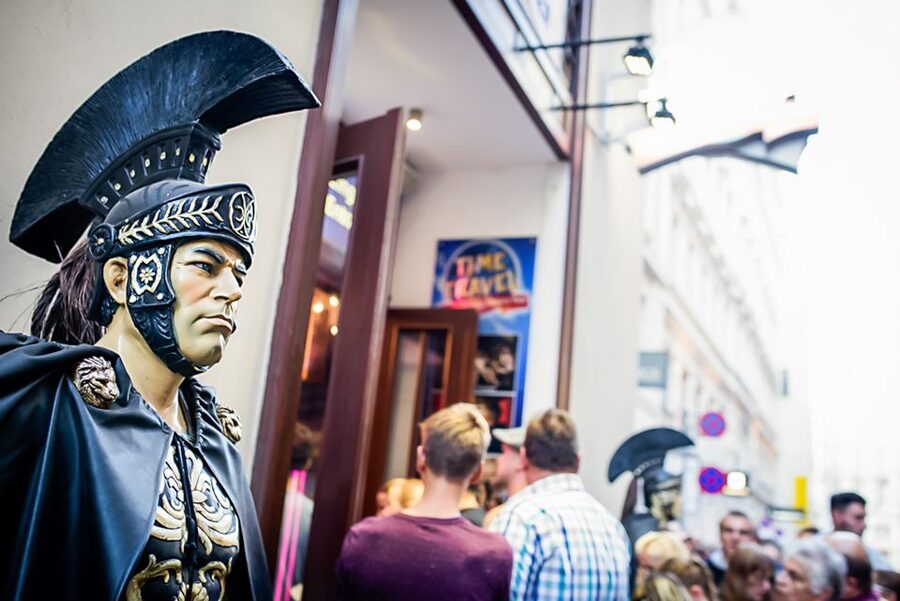
This attraction is built for a wide age range. Kids usually like the sensory elements: 5D effects and VR do the attention-grabbing. Adults often like the way the eras are organized—history isn’t scattered; it’s staged.
The biggest “not for you” group is clear. Due to structural limits—no elevator and about 50 steps between two levels—this is not suitable for wheelchair users or people with mobility impairments. If stairs are a problem for you, plan for an alternative that’s mentioned as available across the street (there’s a second attraction linked to that setup), or choose a different style of museum visit.
One more practical point from the attraction rules: pets aren’t allowed and video recording isn’t allowed. So pack light and plan on enjoying the scenes without capturing everything on your phone.
My Practical Tips for a Smooth Visit
A little planning goes a long way with attractions like this. Here’s what I’d do if I were dropping in for my own one-hour history fix:
- Go earlier rather than later. Last admission is 19:00, and it’s a timed-world building that doesn’t benefit from rushing.
- Arrive ready for sensory tech. 5D cinema and VR glasses are a core part of the program, so expect that your attention will be directed, not “free-roam.”
- Use the multilingual audio guide. It’s included, and it helps the timeline stay readable across languages.
- Pair it with a nearby themed stop. The attraction sits right by the Hofburg area, and there’s also a popular Sisi-themed option across the way. Doing them back-to-back can make the imperial story feel complete.
- Bring energy, not expectations of a quiet archive. This is meant to be fun and fast. If you treat it like a movie with education, you’ll get more out of it.
Also, if you’re looking at it as your first Vienna activity, that’s a smart move. The show gives you enough context that your later walks around the city start to feel less like wandering and more like connecting scenes you already saw.
Should You Book Time Travel Vienna?
Yes, I’d book it if you want a high-impact, short way to understand Vienna’s story—from Roman beginnings through imperial life and into WWII recovery. For families, it’s especially convenient: one hour, clear pacing, and technology that keeps kids engaged without turning it into a random entertainment stop.
I’d skip it if you need step-free access. The stairs/no elevator setup is a hard limitation, and it’s not a “bring the right accommodation” situation.
Bottom line: if you like history that moves, and you’re happy trading depth for momentum, this is a very good use of an hour in Vienna’s center—especially for first-time visitors who want their city bearings fast.
FAQ
How long does the Vienna Time Travel experience last?
The experience is scheduled for 1 hour.
Where is the meeting point for Time Travel Vienna?
The meeting point is Habsburgergasse 10A, 1010 Vienna.
What’s included with the ticket?
Your ticket includes entry to the attraction and a multilingual audio guide.
Is there an elevator, and is it wheelchair accessible?
There is no elevator. The exhibition has two levels with about 50 steps, and wheelchair users are not accepted due to building regulations.
What time is the last admission?
The last admission is at 19:00.
How can I get there using public transport?
You can take the underground on U1 (Stephansplatz) or U3 (Herrengasse).
Are pets or video recording allowed?
Pets are not allowed, and video recording is not allowed inside the attraction.
More Tours in Vienna
- Vienna: Schönbrunn Palace & Gardens Skip-the-Line Tour
★ 4.7 · 7,739 reviews - Vienna Spanish Riding School Guided Tour
★ 4.7 · 6,765 reviews - Vienna: Skip-the-Line Sisi Museum, Hofburg and Gardens Tour
★ 4.8 · 5,918 reviews - Vienna: Skip-the-Line Schönbrunn Palace & Gardens Tour
★ 4.8 · 5,411 reviews - Vienna: Guided Walking Tour of City Center Highlights
★ 4.7 · 4,989 reviews
More Tour Reviews in Vienna
- Vienna: Vivaldi’s Four Seasons Concert in Karlskirche
★ 4.7 · 14,951 reviews - Vienna: Schönbrunn Palace & Gardens Skip-the-Line Tour
★ 4.7 · 7,739 reviews - Vienna: Light of Creation Votive Church Immersive Light Show
★ 4.8 · 6,779 reviews - Vienna Spanish Riding School Guided Tour
★ 4.7 · 6,765 reviews - Vienna: Classical Concert in the World-Famous Musikverein
★ 4.6 · 6,673 reviews
Vienna, Reimagined
- Vienna: Light of Creation Votive Church Immersive Light Show
★ 4.8 · 6,779 reviews - Time Travel-Magic Vienna History Tour Ticket
★ 4.5 · 1,099 reviews - Vienna: “Sisi’s Amazing Journey” Virtual Reality Experience
★ 4.5 · 673 reviews - Vienna: Time Traveling Virtual Reality Sightseeing Tour
★ 4.6 · 672 reviews - Ikono Vienna an Immersive Experience
★ 4.5 · 543 reviews
Just In: New Vienna Reviews



Historical Tours, compared.
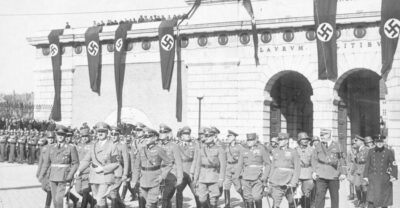 ★ 4.8World War II Historical Walking TourFrom $311,772 reviews
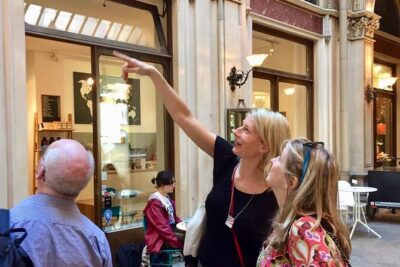 ★ 5.0Vienna Historic Center Small Group Walking TourFrom $721,746 reviews
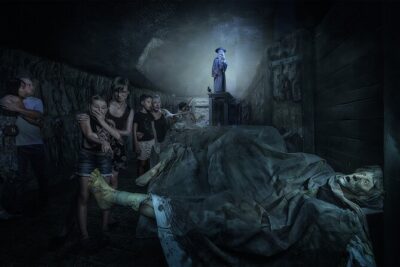 ★ 4.5Time Travel-Magic Vienna History Tour TicketFrom $271,099 reviews
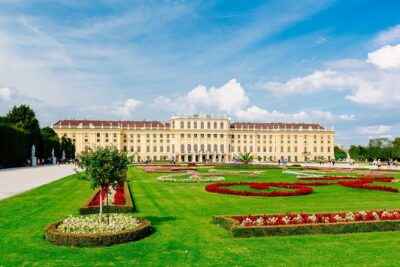 ★ 3.5Skip-the-Line Schonbrunn Palace Guided Tour and Vienna Historical City TourFrom $82940 reviews
 ★ 4.5Vienna Mozart Concert in Historical Costumes at the MusikvereinFrom $83888 reviews
 ★ 5.0Historical Hitler Walking Tour of ViennaFrom $32887 reviews
 ★ 4.9Essential History Walking TourFrom $34633 reviews
 ★ 4.8Historical Pharmacy Cellar Guided TourFrom $37541 reviews
Browse the lists this tour appears in