
Reviewed · IMMERSIVE & VR EXPERIENCES
Vienna: Time Traveling Virtual Reality Sightseeing Tour
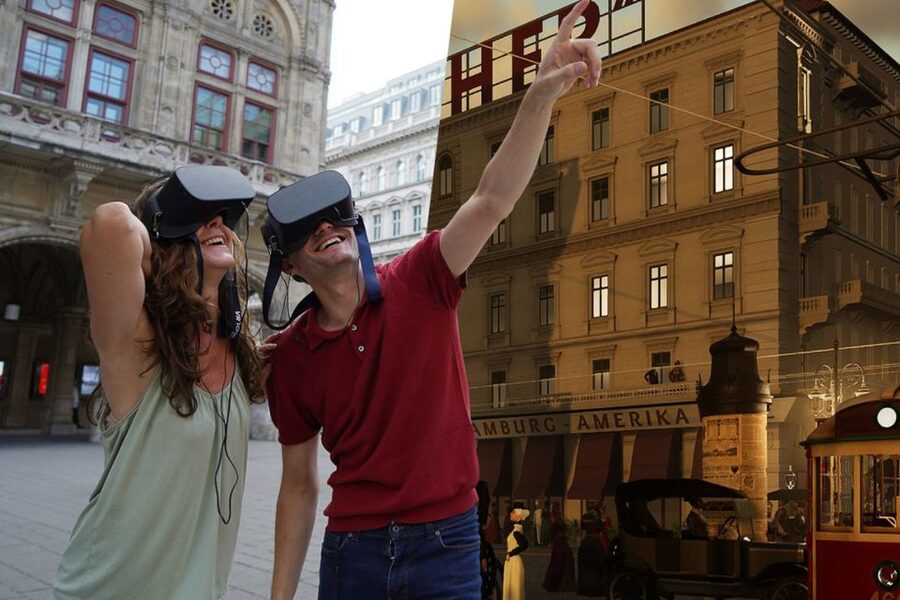
Vienna turns history into something you can look around at. This 360-degree VR walk through the old town drops you into six major moments, from medieval Vienna to WWII, with a guided story along the way.
What I really like is how the live guide ties the scenes to the streets you’re standing on, not just a screen you watch and forget.
The second big win is the multilingual audioguide plus the live English/German guidance, so you can keep your bearings even when history gets dense. The one drawback to note is that the VR moments are scene-based: a lot of the time you’re walking and listening, and the VR visuals can feel a bit dated compared with today’s sharpest headsets.
If you’re visiting Vienna for the first time, this is a smart way to get your bearings fast—without turning your schedule into a museum sprint.
In This Review
- Key things that make this Vienna VR tour work
- Why this VR time-walk is a great first-day idea in Vienna
- Meeting at Neuer Markt 6 and getting set up without stress
- The walking plan: 3.2 km of flat streets and six major moments
- White Sunday in 1483: a procession that explains public Vienna
- Ottoman pressure and the siege era: why 1683 still matters
- The plague and Augustin: dark history with survival and humor
- Hofburg hunting with Sisi and Franz Joseph: royalty made personal
- The Opera in the golden 20s: what “preparing” looked like
- St. Stephen’s Square and WWII: seeing the cathedral burn
- The guide and audioguide: staying clear in English or German
- VR quality reality check: the “scene” approach beats expecting perfection
- Price and value: is $45 worth it?
- Who should book this, and who should skip it
- A practical way to enjoy all six scenes
- Should you book this Vienna VR time-walk?
- FAQ
- How long is the Vienna VR sightseeing tour?
- Where does the tour start?
- Where does the tour finish?
- How much does it cost?
- What is included in the ticket price?
- Is food and drinks included?
- What languages are available?
- Is the tour wheelchair accessible?
- Is it suitable for children?
- Can I pay later and cancel if plans change?
Key things that make this Vienna VR tour work
- Six VR scenes in sequence, each tied to a specific part of central Vienna
- 360-degree all-round viewing, so you can look left, right, and behind you
- Medieval to WWII time jumps, including White Sunday (1483) and Soviet tanks at St. Stephen’s Square
- A real live guide (English and German) paired with earphones audioguide
- Flat, doable walking: about 3.2 kilometers over easy terrain
- Not for everyone: children under 8 and people with epilepsy should skip VR
Vienna reimagined, screens and all
- Vienna: Time Travel and Magic Vienna History Tour★ 4.6 · 3,879 reviews
- Time Travel-Magic Vienna History Tour Ticket★ 4.5 · 1,099 reviews
- Vienna: “Sisi’s Amazing Journey” Virtual Reality Experience★ 4.5 · 673 reviews
- Vienna: Time Traveling Virtual Reality Sightseeing Tour★ 4.6 · 672 reviews
Why this VR time-walk is a great first-day idea in Vienna
You don’t need to choose between “learning” and “seeing.” This tour blends both by taking you through the city center while the VR headset brings in what used to be there. It’s like getting a guided history lesson where the past shows up at street level.
I like tours that do more than point at buildings. Here, the story follows the big turning points that shaped Vienna into the cosmopolitan city it became—religious life, empire conflict, plague-era survival, royal pageantry, opera culture, and the trauma of the Second World War.
There’s also a practical reason this works early in your trip: you end at Albertina, right in the heart of things, so you can continue exploring with better context. Even if you end up returning to some of these places later, the time-order helps a lot.
Meeting at Neuer Markt 6 and getting set up without stress
Your starting point is Neuer Markt 6. Plan to arrive 15 minutes early and look for the turquoise-colored entrance.
The setup matters more than people think, because you’re going to wear a headset and listen through earphones. Getting checked in early means you’re not trying to untangle straps and cables while everyone else is already moving.
You also want to be ready for small “systems” moments: the guide will show you how to use the VR glasses and the audio earphones, and then you’ll switch between walking and headset time. If you’re the kind of person who likes to be fully ready before you start, this early arrival helps.
The walking plan: 3.2 km of flat streets and six major moments
The route is about 3.2 kilometers over flat terrain, which is good news if you don’t want a steep, exhausting day. You’re out for roughly 100 minutes total, with guided walking plus several VR scenes.
Here’s the key idea: you’re not just getting VR in one place. You walk between locations, and the tour uses the movement to make the history feel tied to the city’s geography. That’s why the walking portion still matters even if you don’t love audio tours.
Also, keep weather in mind. The tour may be canceled due to poor weather like heavy rain or storms, and that decision can happen at the last minute. If you’re planning other outdoor time right before or after, keep some slack.
White Sunday in 1483: a procession that explains public Vienna
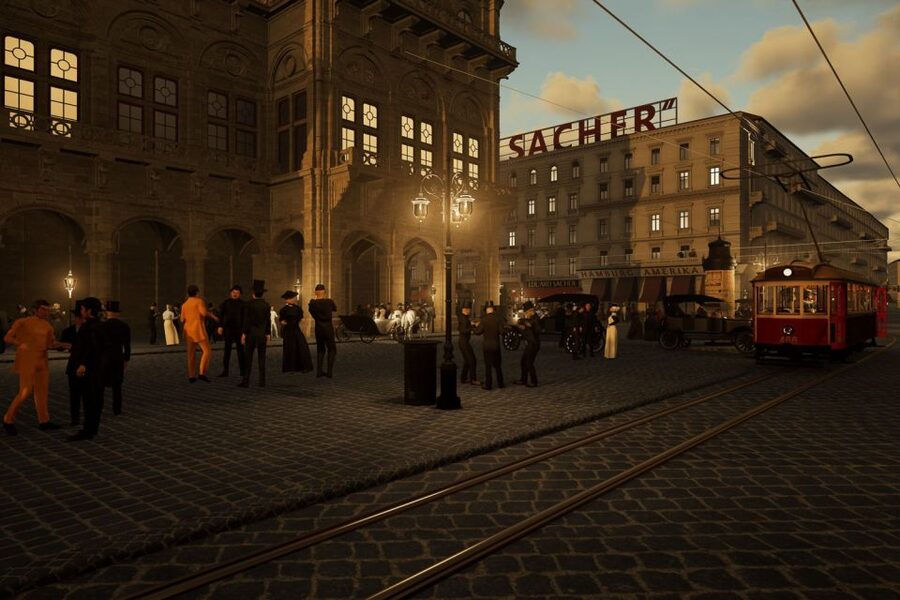
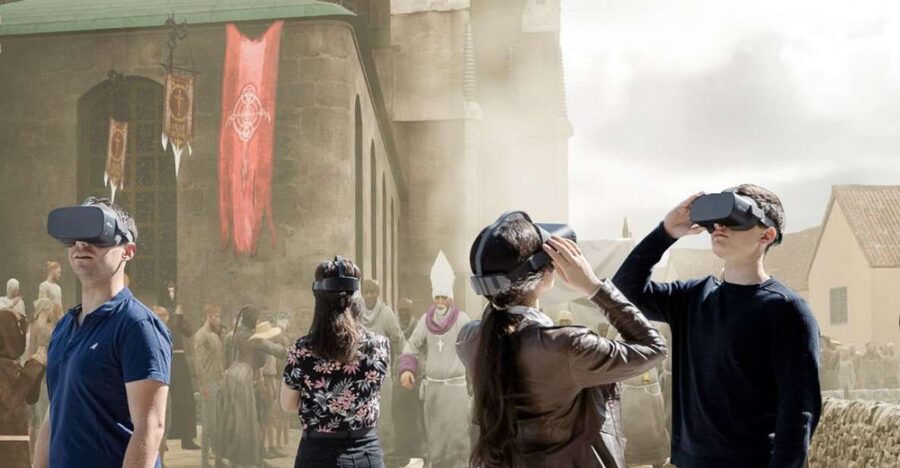
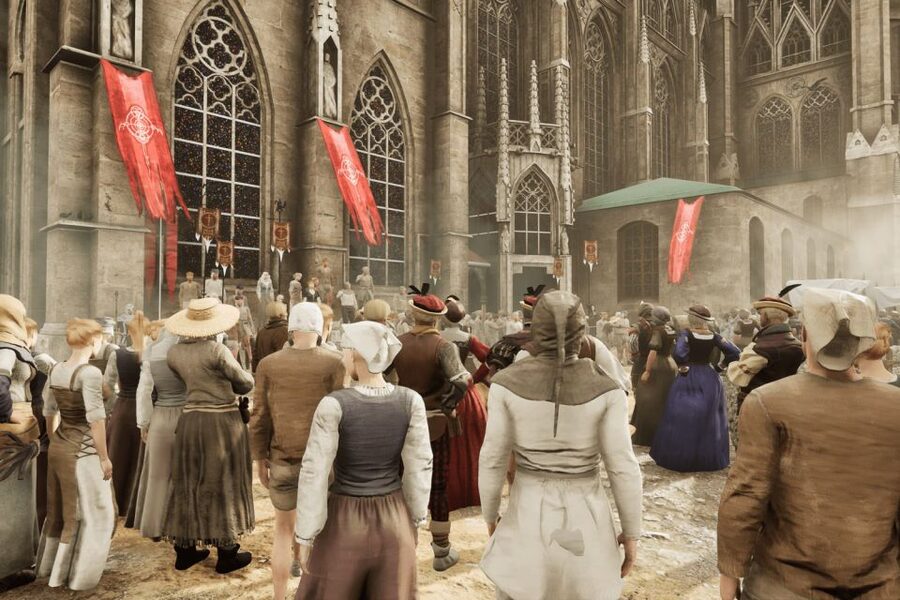
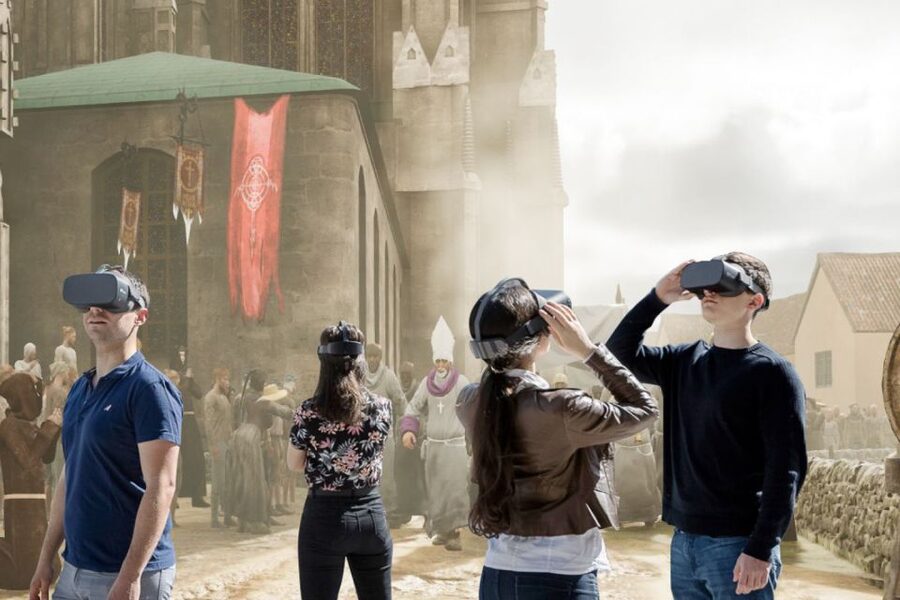
The tour’s medieval scene takes you into a White Sunday procession in 1483, one of the rare occasions when the ornaments were brought out and shown to the public.
This part is useful because it shows Vienna as a religious city with public rituals, not just a skyline of palaces. It also gives you a sense of how people experienced the city together—through gatherings, ceremonies, and shared moments in the streets.
For your brain, it helps that this isn’t abstract. You’re moving through central Vienna, and then the VR layer gives you the past atmosphere that your eyes would otherwise miss. It turns “I’m looking at an old building” into “this is where people once showed devotion in public.”



Ottoman pressure and the siege era: why 1683 still matters
Next comes an Ottoman siege episode during the second siege in 1683. It’s the kind of historical conflict that you can’t understand just by reading dates. You need a sense of scale and urgency—fear in the streets, the reality of danger, and how cities prepare for being attacked.
This is one of the reasons I like this format. It helps you grasp how Vienna’s position shaped its fate. Vienna wasn’t only a place of art and music; it was also a strategic crossroads caught in empire-level struggles.
One caution: even with VR, this is still heavy material. Keep your expectations realistic. You’re getting a story-driven scene, not a full cinematic immersion that answers every question.
The plague and Augustin: dark history with survival and humor
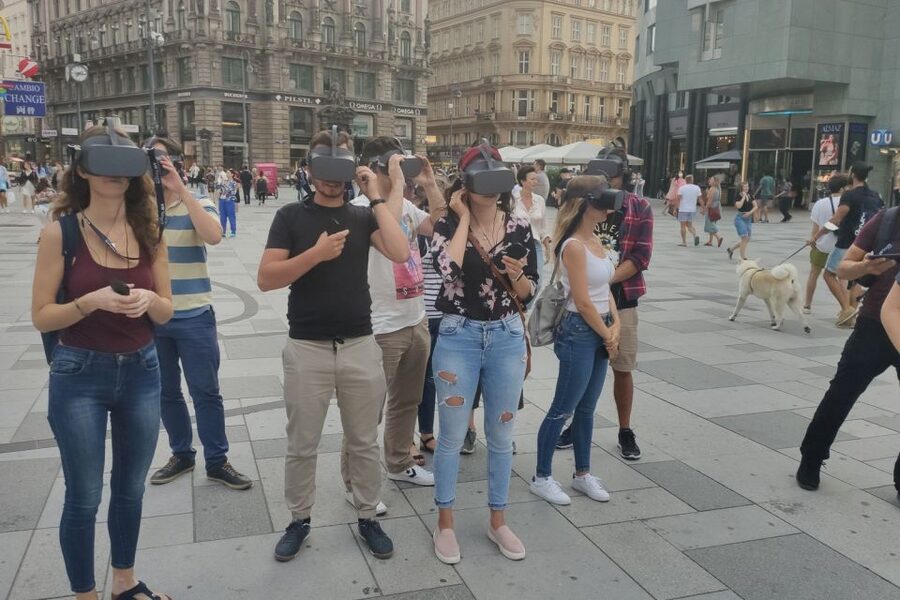
The tour then pivots into one of the most brutal chapters: the darkness during the plague, when a disease killed half of Europe. You also meet Augustin, a singer who showed Vienna could endure terrible times with humor and music.
This scene is powerful because it refuses to treat the past as only tragic. It highlights a survival mechanism—culture, performance, and humor—when life is falling apart.
And the practical payoff is big: when you walk past central landmarks later, you won’t only see stone and statues. You’ll remember that people lived through fear, loss, and hardship right there. That shift is the point of a time-travel tour: not “wow,” but understanding why a city’s character exists.
Hofburg hunting with Sisi and Franz Joseph: royalty made personal
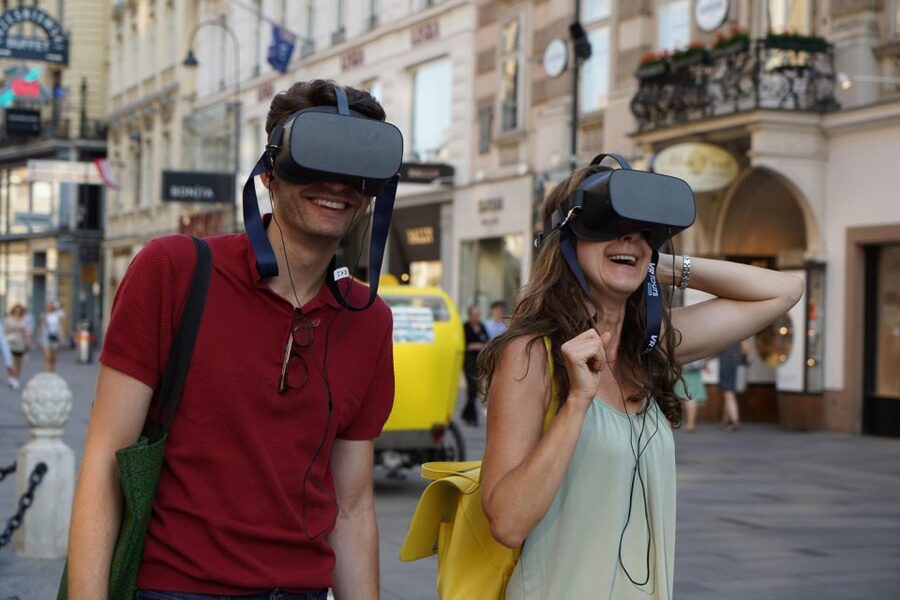
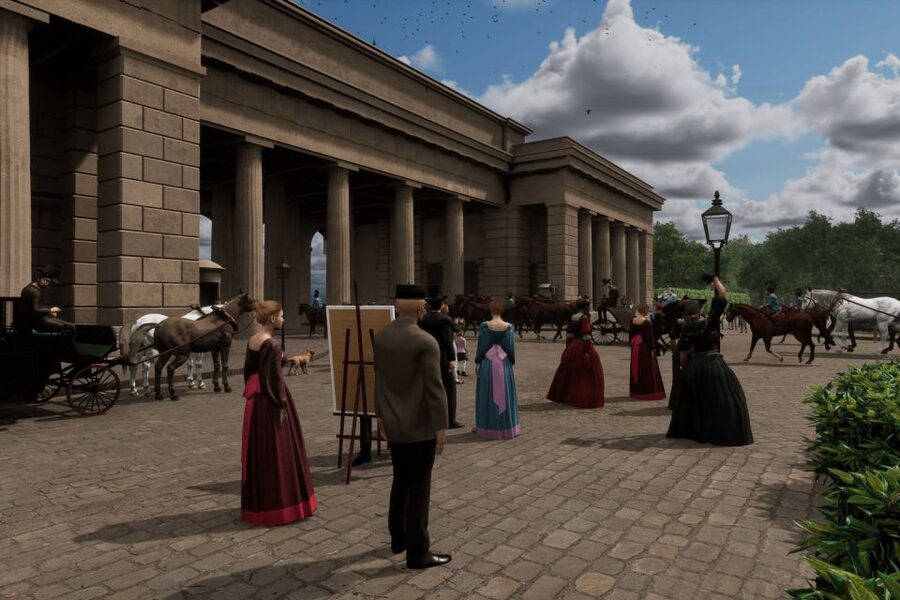
On a sunny-day style scene, you get to experience the Hofburg area with Empress Sisi and Emperor Franz Joseph II on a hunting trip. The tour even notes that you’re standing very close to the road—so don’t forget to wink when prompted.
This is the lighter, court-life contrast that makes the heavy scenes easier to digest. It also helps you remember that Vienna’s identity isn’t only built from battles and epidemics. It’s also about rituals of power: who had access, how people moved, and what daily life looked like for the elite.
If you like royal stories, this scene will land well. If you don’t, it still works as a breathing break and a way to see how the city’s “grand” side was staged and performed.
The Opera in the golden 20s: what “preparing” looked like
Then you’re at the Opera area in the golden 20s, when you see how people prepare for an opera performance.
What’s smart here is that it focuses on more than just the final moment. Opera culture is easy to think of as costumes and music, but the lead-in—the bustle, the anticipation, the work behind the scenes—tells you how culture actually functioned day to day.
One heads-up: the VR look and feel can be somewhat limited, so don’t expect perfect detail in every tiny motion. The payoff is still the story and the sense of time period around you, not a super crisp recreation of everything.
St. Stephen’s Square and WWII: seeing the cathedral burn
The final scene lands at St. Stephen’s Square. You experience the cathedral burn in the last month of the Second World War, then you witness the Soviet army driving the last German soldiers out.
This ending is emotionally intense, and it’s also historically anchored. St. Stephen’s is one of those places where, even if you don’t know every fact, you feel the weight of what happened around it.
For a lot of people, this is where the tour stops being “fun VR” and becomes a real history moment. If you prefer lighter experiences, it might feel darker than you expected.
The guide and audioguide: staying clear in English or German
You get a live tour guide in English and German, and you’ll also use an audioguide with options including English, Spanish, Dutch, French, Italian, and Russian.
That combination is practical. The guide can explain context and guide your attention, while the audioguide helps you keep up if you’re more comfortable in your chosen language. It also gives you redundancy: if you miss a sentence, you can catch up through the audio.
I’ve seen guides like Julian bring both German and English smoothly into the story. Others, like Dr. Reiner, tend to deliver the kind of explanations that make the past feel connected to real street corners. Either way, it’s worth listening closely during the headset moments, because that’s when the details matter most.
VR quality reality check: the “scene” approach beats expecting perfection
One fair thing to keep in mind: the VR scenes can feel slightly rough or blurry, and some visual details may not match what you’d hope for in cutting-edge VR. The format is built around short, meaningful scenes, not long sequences that fully resolve into crystal-clear imagery.
So how should you set expectations? Think of it as history storytelling with VR support, not a full high-definition replacement for a museum exhibit. It’s still a lot of fun when you let it do what it does best: give you perspective, place, and timing.
Price and value: is $45 worth it?
At $45 per person for about 100 minutes, this isn’t the cheapest way to see Vienna. But you’re paying for two expensive inputs: VR glasses and a guided, narrative-driven route that uses the city itself as the setting.
If you’re comparing it to a basic walking tour, the VR scenes add a clear layer of “I can see what it might have looked like.” If you’re comparing it to museum-only time, it can actually save energy—this tour helps you connect multiple time periods without spending all day inside.
For best value, pair it with a plan to do additional exploring on your own right after. You’ll get more from your second walk when you already know the historical order.
Who should book this, and who should skip it
This tour suits you if you want history with motion and place. It works well when you enjoy learning through stories, and when you like the idea of standing in central Vienna while the headset shows you what used to be there.
It’s wheelchair accessible, which is great if you want a guided option that isn’t built around stairs and steep stairs-like routes.
Skip it if you’re bringing children under 8 or if you have epilepsy, since VR isn’t suitable for those situations. Also, if weather is a factor in your schedule, plan for the possibility of last-minute cancellation.
A practical way to enjoy all six scenes
To get the most out of it, show up ready to pay attention during the headset parts. When you’re walking, treat the audio like the setup act; when the headset goes on, treat it like the payoff.
Here’s the rhythm I’d follow:
- Keep your pace steady during the walking segments so you don’t feel rushed later.
- Focus on the guide’s cues at the start of each VR scene.
- After each scene, take a second to look at what’s in front of you in the real street view. That’s where the “time travel” sticks.
And if you’re in a group and you’re switching between languages, stay tuned to the language you chose so the story doesn’t slip away.
Should you book this Vienna VR time-walk?
I’d book it if you want a first-day foundation and you’re curious about how Vienna changed over centuries. The VR scenes give you a memorable way to understand medieval ceremony, siege danger, plague-era survival, imperial court life, opera culture, and WWII devastation—all while you cover a manageable flat route.
I wouldn’t book it if you hate audio-heavy walking tours, or if you’re expecting ultra-sharp, modern VR visuals nonstop. This one is best when you accept VR as a storytelling tool and you let the city streets do the rest.
If you’re on the fence, consider whether you’ll be doing more self-guided sightseeing afterward. This tour’s value spikes when you use it as your historical map.
FAQ
How long is the Vienna VR sightseeing tour?
The tour duration is listed as about 100 minutes.
Where does the tour start?
The meeting point is Neuer Markt 6. Arrive 15 minutes early and look for the turquoise-colored entrance.
Where does the tour finish?
The tour finishes at Albertina.
How much does it cost?
The price is $45 per person.
What is included in the ticket price?
You get virtual reality glasses and earphones for the audio guide.
Is food and drinks included?
No. Food and drinks are not included.
What languages are available?
The live tour guide is available in English and German. The audio guide includes English, Spanish, Dutch, French, Italian, and Russian.
Is the tour wheelchair accessible?
Yes, the tour is listed as wheelchair accessible.
Is it suitable for children?
It is not suitable for children under 8.
Can I pay later and cancel if plans change?
You can reserve now and pay later. There is also free cancellation up to 24 hours in advance for a full refund, and the tour might be canceled due to poor weather.
More Tours in Vienna
- Vienna: Schönbrunn Palace & Gardens Skip-the-Line Tour
★ 4.7 · 7,739 reviews - Vienna Spanish Riding School Guided Tour
★ 4.7 · 6,765 reviews - Vienna: Skip-the-Line Sisi Museum, Hofburg and Gardens Tour
★ 4.8 · 5,918 reviews - Vienna: Skip-the-Line Schönbrunn Palace & Gardens Tour
★ 4.8 · 5,411 reviews - Vienna: Guided Walking Tour of City Center Highlights
★ 4.7 · 4,989 reviews
More Tour Reviews in Vienna
- Vienna: Vivaldi’s Four Seasons Concert in Karlskirche
★ 4.7 · 14,951 reviews - Vienna: Schönbrunn Palace & Gardens Skip-the-Line Tour
★ 4.7 · 7,739 reviews - Vienna: Light of Creation Votive Church Immersive Light Show
★ 4.8 · 6,779 reviews - Vienna Spanish Riding School Guided Tour
★ 4.7 · 6,765 reviews - Vienna: Classical Concert in the World-Famous Musikverein
★ 4.6 · 6,673 reviews
Vienna, Reimagined
- Vienna: Light of Creation Votive Church Immersive Light Show
★ 4.8 · 6,779 reviews - Vienna: Time Travel and Magic Vienna History Tour
★ 4.6 · 3,879 reviews - Time Travel-Magic Vienna History Tour Ticket
★ 4.5 · 1,099 reviews - Vienna: “Sisi’s Amazing Journey” Virtual Reality Experience
★ 4.5 · 673 reviews - Ikono Vienna an Immersive Experience
★ 4.5 · 543 reviews
Just In: New Vienna Reviews


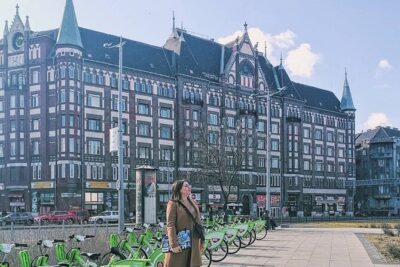

Immersive & VR Experiences, compared.
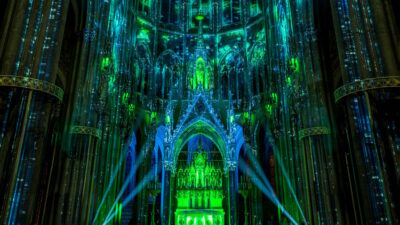 ★ 4.8Light of Creation Votive Church Immersive Light ShowFrom $256,779 reviews
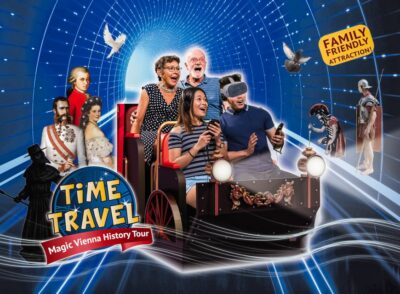 ★ 4.6Time Travel and Magic Vienna History TourFrom $273,879 reviews
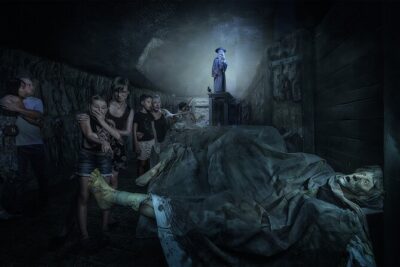 ★ 4.5Time Travel-Magic Vienna History Tour TicketFrom $271,099 reviews
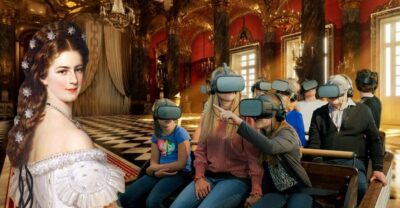 ★ 4.5“Sisi’s Amazing Journey” Virtual Reality ExperienceFrom $14673 reviews
 ★ 4.5Ikono Vienna an Immersive ExperienceFrom $30543 reviews
 ★ 4.2IKONO VIENNA Immersive Experience TicketFrom $22316 reviews
 ★ 4.7Bus Tour with Virtual Reality ExperienceFrom $32148 reviews
 ★ 4.8Johann Strauss – Immersive Audiovisual Experience TicketFrom $2860 reviews
Browse the lists this tour appears in