
Reviewed · ST STEPHEN'S & OLD TOWN TOURS
Vienna Historic Center Small Group Walking Tour
Vienna clicks into place fast on foot. This small-group route (up to 15 people) connects major sights like St. Stephen’s Cathedral, the Hofburg complex, and the UNESCO-listed Ringstrasse—about 2.5 hours total, with audio devices so you don’t miss the guide’s stories.
I love two things most: the tight route that hits the big political and cultural landmarks without museum lines, and the end-of-walk help with practical ideas for what to eat and where to go next. It’s an efficient way to get your bearings fast, especially on a first day.
One trade-off: it stays mostly outside, so you’re looking at façades, squares, and streets—great views and context, but not museum entry. Some churches and a few indoor moments may happen depending on the day, yet don’t plan around museum tickets.
In This Review
- Key things that make this tour worth your time
- The big win: a focused Vienna intro in just 2.5 hours
- Meeting at Maria-Theresien-Platz: the museum square without the museum crowds
- Ringstrasse: why this boulevard is more than a road
- Burgtor and the Hofburg edge: stepping into the imperial neighborhood
- Courtyards, Heldenplatz, and the Hofburg power story
- Churches and civic Vienna: St. Michael’s and the seat of government
- The culture stops: Burgtheater, Volksgarten, and coffee-house stories
- Beethoven’s world: Pasqualatihaus and the city’s composer trail
- Palais Ferstel, the University of Vienna, and Vienna as a brain city
- Ending at Stephansplatz: Graben, Kohlmarkt, and St. Stephen’s Cathedral
- How the small-group format actually helps (not just on paper)
- Price and value: why about $72 can make sense here
- Who should book this tour, and who might want to skip
- Should you book this Vienna Historic Center walking tour?
- FAQ
- How long is the Vienna Historic Center Small Group Walking Tour?
- How large is the group?
- Are museum entrances included?
- Where does the tour start and where does it end?
- Is the tour offered in English?
- What happens if the weather is bad or I need to cancel?
Key things that make this tour worth your time
- Up to 15 people plus audio devices so the guide stays easy to hear in busy spots
- UNESCO Ringstrasse views with a clear story for why this boulevard replaced old fortifications
- Hofburg and Heldenplatz context that ties Habsburg power to modern Austria
- Composer and culture stops like Beethoven’s Pasqualatihaus area and a classic coffee-house-style moment
- A smart finish at Stephansplatz so you can keep exploring after the walk
- A brisk walking pace that can add up fast (one review called it around 14,000 steps)
Around the Stephansdom and the old lanes
- Vienna: Guided Walking Tour of City Center Highlights★ 4.7 · 4,989 reviews
- Vienna Historic Center Small Group Walking Tour★ 5.0 · 1,746 reviews
- Vienna: St. Stephen’s Cathedral & Dom Museum Wien Tickets★ 4.5 · 1,652 reviews
- Vienna: Old Town Sightseeing Tour in a Vintage-Style E-Car★ 4.5 · 1,107 reviews
The big win: a focused Vienna intro in just 2.5 hours
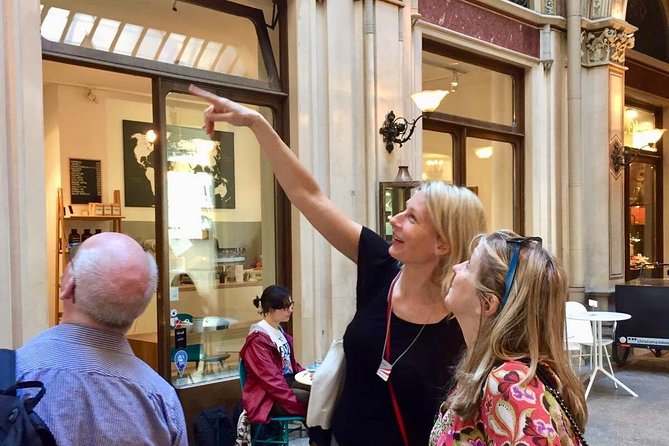
If Vienna feels big and confusing, this is the kind of tour that helps it click into place. The route is built around the historic center’s main stage: grand civic buildings, imperial spaces, and the streets that funnel you right toward Stephansdom. Because it’s small-group capped at 15, you’re less likely to get lost in the shuffle, and you can ask questions without yelling.
It also helps that the tour is offered at several start times. Pick a time when your feet feel fresh, because this is a proper walking route, not a slow stroll. One past guest noted about 14,000 steps over the full 2.5-hour experience—so yes, you’ll move.
Finally, this tour works well for first-timers and for anyone short on days. You’re not trying to “cover everything.” You’re getting the right landmarks, in the right order, with enough background to make the rest of your trip make sense.
Meeting at Maria-Theresien-Platz: the museum square without the museum crowds
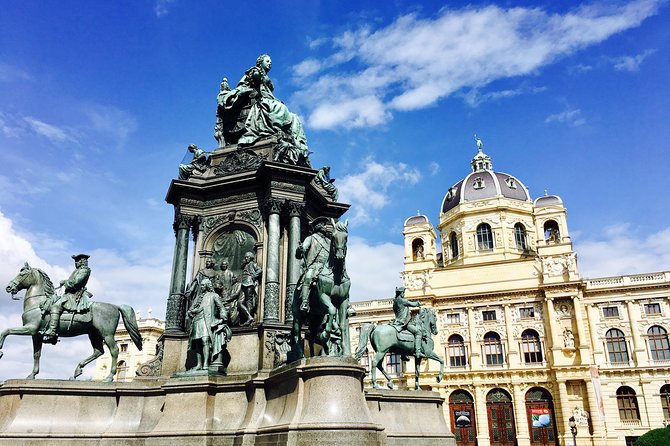
The walk starts at Maria-Theresien-Platz, a wide city square where the Natural History Museum and Art History Museum face each other across the open space. Even without going inside, you get a strong sense of Vienna’s idea of culture as a public project—statues, symmetry, and grand architecture meant for everyone.
At the center of your early photos is the statue of Empress Maria Theresa. The guide uses this stop to frame Vienna’s long-running story: power, patronage, and how the Habsburg era shaped the city’s identity in everything from politics to the arts.
Practical note: because you’re starting in a big open square, it’s a good warm-up. You’ll feel the scale of Vienna’s center before you start squeezing between impressive buildings along the Ring Road.
Ringstrasse: why this boulevard is more than a road
Next comes the Ringstrasse—a circular boulevard that replaced older medieval fortifications in the second half of the 19th century. This is one of those Vienna facts that changes how you see the city. You’re not just looking at big buildings; you’re seeing the plan for how Vienna wanted to present itself.
This boulevard is also tied to UNESCO World Heritage, and you can feel why. The stretch is lined with civic and cultural showpieces. Your walk passes key landmarks tied to government and public life, including the neo-Gothic Town Hall and the Austrian Parliament Building (both along the Ringstrasse route).
You’ll also get to see the Kunsthistorisches Museum from outside near the start of the Ring Road segment. The building is part of the visual “message” of the area—royal collections and art as state identity. Even if you’re not entering museums on this tour, the architecture does a lot of the work for you.
Burgtor and the Hofburg edge: stepping into the imperial neighborhood
As the route tightens, you hit the Burgtor, a neoclassical main gate to the palace area. It’s short and easy as a stop, but it marks the shift from broad boulevard to the imperial core. Gates like this are Vienna’s way of saying, pay attention—this is a different layer of the city.
Then you move toward the Hofburg complex. The guide doesn’t treat it like one building. You get the Hofburg as a changing, centuries-long power center—something that’s been reshaped over time and still matters in Austrian life today.
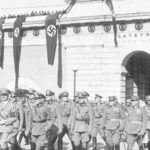
One of the most striking moments for many people is the story connected to the balcony of the New Castle (part of Hofburg). The guide points out how Adolf Hitler proclaimed the Anschluss from that balcony during the Third Reich era. Even from outside, this is heavy history, and it’s handled through context rather than shock value.
Vienna on foot, a couple more routes

Courtyards, Heldenplatz, and the Hofburg power story
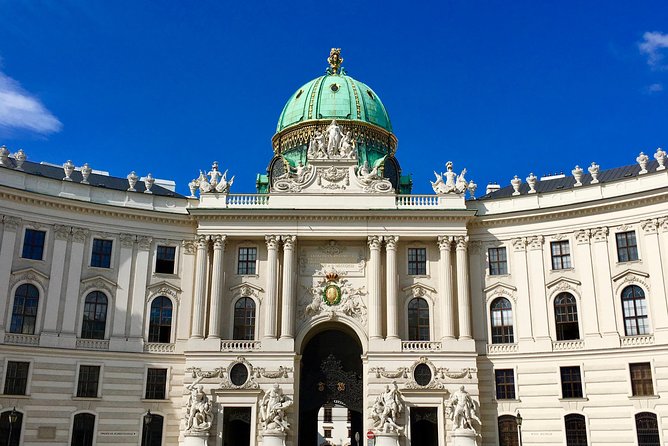
The Hofburg segment is where the tour earns its keep. You’re not just walking past pretty stone. You’re getting a guide-led explanation of the palace’s development, important courtyards and façades, and the court life that shaped Habsburg identity.
A short walk leads you to Heldenplatz (Heroes Square), a large open space attached to the palace area. The guide ties it to the Napoleonic-era demolitions that reshaped the city’s old bastions. It’s the kind of place where the space matters as much as the buildings: you feel how royal power needs room.
You may also hear about key institutions connected to this part of Vienna, including the Austrian National Library (described as one of the most important libraries in the world). Even if you don’t step inside, the area’s “think-and-learn” vibe comes through.
If you catch the right view angle, you can also connect this imperial zone to Viennese performance tradition. The route references the Baroque Winter Riding School at Hofburg, known for the training and performances of the Lipizzan stallions.
Churches and civic Vienna: St. Michael’s and the seat of government
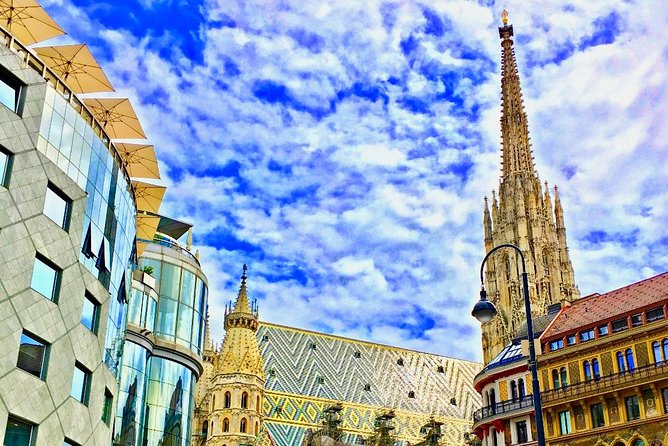
From the palace core, the tour shifts back to city life with stop(s) that help you see how religion and government share the same central space.
You’ll visit St. Michael’s Church, dating back to 1220. It’s one of those older Vienna anchors that makes the modern grandeur feel grounded. This is also the kind of church stop where atmosphere matters: you’re there to notice details and how the building holds the mood of a much older era.
Then the walk moves toward major civic buildings, including the Office of the Federal Chancellor and the Rathaus (Vienna City Hall). The Rathaus stop focuses on its neo-Gothic character and its role as the seat of Vienna’s government. Again, it’s mostly outside viewing, but it’s a strong shift from imperial architecture to modern governance.
The culture stops: Burgtheater, Volksgarten, and coffee-house stories
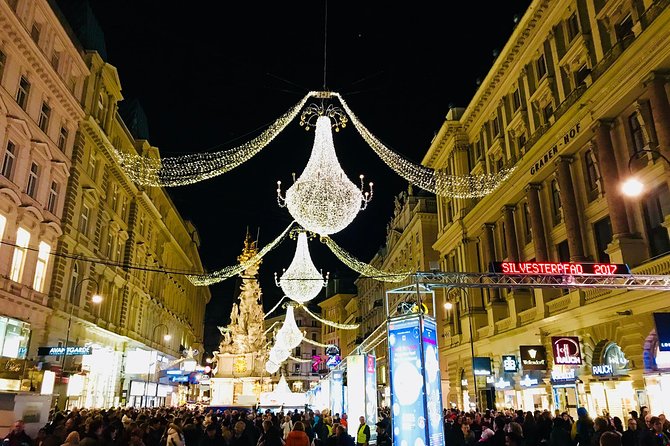
This tour keeps variety by mixing big-name landmarks with culture you might otherwise miss.
You pass Burgtheater, described as one of the best theaters in the world. Even when you’re only seeing the exterior, you get the sense that Vienna built its public identity around performance and art.
Then you reach Volksgarten, a park stop with a standout structure: the Theseus Temple, a small replica of the Hephaestion in Athens. The guide also connects it to Antonio Canova’s sculpture design history. This is a great pause from dense streets—a place to reset your legs.
There’s also a brief nod to courtly leisure and music culture through a café connection in Volksgarten (and it notes even Johann Strauss used to play there). It’s quick, but it adds the human scale behind all the monuments.
Beethoven’s world: Pasqualatihaus and the city’s composer trail
Vienna has a composer-shaped map, and this route points you to one very specific stop: Beethoven Pasqualatihaus. The guide highlights it as a former residence of Ludwig van Beethoven, set in an exposed position on the ramp of former town fortifications.
This matters because it turns Beethoven from a museum label into an address. You’re walking where art lived alongside politics, commerce, and daily life. It’s the kind of detail that makes your future reading and museum visits hit harder, even though this tour doesn’t go inside museums.
Palais Ferstel, the University of Vienna, and Vienna as a brain city
Another strong stretch is the shift toward institutions of finance and ideas.
The route includes Palais Ferstel, once home to the Austro-Hungarian National Bank and the Stock Exchange. You don’t linger long here, but the stop makes it clear that Vienna’s center wasn’t only royal and religious. It was also modern business power.
Then you reach the University of Vienna, with stories about groundbreaking minds including Sigmund Freud and Lise Meitner, noted here as a brilliant Jewish physicist whose work changed modern science. This is more than name-dropping. It helps you understand why Vienna shows up in global intellectual history, not just European politics.
Ending at Stephansplatz: Graben, Kohlmarkt, and St. Stephen’s Cathedral
As the walk moves toward the finish, it turns from grand architecture to the streets that shape daily movement.
You pass Freyung, one of the oldest squares in Vienna’s city center, known for an intimate feel. Then the route heads through Graben and Kohlmarkt, a pedestrian shopping area that functions like a spine pulling you toward Stephansdom.
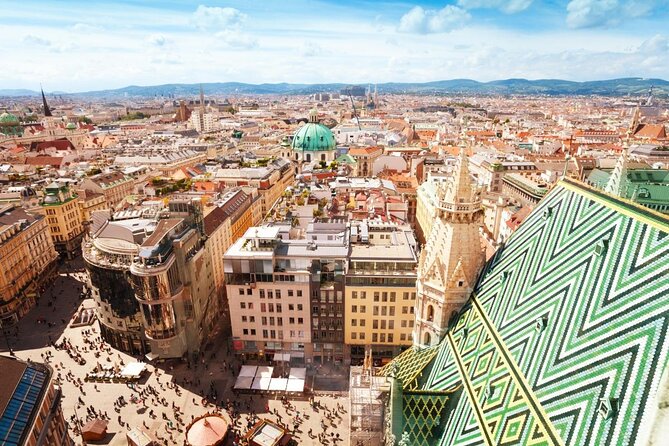
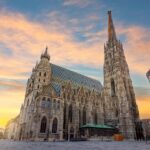
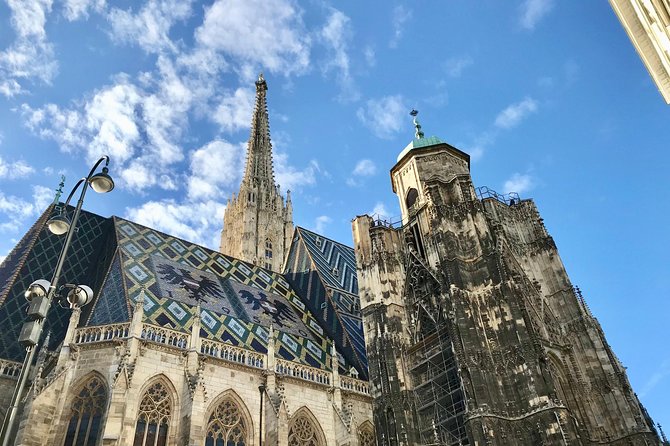
Finally, you reach Stephansplatz—the heart and soul of the city center—with the big visual anchor: St. Stephen’s Cathedral. The tour ends here, and that’s a smart choice. You can take your time looking at the cathedral up close and then build your own afternoon around it.
How the small-group format actually helps (not just on paper)
A cap of 15 people sounds nice, but what you feel is the reduced friction. You’re moving between crowded junctions, and you don’t want a guide fighting to keep the group together. Past guests also mention how well the guide keeps people together in dense areas, which matters on a day when phones, buses, and tour crowds all collide.
Audio devices help a lot too, especially around big intersections where noise swallows normal voices. More than once, people praised being able to hear clearly—so you don’t need to crane your neck or guess what matters.
And because you’re not trapped in museum rooms, the guide can time the story moments with the city’s visual cues: a façade, a statue, a square. That mix is what keeps the walk from feeling like a lecture with stops.
Price and value: why about $72 can make sense here
At $72.56 per person for roughly 2 hours 30 minutes, this isn’t a “free to do on your own” walking route. You’re paying for a certified local guide, a planned walking route through the historic center, and audio devices.
You’re also paying for something harder to replicate: a coherent order. Vienna’s highlights can feel like random postcard locations if you’re on your own. Here, you get context for why the Ringstrasse, Hofburg, Heldenplatz, and Stephansdom connect into one story of power, culture, and public space.
Also, the tour doesn’t require museum entry tickets. That makes it easier to build a day around it. You can do this as your first orientation, then decide which museums to pay for later based on what you actually care about after the walk.
Who should book this tour, and who might want to skip
This tour is a great fit if you want:
- a first-day Vienna orientation that keeps you moving and informed
- a route that focuses on outside sights and the stories behind them
- a small group with audio devices so you can actually hear the guide
It might not be your best match if:
- you want museum entry or long indoor time inside big collections (this tour specifically does not visit the inside of museums)
- you have trouble with longer walking routes. The tour notes moderate physical fitness needs and says it’s not recommended for travelers with walking disorders.
Should you book this Vienna Historic Center walking tour?
Yes, if you want a smart, time-efficient way to understand central Vienna. It’s especially useful on a first visit because it shows you the city’s “why,” not just the “what,” and it ends at St. Stephen’s Cathedral where it’s easy to keep exploring on your own.
Don’t book it if your priority is museum interiors or if you need a low-effort walking experience. In that case, you’ll likely feel the tour’s value should have been delivered in ticketed indoor time.
If you do book, wear comfortable shoes, bring layers for changing weather, and plan to use the last 30 minutes near Stephansdom to slow down and look. The cathedral and the streets around it reward that extra attention.
FAQ
How long is the Vienna Historic Center Small Group Walking Tour?
It runs about 2 hours 30 minutes.
How large is the group?
The tour maximum is 15 travelers.
Are museum entrances included?
No. The tour does not visit the inside of any museums. It’s mainly an outdoor historic center walk, though some churches and other indoor locations may happen depending on the weekday.
Where does the tour start and where does it end?
It starts at Maria-Theresien-Platz, Vienna, and ends at Stephansplatz, 1010 Vienna.
Is the tour offered in English?
Yes, it is offered in English.
What happens if the weather is bad or I need to cancel?
The tour requires good weather. If it’s canceled due to poor weather, you’ll be offered a different date or a full refund. You can cancel for a full refund if you cancel at least 24 hours before the experience start time.
More Tour Reviews in Vienna
- Vienna: Vivaldi’s Four Seasons Concert in Karlskirche
★ 4.7 · 14,951 reviews - Vienna: Schönbrunn Palace & Gardens Skip-the-Line Tour
★ 4.7 · 7,739 reviews - Vienna: Light of Creation Votive Church Immersive Light Show
★ 4.8 · 6,779 reviews - Vienna Spanish Riding School Guided Tour
★ 4.7 · 6,765 reviews - Vienna: Classical Concert in the World-Famous Musikverein
★ 4.6 · 6,673 reviews
Vienna on Foot, Continued
- Vienna: Guided Walking Tour of City Center Highlights
★ 4.7 · 4,989 reviews - Vienna: Vienna Central Cemetery Guided Walking Tour
★ 4.8 · 3,307 reviews - Vienna: Guided Walking Tour of City Highlights & Hidden Gems
★ 4.9 · 2,180 reviews - Vienna: Viennese Underworld Guided Walking Tour
★ 4.7 · 1,865 reviews - Vienna: World War II Historical Walking Tour
★ 4.8 · 1,772 reviews
The Old Town Around St Stephen's
- Vienna: Guided Walking Tour of City Center Highlights
★ 4.7 · 4,989 reviews - Vienna: St. Stephen’s Cathedral & Dom Museum Wien Tickets
★ 4.5 · 1,652 reviews - Vienna: Old Town Sightseeing Tour in a Vintage-Style E-Car
★ 4.5 · 1,107 reviews - Vienna: 30-Minute Fiaker Ride in the Old Town
★ 4.5 · 1,092 reviews - Vienna: Romantic Old Town 2-Hour Discovery Tour
★ 4.7 · 816 reviews
Just In: New Vienna Reviews



St Stephen's & Old Town Tours, compared.
 ★ 4.5St. Stephen’s Cathedral & Dom Museum Wien TicketsFrom $341,652 reviews
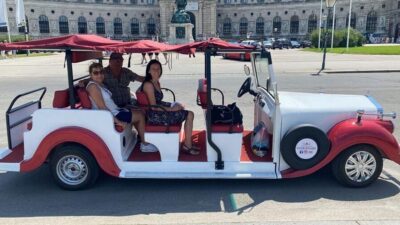 ★ 4.5Old Town Sightseeing Tour in a Vintage-Style E-CarFrom $281,107 reviews
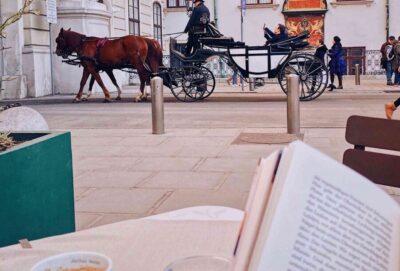 ★ 4.530-Minute Fiaker Ride in the Old TownFrom $1111,092 reviews
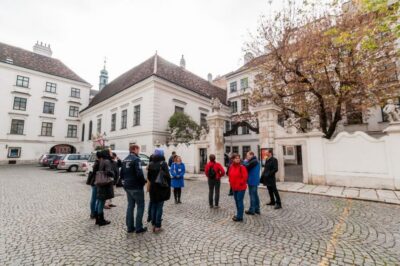 ★ 4.7Romantic Old Town 2-Hour Discovery TourFrom $352816 reviews
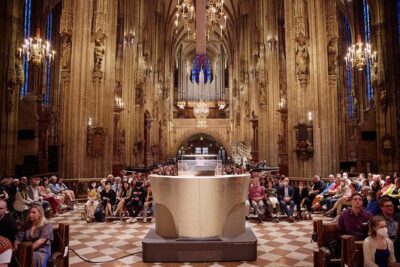 ★ 4.0Concert at Vienna’s St. Stephen’s CathedralFrom $12432 reviews
 ★ 5.0Exclusive Vienna Old Town Highlights Walking Tour (max. 6 persons)From $151252 reviews
 ★ 4.7Hidden Gems near St. Stephen’s & Old UniversityFrom $353153 reviews
 ★ 5.0Guided Walking Tour of Vienna City Center HighlightsFrom $30150 reviews
Browse the lists this tour appears in