
Reviewed · ST STEPHEN'S & OLD TOWN TOURS
Vienna: Hidden Gems near St. Stephen’s & Old University
Vienna hides in plain sight. This 2-hour walk turns St. Stephen’s area into a storybook of courtyards and Mozart legends you won’t hear on the usual routes. I like how the pace is tight enough to feel efficient, yet you still get that sense of slipping into places most people miss. The best part is the guide, who can answer questions and thread together music, power, and post-war rebuilding in one route.
What I really enjoy is the mix of big names with small details: Mozart’s life in Vienna, Prince Eugene’s palace, and the Old University Quarter’s Baroque church. I also like the practical, on-the-ground Vienna tips—coffeehouses, bars, sausage stalls, and where to get good food and drinks without wasting time. One consideration: since it’s in the inner city and timed to 2 hours, you’ll be walking a lot of city blocks, so it’s not the place to wander slowly.
You finish at Schwedenplatz, which is a handy end point for hopping onto trams or continuing on your own. And if you’ve got a small group, this private format helps keep questions flowing (I especially noticed guides who bring serious energy, like Evelin, who made the route feel personal and question-friendly).
In This Review
- Key highlights you’ll feel right away
- Getting oriented: Albertina Square to Schwedenplatz
- Why the route structure is worth it
- Hidden lanes near St. Stephen’s: seeing what most people walk past
- A practical note on pacing
- Old University Quarter and the Baroque church you’ll remember
- What makes this stop valuable for you
- The drawback of this focus
- Mozart in Vienna: real stories plus common myths
- How to get the most out of it
- Prince Eugene of Savoy and the palace factor
- Why this works in a 2-hour tour
- WWII damage and post-war rebuilding: what you’ll notice on the street
- The street-level learning advantage
- Greek Quarter secrets and the Viennese Bermuda Triangle
- The real benefit: better independent walking
- Where to eat and drink: local tips you can use tonight
- How to use the tips the right way
- Price and value: what $353 per group really means
- When it’s a great deal
- When you might rethink it
- Tour style and guide impact (including Evelin)
- The main practical tip
- Who should book this walking tour
- The one caution I’d keep in mind
- Should you book it?
- FAQ
- How long is the tour?
- Where do we meet for the walking tour?
- What’s included in the price?
- Is hotel drop-off included?
- Are entrance fees included?
- Are food and drinks included?
- What languages is the live guide available in?
- Is the tour refundable if plans change?
Key highlights you’ll feel right away
- Courtyards, lanes, and passages: smaller streets and in-between spaces, not just main avenues
- Old University Quarter focus: the Baroque church plus context for what was lost and rebuilt
- Mozart stories with myth-busting: you’ll hear what’s commonly repeated but not always true
- Prince Eugene’s palace: a dramatic stop tied to real political weight
- Greek Quarter + Viennese Bermuda Triangle: playful local lore that helps you navigate better
Around the Stephansdom and the old lanes
- Vienna: Guided Walking Tour of City Center Highlights★ 4.7 · 4,989 reviews
- Vienna Historic Center Small Group Walking Tour★ 5.0 · 1,746 reviews
- Vienna: St. Stephen’s Cathedral & Dom Museum Wien Tickets★ 4.5 · 1,652 reviews
- Vienna: Old Town Sightseeing Tour in a Vintage-Style E-Car★ 4.5 · 1,107 reviews
Getting oriented: Albertina Square to Schwedenplatz
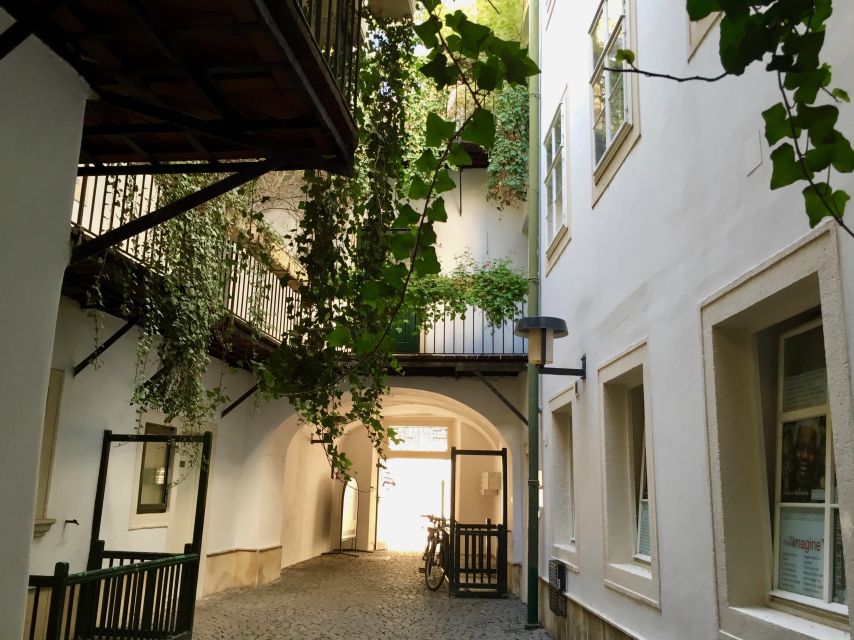
This tour is built like a shortcut through Vienna’s layers. You start at Albertina Square, in front of the Tourist Information, which is a smart choice because it gives you an easy landmark and gets you moving fast. From there, you work your way through the parts of central Vienna that feel quieter and more connected—think side lanes, courtyards, and passages that you wouldn’t necessarily spot on your own.
You’ll end at Schwedenplatz. That matters more than it sounds. It’s a central hub, so you’re not stuck trying to figure out your next step at the far edge of town. If you’re pairing this with something later in the afternoon or evening, Schwedenplatz is a convenient landing spot.
Why the route structure is worth it
A standard sightseeing route can feel like a list of façades. This one is designed to connect meaning: why certain buildings matter, what happened to the area during World War II, and why post-war reconstruction shaped what you see today. Even if you already know the headline facts about Vienna, the tour’s structure helps you place them in the actual streets and spaces.
Hidden lanes near St. Stephen’s: seeing what most people walk past
The promise here is not just more sights—it’s more texture. The tour spends time in the spaces between the big attractions: lanes that cut through neighborhoods, courtyards you can actually pause in, and passageways that change your sense of direction. The goal is simple: get you oriented in a way that stays useful after the guide leaves.
This is also where you start to understand the idea of Vienna’s city logic. Vienna can feel orderly on a map, but on foot it’s full of tiny choices: which turn makes a view open up, which street makes you feel like you’re slipping behind the main scene. If you like walking tours that teach you how a city works, this part is the payoff.
A practical note on pacing
Because the whole experience is 2 hours, you won’t be lingering long at every stop. You’ll get enough time to look, listen, and ask questions, but you should plan on comfortable walking and frequent short stops rather than long museum-style pauses.


Old University Quarter and the Baroque church you’ll remember
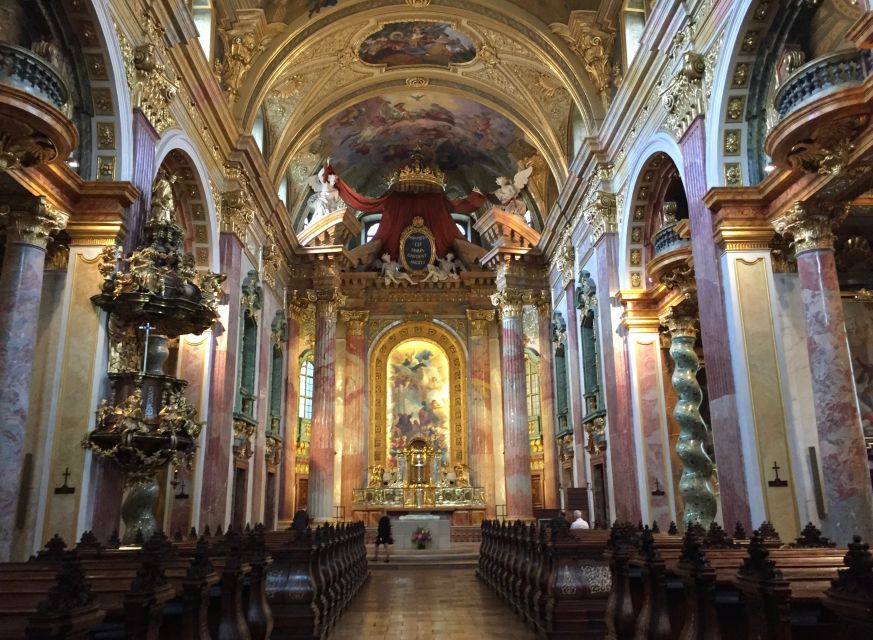
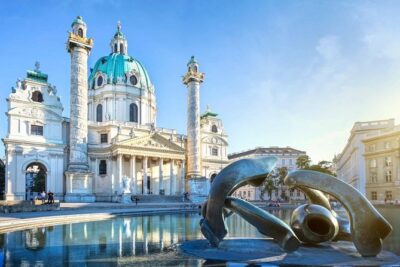
One of the strongest anchors on this walk is the Old University Quarter. You’ll see its impressive Baroque church, and you’ll learn why this area matters beyond architecture. The Baroque style here isn’t just decoration—it’s part of how Vienna expresses ambition and faith through form.
Then comes the part that adds depth fast: the destruction of the area during World War II and the reconstruction that followed. Vienna’s post-war story can be hard to grasp when you only see cleaned-up streets and restored façades. On this tour, you get a guided framework that helps you connect damage, rebuilding, and what you see now.
What makes this stop valuable for you
If you’ve ever wondered why Vienna looks the way it does—why some parts feel older, some feel reorganized, and some feel intentionally blended—this is where the answer starts to click. The guide turns the area into a before-and-after story without turning it into a lecture.
The drawback of this focus
Because the tour time is limited, you’ll get the key points rather than a full architectural teardown. If you want to spend hours specifically on Baroque churches or wartime urban planning, you’ll still benefit, but you might want a longer follow-up after the walk.
Mozart in Vienna: real stories plus common myths
Mozart in Vienna is famous territory, but it’s also full of “everyone knows” stories that may not be accurate. This tour leans into that. You’ll learn about Mozart’s life in Vienna, and you’ll also hear some common false stories people repeat about him.
That myth-busting angle is more than trivia. It helps you look at the city differently. Instead of seeing Mozart as a set of postcard images, you start connecting the person to the places and routines that shaped his life there. A good guide makes the difference between name-dropping and real understanding, and that’s what this section is aiming for.
How to get the most out of it
Bring your curiosity and ask questions while you’re moving. The best moments usually happen when you hear a story, then you look around and realize the city can explain the story back. If you’re the type who likes sorting fact from folklore, you’ll enjoy this.
Prince Eugene of Savoy and the palace factor
Another standout is Prince Eugene of Savoy. You’ll admire his palace, and the guide ties it to the larger role of power and strategy in Vienna’s story. This is a change of pace from the musical theme—your brain shifts from creativity to leadership and statecraft.
The value here is that it gives Vienna’s celebrity layer more grounding. You’re not only learning who Mozart was. You’re also learning how the city functioned as a stage for major historical figures, with real buildings and real locations that still carry that weight.
Why this works in a 2-hour tour
This is short enough to avoid fatigue, but varied enough to keep you engaged. You get one “human genius” story (Mozart), one “political force” story (Prince Eugene), and then a city-level story (war and reconstruction). That combo makes it feel like you learned something new even if you’ve seen Vienna before.
WWII damage and post-war rebuilding: what you’ll notice on the street
World War II is part of Vienna’s architecture whether you talk about it or not. On this walk, you get a guided explanation for what was destroyed in the area and how reconstruction shaped the neighborhood you’re standing in.
This is where the tour becomes practical for your future self. After you learn the basic logic, you’ll start noticing things on your own: shifts in style, the way certain blocks feel planned, and the way restoration can preserve or alter how places connect.
The street-level learning advantage
You don’t need a museum ticket to understand history here. You’re learning by walking through the city’s visible transitions. That kind of learning tends to stick because your feet are the timeline.
Greek Quarter secrets and the Viennese Bermuda Triangle
This is one of the tour’s more playful parts: you’ll hear stories about the Greek Quarter and the Viennese Bermuda Triangle. The “Bermuda Triangle” concept is clearly meant as local humor and navigation wisdom—where you can end up turning in circles, or discovering a shortcut you didn’t expect.
Even if you’re not chasing folklore, this section helps you build mental maps. You’ll start recognizing patterns: how neighborhoods connect, how side streets can redirect you, and how people use certain routes differently than tourists do.
The real benefit: better independent walking
After a tour like this, you don’t feel as dependent on the phone map. You’ll have a better sense of how to cut across areas and how to get to food and drinks without backtracking. That’s the kind of skill you actually use after the tour ends.
Where to eat and drink: local tips you can use tonight
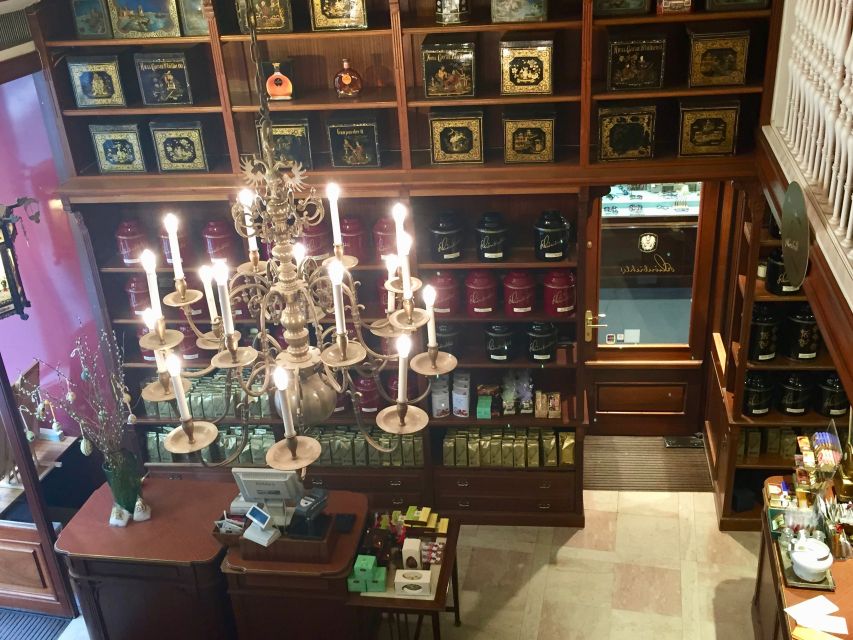
One of the best perks is that the guide shares where to get the best food and drinks. This is not theoretical advice. You’ll get pointers for Viennese cuisine, famous coffeehouses and bars, and suggestions for sausage stalls and ice cream shops.
Even though food and drinks are not included, the tour aims to set you up with a plan. That matters because central Vienna can feel overwhelming when you’re tired and hungry. A guide’s shortlist saves time and helps you avoid the trap of picking the most touristy menu just because it’s visible.
How to use the tips the right way
When the guide suggests places, take note of why they recommend them: what kind of atmosphere you’ll get, what to try, and how to order. Then choose based on your mood—quick bite from a sausage stall, a slower coffeehouse stop, or something sweet at an ice cream shop.
Price and value: what $353 per group really means
This tour is priced at $353 per group up to 8, for a duration of 2 hours. Since it’s a private group, you’re not paying per seat in the usual way—your cost is tied to group size, not solo pricing.
Here’s the practical math: if you fill all 8 spots, you’re at about $44 per person. If you’re only a couple of people, the per-person cost rises, but you’re also buying the flexibility of a private walk and hotel pickup (for the private option). So the value depends on how many people you’re splitting with.
When it’s a great deal
- You have 4–8 people and want a guided walk that feels personal
- You want story-focused sightseeing, not just a list of landmarks
- You care about local food and drink recommendations you can use immediately
When you might rethink it
If you’re traveling solo and won’t share the cost, you may prefer a cheaper group tour unless the private attention is a top priority.
Tour style and guide impact (including Evelin)
This is a live walking tour with a guide who can speak Polish, English, and German. In a private group, the guide’s role is louder and more responsive—you’re not competing for attention in a crowd.
One guide you may encounter is Evelin, who stood out for answering questions and showing places that left people feeling genuinely surprised. That kind of guide energy matters on a short route. It’s the difference between hearing facts and actually feeling you’ve been taught how to see.
The main practical tip
Comfortable shoes are a must. This is a walking tour with multiple stops and frequent turns, so you’ll want your feet ready.
Who should book this walking tour
You should book if you want:
- A structured walk that explains Vienna’s layers fast
- Mozart + Prince Eugene stories that connect to real streets
- WWII and reconstruction context without needing a museum day
- Local food and drink guidance for tonight
You’ll especially enjoy it if you’ve already seen a few big landmarks and want a more human, street-level Vienna. It also fits well for couples, small families, and friends who want a private format.
The one caution I’d keep in mind
Most tours start on time and run smoothly—but there is at least one report of a guide not appearing at the agreed meeting point. That doesn’t mean it’s common, but it’s a reminder to double-check the meeting location before you set out and keep your booking info handy in case you need to confirm details quickly.
Should you book it?
If you’re aiming for a smart, story-led 2-hour walk that helps you navigate and eat well in central Vienna, I think it’s a good choice. The route focuses on meaningful context—Mozart myths, Prince Eugene, the Baroque church in the Old University Quarter, and the WWII reconstruction story—plus practical food-and-drink guidance you can act on right away.
If you want long stays, slow wandering, or deep dives into one topic, you may want a longer or more specialized tour. But for most people, this is a strong way to get more from a limited time window in Vienna.
FAQ
How long is the tour?
The tour lasts 2 hours.
Where do we meet for the walking tour?
You meet in front of the Tourist Information.
What’s included in the price?
The tour includes a 2-hour walking tour, and hotel pickup is included if you select the private option.
Is hotel drop-off included?
No, hotel drop-off is not included.
Are entrance fees included?
No, entrance fees are not included.
Are food and drinks included?
No, food and drinks are not included.
What languages is the live guide available in?
The guide is available in Polish, English, and German.
Is the tour refundable if plans change?
Yes. You can cancel up to 24 hours in advance for a full refund.
More Tour Reviews in Vienna
- Vienna: Vivaldi’s Four Seasons Concert in Karlskirche
★ 4.7 · 14,951 reviews - Vienna: Schönbrunn Palace & Gardens Skip-the-Line Tour
★ 4.7 · 7,739 reviews - Vienna: Light of Creation Votive Church Immersive Light Show
★ 4.8 · 6,779 reviews - Vienna Spanish Riding School Guided Tour
★ 4.7 · 6,765 reviews - Vienna: Classical Concert in the World-Famous Musikverein
★ 4.6 · 6,673 reviews
The Old Town Around St Stephen's
- Vienna: Guided Walking Tour of City Center Highlights
★ 4.7 · 4,989 reviews - Vienna Historic Center Small Group Walking Tour
★ 5.0 · 1,746 reviews - Vienna: St. Stephen’s Cathedral & Dom Museum Wien Tickets
★ 4.5 · 1,652 reviews - Vienna: Old Town Sightseeing Tour in a Vintage-Style E-Car
★ 4.5 · 1,107 reviews - Vienna: 30-Minute Fiaker Ride in the Old Town
★ 4.5 · 1,092 reviews
Just In: New Vienna Reviews



St Stephen's & Old Town Tours, compared.
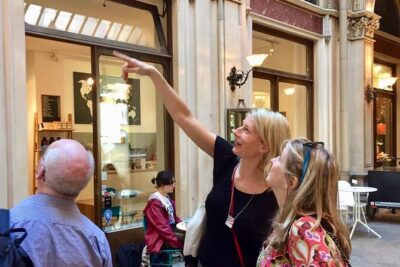 ★ 5.0Vienna Historic Center Small Group Walking TourFrom $721,746 reviews
 ★ 4.5St. Stephen’s Cathedral & Dom Museum Wien TicketsFrom $341,652 reviews
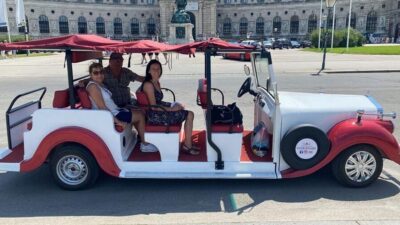 ★ 4.5Old Town Sightseeing Tour in a Vintage-Style E-CarFrom $281,107 reviews
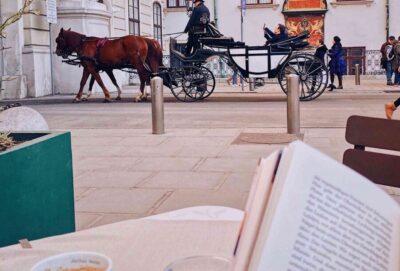 ★ 4.530-Minute Fiaker Ride in the Old TownFrom $1111,092 reviews
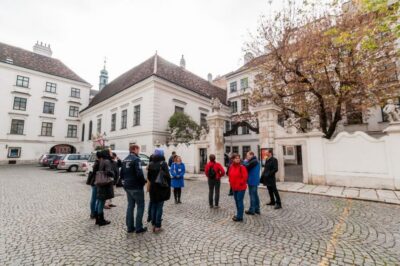 ★ 4.7Romantic Old Town 2-Hour Discovery TourFrom $352816 reviews
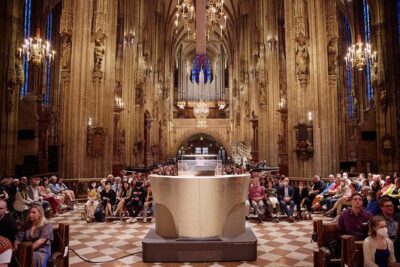 ★ 4.0Concert at Vienna’s St. Stephen’s CathedralFrom $12432 reviews
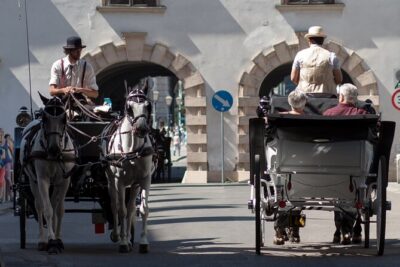 ★ 5.0Exclusive Vienna Old Town Highlights Walking Tour (max. 6 persons)From $151252 reviews
 ★ 5.0Guided Walking Tour of Vienna City Center HighlightsFrom $30150 reviews
Browse the lists this tour appears in