
Reviewed · TOURS
Vienna: ‘Armenia In The Heart Of Austria’ Tour
This Vienna detour feels like a cultural passport. In just two hours, you’ll step into the Mekhitarist Monastery world and see how faith, art, and scholarship shaped Armenian life in Vienna.
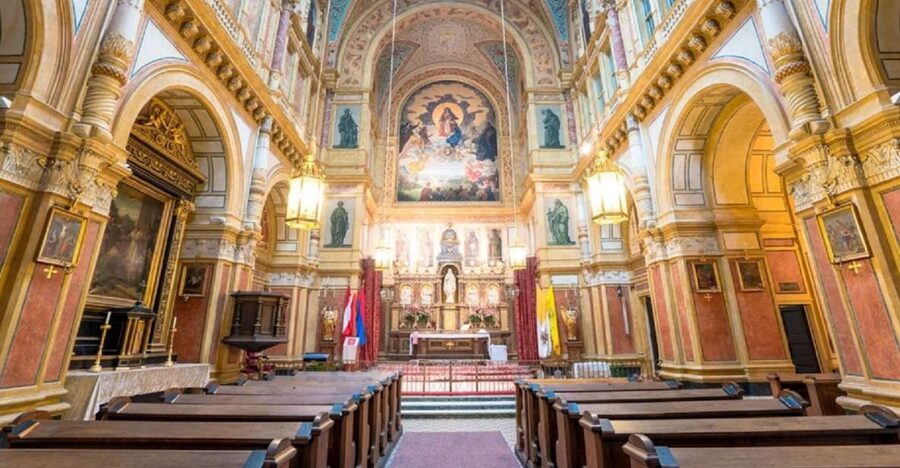
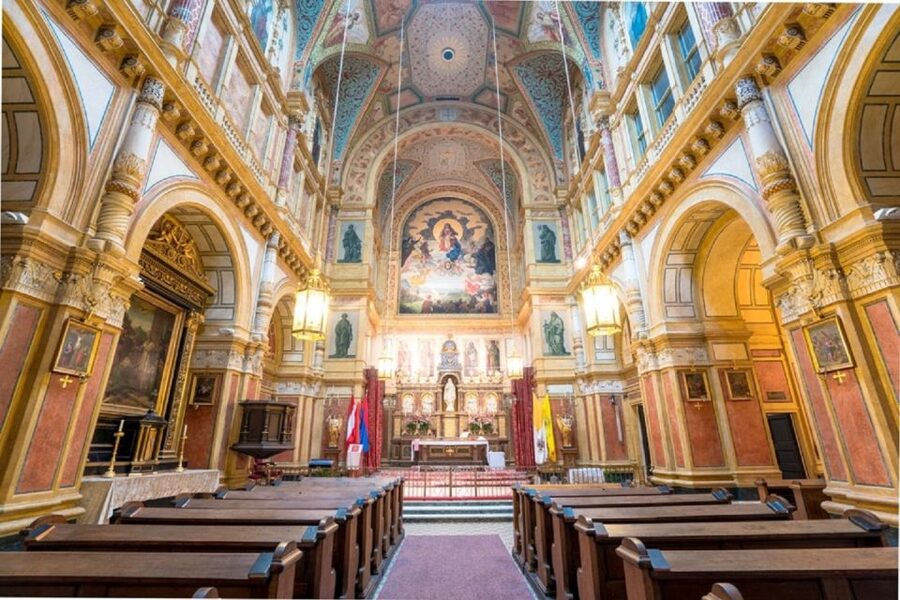
I especially love the Maria Schutz Church interior, where the altar paintings and architecture connect real place with big ideas. I also love the Mekhitharists Library stop, because you’re not just looking at objects, you’re seeing a serious collection story, guided by people like Father Vahan who explain it clearly.
One consideration: the tour packs a lot into 2 hours. If you’re the type who wants long, quiet time in museums and libraries, you may feel a bit on the fast side.
In This Review
- Key things you’ll notice on this tour
- Why this tour feels like more than a church visit
- Entering the Mekhitarist Monastery: meeting point and your pace
- Maria Schutz Church interior: named art, named people, real connections
- A practical tip for enjoying this stop
- Loretto-Chapel and the story of Mary with the Rose
- The refectory: where the Feeding of the Five Thousand steals the show
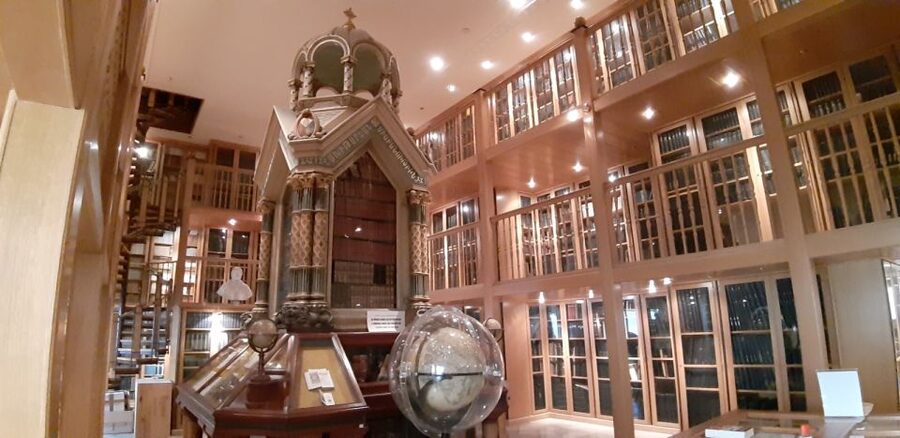
- Mekhitharists Museum and Library: manuscripts, coins, ceramics, carpets
- Armenian manuscripts and book collections that feel almost unreal
- Numismatics and objects beyond books
- Paintings, including Aivazovsky
- The people part: Father Vahan’s style and why it lands
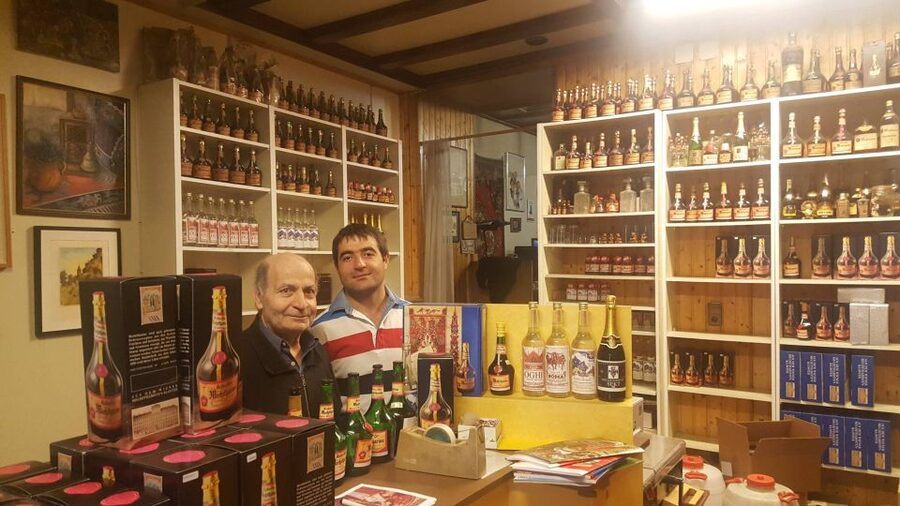
- Mechitharine liqueur tasting: the end point that adds a taste of culture
- Price and value: $84 for a 2-hour small group
- Who should book this tour (and who might skip it)
- Should you book Armenia In The Heart Of Austria?
- FAQ
- How long is the Armenia In The Heart Of Austria tour?
- What is the price per person?
- Where is the meeting point?
- Is it a small group?
- What languages are available for the live guide?
- What is included in the tour price?
- Can I cancel and get a full refund?
- Do I have to pay immediately to reserve my spot?
Key things you’ll notice on this tour
- A quick hit of Armenia in Vienna through one monastery complex
- Maria Schutz Church artwork tied to named artists and architects
- Loretto-Chapel and Mary with the Rose, saved during the 1683 siege period
- A refectory painting you likely won’t expect to see in a monastery setting
- Library and museum breadth: manuscripts, books, coins, ceramics, carpets, and paintings (including Aivazovsky)
- A guided finish with Mechitharine liqueur tasting
Still weighing this one? Line it up against a few Vienna favourites first.
- Vienna: Vivaldi’s Four Seasons Concert in Karlskirche★ 4.7 · 14,951 reviews
- Vienna: Schönbrunn Palace & Gardens Skip-the-Line Tour★ 4.7 · 7,739 reviews
- Vienna: Light of Creation Votive Church Immersive Light Show★ 4.8 · 6,779 reviews
- Vienna Spanish Riding School Guided Tour★ 4.7 · 6,765 reviews
Why this tour feels like more than a church visit

This isn’t a generic church-and-then-leave routine. You’re walking through a single Armenian monastery campus that functions like a mini cultural city block: church, chapels, refectory, then museum and library, and finally a liqueur tasting at the end.
What makes it interesting is the balance between sacred art and practical scholarship. You’ll see stunning religious spaces, but you’ll also get the sense of why the Mekhitarist community became a hub for Armenian memory. When a guide points out specific works, like the altar devoted to St Gregory the Illuminator, it stops being trivia and starts feeling like a map of identity.
Entering the Mekhitarist Monastery: meeting point and your pace
You’ll meet in front of the main entrance of the Mekhitarist Monastery. From there, you’ll move room to room with a live guide and entrance fees handled for you. The small group limit (up to 10 people) matters more than you’d think in a place with lots of detail. It keeps the tour from turning into a shuffle through the halls.
The timing is set for two hours. That means you will cover several major spaces: church interior, Loretto-Chapel, refectory, plus museum and library exhibitions. It’s a great format for a first-time visit. It’s not built for slow browsing or reading every placard word-for-word.
Maria Schutz Church interior: named art, named people, real connections
The tour begins with context: the history of the Mekhitarist Congregation in Vienna. That matters because you’re about to see art with a mission. Without that setup, the stops can feel like a set of beautiful rooms. With it, the objects feel like evidence of a community’s endurance.
Then you’ll focus on Maria Schutz Church. The church you’ll visit was built in 1874, replacing an older Cappuccine one. That replacement detail is a reminder that this story isn’t stuck in the past. Vienna’s religious landscape changed, and the Mekhitarists shaped their presence in that changing city.
Inside, you’ll get guided attention on two big altar-related artistic highlights:
- A painting showing St Mary’s protection of Armenia, painted by Camillo Sitte
- An altar dedicated to St Gregory the Illuminator, designed by Theophil von Hansen
Here’s where it becomes extra meaningful for your “Vienna brain.” Theophil von Hansen is the architect of the Austrian Houses of Parliament in Vienna. So you’re looking at Armenian-focused religious art in a building tied to a major Vienna landmark. That cross-connection helps you read the city as one big conversation, not separate worlds.
A practical tip for enjoying this stop
Give yourself permission to look twice: once at the overall impression (the church interior and altar composition), then again at the names your guide points out. When your guide ties an artwork to a person like Camillo Sitte or Hansen, it makes the details stick.

Loretto-Chapel and the story of Mary with the Rose
Next you’ll go into the Loretto-Chapel. This is where the tour leans into story-driven wonder, and not just visual beauty. You’ll see the baroque miraculous picture known as Mary with the Rose.
What makes this specific picture compelling is its survival story: it was rescued intact from the perils of the Turkish siege of Vienna in 1683. That detail turns a chapel stop into a historical anchor. Even if you don’t usually think about the 1600s, you’ll feel how the past stayed physically present through the centuries.
The payoff here is emotional clarity. You’re not just walking past a religious image; you’re learning why this kind of object carried protection, continuity, and hope during upheaval.
The refectory: where the Feeding of the Five Thousand steals the show
After the chapel, you’ll pass the refectory. The standout feature is a monumental painted work by Ludwig Ferdinand Schnorr von Carolsfeld titled The Feeding of the Five Thousand.
It’s a strong choice for a refectory setting. It connects daily life (eating, sharing space) with a visual message about generosity and provision. And it also surprised me as a concept: you expect devotional scenes in church spaces, but here the refectory carries a grand painting with a very public, biblical energy.
Because the tour is guided, you’re not just looking at the painting. You’ll get direction on what to notice, and why it belongs in this monastery environment.
Mekhitharists Museum and Library: manuscripts, coins, ceramics, carpets
This is the main reason many people love the tour, and for good reason. After the church-and-chapel sequence, the experience expands into culture and documentation.
Armenian manuscripts and book collections that feel almost unreal
In the library and museum, the scale gets serious. You’ll hear about:
- more than 2,800 Armenian manuscripts
- more than 170,000 volumes of Armenian publications
- the largest collection of Armenian newspapers and magazines found in the Western world
Even if you’re not a manuscript person, you’ll understand the value instantly: this is what allows Armenian language and culture to remain traceable in places where it might otherwise have thinned out. A guide can walk you through exhibitions, and you’ll come away with a stronger sense of how knowledge survives.
Numismatics and objects beyond books
The tour doesn’t stop at paper. You’ll also see special features like the Mekhitharists numismatic collection:
- 10,000 Armenian coins
- 20,000 coins from other countries
That’s followed by museum objects including ceramics and carpets, mainly of Armenian production. It’s a shift in “how you read history.” Instead of everything being dates and names, you’re seeing material culture: what people made, used, traded, and preserved.
Paintings, including Aivazovsky
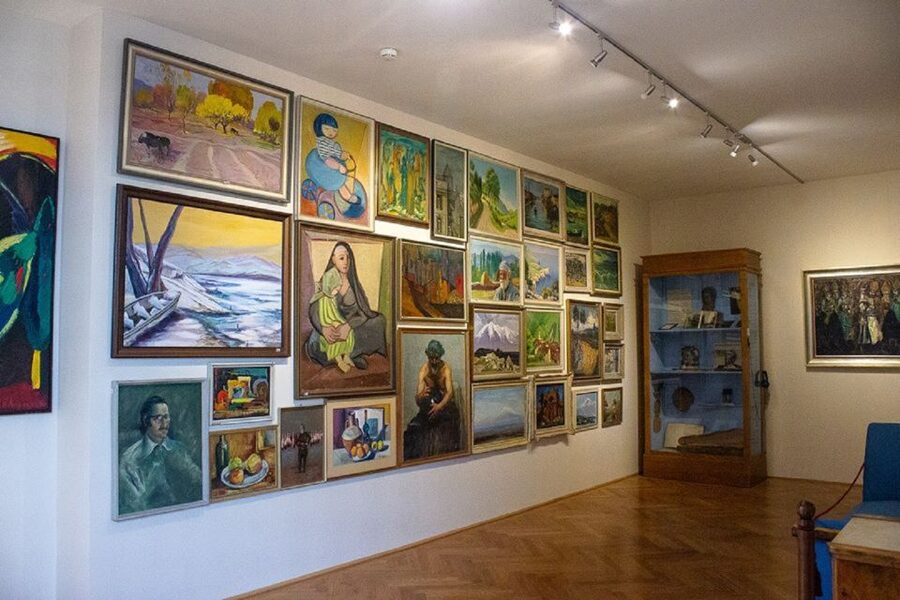
The gallery includes valuable paintings by Armenian artists, among them three paintings by Aivazovsky. That detail is a great way to catch attention even if you’re not deep into art history. When a guide points out named works like this, the museum becomes more than background color.
The people part: Father Vahan’s style and why it lands
One of the strongest impressions from the experience is the tone of the guide. Many tours give you information. This one tends to give you a sense of welcome and personal connection.
Father Vahan comes up in the descriptions as someone who welcomes visitors warmly and answers questions with real clarity. That makes a difference in a tour like this, because the subject sits at the intersection of faith, national identity, and historical memory. If the guide can explain without turning it into a lecture, you’ll walk out feeling you actually understood something.
Mechitharine liqueur tasting: the end point that adds a taste of culture
You finish with a tasting of high-quality Mechitharine liqueur. During it, your guide shares secrets about the liqueur world: its unique taste, history, families, and the business behind it.
This is not just a token sip. It gives your brain something different to hold onto after church art and library facts. It also gently underlines the human side of monastery life: tradition isn’t frozen. It keeps moving through recipes, production, and commerce.
If you avoid alcohol, this is the one part you should think about before booking. The tasting is included, so plan according to your own comfort level.
Price and value: $84 for a 2-hour small group
At $84 per person for 2 hours, the price sits in the “worth it if you care about guided context” category. Here’s why it can feel like good value:
- Entrance fees are included, so you’re not doing mental math mid-tour.
- You get a live guide through multiple distinct spaces: church, chapel, refectory, museum, and library.
- You’re in a small group (limited to 10), which usually means more time for questions and fewer “just keep up” moments.
If you were to visit the church and museum on your own, you’d likely spend more time figuring out what matters. Paying for a guide here buys you interpretation. And interpretation is exactly what turns impressive rooms into a story you can remember.
Who should book this tour (and who might skip it)
This tour is a great fit if you:
- like churches but want more than architecture photos
- care about Armenian culture and how it connects to Vienna
- enjoy libraries and collections, especially when the guide gives names, numbers, and context
- want a short, structured way to understand a big cultural story
You might think twice if you:
- prefer slow museum time and deep reading over guided pacing
- don’t want an included liqueur tasting at the end
For everyone else, it’s one of those experiences that makes you feel like you found something specific, not generic.
Should you book Armenia In The Heart Of Austria?
I’d book it if you want a compact tour that covers real highlights without wasting time. The combination is strong: Maria Schutz Church, the Loretto-Chapel story of Mary with the Rose, the refectory painting The Feeding of the Five Thousand, and then the scale of the Mekhitharists Library and museum collection.
This is also a smart choice if you’re curious about how minority communities preserve language, objects, and memory in a major European city. And with a small group size and guides known for warm, clear explanations, you’re set up for an experience that feels human, not rushed.
If you like tours where details have meaning, this one is worth your evening.
FAQ
How long is the Armenia In The Heart Of Austria tour?
The tour duration is 2 hours.
What is the price per person?
The price is $84 per person.
Where is the meeting point?
Meet in front of the main entrance of the Mekhitarist Monastery.
Is it a small group?
Yes. The group is limited to 10 participants.
What languages are available for the live guide?
The tour offers Armenian, English, and German.
What is included in the tour price?
It includes entrance fees, guide service, and a Mechitharine liqueur tasting.
Can I cancel and get a full refund?
Yes. Free cancellation is available up to 24 hours in advance for a full refund.
Do I have to pay immediately to reserve my spot?
No. You can reserve now and pay later, keeping your plans flexible.
More Tours in Vienna
- Vienna: Schönbrunn Palace & Gardens Skip-the-Line Tour
★ 4.7 · 7,739 reviews - Vienna Spanish Riding School Guided Tour
★ 4.7 · 6,765 reviews - Vienna: Skip-the-Line Sisi Museum, Hofburg and Gardens Tour
★ 4.8 · 5,918 reviews - Vienna: Skip-the-Line Schönbrunn Palace & Gardens Tour
★ 4.8 · 5,411 reviews - Vienna: Guided Walking Tour of City Center Highlights
★ 4.7 · 4,989 reviews
More Tour Reviews in Vienna
- Vienna: Vivaldi’s Four Seasons Concert in Karlskirche
★ 4.7 · 14,951 reviews - Vienna: Schönbrunn Palace & Gardens Skip-the-Line Tour
★ 4.7 · 7,739 reviews - Vienna: Light of Creation Votive Church Immersive Light Show
★ 4.8 · 6,779 reviews - Vienna Spanish Riding School Guided Tour
★ 4.7 · 6,765 reviews - Vienna: Classical Concert in the World-Famous Musikverein
★ 4.6 · 6,673 reviews
Just In: New Vienna Reviews



Tours, compared.
 ★ 4.7Schönbrunn Palace & Gardens Skip-the-Line TourFrom $637,739 reviews
 ★ 4.7Vienna Spanish Riding School Guided TourFrom $286,765 reviews
 ★ 4.8Skip-the-Line Schönbrunn Palace & Gardens TourFrom $765,411 reviews
 ★ 4.2Hop-On Hop-Off Sightseeing Bus Tour in 19 LanguagesFrom $414,518 reviews
 ★ 4.6Time Travel and Magic Vienna History TourFrom $273,879 reviews
 ★ 4.4Big Bus Hop-On, Hop-Off Tour by Open-Top BusFrom $363,529 reviews
 ★ 4.8Vienna Central Cemetery Guided Walking TourFrom $3353,307 reviews
 ★ 4.3Bus & Schönbrunn Palace Skip-the-Line Guided TourFrom $812,802 reviews