
Reviewed · VIENNA OPERA & CLASSICAL CONCERTS
Vienna: Mozart Concert in the Brahms-Saal
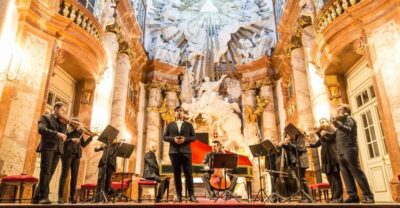
Baroque costumes meet Mozart in one evening. I love the sound from this orchestra and the dramatic flair from the singers. It can feel like a proper Vienna event, not just a ticketed stop.
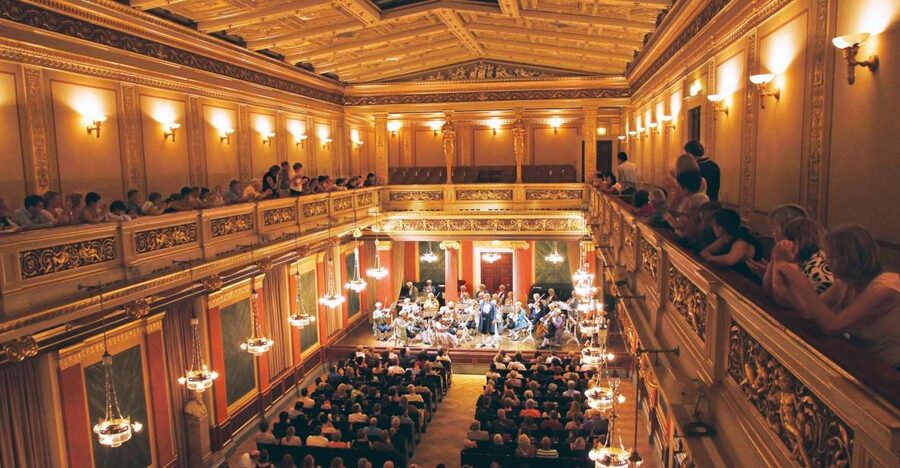
My second big plus is the way the program moves. You get Mozart opera highlights (overtures, arias, duets) and then the big Austrian crowd-pleasers—Blue Danube and Radetzky March—to close the show on a high note. One thing to consider: if you sit on the balcony, you may have to crane your neck and you might miss some of the stage view.
In This Review
- Key things to know before you go
- Vienna’s Brahms-Saal: Why This Concert Feels Like an Event
- The Orchestra and Soloists: Mozart Orchestra of Vienna Meets Opera Power
- The Program Flow: Mozart Opera Highlights, Then Strauss Crowd Favorites
- The small audience moment you might catch
- Costumes and Wigs: When Baroque Dress Makes the Music Easier to Feel
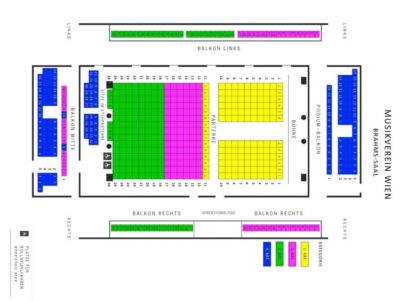
- Seats and Views in the Musikverein: Choose Based on Stage Visibility
- Smart Casual, Ticket Exchange, and the Stuff You’ll Need On Arrival
- Where to exchange your voucher
- Dress code
- What is not included
- A note on ticket handling
- Price and Value: Is $81 a Good Deal for This Mozart Night?
- Who This Is Best For (and Who Should Skip It)
- Should You Book This Vienna Mozart Concert?
- FAQ
- How long is the concert?
- Where do I exchange my voucher for the ticket?
- Is a concert program included?
- Is the cloakroom included?
- What should I wear?
- Are student discounts available?
Key things to know before you go
- Brahms-Saal performance energy: You’re in a famous concert hall setup, and the room is designed to carry orchestral sound.
- Serious local musicianship: The Mozart Orchestra of Vienna draws players from major Austrian groups, which helps explain the tight, polished feel.
- Opera singers in the mix: Two opera singers (State Opera and Volksoper) join the soloists for arias and duets.
- A “period” presentation: Costumes and wigs aim for an 18th-century academy vibe, not just casual concert wear.
- Plan around viewing: Floor and lower seating tend to be easier for seeing performers; balcony seats can be limiting.
- A short, friendly audience moment: There can be a conductor-led clap-along during certain numbers.
Another night under the chandeliers
- Vienna: Classical Concert in the World-Famous Musikverein★ 4.6 · 6,673 reviews
- Vienna: Mozart Concert at the Musikverein – Golden Hall★ 4.6 · 5,194 reviews
- Vienna: Classical Concert in St. Anne’s Church (Annakirche)★ 4.6 · 3,414 reviews
- Vienna: Mozart and Strauss Concert at Schönbrunn★ 4.5 · 2,967 reviews
Vienna’s Brahms-Saal: Why This Concert Feels Like an Event
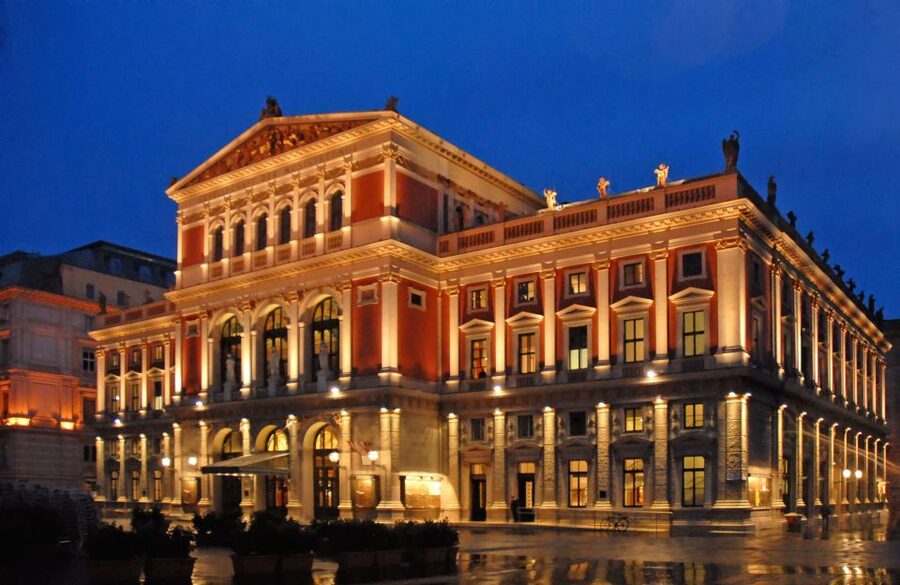
This is the kind of evening that makes Vienna feel theatrical—in a good way. You’re not just listening passively. From the start, the pacing and staging are built to make Mozart and Strauss feel like something you’d talk about afterward.
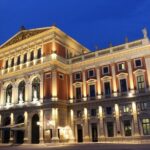
The setting matters. The concert takes place at the Wiener Musikverein, specifically the Brahms-Saal, which helps you hear a full, blended orchestra rather than a thin sound. Even if you are not a classical die-hard, it’s easy to follow what’s happening because the program is made of instantly recognizable musical types: overtures, solo moments, and then big public favorites.
There’s also a nice “two worlds” effect. Mozart is all about elegant lines and character. Strauss is all about motion and joy. The show keeps changing gears, so it doesn’t feel repetitive over the full 2 hours.
The Orchestra and Soloists: Mozart Orchestra of Vienna Meets Opera Power
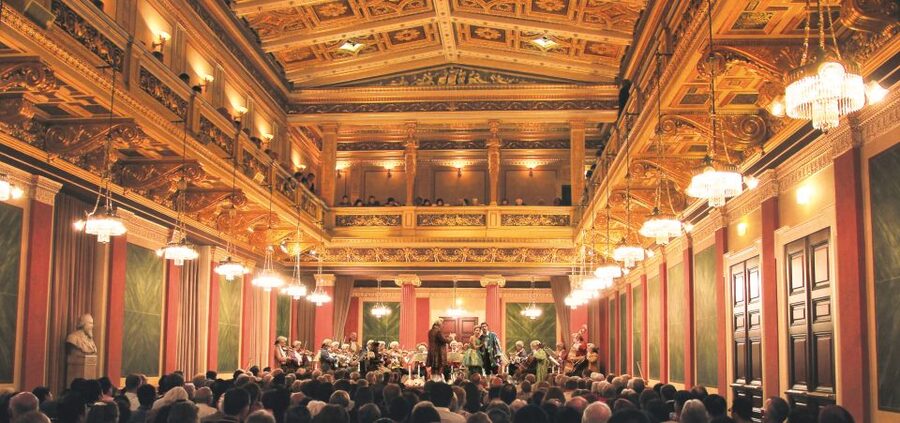
One of the strongest reasons to book is the cast quality. You’re looking at a roughly 30-musician ensemble pulled from the ranks of major Austrian orchestras, including the Vienna Philharmonic and Vienna Symphony, plus other well-known groups. In plain terms: you’re hearing pro-level players, not a small group that has to stretch itself thin.
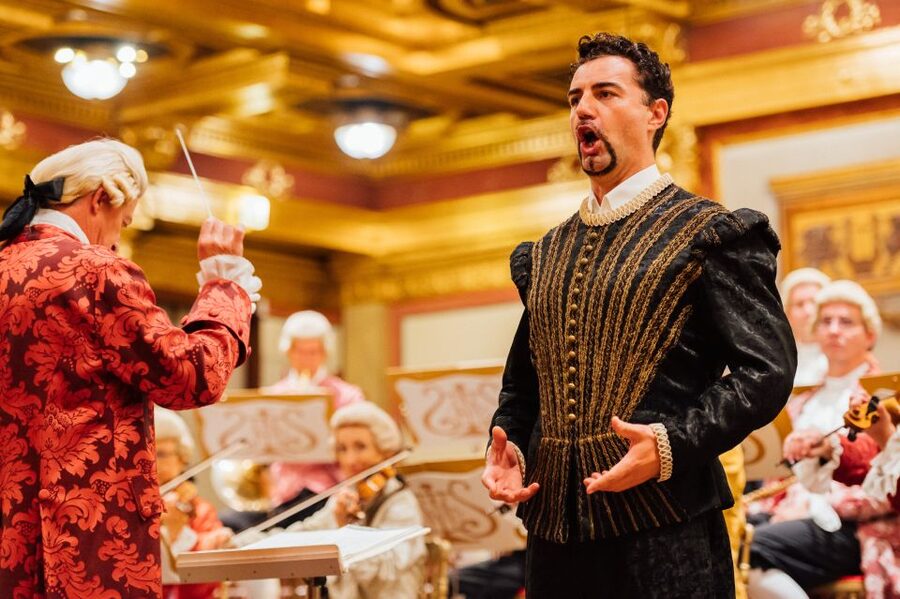
Then the soloists step in. The program includes internationally acclaimed soloists and two opera singers from the State Opera and Volksoper. That combination makes a difference for Mozart opera selections. These are not just pretty tunes. Operatic singing brings the drama and the text-like phrasing to music you might think you already know from recordings.
You also get a star conductor leading the whole thing. That matters because concerts like this live and die by transitions—how the orchestra supports singers, how tempos shift, and how the room is guided through the emotional contrasts. If you like performances where everything feels tightly coordinated, this is the sweet spot.
The Program Flow: Mozart Opera Highlights, Then Strauss Crowd Favorites
The show is built like a classic Viennese night with a clear arc.
First come selections that highlight Mozart in an operatic way: overtures, arias, and duets from his best-known operas. Even if you only recognize fragments, your brain catches on quickly because these pieces are “famous for a reason.” You’ll also hear excerpts beyond operas—there are mentions of symphony, concerto, serenade, and divertimento-style selections presented in the flavor of 18th-century musical academies.
Then, later in the evening, the program moves into the most unmistakable Austrian territory. You’ll end with Johann Strauss I’s Radetzky March and Johann Strauss II’s Blue Danube Waltz.
That ending isn’t random. It’s a smart way to finish a concert for mixed audiences. Mozart can be wonderfully light, but Strauss is the universal language of waltzes and party energy. If you want your last moments in Vienna to feel celebratory, this finale does the job.
The small audience moment you might catch
One of the fun touches is that the conductor may lead a timed clap-along during certain numbers. It’s brief, and it fits the festive energy of Strauss, but it also shows the event isn’t trying to be stiff and museum-quiet. If you like concerts where people actively participate (without turning it into a circus), this helps.
More Mozart and Strauss after dark
Costumes and Wigs: When Baroque Dress Makes the Music Easier to Feel
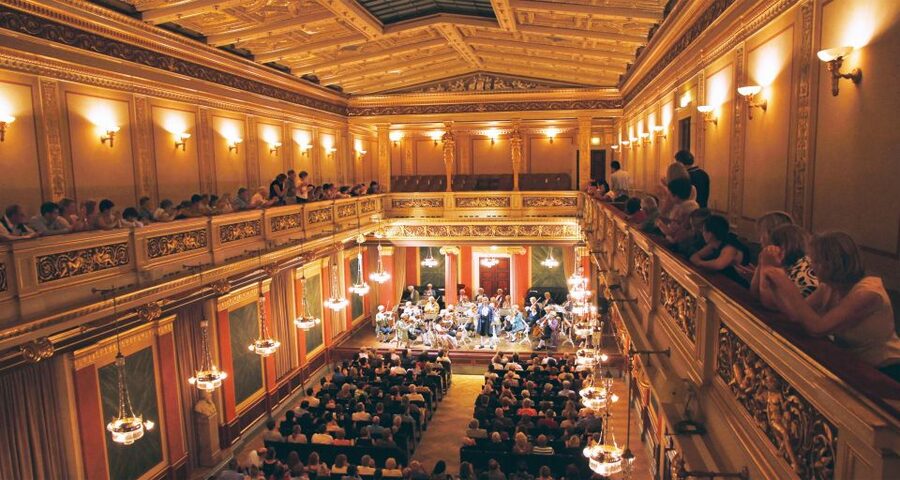
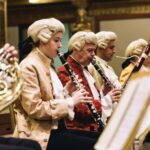
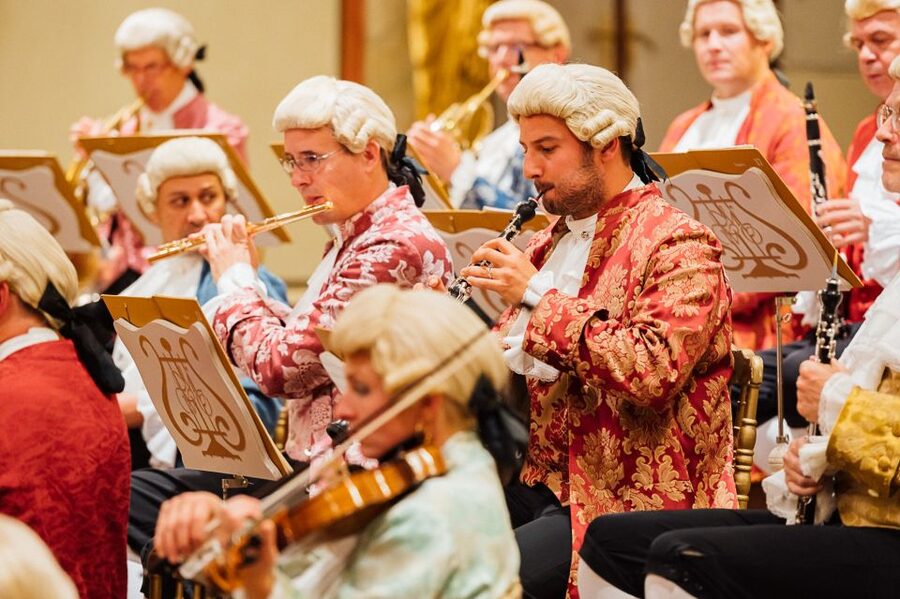
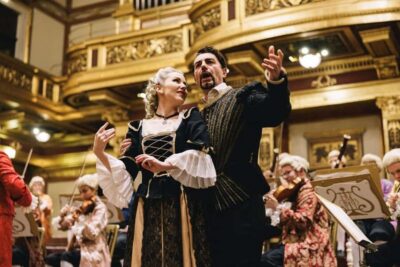
The performance includes period costumes and wigs in a Baroque style. This is not just visual decoration. It changes how you perceive Mozart’s opera excerpts and the academy-like concept of the evening.
Here’s why it works: Mozart’s opera highlights already have characters and dramatic situations built into the music. When the singers and orchestra look like they belong to an 18th-century stage world, your brain connects the sound to a setting. You don’t need a translation or a lecture to understand that something theatrical is happening.
Is it for everyone? If you strongly prefer modern concert formality, you might find it a bit playful. But the general takeaway is that the staging adds confidence and momentum to the musical choices.
Seats and Views in the Musikverein: Choose Based on Stage Visibility
This is the one practical area where your choice can make or break the experience.
The concert is 2 hours long. You’ll spend that time looking either at the stage directly or up at the balcony. Reviews showed a real difference between floor seating and balcony placement:
- Floor seats tend to offer a more satisfying view of performers.
- Balcony seats can be great for hearing, but you may have trouble seeing musicians clearly, especially if you’re seated above the action.
If you’re offered categories like balcony-focused options, treat that as a signal. Plan for neck-craning and the possibility that musicians are partially obscured. If being able to see the singers and conductor clearly matters to you, aim for lower or nearer seating.
Also keep in mind that the hall layout can affect what you see. Flat seating on the floor can still limit sightlines if you’re far back, so don’t assume “floor” automatically means perfect sight.
My practical advice: prioritize visibility of the stage over the idea of being close to the orchestra pit. In a performance that uses costumes and has singers up front, seeing faces and gestures makes the music feel more alive.
Smart Casual, Ticket Exchange, and the Stuff You’ll Need On Arrival
Logistics are straightforward once you know the system.
Where to exchange your voucher
You’ll exchange your voucher at the ticket box office at Kärntner Straße 51, 1010 Vienna. There’s also the option to exchange directly at the Wiener Musikverein in the main foyer at the ticket collection point, from 1 hour before the concert starts.
The venue opens 60 minutes prior to showtime, so you’ll have time to get settled and find your way without sprinting.
Dress code
Dress code is smart casual. Think “nice dinner” rather than “formal evening.” If you show up in that sweet spot, you won’t feel underdressed or overdressed.
What is not included
Two items matter:
- A concert program is not included.
- Cloakroom is not included.
So travel light. If you normally rely on paper programs to orient yourself, you may want to look up the general program idea beforehand, or be ready to enjoy it by sound and staging instead of reading along.
A note on ticket handling
You can exchange your ticket any day before the concert, which gives you flexibility if your schedule changes. If you want to skip the ticket line in the evening, exchanging earlier at the Kärntner Straße office (open daily from 10:00 AM to 5:00 PM) is the easiest path.
Price and Value: Is $81 a Good Deal for This Mozart Night?
At about $81 per person for a 2-hour performance, this sits in the middle of the classic-concert range. Whether it feels like a win comes down to what you want from the evening.
Here’s the value logic:
- You’re getting a full-size ensemble (about 30 musicians), not a chamber-sized group.
- You get opera singers plus soloists, so the program covers more than instrumental highlights.
- The show is staged with period costumes and includes a conductor-led interactive moment (like a clap-along), which adds “event” energy.
- The repertoire includes major, widely known pieces—so you’re not stuck waiting for the moment you recognize.
If you like a concert that blends approachable famous music with real professional performers, it’s a strong value. If your priority is a deep academic program with printed materials included, you may feel slightly annoyed that programs and cloakroom aren’t part of the package.
Who This Is Best For (and Who Should Skip It)
This concert is ideal if you want:
- Mozart opera highlights without needing prior opera knowledge
- A single evening that mixes classical elegance with Austrian pop-culture favorites
- A performance that looks and feels theatrical, thanks to costumes and the way singers are featured
You might want to choose a different kind of concert if:
- You are very sensitive to sightlines and must clearly see performers for the whole show
- You prefer a strictly modern, no-frills concert format
- You rely on printed programs to follow along
For couples, first-time Vienna classical listeners, and anyone who wants a memorable “Vienna night” without researching five different opera houses, this fits well.
Should You Book This Vienna Mozart Concert?
My decision guide is simple.
Book it if you want a polished, professional Mozart-and-Strauss evening with opera singers, a full orchestra, and that unmistakable Wiener Musikverein concert-hall feel. If you’re okay trading a bit of visual perfection for strong sound and are smart about seat choice, it’s a great buy.
Skip it or be extra picky about seats if you know you’ll be disappointed by balcony sightlines. The music and performance quality are the main draw, but seeing the stage matters in this kind of costumed, conductor-driven show.
If you want one evening in Vienna that feels like a living performance, this is one of the easiest ways to make that happen.
FAQ
How long is the concert?
The concert lasts about 2 hours.
Where do I exchange my voucher for the ticket?
You can exchange your voucher at the ticket box office at Kärntner Straße 51, 1010 Vienna. You can also exchange directly at the Wiener Musikverein, in the main foyer, at the ticket collection point from 1 hour before the concert starts.
Is a concert program included?
No. A concert program is not included.
Is the cloakroom included?
No. Cloakroom service is not included.
What should I wear?
The dress code is smart casual.
Are student discounts available?
Yes, discounts are available for children ages 5–18 and students up to age 27, but student discounts require an International Student Identity Card (ISIC). No other student IDs are accepted.
More Tour Reviews in Vienna
- Vienna: Vivaldi’s Four Seasons Concert in Karlskirche
★ 4.7 · 14,951 reviews - Vienna: Schönbrunn Palace & Gardens Skip-the-Line Tour
★ 4.7 · 7,739 reviews - Vienna: Light of Creation Votive Church Immersive Light Show
★ 4.8 · 6,779 reviews - Vienna Spanish Riding School Guided Tour
★ 4.7 · 6,765 reviews - Vienna: Classical Concert in the World-Famous Musikverein
★ 4.6 · 6,673 reviews
More Mozart and Strauss Evenings
- Vienna: Mozart Concert at the Musikverein – Golden Hall
★ 4.6 · 5,194 reviews - Vienna: Mozart and Strauss Concert at Schönbrunn
★ 4.5 · 2,967 reviews - Vienna: Classical Concert at Mozart’s First House
2,423 reviews - Vienna: Mythos Mozart Experience
★ 4.5 · 895 reviews - Vienna Mozart Concert in Historical Costumes at the Musikverein
★ 4.5 · 888 reviews
Another Night at the Opera
- Vienna: Vivaldi’s Four Seasons Concert in Karlskirche
★ 4.7 · 14,951 reviews - Vienna: Classical Concert in the World-Famous Musikverein
★ 4.6 · 6,673 reviews - Vienna: Mozart Concert at the Musikverein – Golden Hall
★ 4.6 · 5,194 reviews - Vienna: Classical Concert in St. Anne’s Church (Annakirche)
★ 4.6 · 3,414 reviews - Vienna: Mozart and Strauss Concert at Schönbrunn
★ 4.5 · 2,967 reviews
Just In: New Vienna Reviews


Vienna Opera & Classical Concerts, compared.
 ★ 4.7Vivaldi’s Four Seasons Concert in KarlskircheFrom $4014,951 reviews
 ★ 4.6Classical Concert in the World-Famous MusikvereinFrom $176,673 reviews
 ★ 4.6Mozart Concert at the Musikverein – Golden HallFrom $815,194 reviews
 ★ 4.6Classical Concert in St. Anne’s Church (Annakirche)From $383,414 reviews
 ★ 4.5Mozart and Strauss Concert at SchönbrunnFrom $422,967 reviews
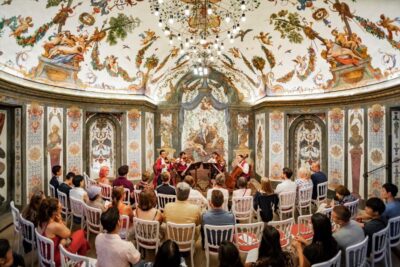 Classical Concert at Mozart’s First House2,423 reviews
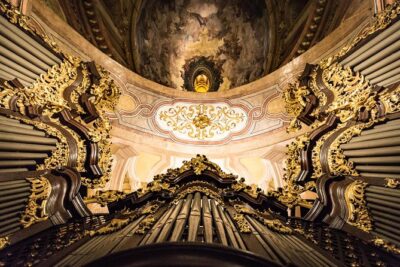 ★ 4.5Vienna Classical Concert at St. Peter’s ChurchFrom $472,039 reviews
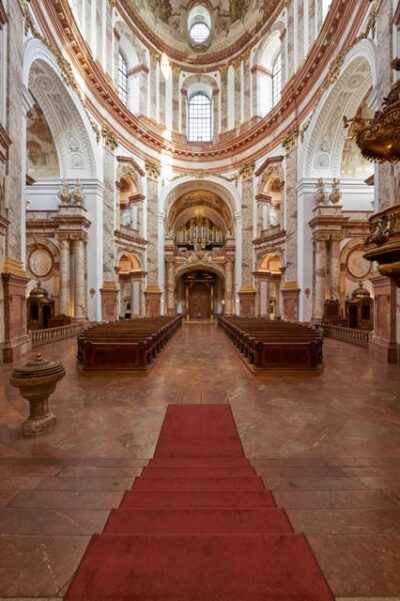 ★ 4.4Karlskirche Entry Ticket with Panoramic Terrace AccessFrom $111,177 reviews
Browse the lists this tour appears in