
Reviewed · VIENNA PRIVATE TOURS
Vienna Photography Masterclass – Private Photography Lesson
Vienna becomes a camera game. I like that this private photo lesson focuses on real street angles and practical coaching, and I also love the way night shooting gets treated as its own skill set, not an afterthought. One thing to plan for: it’s a walking tour through central sights, and the meeting point can be a little tricky to spot if you arrive late or miss the small details.
You’ll spend about 3 hours moving through Vienna’s most photogenic highlights with a professional photographer guide, and you can choose a day session or an after-dark session. It’s offered in English, and you’ll only share the experience with your group, which makes it easier to ask questions and get direct feedback on your photos.
In This Review
- Key highlights at a glance
- Turning Vienna’s Big Sights Into Photos That Feel Personal
- Price and What You Get for $177.44
- Finding Sigmund Freud Stele Fast (So You Don’t Start Rushing)
- Day Tour vs Night Tour: Which One Fits Your Camera Goals?
- Day tour: cleaner lines, more texture, and crowd timing
- Night tour: light control and nighttime techniques
- The Photo Route That Packs a Lot Into 3 Hours
- 1) The Hofburg: imperial scale in manageable frames
- 2) Heldenplatz: symmetry and monument energy
- 3) Volkstheater: street texture and design details
- 4) Österreichisches Parlament: formal architecture, tricky angles
- 5) Rathaus (City Hall): classic Vienna, great photo geometry
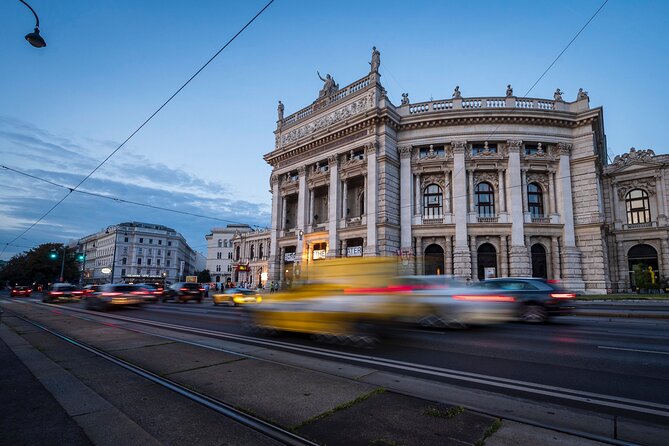
- 6) Burgtheater: elegant visuals beyond the headline sites
- 7) Graben and Kohlmarkt: street-level Vienna, human scale
- 8) St. Stephen’s Cathedral: the signature shot with real technique
- 9) Albertina: a calmer stop that encourages creative framing
- 10) Wiener Staatsoper: nighttime drama or daytime elegance
- What the Photographer Guide Actually Helps You Do
- Camera settings: beyond Auto
- Composition and color: the “why this frame works” lesson
- Nighttime technique: controlling light without losing the mood
- What to Bring: Camera Gear, Tripod Options, and Comfort
- Comfort matters more than you think
- Who This Masterclass Is Best For
- Book It or Skip It? My Take
- FAQ
- How long is the Vienna Photography Masterclass?
- Is the tour private?
- Is there a day tour and a night tour?
- What language is the tour offered in?
- Where does the tour start?
- What stops are included in the route?
- What’s included in the price?
- Is a tripod included?
- Do I need to bring my own camera?
- Can I cancel for a full refund?
Key highlights at a glance
- Private, photo-first guidance from a professional photographer guide during a 3-hour city walk
- Day or night shooting options, each with a different goal and lighting challenges
- Iconic stops in one route, from Hofburg and St. Stephen’s to the Rathaus and Wiener Staatsoper
- Camera settings practice, including the ones you might normally skip on Auto mode
- Tripod support on request, so you can stabilize long exposures if you need it
Only your group, at your own tempo
- Vienna: Private Walking Tour with a Local★ 4.6 · 1,446 reviews
- Vienna: Private Walking Tour with a Guide★ 4.7 · 962 reviews
- Vienna: Wine Tasting Experience in a Private Wine Cellar★ 4.8 · 413 reviews
- Private Day Tour Trip Salzburg Hallstatt and Melk from Vienna★ 5.0 · 388 reviews
Turning Vienna’s Big Sights Into Photos That Feel Personal
Vienna is one of those places where it’s easy to say, I’ll just take a quick snap. The problem is that the photos often look flat. This masterclass is designed to fix that by getting you to slow down and see what’s actually in front of you: lines, reflections, repeating details, and the way light changes how stone and glass behave.
I like the tone of the coaching. It’s not just, Stand here, click. It’s more, Look at what your camera is doing and why. In the day session, you’re learning how to frame imperial buildings and street scenes so they don’t turn into a blur of architecture. In the night session, you’re learning how to handle bright highlights and darker shadows so the illuminated landmarks look intentional, not overexposed.
Price and What You Get for $177.44
At $177.44 per person for about 3 hours, this isn’t the cheapest thing in Vienna—but it’s also not priced like a fancy studio session. The value comes from two things you can feel right away: you get a photographer guiding you through the route, and the tour is private to your group.
If you’re going to spend half a day walking Vienna anyway, paying for focused photo help can be a smart trade. You’re not just paying for access to landmarks. You’re paying for someone to help you make stronger images at the places you’re already going to want to photograph, including St. Stephen’s Cathedral and the Vienna State Opera area (Wiener Staatsoper).
And because it’s a group-discount setup, the per-person cost can make more sense if you’re not traveling solo.
Finding Sigmund Freud Stele Fast (So You Don’t Start Rushing)
Your meeting point is the Sigmund Freud Stele on Universitätsstraße, address listed as 1536/8, 1090 Wien. The tour ends back at the same meeting point.
One practical note: a previous guest feedback pointed out that it can be hard to locate the statue because it isn’t the brightest landmark in the area. So here’s the simple fix: give yourself extra time, check the map on your phone right before you leave, and don’t be shy about asking nearby people for directions to the Sigmund Freud Stele rather than trying to guess from blocks away.
Also, since it’s near public transportation, you can plan an arrival that doesn’t force you to sprint. Vienna is easy to get around, but photo walks are where timing matters—you want to start calm, not flustered.
Day Tour vs Night Tour: Which One Fits Your Camera Goals?
Both tours run about 3 hours, but they’re not the same experience.
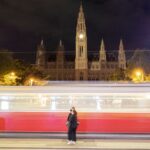
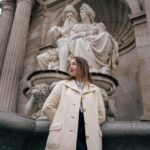
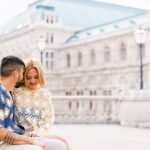
More frames of your Vienna trip
Day tour: cleaner lines, more texture, and crowd timing
During the day, the goal is clarity and structure: how to show Vienna’s imperial elegance and architecture without losing the small details that make the city interesting. Expect stops that work well in daylight, like the Hofburg area and Heldenplatz, where symmetry and building edges help your compositions.
Night tour: light control and nighttime techniques
The night tour is for when you want Vienna to look like it does on a postcard—but with better technique. The illuminated landmarks can be stunning, but they also can trick your camera. This is where you’ll practice nighttime photography techniques and focus on how to handle brightness from signs, windows, and cathedral lighting.
A recent night session example mentioned an 8–11 pm window, which makes sense for seeing landmarks fully lit while still getting enough darkness for mood and contrast.
If you’re deciding between the two, think about your style:
- Pick the day tour if you want sharper architectural frames and street detail.
- Pick the night tour if you want atmosphere, glow, and a challenge that improves your settings fast.
The Photo Route That Packs a Lot Into 3 Hours
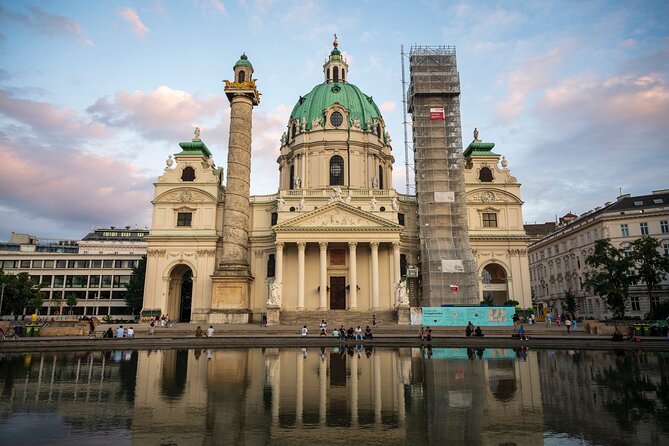
This experience takes you through central Vienna with a set sequence of major photo stops. That matters because it saves you the planning time and keeps you from wasting your limited time on “where should we go next?”
Here’s what each stop is good for, and how it tends to change your photos as you move through the city.
1) The Hofburg: imperial scale in manageable frames
The Hofburg is a strong starting point because it gives you a sense of scale immediately. In photos, big buildings can overpower your frame. The coaching here is useful because it helps you find a composition that balances the palace presence with street-level details—arches, columns, and angles that don’t require standing far back.
2) Heldenplatz: symmetry and monument energy
Heldenplatz is built for bold, central compositions. You’ll likely have opportunities to use leading lines and centered framing to show the space in a way that feels deliberate. In daylight, this type of square often gives clean geometry. At night, the same area can look dramatic as highlights catch on stone surfaces.
3) Volkstheater: street texture and design details
The Volkstheater stop is helpful if you want something beyond the biggest landmarks. The building and surrounding street environment give you chances for color and composition work—capturing the look of the area rather than just photographing a single façade.
A practical idea for your own photos: try mixing a wide shot for context with a tighter frame for details. That’s the kind of habit good guides encourage when time is limited.
4) Österreichisches Parlament: formal architecture, tricky angles
Government buildings often look best when you control perspective. If you shoot too close, buildings stretch; too far and they shrink into the background. This stop is a good place to practice finding an angle that keeps the lines straight and the structure readable in your image.
5) Rathaus (City Hall): classic Vienna, great photo geometry
Rathaus is famous for a reason: the façade and surrounding space give plenty to work with. Think about how you place vertical lines and how you decide whether you want sky included. If you’re doing the day tour, you can emphasize stone texture. If you’re doing the night tour, you can focus on how illumination changes the look of the same surfaces.
6) Burgtheater: elegant visuals beyond the headline sites
Burgtheater adds another layer of architectural character without repeating the exact same look. This stop tends to be where you can practice your ability to spot composition patterns—how windows, edges, and street alignment can guide your eye through the frame.
7) Graben and Kohlmarkt: street-level Vienna, human scale
This pair of streets is where photos can shift from landmark mode to atmosphere mode. You’ll get more street scene opportunities, and that’s a good thing. It’s easy to end a photo tour with 10 nearly identical architectural shots. Street-level frames give you variety and help your set feel like Vienna, not just Vienna buildings.
8) St. Stephen’s Cathedral: the signature shot with real technique
St. Stephen’s Cathedral is one of those places where everyone wants the photo. The difference is whether it looks like a travel snapshot or a controlled image. Daytime helps with clarity, but nighttime is where technique matters most—bright areas, dark shadows, and the risk of turning lights into a blown-out mess.
This is also a great stop to practice composition choices: wide angles for the full cathedral presence, and closer frames for details like patterns and edges.
9) Albertina: a calmer stop that encourages creative framing
Albertina is useful when you want something a bit more flexible—an opportunity to work on your frame choices and not just chase the biggest landmark. It’s a good “practice stop” where you can test composition tweaks your guide suggests, like changing your angle slightly or adjusting where the subject lands in the frame.
10) Wiener Staatsoper: nighttime drama or daytime elegance
Wiener Staatsoper is a top-tier subject for photos because the building reads so clearly in both daylight and night lighting. At night, it can look especially cinematic because the façade lighting helps shapes pop and gives you glow effects. In the day, it still rewards careful framing and line control.
If you’re working toward a strong night set, ending here tends to be satisfying: you finish on a major payoff and can try your final settings without losing your motivation.
What the Photographer Guide Actually Helps You Do
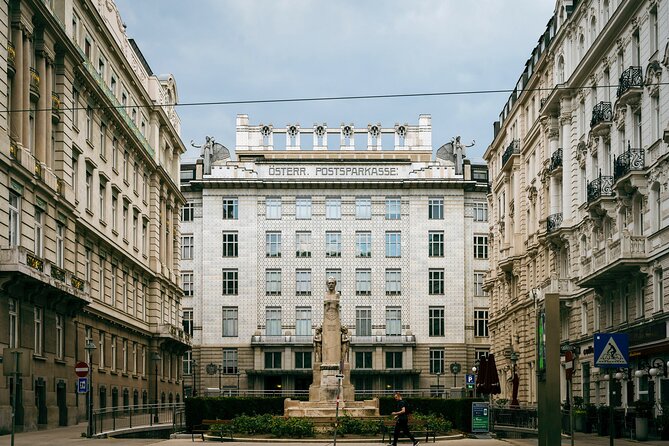
The strongest part of this masterclass is that it doesn’t leave you alone with a city full of photo opportunities. The coaching targets both composition and camera settings.
Camera settings: beyond Auto
One of the best pieces of feedback from this experience is that the guide teaches camera settings you might not normally use. That’s exactly what you want from a guided photo lesson: you learn what changes when you adjust shutter speed, aperture, and ISO—and how to choose those changes based on the lighting around you.
If you’re comfortable with your camera but stuck in repeat-mode, this kind of instruction is still valuable. It helps you stop guessing and start making choices.
Composition and color: the “why this frame works” lesson
Good composition tips can turn a familiar building into something fresh. Expect guidance on framing, color choices, and how to build images so the subject is clear even when Vienna’s details are everywhere.
If your photos often look too busy, this is where you improve fast: your guide will point you toward cleaner framing and help you simplify your shot without losing the essence.
Nighttime technique: controlling light without losing the mood
Night photography is where a guided approach shines. Bright landmark lighting can overpower your camera if you let it. The night tour focuses on mastering nighttime photography techniques, so you learn how to work with illumination rather than fight it.
Even if you don’t own fancy gear, guidance helps you get results by choosing practical settings and managing stability. Tripod advice matters here, too.
What to Bring: Camera Gear, Tripod Options, and Comfort
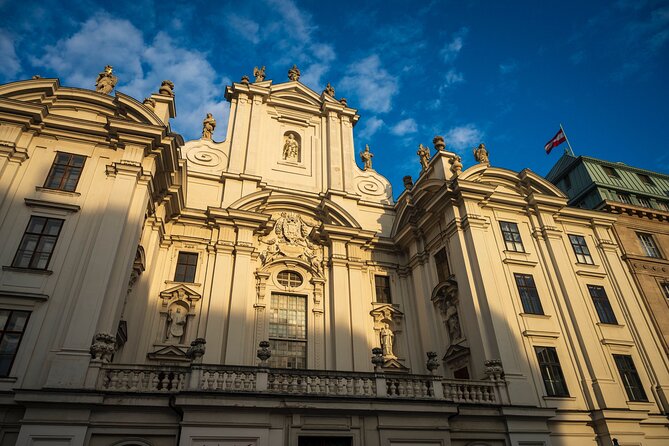
Here’s what’s included: you get a local guide plus a professional photographer guide on a private tour.
Not included: your camera is not provided. Tripods aren’t listed as included, but a tripod is available upon request. So if you have a night shoot goal that includes long exposures, it’s smart to ask ahead and confirm how that works for your specific session.
Comfort matters more than you think
This is a street photo tour through central Vienna. That means walking and standing. Bring comfortable shoes and dress for the season, because you’ll want to stay ready for quick framing changes and short pauses.
And yes, even if you love photography, your feet still deserve credit for keeping you mobile.
Who This Masterclass Is Best For
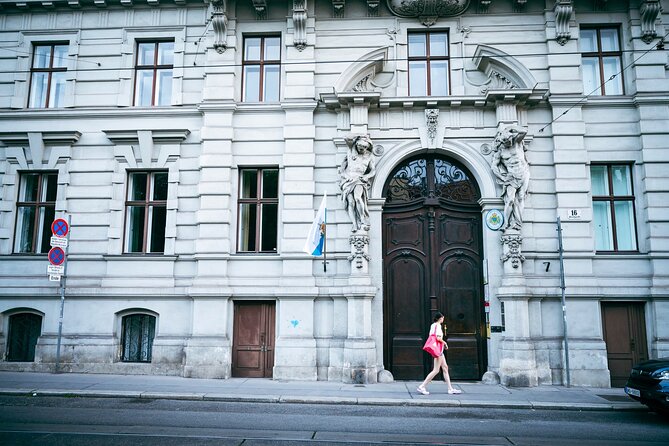
This is a strong fit if you:
- Want help turning Vienna landmarks into stronger photos, not just random clicks
- Prefer a private feel where you can ask questions and get feedback
- Like the idea of learning settings and composition in real-world conditions
- Are aiming for day photos, night photos, or both routes across your stay
It also works well if you know your camera basics but want to stop using the same routine every time. And because the tour is offered in English, it’s easier to communicate what you’re trying to achieve.
If you’re the type who wants fully guided group logistics but doesn’t care about photography at all, you may find the focus too specific. This is a masterclass, not a general sightseeing tour.
Book It or Skip It? My Take
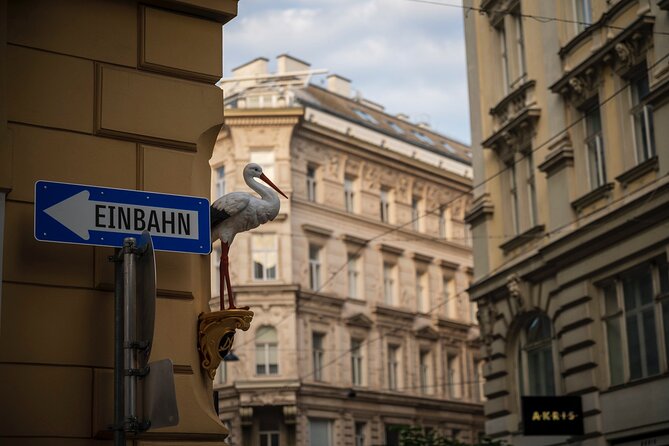
I’d book this if photography is one of your priorities in Vienna. The combination of a professional photographer guide, a focused 3-hour route, and instruction on settings and composition gives you a clear path to better photos—especially if you’re doing the night tour and want light to look controlled.
I’d think twice if you hate walking or if you’re arriving late and will be stressed about finding the meeting point. A little planning makes a big difference here.
If you want a practical way to improve your results in a city that offers endless subjects, this masterclass is a good use of time.
FAQ
How long is the Vienna Photography Masterclass?
It lasts about 3 hours.
Is the tour private?
Yes. It’s a private tour/activity, so only your group participates.
Is there a day tour and a night tour?
Yes. There’s a day photo tour and a night photo tour, each focused on different lighting and techniques.
What language is the tour offered in?
The experience is offered in English.
Where does the tour start?
It starts at Sigmund Freud Stele, Universitätsstraße 1536/8, 1090 Wien, Austria.
What stops are included in the route?
The route includes Hofburg, Heldenplatz, Volkstheater, Österreichisches Parlament, Rathaus, Burgtheater, Graben and Kohlmarkt, St. Stephen’s Cathedral, Albertina, and Wiener Staatsoper.
What’s included in the price?
You get a local guide, a private tour, and a professional photographer guide.
Is a tripod included?
A tripod is available upon request, but it is not listed as included automatically.
Do I need to bring my own camera?
Yes. A camera is not included.
Can I cancel for a full refund?
Yes. You can cancel up to 24 hours in advance for a full refund.
More Tour Reviews in Vienna
- Vienna: Vivaldi’s Four Seasons Concert in Karlskirche
★ 4.7 · 14,951 reviews - Vienna: Schönbrunn Palace & Gardens Skip-the-Line Tour
★ 4.7 · 7,739 reviews - Vienna: Light of Creation Votive Church Immersive Light Show
★ 4.8 · 6,779 reviews - Vienna Spanish Riding School Guided Tour
★ 4.7 · 6,765 reviews - Vienna: Classical Concert in the World-Famous Musikverein
★ 4.6 · 6,673 reviews
Sharper Shots of Vienna
- Vienna: Christmas Photoshoot with a Pro Photographer
★ 4.3 · 241 reviews - Salzburg: Photography Tour with a Professional Photographer
★ 4.6 · 102 reviews - Vienna at night! Private photo tour of Vienna’s most beautiful buildings
★ 5.0 · 63 reviews - Hallstatt: Photoshoot with a Professional Photographer
★ 4.5 · 58 reviews - Exclusive Vienna Photography Session and City tour
★ 5.0 · 30 reviews
Yours Alone Across Vienna
- Vienna: Private Walking Tour with a Local
★ 4.6 · 1,446 reviews - Vienna: Private Walking Tour with a Guide
★ 4.7 · 962 reviews - Vienna: Wine Tasting Experience in a Private Wine Cellar
★ 4.8 · 413 reviews - Private Day Tour Trip Salzburg Hallstatt and Melk from Vienna
★ 5.0 · 388 reviews - Private Day Tour of Hallstatt and Salzburg from Vienna
★ 5.0 · 263 reviews
Just In: New Vienna Reviews
Vienna Private Tours, compared.
 ★ 4.6Private Walking Tour with a LocalFrom $561,446 reviews
 ★ 4.7Private Walking Tour with a GuideFrom $55962 reviews
 ★ 4.8Wine Tasting Experience in a Private Wine CellarFrom $22413 reviews
 ★ 5.0Private Day Tour Trip Salzburg Hallstatt and Melk from ViennaFrom $930388 reviews
 ★ 5.0Private Day Tour of Hallstatt and Salzburg from ViennaFrom $919263 reviews
 ★ 5.0Private Hidden Vienna Walk — Stories Behind Quiet CornersFrom $344137 reviews
★ 4.5Vienna Private Walking Tour with a LocalFrom $58131 reviews
★ 5.0Private Hidden Vienna Walk — Stories Behind Quiet CornersFrom $344137 reviews
★ 4.5Vienna Private Walking Tour with a LocalFrom $58131 reviews
 ★ 5.0Vienna at First Glance a Private Walking Tour for First TimersFrom $344131 reviews
Browse the lists this tour appears in