
Reviewed · VIENNA PRIVATE TOURS
Vienna: Private Music Tour
Vienna’s music story starts under a grand opera roof. This private tour pairs behind-the-scenes access to the Vienna State Opera with an easy inner-city stroll through the real addresses where Beethoven, Mozart, and Johann Strauss left their mark. I especially like how the route turns famous names into places you can point at, not just facts on a page. You also get guide energy that keeps the whole 150 minutes moving, with guides such as Lisa and Giselle leading the way.
One thing to keep in mind: the State Opera entrance fee isn’t included, and the exact start time can shift based on the opera’s opening hours and what the operator has available.
In This Review
- Key highlights you’ll feel right away
- Vienna State Opera: the big moment without the ticket headache
- The guided “music walk” through Vienna’s center
- Palais Lobkowitz: where Beethoven’s Eroica entered the world
- Hofburg Imperial Chapel and the Vienna Boys Choir legacy
- Mozart Memorial and the Strauss dance salon effect
- Pasqualati House: Beethoven’s lived-in side of genius
- St. Stephen’s Cathedral: Mozart’s wedding plus bigger wow-factor
- Mozart’s former home: bringing the composer back down to streets
- Private-group flexibility: pace, priorities, and helpful adjustments
- Price and value: $541 per group up to 15 people
- Who this tour suits best
- Practical tips before you go
- Should you book this private Vienna music tour?
- FAQ
- FAQ
- How long is the Vienna Private Music Tour?
- Is this tour private?
- Where do I meet the guide?
- What’s included in the tour?
- Is the tour entrance fee included for the opera house?
- What languages are available?
- Is the tour wheelchair accessible?
Key highlights you’ll feel right away
- State Opera behind-the-scenes access with skip-the-ticket-line convenience
- Music landmarks close together, so you spend time listening instead of hunting
- Beethoven stop points, including Palais Lobkowitz tied to the Eroica
- Vienna Boys Choir connection through the Imperial Chapel
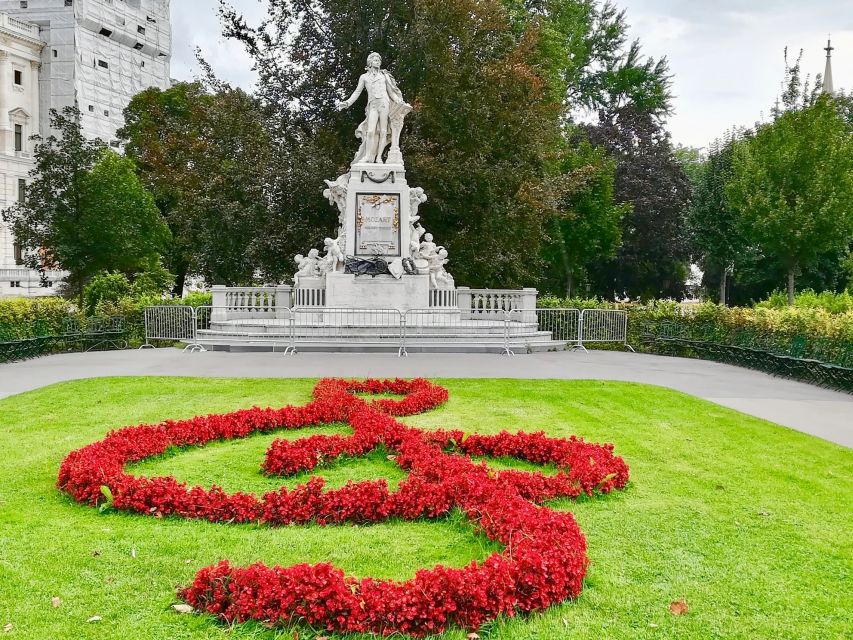
- Strauss and salon culture, via the Mozart Memorial’s former dance setting
- St. Stephen’s Cathedral with a Mozart link, plus other major Mozart sites
Only your group, at your own tempo
- Vienna: Private Walking Tour with a Local★ 4.6 · 1,446 reviews
- Vienna: Private Walking Tour with a Guide★ 4.7 · 962 reviews
- Vienna: Wine Tasting Experience in a Private Wine Cellar★ 4.8 · 413 reviews
- Private Day Tour Trip Salzburg Hallstatt and Melk from Vienna★ 5.0 · 388 reviews
Vienna State Opera: the big moment without the ticket headache
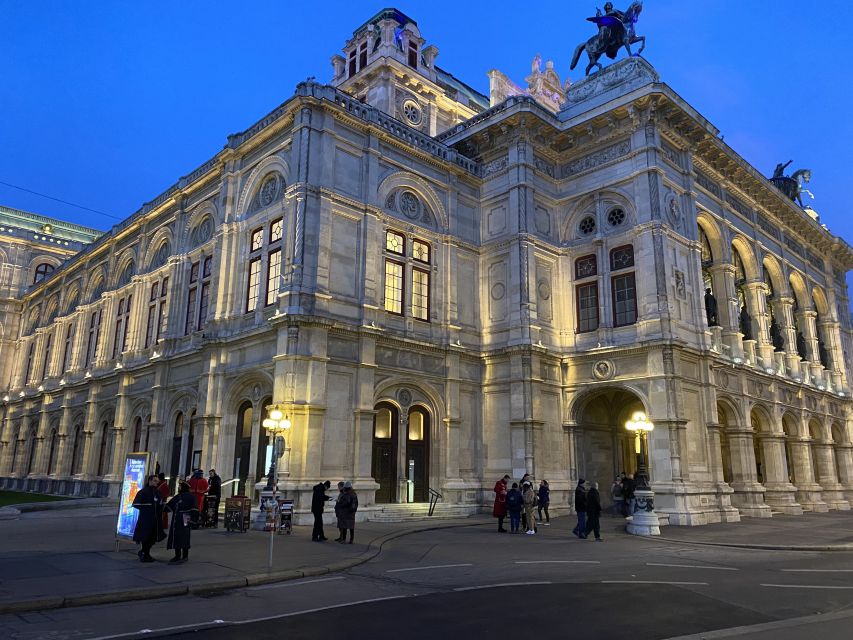
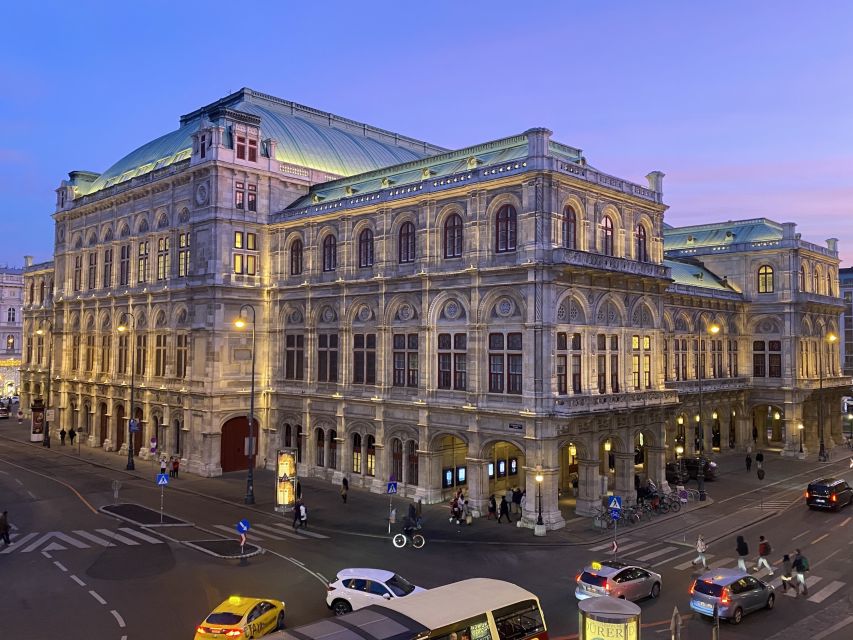
Your tour starts at the Vienna State Opera, with your guide waiting by the fountain on the left-hand side of the building. This matters because it’s one of those places in Vienna where getting oriented fast helps. From there, you’ll get a guided look inside the opera house—exactly the kind of experience that’s hard to replicate on your own unless you already know how tours are timed and what routes are possible.
The key value here is the combination of inside access and context. You’re not only seeing a famous building; you’re learning how it functioned as a music machine—conductors, eras, and why this place became such a symbol of Vienna’s musical identity. The tour specifically calls out major figures like Gustav Mahler, so you can place the opera house in a wider musical timeline instead of treating it like a museum backdrop.
Practical note: the State Opera entrance fee isn’t included. The tour is set up to help you avoid line hassle with skip-the-ticket-line, but you’ll still want to budget for any separate entrance charges that apply to the opera portion.
The guided “music walk” through Vienna’s center
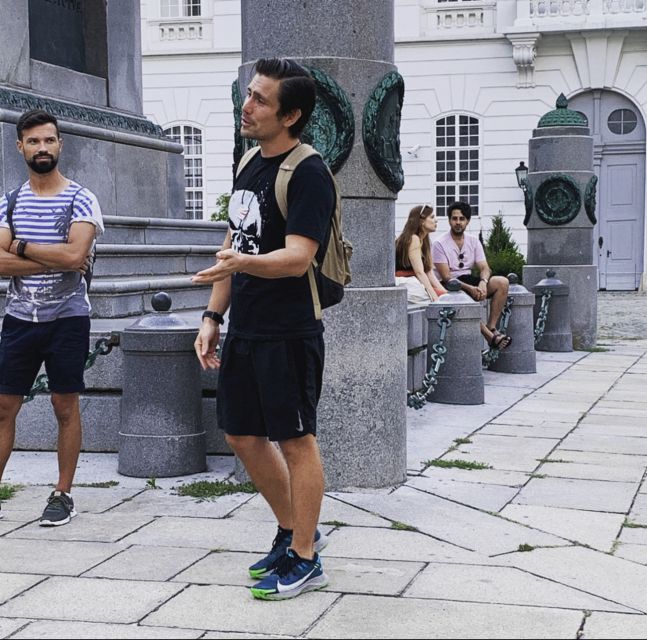
After the opera, the experience shifts into a slower, on-foot rhythm through Vienna’s inner city. The whole guided program lasts about 150 minutes, and it’s designed so you can take in major sights without feeling like you’re sprinting across town. The tour is private (up to 15 people), so the pace stays more flexible than on a large group bus-and-stop tour.
You’ll make several stops tied to the composers and musical traditions the city is famous for. That’s the real genius of this setup: Vienna’s greatness isn’t only in grand monuments—it’s also in how many crucial stories are attached to everyday-looking buildings.
If you like walking but you don’t want to plan five separate tickets and meetups, this format fits well. Just wear comfortable shoes. Even with a “leisurely stroll,” the center adds up.
Palais Lobkowitz: where Beethoven’s Eroica entered the world
One of the most exciting stops is Palais Lobkowitz. This is where Beethoven premiered his Symphony No. 3, Eroica, and where you also learn about the role of his main patron. That’s a detail I really appreciate, because it explains something easy to miss when you only focus on the music.
A composer didn’t just sit alone and write masterpieces. In Vienna, support, venues, and influential patrons mattered. The tour uses the palace to connect the dots: the building becomes part of the story of how big orchestral works reached audiences.
This stop is also a good “reset” moment. After the opera’s formality, you’re back in a human-scale setting that helps the music feel less like legend and more like a product of people, power, and relationships.
Hofburg Imperial Chapel and the Vienna Boys Choir legacy
The route continues toward the Hofburg Imperial Chapel, which is closely linked to the Vienna Boys Choir. The tour doesn’t just point at the chapel—it focuses on how the choir began and why it became such a lasting part of Vienna’s sound.
The important practical piece: the chapel is where the Vienna Boys Choir perform every Sunday. The tour doesn’t promise a performance in every case, but even without hearing them live, the context is powerful. You get the “why” behind the tradition, not just the “what.”
If you’re the type who likes cultural history as much as musical history, this stop will click. It’s a reminder that Vienna’s music identity isn’t only about opera houses and symphonies—it’s also about training, ritual, and long-running institutions.
More private days, your group only
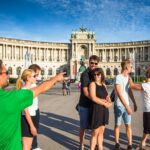
Mozart Memorial and the Strauss dance salon effect
Next comes the Mozart Memorial, tied to a former dance salon connected with Johann Strauss—the so-called Waltz King. This is one of the most fun parts of the itinerary because it treats music as social life.
You’re learning about the kind of spaces where waltzes turned into social events and where Strauss made the ladies swoon—yes, that dramatic phrasing is part of the legend, but the underlying point is practical. Vienna’s music culture isn’t only about big concert halls. It also lives in rooms built for movement, flirting, and full-body rhythms.
If you tend to think of Strauss as background music, this stop helps you understand why the city developed a taste for dance-driven melodies and why the waltz became such a powerful symbol.
Pasqualati House: Beethoven’s lived-in side of genius
The tour also includes the Pasqualati House, described as the former residence of Ludwig von Beethoven. This is the kind of stop that can feel slightly different from the more famous “monument” locations.
When you’re in the orbit of Beethoven’s story, the cathedral and the palace feel like stages. The Pasqualati House brings things closer to daily life, which helps the composer feel less like a statue and more like a person moving through rooms and routines.
Even if you only remember one thing from this stop, it’s the shift in scale—from grand premieres and institutional music to the personal space where inspiration and work overlap.
St. Stephen’s Cathedral: Mozart’s wedding plus bigger wow-factor
No Vienna music route feels complete without St. Stephen’s Cathedral. This tour makes sure you don’t just admire it from a distance. You’ll see the cathedral as a major stop point, and it includes the specific note that Mozart was married here.
That single fact changes how you look at the building. It stops being only architecture and becomes a witness to a major life moment. Even if you’ve visited before, it’s the kind of detail that makes you see the cathedral in a more intimate way.
The cathedral is also a good place for the guide to help you connect Vienna’s religious and civic identity to the arts. It’s not “just a church.” In a city like this, institutions and artists have long shared the same stage.
Mozart’s former home: bringing the composer back down to streets
Another included stop is Mozart’s former home. In a city with so many references to famous names, it’s easy for those sites to blur together. This one works because it reinforces the theme of the tour: music history is mapped onto real neighborhoods.
Seeing Mozart’s home makes it easier to imagine the composer moving through Vienna as a working person, not floating above time. It also helps you understand why Vienna’s reputation isn’t only built on a few set pieces—it’s built on the density of connections.
If you’re short on time and you don’t want to bounce between separate museums, this collection of Mozart sites is a smart way to cover more ground in one guided block.
Private-group flexibility: pace, priorities, and helpful adjustments
Because this is a private group, it tends to feel less like a fixed checklist and more like a guided conversation with a plan. You can also get adjustments during the walk. In one example, the guide worked with a group to end near a metro stop, and the day’s flow adapted so everyone could enjoy a little downtime along the way.
That kind of flexibility matters if:
- you have accessibility needs,
- you’re traveling with kids,
- or you just don’t want your day hijacked by rigid timing.
The tour is also offered in English and German, which helps if you want explanations that aren’t translated into robotic summaries.
Price and value: $541 per group up to 15 people
The price is $541 per group for up to 15 people, for a total duration of 150 minutes. That pricing structure is often what makes this type of tour a good deal in Vienna.
Here’s why it can be strong value:
- You’re not paying for one site. You’re covering multiple major stops linked to big names.
- You get a guided route between places that would take time to stitch together yourself.
- You get skip-the-ticket-line for the opera portion, which saves hassle.
- The guide is state-certified, and the emphasis stays on music plus the surrounding story.
The trade-off: you don’t control the timing the way you would on an all-day DIY walk, and the State Opera entrance fee is not included. Still, for most people, the convenience and the quality of interpretation make the math work, especially if you’re traveling with family or friends rather than going solo.
Who this tour suits best
This is a great match if you want:
- a guided Vienna music primer focused on the big composers,
- multiple key sights without dealing with lots of separate bookings,
- and a route that blends opera-world prestige with the calmer streets around the center.
It may be less ideal if you want long stops inside each building with plenty of personal time. This tour is paced as a 150-minute story arc. You’ll see a lot, but not everything at deep-dive length.
Practical tips before you go
- Bring comfortable walking shoes. Even on a “leisurely” schedule, the center adds up.
- Expect the start time to be set based on the opera’s opening hours and tour availability.
- If you want to connect the tour end with metro access, mention your preference early—guides can often adjust the finish point.
- If you’re traveling with someone who needs extra flexibility, it helps to share needs when the tour time is confirmed so the guide can plan the route accordingly.
Should you book this private Vienna music tour?
Yes, if you want a guided, story-driven Vienna experience that ties the State Opera to Beethoven, Mozart, and Strauss through real places you can stand in. The main reason to book is the combo: inside opera access plus a structured walk to the composer-linked sites that give Vienna its musical identity.
Skip it only if you’re hoping for long unstructured time inside each venue, or if you already have a personal plan that covers these same stops with similar interpretation value.
FAQ
FAQ
How long is the Vienna Private Music Tour?
The tour lasts 150 minutes.
Is this tour private?
Yes. It’s a private group experience (up to 15 people).
Where do I meet the guide?
Meet your guide by the fountain on the left-hand side of the Vienna State Opera.
What’s included in the tour?
You get a guided tour of the State Opera (entrance fee not included). Hotel pickup and drop-off are included if you select that option.
Is the tour entrance fee included for the opera house?
No. The State Opera entrance fee is not included.
What languages are available?
The tour is offered in English and German.
Is the tour wheelchair accessible?
Yes, the tour is wheelchair accessible.
More Tours in Vienna
- Vienna: Schönbrunn Palace & Gardens Skip-the-Line Tour
★ 4.7 · 7,739 reviews - Vienna Spanish Riding School Guided Tour
★ 4.7 · 6,765 reviews - Vienna: Skip-the-Line Sisi Museum, Hofburg and Gardens Tour
★ 4.8 · 5,918 reviews - Vienna: Skip-the-Line Schönbrunn Palace & Gardens Tour
★ 4.8 · 5,411 reviews - Vienna: Guided Walking Tour of City Center Highlights
★ 4.7 · 4,989 reviews
More Tour Reviews in Vienna
- Vienna: Vivaldi’s Four Seasons Concert in Karlskirche
★ 4.7 · 14,951 reviews - Vienna: Schönbrunn Palace & Gardens Skip-the-Line Tour
★ 4.7 · 7,739 reviews - Vienna: Light of Creation Votive Church Immersive Light Show
★ 4.8 · 6,779 reviews - Vienna Spanish Riding School Guided Tour
★ 4.7 · 6,765 reviews - Vienna: Classical Concert in the World-Famous Musikverein
★ 4.6 · 6,673 reviews
Yours Alone Across Vienna
- Vienna: Private Walking Tour with a Local
★ 4.6 · 1,446 reviews - Vienna: Private Walking Tour with a Guide
★ 4.7 · 962 reviews - Vienna: Wine Tasting Experience in a Private Wine Cellar
★ 4.8 · 413 reviews - Private Day Tour Trip Salzburg Hallstatt and Melk from Vienna
★ 5.0 · 388 reviews - Private Day Tour of Hallstatt and Salzburg from Vienna
★ 5.0 · 263 reviews
Just In: New Vienna Reviews



Vienna Private Tours, compared.
 ★ 4.6Private Walking Tour with a LocalFrom $561,446 reviews
 ★ 4.7Private Walking Tour with a GuideFrom $55962 reviews
 ★ 4.8Wine Tasting Experience in a Private Wine CellarFrom $22413 reviews
 ★ 5.0Private Day Tour Trip Salzburg Hallstatt and Melk from ViennaFrom $930388 reviews
 ★ 5.0Private Day Tour of Hallstatt and Salzburg from ViennaFrom $919263 reviews
 ★ 5.0Private Hidden Vienna Walk — Stories Behind Quiet CornersFrom $344137 reviews
★ 4.5Vienna Private Walking Tour with a LocalFrom $58131 reviews
★ 5.0Private Hidden Vienna Walk — Stories Behind Quiet CornersFrom $344137 reviews
★ 4.5Vienna Private Walking Tour with a LocalFrom $58131 reviews
 ★ 5.0Vienna at First Glance a Private Walking Tour for First TimersFrom $344131 reviews
Browse the lists this tour appears in