
Reviewed · TOURS
Vienna: Tour with locals in RAXI electric rickshaw
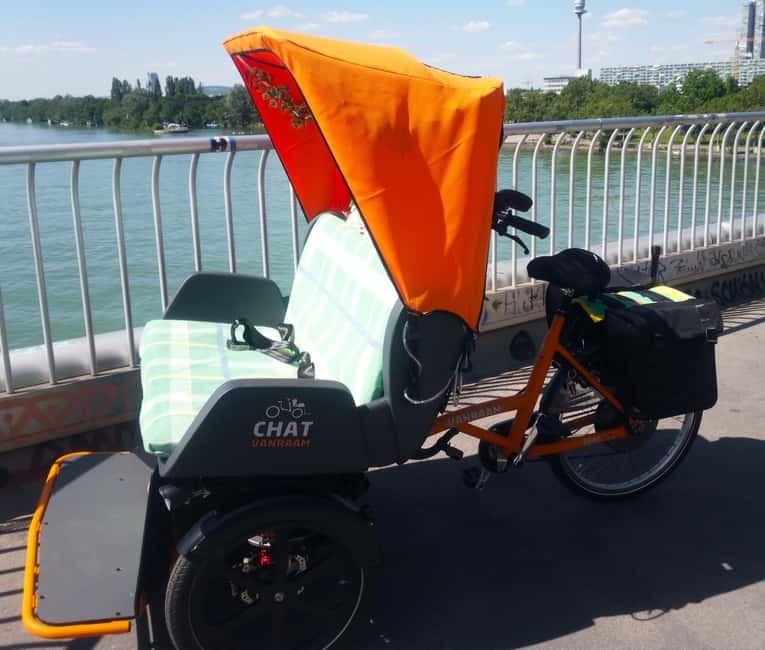
Electric rickshaws make Vienna feel bigger. You glide through parts of the city where cars don’t make sense, then stop for real, unhurried look-ins at iconic and lesser-known sights—without the leg burn. This RAXI electric rickshaw tour is built for comfortable sightseeing: you get narration, smooth riding, and a route that can be shaped around what you care about most.
I especially love the chance to ride the Danube Canal bike lanes the way locals do, which keeps you close to the water and away from noisy traffic. I also like that they bring a heated battery blanket (about 3 hours) plus a waterproof picnic blanket for wind and light rain, so the comfort holds up even when Vienna cools off.
One thing to plan around: weather and rules matter. The rickshaw runs only in a limited weather window, and if it’s too bad, the alternative is public transport plus some walking, with pickup still covered—plus you’ll want to travel light since luggage or large bags aren’t allowed.
In This Review
- Key things I’d circle before you book
- A Private Vienna Ride, Built for Big Stops and Few Sore Feet
- Getting Set Up: Pickup, Headsets, and How the Tour Flows
- Historic Center on Two Wheels: Where You Get Views Without the Hustle
- Hofburg Palace in 15 Minutes: A Quick, Useful Snapshot
- Hundertwasserhaus: Why This Ecological Building Gets a Full 45 Minutes
- Danube Park and the Old Danube: Green Breaks That Still Feel Like Vienna
- Prater and the Ringstraße: Imperial Streets, Modern Angles
- Price and Value: What $175 for Two People Really Buys
- Weather Plan: Heated Blanket, Rain Protection, and the Public Transport Backup
- What to Bring (and What to Skip)
- Who This Tour Suits Best
- Should You Book the Vienna RAXI Electric Rickshaw Tour?
- FAQ
- How long is the Vienna RAXI electric rickshaw tour?
- How many people can ride in the RAXI?
- Where does pickup happen?
- What are the main sights included?
- What languages are the tours offered in?
- What weather is the rickshaw tour able to run in?
- What happens if the weather makes the rickshaw tour impossible?
Key things I’d circle before you book
- Danube Canal bike-lane route that feels local, not car-lined tourism
- Prater green + Ringstraße cruising for that imperial-meets-modern Vienna contrast
- Hundertwasser House (Hundertwasserhaus) with a stop focused on its ecological idea
- Heated blanket and windproof picnic blanket for comfort on cooler days
- Private 2-person rickshaw setup with headsets so you don’t miss the guide
- A flexible route that you can personalize around architecture or history
Still weighing this one? Line it up against a few Vienna favourites first.
- Vienna: Vivaldi’s Four Seasons Concert in Karlskirche★ 4.7 · 14,951 reviews
- Vienna: Schönbrunn Palace & Gardens Skip-the-Line Tour★ 4.7 · 7,739 reviews
- Vienna: Light of Creation Votive Church Immersive Light Show★ 4.8 · 6,779 reviews
- Vienna Spanish Riding School Guided Tour★ 4.7 · 6,765 reviews
A Private Vienna Ride, Built for Big Stops and Few Sore Feet
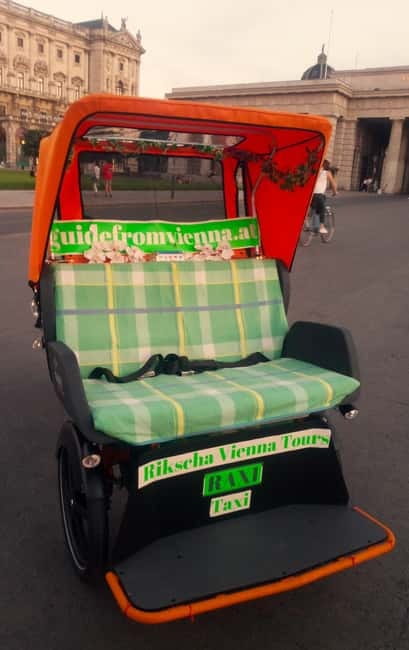
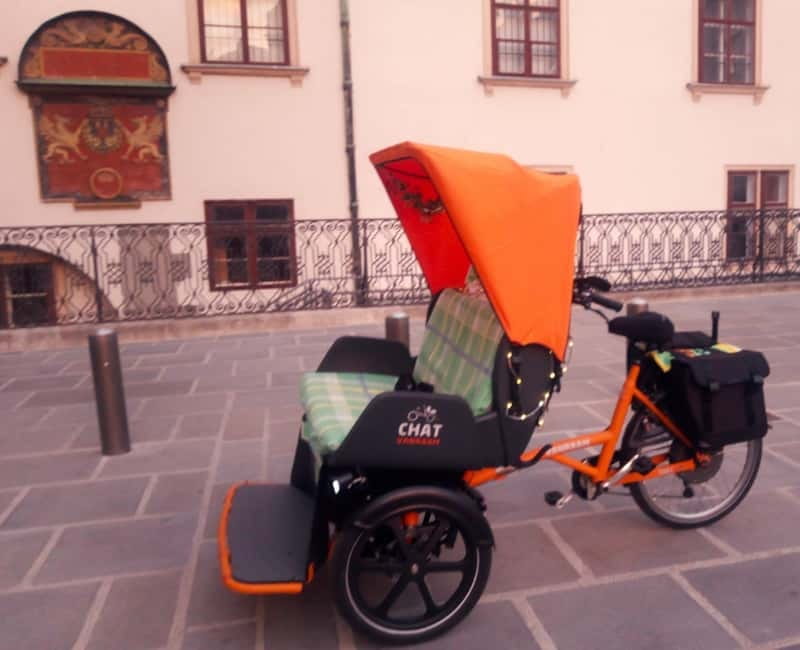
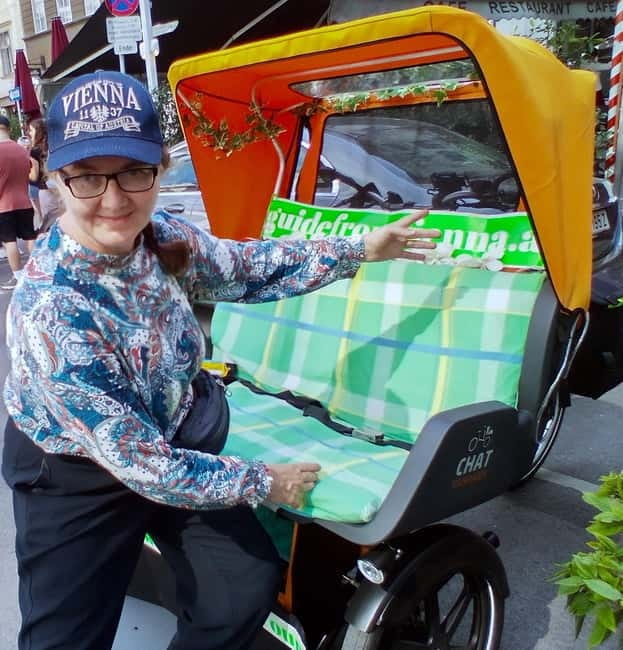
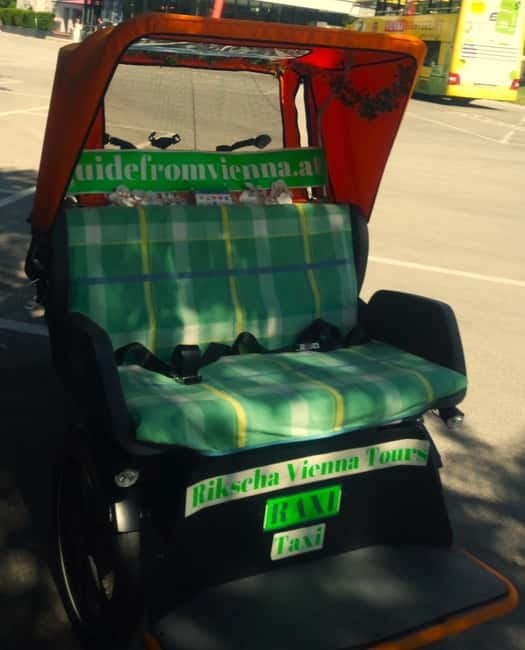
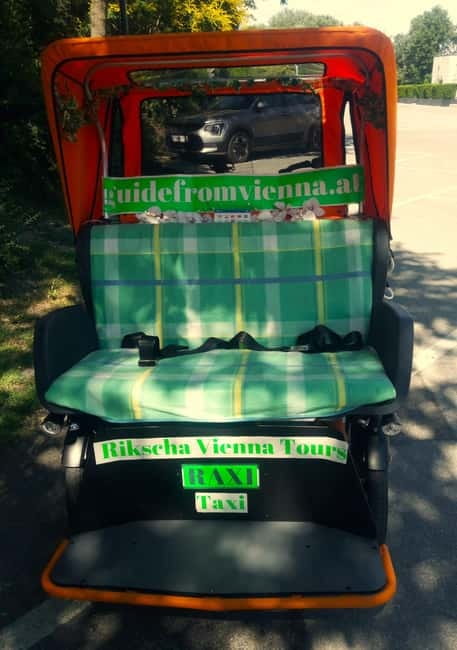
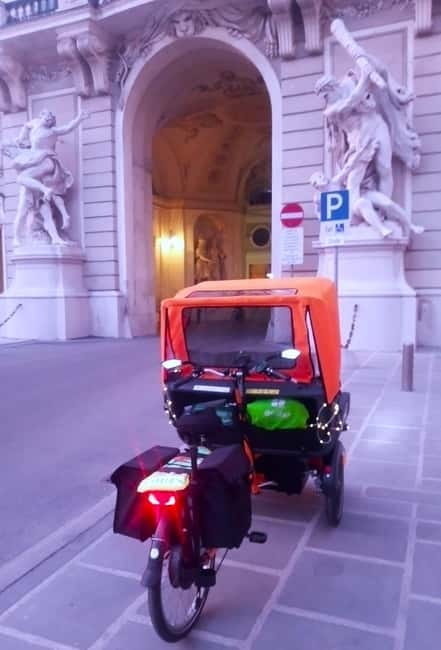
The whole point of a RAXI tour is simple: you still get the street-level sightlines, but you don’t pay for it with long walking stretches. The rickshaw is designed for two adults, and it’s new and in very good condition, with shock absorbers and a stable, smooth ride. Add the orange canopy and a retractable footplate for easy entry and exit, and it’s much less “wobbly fun” than you might expect.
A small detail that matters: the engine is under the seats, so there isn’t engine heat radiated toward you. That’s the kind of comfort tweak you only notice when you’re not fighting discomfort while listening to a guide. And if you need walking sticks, there’s a frame that can carry them, which is useful for people who like the independence but can’t do everything on foot.
You’re also riding legally in a smarter way. The route is built around bike-friendly and car-limited areas, so the experience feels closer to how locals move—especially around the Danube Canal and the parks.
Getting Set Up: Pickup, Headsets, and How the Tour Flows
Your tour time is 90 minutes up to 3 hours, depending on the starting time and the route your guide designs. It’s a private group (so it’s not a cattle-car situation), and you’ll have headsets so the guide’s explanations stay clear without you craning your neck.
Pickup is optional, and it’s designed to be convenient: you can be collected from many hotels in Vienna’s inner districts—listed as first, second, third, and fourth districts—though exact access can depend on bike ways and road construction. If you’d rather, you can also meet at one of the meeting points, then choose where you want to end up.
The tour ends with drop-offs at several well-placed spots, including Praterstern, Wiener Musikverein, Reichsbrücke, the Musikverein Wien area, and Mozart café. That matters because you’re not stuck back at a starting point that’s far from your next plan.
Before rolling, you get a short safety briefing (about 5 minutes). It’s not heavy-handed; it just sets the expectations so you can relax and enjoy the ride.
Historic Center on Two Wheels: Where You Get Views Without the Hustle
A big chunk of your time is spent in the Historic Center, guided for about an hour. This is where the tour earns its keep. On foot, you can spend that hour zig-zagging between stops, dodging crowds, or backtracking. On the rickshaw, you can slow down at the spots that matter and still cover ground efficiently.
What I like about this part is the focus on places that aren’t the default postcard loop. You’ll get to experience areas that are described as unknown to tourists, including the oldest Gothic residential tower in Vienna and stops in the Danube Park area. That combo is key: you’re not only seeing landmarks, you’re learning how the city is put together—neighborhood texture, not just highlight icons.
You’ll also benefit from the rickshaw’s “stop when you want” rhythm. If you want to linger for photos or ask a follow-up question, the tour adjusts. That’s a real advantage for people who hate timed entry tours, but still want guidance.
One small consideration: because the focus is on comfort and short movements between stops, you’ll want to be mentally ready for lots of looking out at buildings while rolling. If you’re the type who needs long walking segments to feel like you truly explored, this format might feel faster than you’re used to.
Hofburg Palace in 15 Minutes: A Quick, Useful Snapshot

You’ll also get a guided stop at Hofburg Palace for about 15 minutes. That’s short—yes—but it’s not trying to turn the palace into a full museum day. Instead, it works like a strong orientation stop: you get a sense of the place and its role in Vienna’s imperial story without losing half a day to queues and deep-room wandering.
Fifteen minutes can be perfect if you’re building a first mental map of the Hofburg area. It also pairs nicely with the bigger architecture theme of the ride, especially since the tour later connects imperial-era Vienna with modern contrasts.
If you’re the kind of visitor who wants to go inside major palace rooms and read every placard, you’ll probably want to add separate time later. But for getting oriented and catching the right exterior and context, this stop does its job.




Hundertwasserhaus: Why This Ecological Building Gets a Full 45 Minutes
The Hundertwasserhaus stop is one of the most distinctive parts of the tour, with about 45 minutes dedicated to it. This is where the experience shifts from classical “royal Vienna” energy to something more playful and ideological.
The tour framing is specifically about the building being the first ecological building in Europe, with a guided look that ties the architecture to that eco message. Even if you don’t care about architecture theory, this stop tends to click because it looks like it’s doing something different from the surrounding city fabric.
Why 45 minutes helps: on a normal visit, you might take a quick photo and move on. Here, you can see how the design works as a system—color, texture, and the way the building treats nature as part of the structure rather than decoration.
If you’re traveling with someone who finds mainstream sightseeing boring, Hundertwasserhaus is a strong “yes” stop.
Danube Park and the Old Danube: Green Breaks That Still Feel Like Vienna
After the architectural hit, you move into a calmer zone: Donau Park for about 45 minutes, followed by Old Danube for about 30 minutes. This is where the Danube-area routing pays off, because the rickshaw lets you stay comfortable while still getting the green, open-air feel.
The big practical value here is that it’s easier to absorb the city’s geography. Vienna’s Danube spaces can feel like they’re far away from the center, but this tour makes it feel connected: you’re seeing how the city uses waterways and parks to shape everyday life.
The tour also includes the idea of “bike lanes of the Danube Canal like the Viennese themselves,” which is a huge part of the Danube experience. Riding there means you’re not just looking at the water—you’re moving through it in the rhythm the city expects.
Possible downside: if you prefer museums and interiors over outdoor scenery, this section might feel more atmospheric than information-heavy. Still, it’s useful for balance, especially since Vienna can be a lot of stone and straight lines.
Prater and the Ringstraße: Imperial Streets, Modern Angles
Two of the tour’s promised highlights are driving in the green Prater and along the Ringstraße. Even if you don’t spend ages in any single spot, these are the stretches where Vienna’s identity becomes obvious.
Prater is about breathing space and greenery. Ringstraße is about the imperial boulevard feel—large-scale architecture and a sense of the city as a grand design project. When you combine those, you get a sense of contrast: how Vienna’s older power symbolism sits next to later modern evolution.
This is also where a rickshaw shines. In a car, you’re often stuck behind windows and traffic flow. On the rickshaw, you can get clearer sightlines and more natural stop-and-look moments, especially around areas where cars don’t belong.
Price and Value: What $175 for Two People Really Buys
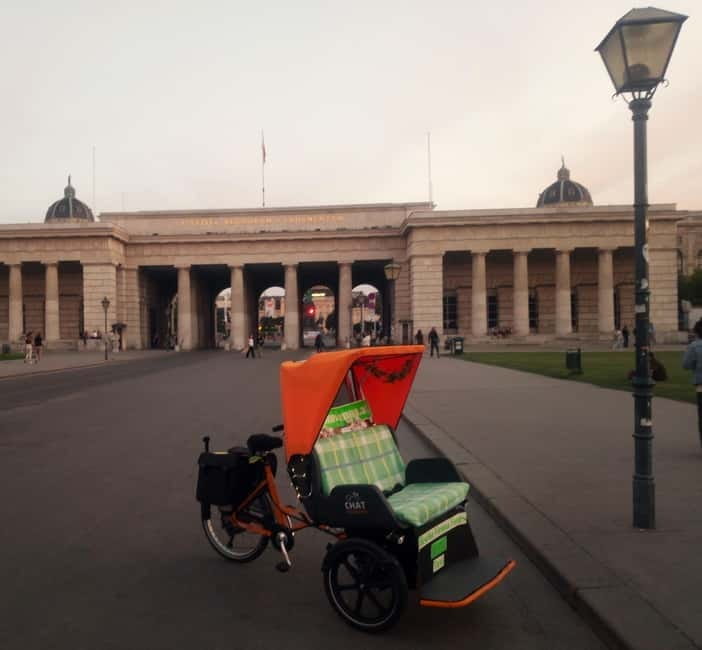
At $175 per group (up to 2), you’re not paying per person like so many city walking tours. That’s a big value lever for couples. It effectively turns your tour into a private guide + private vehicle situation, but without the cost spiral that usually comes with hiring a car and driver in a dense city.
The value shows up in three places:
- Time efficiency: You cover more territory in less time than a pure walking itinerary, and you can still stop for details.
- Comfort: Heated gear, headsets, and a smooth ride mean you’re spending your energy on sightseeing, not on recovery.
- Access: The route is designed to get you close to places where other transport modes can’t go—or where cars aren’t the right tool.
If you’re the type who hates arriving exhausted, this tour’s price makes more sense. You’re buying less stress, not just sightseeing coverage.
Weather Plan: Heated Blanket, Rain Protection, and the Public Transport Backup
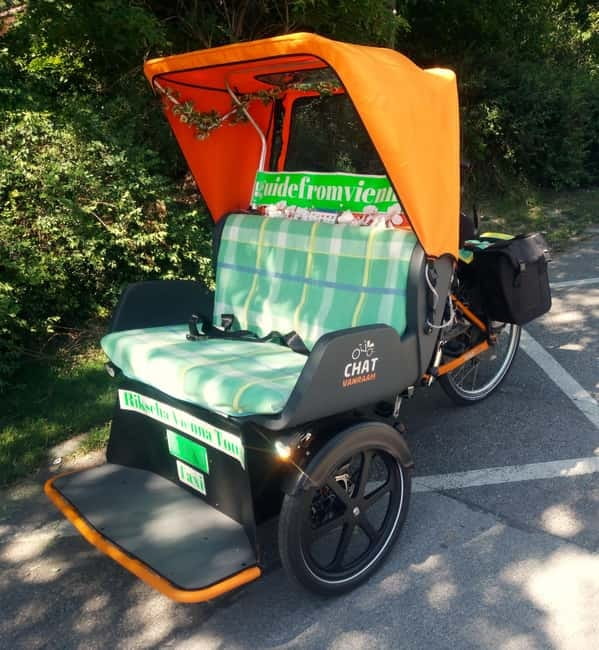
Vienna weather can be tricky, so this tour plans for it. The rickshaw can operate in conditions listed as roughly +2°C to 30°C, with notes that roads shouldn’t be slippery at the low end, and wind is capped at about 40 km/h in the general description.
For cooler days, you get a heated blanket powered by the battery, and the comfort is described as lasting about 3 hours. On blustery days, there’s also a large waterproof picnic blanket that’s windproof, which helps you stay warm without hiding indoors.
There’s rain protection too, for light rain or snow, with a rain cover available. And if weather makes the rickshaw tour impossible, you won’t just get canceled. You’ll do a very similar tour using public transport, with the note that you’ll also need to walk. Pickup from your meeting point or hotel remains free. The guide is meant to message you about 48 hours in advance with the plan, and if you don’t want the public-transport walk, you can cancel free of charge.
This “Plan B” matters more than people think. Vienna is gorgeous in winter, but it’s also windy and changeable. With this setup, you can keep your day on track.
What to Bring (and What to Skip)
Since luggage or large bags aren’t allowed, travel light. The tour is built for two-person comfort on the rickshaw, not for hauling backpacks around. If you have a small camera or phone, great. If you’re traveling with big items, you’ll be happier planning those for later.
You also shouldn’t plan to record the guide’s explanations. The tour content is protected by copyright, and recording any explanations is strictly prohibited.
Best practical idea: dress for mixed temperatures and wind, even if the forecast looks fine. With the heated blanket available, you can handle colder conditions better, but you’ll still feel wind on the move.
Who This Tour Suits Best
This is ideal if you want guided context without the fatigue of long walks. It’s also a strong match for couples because the rickshaw is designed for two adults, with a combined weight limit listed as 180 kg. If you’re near that limit, it’s smart to tell the guide what you already saw and what you still want to see, so the route can be shaped accordingly.
It’s also a good choice if your group has limited mobility. The tour’s comfort-first design includes the heated gear and the “no tired legs” promise, and the rickshaw format tends to work well for people who can’t do long stretches of walking.
If you prefer self-guided wandering and don’t want a guide’s pacing at all, then this may feel too structured. But if you like turning key areas into a coherent story—imperial Vienna, ecological design, and the Danube—this fits well.
Should You Book the Vienna RAXI Electric Rickshaw Tour?
I think you should book it if you want the smartest mix of comfort + coverage. This tour shines when you care about seeing more than just the usual center-stroll loop, and when you appreciate thoughtful stops in places like Hundertwasserhaus and the Danube-area parks.
You might skip it if you’re chasing a fully immersive, step-by-step museum day or if you don’t like riding in short segments between stops. Also, be honest about your tolerance for weather shifts—though the heated gear and rain protection help a lot, Vienna can still force the public-transport walking alternative.
If your goal is to come away with a clearer mental map of Vienna’s architecture and city geography, this rickshaw format makes that goal easier—and for two people at once, it’s a strong value.
FAQ
How long is the Vienna RAXI electric rickshaw tour?
It runs for 90 minutes up to 3 hours, depending on the starting time and the route.
How many people can ride in the RAXI?
It’s a private group designed for comfort for two adults, with a combined weight limit of 180 kg.
Where does pickup happen?
Pickup is optional. The guide can pick you up from many hotels in Vienna’s first, second, third, and fourth districts, depending on road conditions and bike ways. You can also choose meeting points.
What are the main sights included?
The guided route includes the Historic Center, Hofburg Palace, Hundertwasserhaus, Donau Park, and Old Danube, with drop-offs at several points such as Praterstern and Musikverein areas.
What languages are the tours offered in?
The live tour guide is available in English, German, and Italian.
What weather is the rickshaw tour able to run in?
The tour can run between about +2°C and 30°C if roads are not slippery at the low end, with a wind limit listed around 40 km/h. Light rain or snow is covered with rain protection.
What happens if the weather makes the rickshaw tour impossible?
If the rickshaw can’t run, you can do a similar tour using public transport, which still includes some walking. Pickup from your meeting point or hotel remains free, and you’ll be messaged about the change about 48 hours in advance.
More Tours in Vienna
- Vienna: Schönbrunn Palace & Gardens Skip-the-Line Tour
★ 4.7 · 7,739 reviews - Vienna Spanish Riding School Guided Tour
★ 4.7 · 6,765 reviews - Vienna: Skip-the-Line Sisi Museum, Hofburg and Gardens Tour
★ 4.8 · 5,918 reviews - Vienna: Skip-the-Line Schönbrunn Palace & Gardens Tour
★ 4.8 · 5,411 reviews - Vienna: Guided Walking Tour of City Center Highlights
★ 4.7 · 4,989 reviews
More Tour Reviews in Vienna
- Vienna: Vivaldi’s Four Seasons Concert in Karlskirche
★ 4.7 · 14,951 reviews - Vienna: Schönbrunn Palace & Gardens Skip-the-Line Tour
★ 4.7 · 7,739 reviews - Vienna: Light of Creation Votive Church Immersive Light Show
★ 4.8 · 6,779 reviews - Vienna Spanish Riding School Guided Tour
★ 4.7 · 6,765 reviews - Vienna: Classical Concert in the World-Famous Musikverein
★ 4.6 · 6,673 reviews
Just In: New Vienna Reviews


Tours, compared.
 ★ 4.7Schönbrunn Palace & Gardens Skip-the-Line TourFrom $637,739 reviews
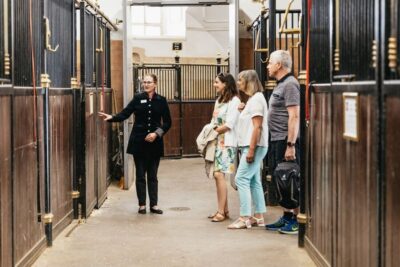 ★ 4.7Vienna Spanish Riding School Guided TourFrom $286,765 reviews
 ★ 4.8Skip-the-Line Schönbrunn Palace & Gardens TourFrom $765,411 reviews
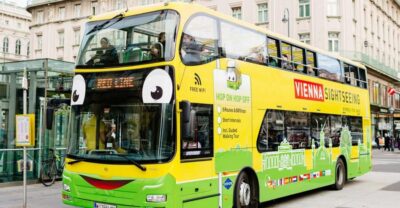 ★ 4.2Hop-On Hop-Off Sightseeing Bus Tour in 19 LanguagesFrom $414,518 reviews
 ★ 4.6Time Travel and Magic Vienna History TourFrom $273,879 reviews
 ★ 4.4Big Bus Hop-On, Hop-Off Tour by Open-Top BusFrom $363,529 reviews
 ★ 4.8Vienna Central Cemetery Guided Walking TourFrom $3353,307 reviews
 ★ 4.3Bus & Schönbrunn Palace Skip-the-Line Guided TourFrom $812,802 reviews