
Reviewed · MOZART & STRAUSS EVENINGS
What do Mozart and Henry Ford have in common? – The freemason in Vienna
Vienna has a way of hiding stories in plain sight. This walk follows the traces of Freemasonry through famous names, street corners, and church façades, using a simple idea: myths spread fast, but symbols still sit where they were carved. I like how the tour ties together big historical figures (from Mozart to George Washington) and turns that rumor-heavy topic into something you can actually look at. I also like the tight format: about 1 hour 45 minutes with a private group feel.
One thing to consider: Freemasonry comes with mystery baggage, so if you expect a full-on proof hunt for conspiracies, this tour is more about observing the marks and understanding why people connected to the fraternity mattered in Vienna.
In This Review
- Key highlights if you like your Vienna a little unusual
- Vienna’s Masons: the connection between famous names and real buildings
- Starting at Judenpl. 5 and ending at Josefsplatz: where the walk really fits
- Stop 1: St. Stephen’s Cathedral and the Freemason emblem under a new angle
- Stop 2: Rauhensteingasse—why the address matters more than the postcard
- Stop 3: St. Michael’s Church and the quieter side of symbolic links
- Stop 4: Albertina exterior view—art-world proximity without paying extra
- Price and value: what $49.78 buys in real sightseeing time
- Practical tips to get the most out of this Freemason trail
- Should you book the Freemason in Vienna tour?
- FAQ
- How long is the tour?
- Where does the tour start and end?
- Is this a private tour?
- What’s the group size?
- Do I need to pay admission at the stops?
- Do I get a mobile ticket?
- When will I receive confirmation after booking?
- Can I cancel for a full refund?
Key highlights if you like your Vienna a little unusual
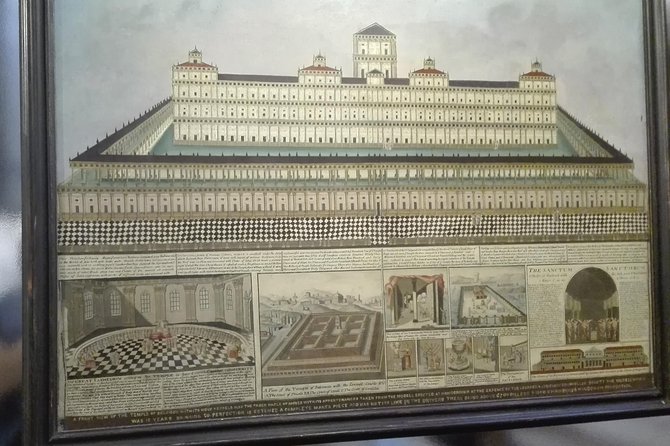
- St. Stephen’s Cathedral emblem explained through a Masonic lens
- Rauhensteingasse as a key address for the union, with time to look around
- St. Michael’s Church quick stop with Freemason-related connections
- Albertina exterior viewing only (admission not included)
- Mobile ticket and a private setup for your group
More Mozart and Strauss after dark
- Vienna: Mozart Concert at the Musikverein – Golden Hall★ 4.6 · 5,194 reviews
- Vienna: Mozart and Strauss Concert at Schönbrunn★ 4.5 · 2,967 reviews
- Vienna: Classical Concert at Mozart’s First House2,423 reviews
- Vienna Mozart Concert in Historical Costumes at the Musikverein★ 4.5 · 888 reviews
Vienna’s Masons: the connection between famous names and real buildings
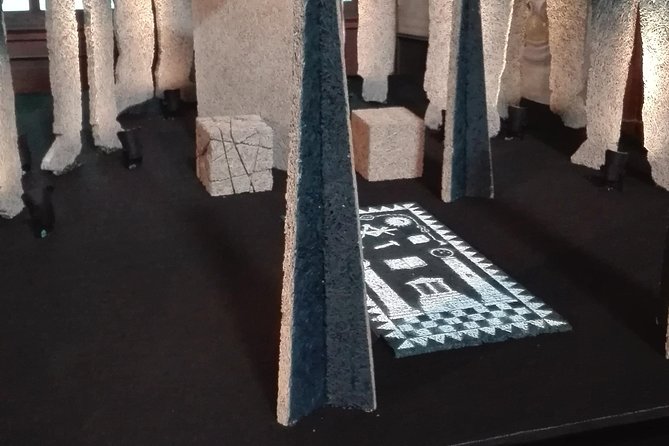
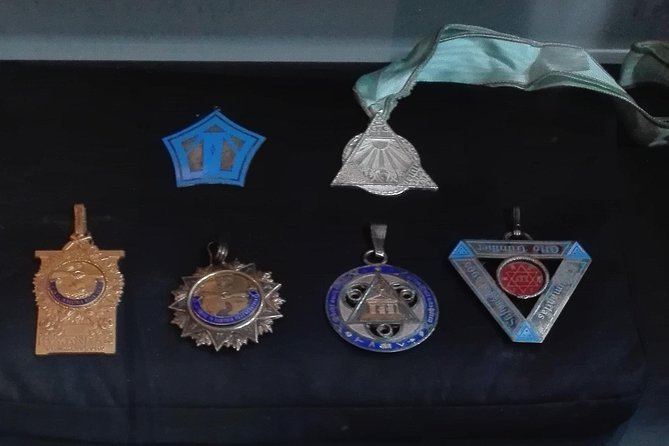
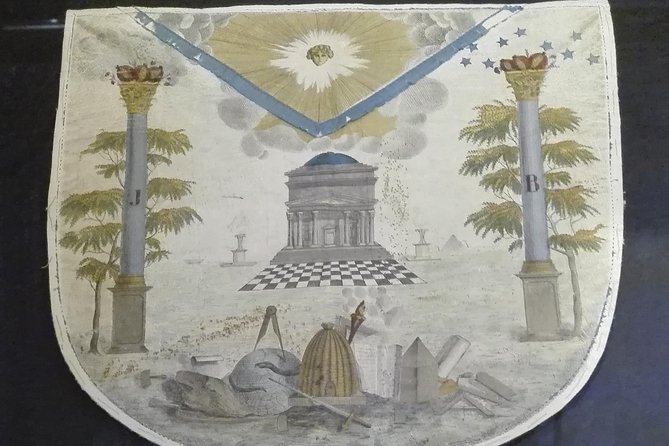
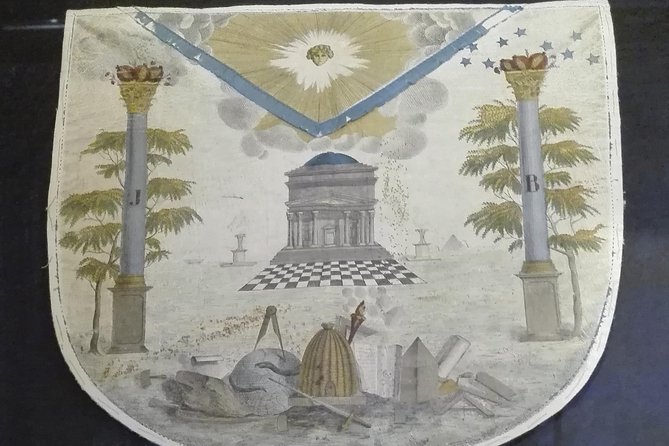
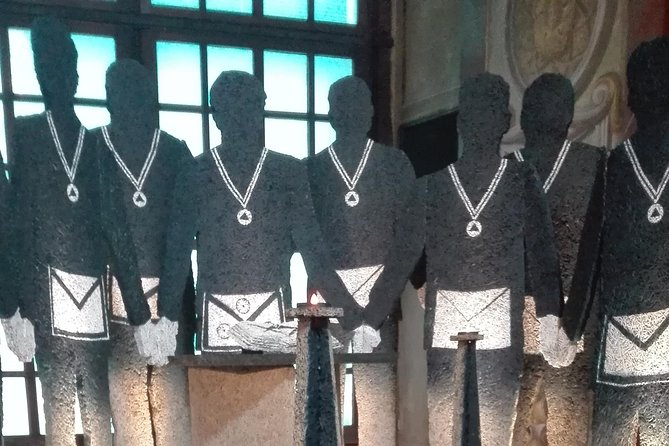
The tour starts with a fun question: what do Mozart and Henry Ford have in common? From there, the story widens to other recognizable figures—J.W. Goethe, George Washington, Henri Dunant, Giacomo Puccini, G.E. Lessing, and Fritz Muliar—framed as part of the same “union of men” thread. Even if you know little about Freemasonry, you’ll get a sense of why the topic fascinates people: it’s tied to networks, ideas, and reputation.
Here’s what I think you’ll appreciate. Instead of treating Freemasonry as pure legend, you’re guided to physical places where clues can be seen—churches, addresses, and symbolic design. Vienna is great for this kind of street-level history. You can stand in one spot and feel how the city’s layers overlap.
Also, the tone matters. The tour acknowledges the subject has often been labeled conspiratorial or mystic. You’re not asked to buy a plot twist. You’re invited to look, notice, and compare what you see with what you’ve heard.
Starting at Judenpl. 5 and ending at Josefsplatz: where the walk really fits
You meet at Judenpl. 5, 1010 Wien and finish at Josefsplatz, 1010 Wien. That’s a practical setup because both points are in central Vienna, close enough to other sights that you can build the day around the walk.
The duration is about 1 hour 45 minutes, which is short enough to do without wrecking your whole sightseeing schedule. It’s also long enough for meaningful pauses—especially at Rauhensteingasse, where you get a bigger chunk of time than at the churches.
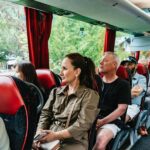
It’s a private tour, limited to your group only. The group size runs from a minimum of 5 to a maximum of 25, so it should feel like a small classroom rather than a herd of people. And yes, you’ll use a mobile ticket, so you can keep things simple on your phone.
Stop 1: St. Stephen’s Cathedral and the Freemason emblem under a new angle
The first stop is St. Stephen’s Cathedral. The tour time here is around 10 minutes, and it notes an emblem under the aspect of the Freemason. In plain terms: you’re not trying to tour the whole cathedral in one quick hit. You’re using it like a visual anchor.
Why this works: St. Stephen’s is the kind of landmark where symbol literacy actually pays off. If you’ve walked past big buildings your whole life, you might miss the details. In 10 minutes, your guide can point you toward one or two things that change how you see the façade and interior.
Price-wise, this stop is marked as free (admission ticket free). So you aren’t paying extra just to get started with the “look and learn” part.
Possible drawback? If you’re the type who wants slow cathedral time, 10 minutes can feel tight. But for this particular theme-based walk, speed is part of the design.
Stop 2: Rauhensteingasse—why the address matters more than the postcard
Next is Rauhensteingasse, with about 20 minutes set aside. The tour calls it an important address for the union. That’s a big clue about how this experience is built: it’s not only about famous churches. It’s also about Vienna’s streets—where institutions lived, operated, and left traces through locations.
This stop is the one I’d treat like your “main scene.” Twenty minutes gives you time to slow down, orient yourself, and actually connect the story to place. You’re likely to notice how this neighborhood sits within the city’s larger geography—how easy it is for a “secretive” topic to become everyday once you know where to look.
Since this is a street-and-building stop, it’s also a good moment for questions. If you want clarity—What’s the difference between myth and documented presence? How do you read symbols fairly?—this is where a guide can answer without racing to the next church.
This stop is also listed as free, with admission ticket free.

Stop 3: St. Michael’s Church and the quieter side of symbolic links
Then you move to St. Michael’s Church, again around 10 minutes. The tour frames it as also related to the Freemason theme. Expect another targeted look, not a full church visit.
Why a short church stop can still be worth it: smaller time windows keep you focused on what matters for the theme. You’re looking for connections—design choices, historical links, and the logic behind why certain buildings become reference points in stories like this.
Still, it helps to be honest with your expectations. If you’re going to St. Michael’s only once during your trip, you’ll probably want more time later to appreciate it on your own. This stop is for thematic understanding first.
Admission is marked as free (admission ticket free), which keeps the experience streamlined.
Stop 4: Albertina exterior view—art-world proximity without paying extra
The final listed stop is Albertina, but it’s described as outside, with about 10 minutes. It also states admission ticket not included, and the word outside matters: you’re not buying museum time as part of this tour plan.
So why include Albertina at all? In Vienna, many “knowledge stories” spill into the arts. Freemasonry has been associated—through the personalities it touched—with culture, public life, and intellectual circles. Even without going in, a final exterior stop can give you a sense of how the city’s cultural institutions sit near its older civic and religious landmarks.
The value here is pacing. You get one more visual anchor before the walk ends. It’s a decent way to connect the theme to Vienna’s broader vibe without turning your day into museum overload.
Price and value: what $49.78 buys in real sightseeing time
The price is $49.78 per person for about 1 hour 45 minutes. That sounds straightforward, but value depends on what you get for the money: not just access, but interpretation.
Because most stops are admission free (cathedral, Rauhensteingasse, St. Michael’s) and the Albertina is outside only, you’re paying mainly for guided context: the “what to look for” part. In a topic as easily misunderstood as Freemasonry, having someone help you read symbols and connections can be the difference between a cool walk and a confusing one.
It’s also private, with a min/max group size (5 to 25). Private doesn’t automatically mean one-on-one, but it does usually mean less shuffling and less feeling like you’re competing for attention in a crowded line.
One more value point: the experience includes a mobile ticket, and it’s near public transportation. So you can fit it in without complicated logistics.
Practical tips to get the most out of this Freemason trail
A theme tour lives or dies on attention. You’ll enjoy it more if you go in ready to look closely.
- Wear shoes you can stand in for short bursts. The stops are brief, but you’ll still spend time on feet.
- Keep your phone charged. You’ll likely want to take photos of façades and emblems, then compare later while things are still fresh.
- Bring curiosity, not a demand for certainty. The subject has reputations and myths; your best takeaway will be how Vienna’s spaces carry traces.
- If you’re with friends or family, agree on a basic rule: one person reads what the guide points to, and everyone else watches the building first. Then you swap.
Also, the tour is run by Sandra Blum (Safu – exklusiv Wien entdecken). For a private tour, that matters because you’re not just collecting facts. You’re getting a particular way of framing the topic—focused, local, and meant for seeing the city with fresh eyes.
Should you book the Freemason in Vienna tour?
Book it if you want a short, central Vienna walk that mixes famous names with real architecture and addresses. This is a good choice if you like symbol-driven sightseeing and you’re okay with the fact that the topic can be surrounded by myth—your guide’s job is to help you focus on what you can actually observe.
Skip it if you mainly want broad museum time, long cathedral wandering, or a heavy lecture style. The stops are short, and the Albertina is exterior only. You’re buying a guided route and interpretation, not a full institutional deep history.
If you want Vienna with a sharper plot twist, this tour is a fun way to do it—without getting lost in smoke and mirrors.
FAQ
How long is the tour?
It runs for about 1 hour 45 minutes.
Where does the tour start and end?
The start is Judenpl. 5, 1010 Wien, Austria and the end is Josefsplatz, 1010 Wien, Austria.
Is this a private tour?
Yes. It’s listed as private, so only your group will participate.
What’s the group size?
The tour has a minimum of 5 and a maximum of 25 people.
Do I need to pay admission at the stops?
St. Stephen’s Cathedral and St. Michael’s Church are marked as admission ticket free. The Albertina stop is outside and admission is not included.
Do I get a mobile ticket?
Yes. The experience includes a mobile ticket.
When will I receive confirmation after booking?
Confirmation is received within 48 hours of booking, subject to availability.
Can I cancel for a full refund?
Yes, free cancellation is available. You can cancel up to 24 hours in advance for a full refund. Canceling less than 24 hours before the start time is not refunded.
More Tour Reviews in Vienna
- Vienna: Vivaldi’s Four Seasons Concert in Karlskirche
★ 4.7 · 14,951 reviews - Vienna: Schönbrunn Palace & Gardens Skip-the-Line Tour
★ 4.7 · 7,739 reviews - Vienna: Light of Creation Votive Church Immersive Light Show
★ 4.8 · 6,779 reviews - Vienna Spanish Riding School Guided Tour
★ 4.7 · 6,765 reviews - Vienna: Classical Concert in the World-Famous Musikverein
★ 4.6 · 6,673 reviews
More Mozart and Strauss Evenings
- Vienna: Mozart Concert at the Musikverein – Golden Hall
★ 4.6 · 5,194 reviews - Vienna: Mozart and Strauss Concert at Schönbrunn
★ 4.5 · 2,967 reviews - Vienna: Classical Concert at Mozart’s First House
2,423 reviews - Vienna: Mythos Mozart Experience
★ 4.5 · 895 reviews - Vienna Mozart Concert in Historical Costumes at the Musikverein
★ 4.5 · 888 reviews
Just In: New Vienna Reviews


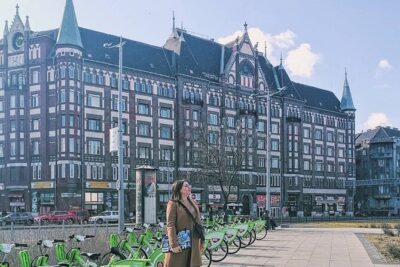

Mozart & Strauss Evenings, compared.
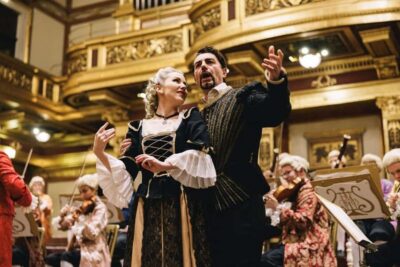 ★ 4.6Mozart Concert at the Musikverein – Golden HallFrom $815,194 reviews
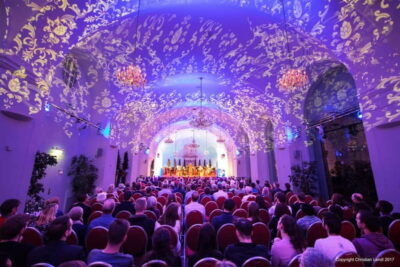 ★ 4.5Mozart and Strauss Concert at SchönbrunnFrom $422,967 reviews
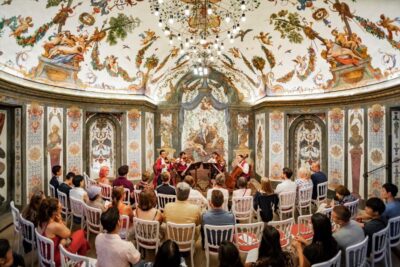 Classical Concert at Mozart’s First House2,423 reviews
 ★ 4.5Mythos Mozart ExperienceFrom $27895 reviews
 ★ 4.5Vienna Mozart Concert in Historical Costumes at the MusikvereinFrom $83888 reviews
 ★ 4.5Johann Strauss Dinner Show at the PraterFrom $93730 reviews
 ★ 4.6Mozart Concert at the Vienna State OperaFrom $81461 reviews
 ★ 4.5Strauss Dinner ShowFrom $95395 reviews
Browse the lists this tour appears in