
Mozart’s last home turns into a concert hall. I like this because you get the Mozarthaus Vienna setting first, then a small classical concert where you can actually see the musicians. One possible drawback: the concert room is close quarters, and a few people feel a bit claustrophobic.
What I really liked is how the evening stays focused. You’re not just sitting in the dark; you’ll hear short, clear context before the music starts, which makes famous pieces easier to follow. I also love that the museum is part of the ticket, so you can soak in Mozart’s world in the same building, not just breeze by it.
The main thing to consider is comfort and certainty. The venue is intimate, and there can be small hiccups (like a reported delay or even a missing musician on one night), so this is best for people who can stay flexible and keep an easy mindset.
In This Review
- Key highlights not to miss
- Mozarthaus Vienna: the best way to start an evening in Mozart’s own building
- The chamber concert setup: why this feels personal (and not just formal)
- What you’ll hear: Mozart, Strauss, Haydn, Beethoven (and the season-friendly picks)
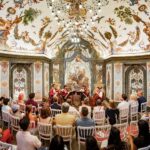
- The room: lower level, close acoustics, and a real sense of space pressure
- Meeting point and timing: making it easy to fit into Vienna night plans
- Price and value: how $71.38 makes sense for the mix of music + museum
- The practical stuff I’d plan for before you go
- Who should book this concert at the Mozarthaus Vienna?
- Should you book?
- FAQ
- Where is the meeting point for Concerts at the Mozarthaus Vienna?
- What time does the concert start?
- How long is the experience?
- What’s included with the ticket?
- Is catering included?
- How big is the group?
- Is it accessible for people who use service animals or rely on public transport?
- What is the cancellation policy?
Key highlights not to miss
- Mozarthaus admission included, in the building where Mozart lived during his last year
- Short introductions before each work, so the program makes sense fast
- Small-audience chamber music, typically around 50–75 people
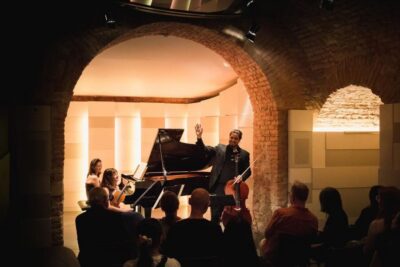
- Up close chamber set-up (you’ll see the performers clearly)
- Concert hall on the lower level, with a closely focused acoustic
Where the music lived, a couple more visits
- Vienna: Tickets for Mozarthaus Vienna with Audio Guide★ 4.2 · 2,344 reviews
- Vienna: Haus des Meeres Entry Ticket★ 4.6 · 1,260 reviews
- Vienna: Tickets to Haus der Musik★ 4.6 · 704 reviews
- Concerts at Mozarthouse Vienna – Chamber Music concerts.★ 4.5 · 367 reviews
Mozarthaus Vienna: the best way to start an evening in Mozart’s own building
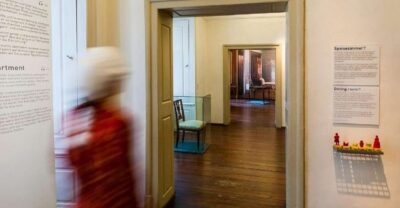
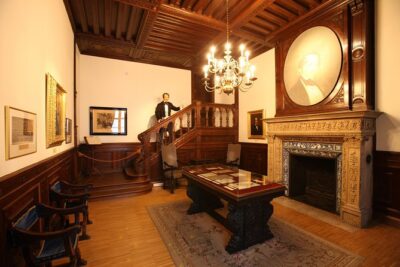
The Mozarthaus Vienna is a museum devoted to Wolfgang Amadeus Mozart—his life, work, and the objects tied to him. The location matters: it’s in the building where Mozart lived during his final year in Vienna. That alone changes the feeling of a visit. It’s not a generic museum display. You’re standing where he actually lived during a late, intense chapter of his life.
You’ll be able to use your concert ticket for free museum admission. That’s a big value point, because you’re paying once and getting both history and music in one stop. The museum part also gives you something calm to do before the concert, especially if you want an early arrival feel without committing to an all-day plan.
Practical tip: the museum experience can be a bit of a “see it, then go” setup. If you like to read every label, you might need extra time—your ticket includes entry, but the scheduled experience runs about 1 hour 10 minutes. If you want the concert to stay the main event, skim the highlights and save your deep reading for a second visit.
The chamber concert setup: why this feels personal (and not just formal)
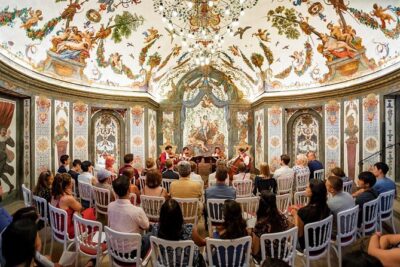
The concert is hosted by Wiener Ensemble and staged in an intimate hall, built for chamber music. You’ll hear a mix of classical favorites tied to Mozart and other major names—plus the classic Viennese sound of Strauss, Haydn, and Beethoven. It’s designed to remind you that chamber music isn’t background. In a small room, it’s conversation-level detail.
A standout feature is the presenter’s role. Before each piece, you get a short introduction with history and quick context. It’s the kind of framing that helps you catch the structure of a work even if you’re not a theory person. One of my favorite parts of this format is that it turns famous pieces into something you can track, not just recognize.
What I’d expect in terms of performance format: many evenings run as a trio—typically piano, violin, and cello. A reported night had a delay and a missing cellist, and the remaining musicians still performed. That tells me two things: the team communicates with guests, and the music still goes on even when plans change. Still, it’s smart to be emotionally prepared for the possibility of a last-minute adjustment if you’re very set on a specific lineup.
What you’ll hear: Mozart, Strauss, Haydn, Beethoven (and the season-friendly picks)
The program aims for well-known works by Mozart and the giants of the classical and Viennese worlds: Haydn, Beethoven, and Strauss. That matters because these names aren’t just marketing. They also tend to work well in chamber arrangements, where the lines pass quickly between instruments and the textures feel clear.
From the details shared about actual evenings, you might hear pieces like Eine kleine Nachtmusik and the Blue Danube (a frequent crowd-pleaser in a Viennese setting). Another example noted was Radetzky March, which often lands well as an encore choice because it’s rhythmic, recognizable, and satisfying to end on. You may also catch solo works—so the piano gets its moments, and the strings get featured too.
The overall effect is that you’ll get a mix of moods: graceful and gentle passages, plus moments that feel more urgent or forceful. That’s a big deal in a small hall, because the emotion reads instantly. When the players are truly together, you don’t just hear notes—you hear the pacing.
If you’re new to classical concerts, this is the kind of program that can teach you without talking down to you. The introductions give you a map, then the musicians do the rest.
The room: lower level, close acoustics, and a real sense of space pressure
One review described the recital room as well below ground level, which is exactly the kind of detail you should care about. Lower-level venues often have acoustics that feel tightly focused—good for chamber music—so you can hear phrasing and balance without craning your neck.
That said, intimacy is a double-edged sword. A few people feel claustrophobic in such close quarters. If you know you’re sensitive to small rooms, it’s worth thinking about your comfort level before booking. You may be able to adjust by picking where you stand or sit, but the space is what it is.
Also note the “watchable” nature of the performance. You’re close enough to see the musicians up close, which is great for connection. It also means you’re sharing the room’s energy closely, for better or worse.
More music, other Vienna nights


Meeting point and timing: making it easy to fit into Vienna night plans
The meeting point is at Wien Museum Mozart apartment / Mozarthaus, Domgasse 5, 1010 Wien. The start time is 6:30 pm, and it ends back at the meeting point. It’s a good schedule for people who want a structured evening without rushing all day.
Because it’s near public transportation and in the city center, you can pair it with other nearby plans. After the show, you’re set up to wander, grab dinner, or do a short walk—without needing a complicated return trip. That convenience is part of the value here. You’re not spending the whole evening on transit.
Group size is capped at 70 travelers, which helps explain why the atmosphere stays intimate rather than turning into a large-venue scramble. An average booking window of about 32 days in advance also suggests this is a popular option. If you’re traveling during a busy season, I’d book earlier rather than later.
Price and value: how $71.38 makes sense for the mix of music + museum
At $71.38 per person, you’re paying for two experiences bundled into one evening: entry to the Mozarthaus Vienna and a chamber concert with narration before the music. That kind of package can feel like better value than buying museum admission alone plus a separate concert ticket, especially when the venue is in the same building.
Also, this isn’t a mass-performer event. It’s chamber music, typically played by a small set of professionals in front of a limited audience. In other words, you’re buying proximity—sound quality and closeness to the performers—plus the small-program format that helps you actually follow what’s happening.
The risk with pricing is usually whether the experience is too short to feel complete. Here, the scheduled duration is about 1 hour 10 minutes, which is compact. That can be a plus if you don’t want a long evening, but it also means you should treat it as an event, not a half-day tour. If you want more museum time, plan to arrive with a bit of breathing room (within reason) or consider a separate longer visit another day.
One more value note: catering isn’t included. That’s normal for a concert, but it’s useful for planning. Eat beforehand or after, and keep your timing flexible.
The practical stuff I’d plan for before you go
Here’s how to set yourself up so the night stays smooth.
- Arrive a little early. The evening has a tight rhythm: museum access first, then concert space. If you’re cutting it close, you’ll feel it.
- Wear something comfortable for a short indoor event in a close room. Intimate venues can feel warm once people pack in.
- Have coat expectations in mind. One complaint mentioned a coat-check interaction that felt harsh, so if you’re traveling with a coat, don’t expect everything to be perfectly polished.
- Be flexible about performers. A reported night included a delay and a missing musician. The organizers informed guests and offered refunds, which is a sign of responsible handling. Still, the right mindset is: enjoy the evening, not just a specific program fantasy.
Who should book this concert at the Mozarthaus Vienna?
This is a great choice if you:
- love classical music and want to hear it in an up-close chamber format
- want a Vienna evening that connects music to place (Mozart’s actual last-year address)
- enjoy short explanations that help you understand what you’re listening to
- prefer smaller groups and cleaner logistics (max 70 people)
It’s also a good fit for first-timers. If you’re new to classical concerts, the introductions and the focus on famous works make it easier to follow without prior knowledge.
You might skip it if:
- you’re uncomfortable in tight indoor spaces
- you need a long museum visit window
- you dislike any chance of last-minute changes in who performs (even though the organizers appear to handle issues)
Should you book?
Yes—if you want a high-impact, low-hassle Vienna night where Mozart’s building and chamber music reinforce each other, book it. The combination is the point: museum entry plus a narrated concert, delivered in a room that keeps you close to the sound.
If you’re sensitive to cramped spaces, go in with your expectations set. And if you care a lot about one specific trio lineup, remember that one reported evening had a missing musician and a delay—but the music still happened and the team offered alternatives.
Given the strong rating (4.9 out of 5 from 156 ratings) and the consistent “intimate and well explained” theme, this is one of those experiences that tends to land well for real visitors who want something classic and human-scaled.
FAQ
Where is the meeting point for Concerts at the Mozarthaus Vienna?
You’ll meet at the Wien Museum Mozart apartment / Mozarthaus at Domgasse 5, 1010 Wien, Austria.
What time does the concert start?
The start time is 6:30 pm.
How long is the experience?
The duration is about 1 hour 10 minutes.
What’s included with the ticket?
Your ticket includes free admission to the Mozarthaus Vienna museum plus the Wiener Ensemble concert.
Is catering included?
No, catering is not included.
How big is the group?
The activity has a maximum of 70 travelers.
Is it accessible for people who use service animals or rely on public transport?
Service animals are allowed, and the location is near public transportation.
What is the cancellation policy?
You can cancel for free up to 24 hours in advance for a full refund. Canceling less than 24 hours before the start time won’t be refunded.
More Vienna Music Nights
- Vienna: Vivaldi’s Four Seasons Concert in Karlskirche
★ 4.7 · 14,951 reviews - Vienna: Classical Concert in the World-Famous Musikverein
★ 4.6 · 6,673 reviews - Vienna: Mozart Concert at the Musikverein – Golden Hall
★ 4.6 · 5,194 reviews - Vienna: Classical Concert in St. Anne’s Church (Annakirche)
★ 4.6 · 3,414 reviews - Vienna: Mozart and Strauss Concert at Schönbrunn
★ 4.5 · 2,967 reviews
More Tour Reviews in Vienna
- Vienna: Vivaldi’s Four Seasons Concert in Karlskirche
★ 4.7 · 14,951 reviews - Vienna: Schönbrunn Palace & Gardens Skip-the-Line Tour
★ 4.7 · 7,739 reviews - Vienna: Light of Creation Votive Church Immersive Light Show
★ 4.8 · 6,779 reviews - Vienna Spanish Riding School Guided Tour
★ 4.7 · 6,765 reviews - Vienna: Classical Concert in the World-Famous Musikverein
★ 4.6 · 6,673 reviews
Where Vienna's Music Was Made
- Vienna: Tickets for Mozarthaus Vienna with Audio Guide
★ 4.2 · 2,344 reviews - Vienna: Haus des Meeres Entry Ticket
★ 4.6 · 1,260 reviews - Vienna: Tickets to Haus der Musik
★ 4.6 · 704 reviews - Vienna: Classical Concert at Mozarthaus with Museum Entry
★ 4.8 · 371 reviews - Concerts at Mozarthouse Vienna – Chamber Music concerts.
★ 4.5 · 367 reviews
Just In: New Vienna Reviews



Mozarthaus & Music Museums, compared.
 ★ 4.2Tickets for Mozarthaus Vienna with Audio GuideFrom $182,344 reviews
 ★ 4.6Haus des Meeres Entry TicketFrom $271,260 reviews
 ★ 4.6Tickets to Haus der MusikFrom $22704 reviews
 ★ 4.8Classical Concert at Mozarthaus with Museum EntryFrom $69371 reviews
 ★ 4.5Concerts at Mozarthouse Vienna – Chamber Music concerts.From $50367 reviews
 ★ 4.9Classical Masters Concert at Haus der MusikFrom $27256 reviews
 ★ 4.5Vienna House of Music Entrance TicketFrom $22191 reviews
 ★ 3.0Mozarthaus Vienna Admission TicketFrom $19139 reviews
Browse the lists this tour appears in