
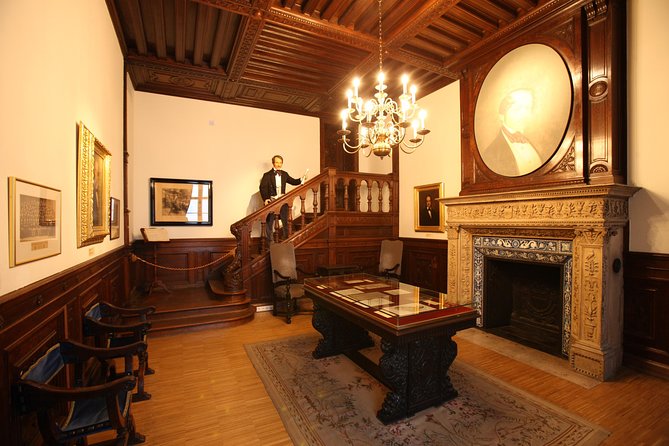
Reviewed · MOZARTHAUS & MUSIC MUSEUMS
Vienna House of Music Entrance Ticket
Forget quiet halls; this is Vienna’s hands-on music museum. It’s a central-stop ticket that focuses on the science of sound as much as the big names of classical music. I love the Virtual Reality Sound Lab, where you create your own sound creature, and I love the virtual conductor exhibit that tracks your baton movements and gives you feedback. One drawback: if you come late, the museum can feel busy, and the most popular stations may take a little longer.
This is a self-paced entry experience, usually plan for about 1 hour 30 minutes to 2 hours. At $22.93 per person, the value comes from doing a lot of hands-on tech for one price, plus the free smartphone HdM Museums Guide (download), offered in 8 languages including a family version in German and English.
In This Review
- Key highlights at a glance
- Entering the House of Music: what this ticket actually gives you
- Sonotopia Universe and the Virtual Reality Sound Lab (VR Sound Lab)
- Vienna Philharmonic archives: the New Year’s Eve listening moment
- Composer floors (Beethoven, Mozart, Strauss, plus more)
- The virtual conductor on the 4th floor
- Hands-on sound experiments you can’t unlearn
- How long to plan, and why time matters here
- Price and value: is $22.93 worth it?
- Getting there and making it work with the rest of your Vienna days
- Who should book this ticket?
- Quick booking thoughts: should you reserve in advance?
- Should you book the Vienna House of Music entrance ticket?
- FAQ
- What does the Vienna House of Music entrance ticket include?
- Is the experience available in English?
- How long should I plan for my visit?
- Which parts of the museum are mentioned in the experience?
- Are food and drinks included?
- When is the museum open?
- Can I bring a service animal?
- Is the museum near public transportation?
- Can I cancel and get a full refund?
Key highlights at a glance
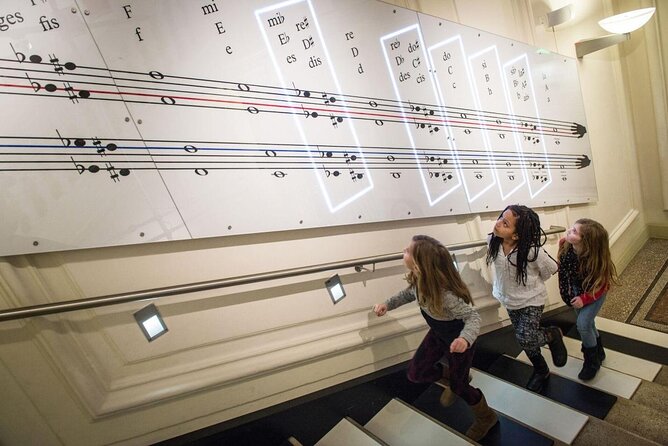
- Interactive sound stations that turn music and physics into play
- Vienna Philharmonic archives, including listening to their famous New Year’s Eve concert
- Sonotopia Universe and a VR Sound Lab where you build your own sound creature
- Composer floors with context on Beethoven, Mozart, Schubert, Mahler, and the Strauss family
- Virtual conductor exhibit where you try conducting and get feedback
- A smartphone guide in 8 languages to help you move through the museum smoothly
Where the music lived, a couple more visits
- Vienna: Tickets for Mozarthaus Vienna with Audio Guide★ 4.2 · 2,344 reviews
- Vienna: Haus des Meeres Entry Ticket★ 4.6 · 1,260 reviews
- Vienna: Tickets to Haus der Musik★ 4.6 · 704 reviews
- Concerts at Mozarthouse Vienna – Chamber Music concerts.★ 4.5 · 367 reviews
Entering the House of Music: what this ticket actually gives you
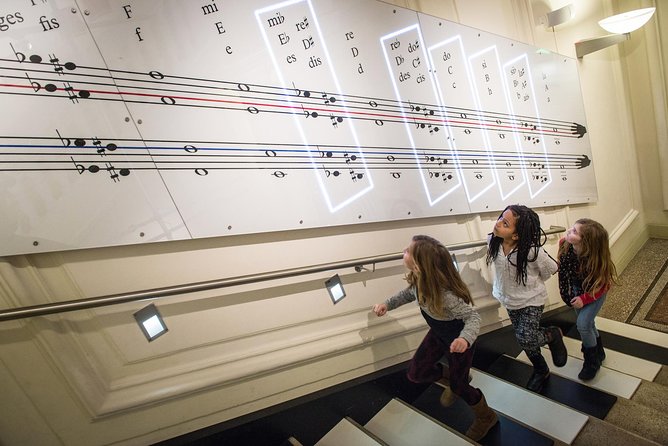
The House of Music, or Haus der Musik, is one of those Vienna experiences that doesn’t demand you already know everything about classical music. It’s built for movement: you press buttons, you listen, you test, you try. You’ll walk room to room, and the museum quietly keeps nudging you toward the same idea: sound is physical, cultural, and deeply human.
Your ticket is for the museum entrance, not a guided talk. That matters because you control the pace. If you want to spend extra time on the Vienna Philharmonic material, you can. If you want to focus on the tech and skip some composer background, you can do that too.
The biggest “value” detail is that the museum isn’t just glass cases and labels. You’ll spend most of your time participating in the exhibits—especially the sound experiments, VR, and the virtual conducting activity.
Sonotopia Universe and the Virtual Reality Sound Lab (VR Sound Lab)
A lot of people come for the classical composer sections. I get it. But the part that tends to steal the show is the technology and sound play.
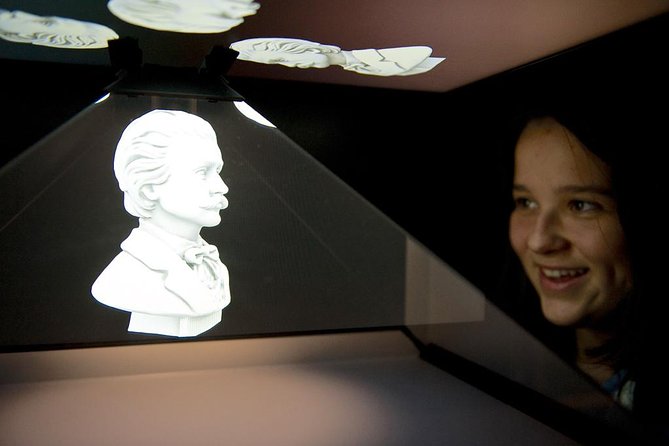
On the 2nd floor, you’ll find Sonotopia Universe. This is where the museum leans hard into interactive learning: physics of sound stations, sound experimentation, and the VR area. The headliner here is the Virtual Reality Sound Lab, where you can create your own sound creature. Even if you don’t love VR, the concept is clever: it turns making sound into a creative design activity, not just a novelty.
Why this matters for you: the VR and interactive stations do the teaching for you. You don’t have to translate music theory in your head. The exhibit lets you experience cause and effect—how sound changes what you see, how your actions change what you hear, and how performance is more than just listening.
Practical tip: if you’re visiting with kids, treat Sonotopia + VR as your “anchor.” It’s often the most memorable part, so start earlier rather than later.
Vienna Philharmonic archives: the New Year’s Eve listening moment
Then there’s the museum’s connection to one of the most famous orchestras on earth. The historical archives of the Vienna Philharmonic are a major highlight and feel more than ceremonial. You can listen to their famous New Year’s Eve concert—right there in the museum experience.
This stop is valuable because it gives the sound a place. Instead of hearing music as a distant tradition, you experience it with context: the museum places you near the archive material and lets you listen in a setting designed for discovery. If you’re the type who plans concerts while you’re in Vienna, this can also help you connect the dots between what you’ll hear live and what you’ve encountered inside the museum.
One thing to watch: this area is a listening experience. If you’re the kind of visitor who prefers “do” over “sit and listen,” give yourself permission to skim the surrounding info and focus on the audio playback.
Composer floors (Beethoven, Mozart, Strauss, plus more)
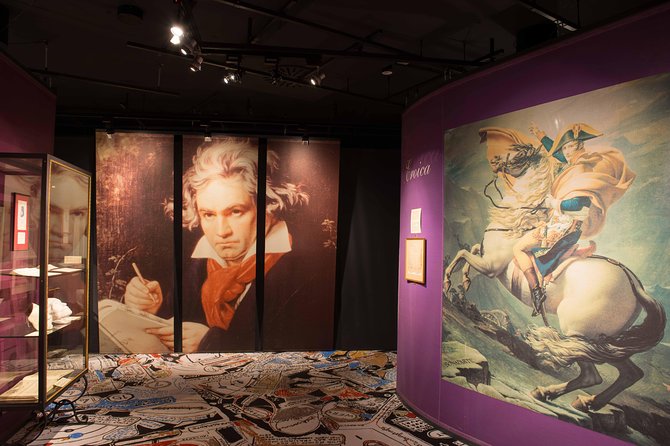
If Beethoven, Mozart, and the Strauss family are your comfort zone, you’ll feel at home on the 3rd floor. This level focuses on composers tied to Vienna and what their lives and music looked like in the city.
What I like about these composer areas is that they don’t reduce famous names to a quick timeline. The exhibits are designed to help you connect composer life to musical creation in a way that doesn’t feel like a lecture. You’ll also find broader composer coverage than just the headline trio. Based on visitor experiences, areas for names like Schubert and Mahler show up too, alongside the Strauss family and the usual suspects.
Why it’s worth your time: when you add sound play earlier in the visit, these composer floors start to make more sense. You’re not only learning who mattered—you’re learning what kinds of sound ideas were at work.
Possible drawback: if you’re only interested in tech and not composer context, some of these rooms may feel slower than the VR and sound experiments. The good news is you can adjust your pace since this is self-guided.
Worth a look before you book this Vienna tour:



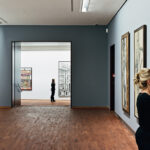
The virtual conductor on the 4th floor
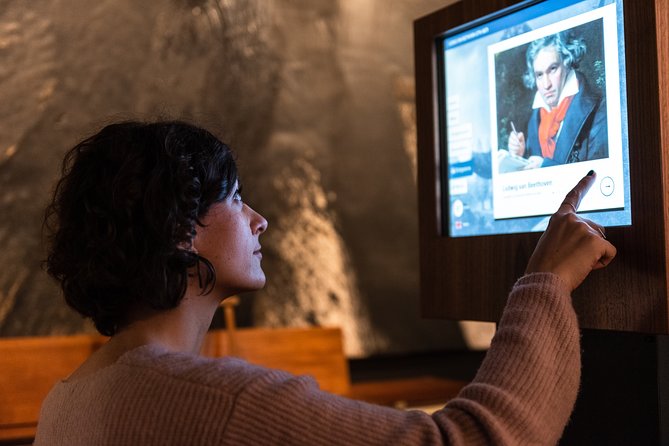
This is the part that makes the museum feel like a game with an orchestra inside it.
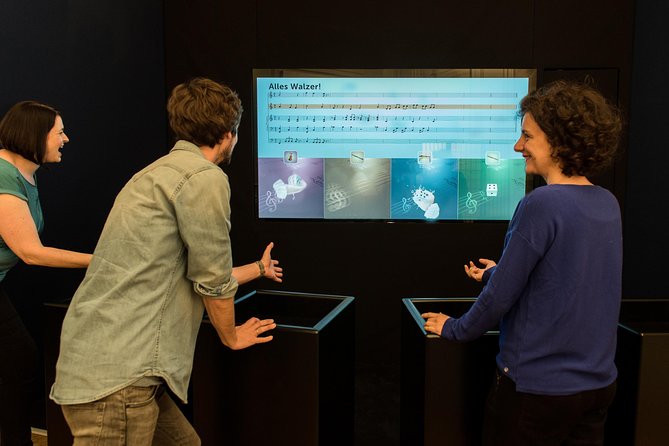
On the 4th floor, you’ll get to try the virtual conductor exhibit. It’s built around the idea that conducting is choreography, not just waving a stick. You conduct along to a video of Vienna Philharmonic playing, and you’ll get feedback after your attempt.
What’s useful for you: the exhibit turns a classic concert concept into something you can try immediately. If you’ve ever watched a conductor and wondered what, exactly, they’re doing beyond general arm waves, this helps. You’ll get a more grounded sense of rhythm, pacing, and how performance responds to visible cues.
Practical tip: don’t rush this. Conducting exhibits can be popular, and a short queue can turn a 3-minute try into a longer wait. If you go earlier, you often get smoother turn-taking.
Hands-on sound experiments you can’t unlearn
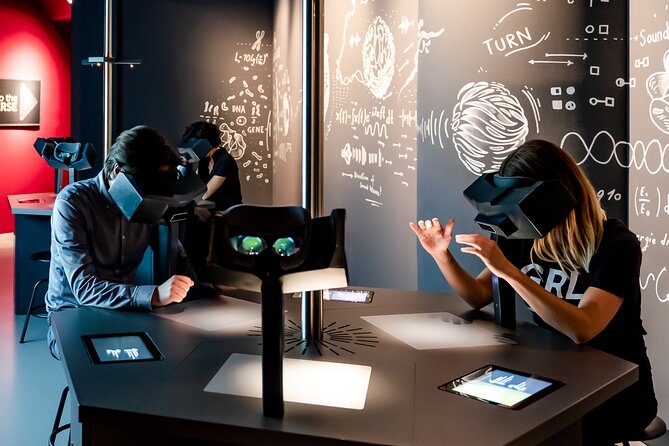
Even without the VR and conductor centerpiece, the museum is packed with interactive displays tied to the physics of sound. You’ll test stations that help explain how sound behaves and how music becomes audible experience.
One specific hands-on favorite highlighted by visitors is a motion-based activity where your movements create a pattern on the ceiling. It’s one of those exhibits that works well for multiple ages because adults and kids can both participate without needing musical training.
Why this matters: Vienna can be heavy on walking and history. This museum gives you a different kind of energy—hands-on, playful learning that still leaves you with something to talk about. It’s also a break from the “museum stare” routine.
How long to plan, and why time matters here
Plan for 1 hour 30 minutes to 2 hours. That window is realistic for most people if you keep moving between floors and don’t spend 30 minutes stuck on one station.
If you want a more relaxed visit, add 20 to 30 minutes. It’s not just about seeing more rooms. The stations take time because they’re interactive and you have to try them, not just watch them.
Also, here’s the practical timing advice: if you want a calmer experience, go earlier in the day. Visitors often find the museum gets more crowded later. Going early helps you keep momentum and reduces the chance of waiting at the biggest attractions.
Price and value: is $22.93 worth it?
At $22.93 per person, this ticket sits in the mid-range for a major Vienna attraction. Here’s why it can still feel like strong value:
- You get entry into a multi-floor interactive museum, not a short stop.
- The experience includes major tech moments like VR Sound Lab and the virtual conductor.
- The smartphone guide download is free and helps you navigate without buying a printed guide on site.
Where it may not feel worth it: if you’re expecting a traditional guided tour with deep narration and a fixed itinerary, this is not built that way. You’re going at your pace, so you’ll do better if you’re comfortable exploring.
Bottom line: if you like hands-on exhibits, sound play, and tech-driven learning, this price is easier to justify.
Getting there and making it work with the rest of your Vienna days
The museum is near public transportation, so it’s easy to plug into an itinerary without a complicated plan. Since you don’t need hotel pickup or drop-off, you can keep your day flexible and decide the visit time based on your energy and crowd levels.
Also note what’s not included: food and drinks aren’t part of the ticket. So if you’re turning this into a half-day, plan a snack or meal nearby before or after. In a place full of active stations, you’ll often feel the need for water and a break sooner than you expect.
Who should book this ticket?
This ticket fits best if you fall into one of these groups:
- Families with kids: the interactive displays and hands-on stations are made for younger visitors, and they don’t require silence or patience in the “sit still” sense.
- Classical music fans: you get Vienna Philharmonic archives and composer-focused areas for names tied to Vienna.
- Curious general visitors: even if you’re not a classical expert, the museum teaches through experience—sound behavior, music making, and listening.
- Tech and hands-on learners: VR Sound Lab and the virtual conductor are the kind of exhibits people remember.
If you only want quiet galleries and traditional museum displays, you might find portions of the experience less appealing. But if you’re okay with noise, motion, and participation, you’ll probably have a smoother time.
Quick booking thoughts: should you reserve in advance?
On average, this experience is booked about 21 days in advance. That suggests demand stays high around certain dates and time slots. If your Vienna trip has fixed commitments—concert night, specific theater schedule, or travel with kids—I’d recommend reserving ahead so you’re not guessing on the day.
If plans change, you have free cancellation up to 24 hours in advance for a full refund. That flexibility is useful when Vienna weather or schedule juggling is part of your reality.
Should you book the Vienna House of Music entrance ticket?
Book it if you want an attraction that feels like a mix of museum and playground, with real ties to Vienna’s music scene. The Vienna Philharmonic archives, Sonotopia Universe, the VR Sound Lab (sound creature creation), and the virtual conductor are the main reasons. If you like hands-on learning and you can handle interactive exhibits, this is a great use of 1.5 to 2 hours.
Skip it or reconsider only if you’re hunting for a quiet, classic guided history tour. This museum is designed for participation, and that’s the point.
If you’re in Vienna and you plan to hear live classical music, this ticket can also act like a warm-up. You’ll leave with more than photos—you’ll leave with sound memories and a better sense of how performance becomes audible.
FAQ
What does the Vienna House of Music entrance ticket include?
It includes admission to the House of Music and a free smartphone Museums Guide download (HdM Museums Guide).
Is the experience available in English?
Yes. The ticket is offered in English.
How long should I plan for my visit?
Plan about 1 hour 30 minutes to 2 hours.
Which parts of the museum are mentioned in the experience?
You can explore the museum’s interactive sound displays, the Vienna Philharmonic historical archives (including a New Year’s Eve concert listening), Sonotopia Universe, composer areas, and the virtual conductor exhibit.
Are food and drinks included?
No. Food and drinks are not included with the ticket.
When is the museum open?
The hours listed are 10:00 AM to 10:00 PM for most days in the date range, with a shorter schedule on 12/24 (10:00 AM to 6:00 PM). Another listed range shows 10:00 AM to 10:00 PM from 12/25 to 12/31.
Can I bring a service animal?
Yes. Service animals are allowed.
Is the museum near public transportation?
Yes. It is near public transportation.
Can I cancel and get a full refund?
Yes. You can cancel up to 24 hours in advance of the experience start time for a full refund.
More Tickets in Vienna
- Vienna: Classic Ensemble Vienna in St. Peter’s Church Ticket
★ 4.7 · 4,819 reviews - Vienna Kunsthistorisches Museum Day Admission Ticket
★ 4.6 · 3,690 reviews - Vienna: Tickets for Mozarthaus Vienna with Audio Guide
★ 4.2 · 2,344 reviews - Vienna: Skip-the-Line Entrance Ticket to the Danube Tower
★ 4.5 · 2,303 reviews - Tickets for the Albertina Exhibitions
★ 4.7 · 2,126 reviews
More Tour Reviews in Vienna
- Vienna: Vivaldi’s Four Seasons Concert in Karlskirche
★ 4.7 · 14,951 reviews - Vienna: Schönbrunn Palace & Gardens Skip-the-Line Tour
★ 4.7 · 7,739 reviews - Vienna: Light of Creation Votive Church Immersive Light Show
★ 4.8 · 6,779 reviews - Vienna Spanish Riding School Guided Tour
★ 4.7 · 6,765 reviews - Vienna: Classical Concert in the World-Famous Musikverein
★ 4.6 · 6,673 reviews
Where Vienna's Music Was Made
- Vienna: Tickets for Mozarthaus Vienna with Audio Guide
★ 4.2 · 2,344 reviews - Vienna: Haus des Meeres Entry Ticket
★ 4.6 · 1,260 reviews - Vienna: Tickets to Haus der Musik
★ 4.6 · 704 reviews - Vienna: Classical Concert at Mozarthaus with Museum Entry
★ 4.8 · 371 reviews - Concerts at Mozarthouse Vienna – Chamber Music concerts.
★ 4.5 · 367 reviews
Just In: New Vienna Reviews





Mozarthaus & Music Museums, compared.
 ★ 4.2Tickets for Mozarthaus Vienna with Audio GuideFrom $182,344 reviews
 ★ 4.6Haus des Meeres Entry TicketFrom $271,260 reviews
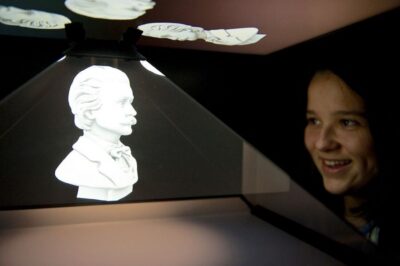 ★ 4.6Tickets to Haus der MusikFrom $22704 reviews
 ★ 4.8Classical Concert at Mozarthaus with Museum EntryFrom $69371 reviews
 ★ 4.5Concerts at Mozarthouse Vienna – Chamber Music concerts.From $50367 reviews
 ★ 4.9Classical Masters Concert at Haus der MusikFrom $27256 reviews
Concerts at the Mozarthaus ViennaFrom $71156 reviews
★ 4.9Classical Masters Concert at Haus der MusikFrom $27256 reviews
Concerts at the Mozarthaus ViennaFrom $71156 reviews
 ★ 3.0Mozarthaus Vienna Admission TicketFrom $19139 reviews
Browse the lists this tour appears in