
Reviewed · VIENNA WALKING TOURS
Introducing Vienna Walking Tour: The Capital of the Habsburgs
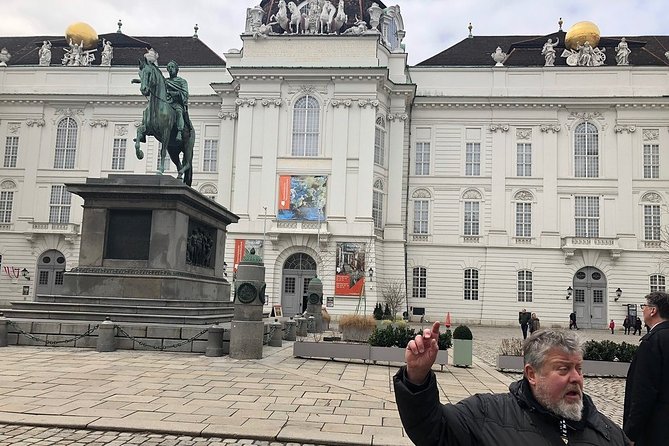
Habsburg Vienna feels close and personal. This 2-hour walk through central Vienna makes the big names you’ve heard about feel real, from St. Michael’s church to the Hofburg palace complex.
I like that it’s a small group (up to 15) with a guide who keeps the pace friendly and questions welcome. I also like the built-in payoff at the end: a stop at the Lindt Chocolate Boutique near St. Stephen’s Cathedral.
One thing to consider: the route is tight, so you’ll want to plan for quick photo moments, not long stops at each landmark. Also, even though this tour is offered in English, confirm your ticket language for your specific day.
In This Review
- Key highlights worth planning around
- Why this Vienna Habsburg walking tour is such a good first day
- Price and value: what $35.07 buys you in 2 hours
- Meeting at Michaelerplatz and finishing at Lindt near Stephansplatz
- St. Michael’s Church and the Roman-medieval layers you can still feel
- White stallions: what you’ll learn and how it connects to Vienna’s image
- Hofburg: from a residence to the nerve center of the dynasty
- Heldenplatz: the Hero Square and Austria’s political story in plain language
- Imperial relics at the Hofburg: the Holy Lance and the Holy Roman Empire crown story
- Joseph’s Square and Maria Theresia’s reign: seeing a ruler through the city
- Albert and Maria Christina’s residence and the Albertina drawing collections
- Monument Against War and Fascism: remembrance in a city built for ceremony
- Opera ticket tip and the walk toward St. Stephen’s Cathedral
- What it feels like on the ground: pace, weather, and group size
- Who should book this Vienna walking tour
- Should you book this tour or build your own route?
- FAQ
- How long is the Vienna walking tour?
- How much does it cost per person?
- How big is the group?
- Where do I meet the guide, and where does the tour end?
- Is the tour offered in English?
- Does the tour run in bad weather?
- What’s included in the price?
- Can I get a refund if my plans change?
Key highlights worth planning around
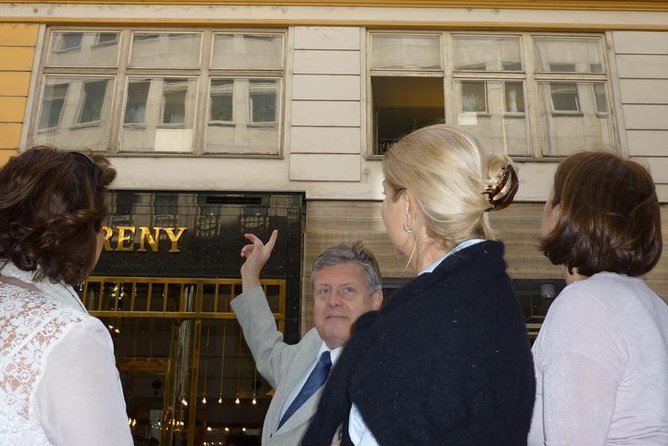
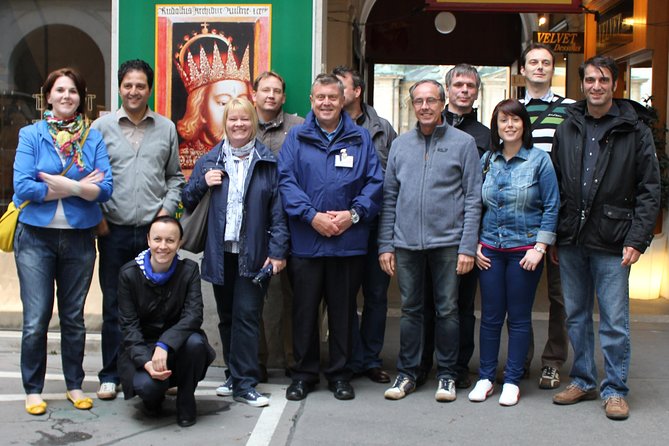
- Small group size (max 15): easier questions, less crowd noise, and more time with the guide
- Habsburg landmarks in one loop: Hofburg, Heldenplatz, Joseph’s Square, and nearby squares without detours
- Stories that connect power and art: relics, rulers, and how buildings shaped politics
- A practical city tip at the Opera area: daily-changing options and a low-cost ticket reference
- Ends where you’ll actually keep walking: St. Stephen’s area, plus a chocolate stop to finish strong
Vienna on foot, a couple more routes
- Vienna: Guided Walking Tour of City Center Highlights★ 4.7 · 4,989 reviews
- Vienna: Vienna Central Cemetery Guided Walking Tour★ 4.8 · 3,307 reviews
- Vienna: Viennese Underworld Guided Walking Tour★ 4.7 · 1,865 reviews
- Vienna: World War II Historical Walking Tour★ 4.8 · 1,772 reviews
Why this Vienna Habsburg walking tour is such a good first day
Vienna can feel like a museum that never closes. The trick is learning how the pieces connect. This tour is built for exactly that: you start in the historic core and move through the spaces where the Habsburgs lived, governed, and performed power in public.
I like the way the guide uses the streets themselves as a map. Instead of only describing buildings, you also get the “why here” behind them. That matters in Vienna, because many sights look similar from the outside, but they mean very different things once you understand the political and religious context.
You’ll also get a feel for distance and direction. By the time you finish at the St. Stephen’s area, you’re not just leaving with facts—you’re leaving with a walkable mental layout of the center.
Price and value: what $35.07 buys you in 2 hours
At about $35.07 per person for an approximately 2-hour guided walk, this isn’t a “cheap and cheerful” stop. It’s priced like a real guided experience with a professional guide, and that’s how it tends to pay off.
Here’s the value logic I’d use if you’re deciding:
- You’re paying for a guide who links landmarks to the Habsburg story, not just a march from point A to point B.
- The small-group limit of 15 helps keep the experience interactive, which is hard to replicate on larger tours.
- The route is concentrated around central Vienna landmarks, so you’re saving energy and planning time on your own first day.
One practical angle: the guide also shares recommendations and on-the-ground context. Even when you don’t follow every suggestion, it reduces guesswork—especially if it’s your first time in Vienna.
Meeting at Michaelerplatz and finishing at Lindt near Stephansplatz
You meet at Michaelerplatz 3, 1010 Wien, right in the heart of the historic district. That’s a smart start point because it’s not off on a side street with awkward access.
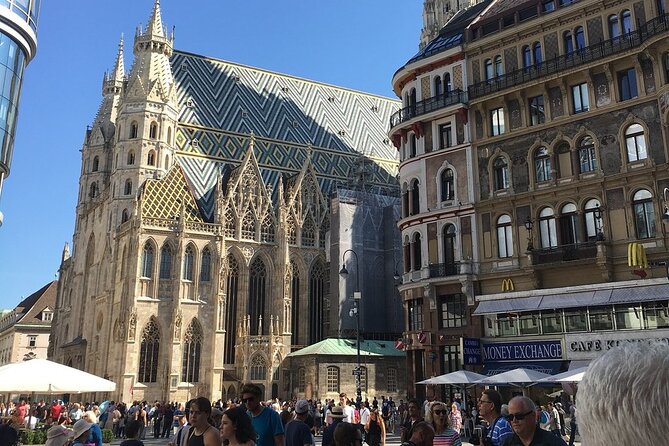
The walk ends at Lindt Chocolate Boutique, Stephansplatz 8A, also in the center. The location is useful even beyond the chocolate. You finish near Stephansplatz and the U1/U4 subway station area, which makes it easier to keep exploring afterward without backtracking.
If you want the most out of the last stretch, plan your next stop around St. Stephen’s Cathedral. The finish is close enough that you can pivot directly into independent sightseeing while the tour story is still fresh.
St. Michael’s Church and the Roman-medieval layers you can still feel
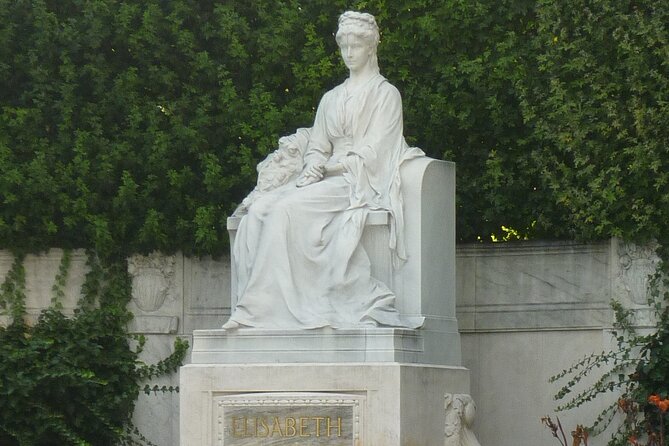
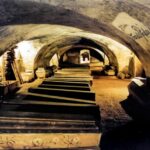
The tour starts at St. Michael’s Church, which is a great opener because it sits where Vienna’s older layers overlap. You get a mix of Roman and medieval ruins as the guide frames what was here before the grand imperial stage.
Why this stop matters: Vienna’s center isn’t just one timeline. It’s layered. Seeing the church while hearing about the earlier settlement patterns helps you understand why the Habsburgs later built so deliberately where they did. They weren’t just putting up fancy architecture—they were inheriting a city with strong, established routes and meanings.
What to expect during the stop:
- A short orientation moment so you know where you are in the historic core
- Explanations tying the past city to later imperial sites
If you’re traveling with a camera, keep it ready early. This area is photogenic, but the tour works on a steady schedule, so don’t expect long waits for ideal angles.
Vienna at walking pace, more routes
White stallions: what you’ll learn and how it connects to Vienna’s image
One of the more distinctive parts of the route is the stop focused on the white stallions. This is the kind of Vienna detail that can sound like a trivia fact until someone explains the cultural role behind it.
The practical value: it gives you another way to “read” Vienna. Yes, you’re learning politics and palace history, but you’re also learning how Vienna performs its identity—through tradition, ceremony, and highly trained craft.
Think of it as a break from pure palace talk. Instead, you get a hint of how the city’s elite culture expressed itself through spectacle, discipline, and public-facing tradition.
Hofburg: from a residence to the nerve center of the dynasty
From here the tour moves into the heart of Habsburg influence: the Hofburg, described as the Habsburg dynasty residence dating back to the 12th century. This is where the Habsburgs weren’t merely visiting. They were living inside the system.
You’ll likely hear two kinds of stories:
- The political story: how rule was staged, protected, and maintained
- The personal story: how rulers shaped the look and function of the palace complex
This is also where the guide’s pacing helps. The Hofburg area can feel like too much if you wander alone. With a guide, you get a mental shortlist of what matters and why.
Heldenplatz: the Hero Square and Austria’s political story in plain language
Next is Heldenplatz, called Hero Square. You’ll hear why it’s named that way and how the space ties into the Austrian government system.
This is a stop that’s surprisingly useful for travelers who like to understand what they’re looking at, not just what it looks like. Squares in Vienna aren’t neutral spaces. They’re designed to carry messages—political messages most of all.
I like this stop because it answers the question many people have in Vienna: why do the grand places feel so official? A quick explanation turns the stone and statues into a readable system.
Imperial relics at the Hofburg: the Holy Lance and the Holy Roman Empire crown story
A highlight on the route is hearing about unbelievable relics tied to European history, including the Holy Lance and the crown associated with the Holy Roman Empire.
Even if you’ve heard bits of this before, the tour helps you place it in context. Religious relics in Europe weren’t only about faith. They were also about legitimacy and authority—tools that rulers used to strengthen their claims.
One consideration: these topics can feel heavy. If you’re the type who prefers lighter sightseeing, you may want to balance this section with a calm moment afterward—like a walk and a drink near the cathedral area later.
Joseph’s Square and Maria Theresia’s reign: seeing a ruler through the city
The tour then heads to Joseph’s Square and connects it to the secrets of Maria Theresia’s reign.
This is where Vienna history turns from names into cause-and-effect. Maria Theresia isn’t just a famous emperor figure. Her rule helps explain why Vienna’s institutions and public spaces took the shape they did.
What makes the stop valuable:
- You learn how one reign affected the city’s overall direction
- You get a clearer sense of which figures were builders of systems, not just event-makers
If you’ve got even a small interest in European history, this segment will likely click. If you don’t, it can still work because the guide ties it back to what you’re seeing outside your eyes.
Albert and Maria Christina’s residence and the Albertina drawing collections
Another strong stop focuses on the residence associated with Albert and Maria Christina, and the fact that it houses today the largest drawing collections worldwide.
This part is smart because it broadens the Habsburg story beyond thrones and wars. A dynasty can be seen through its art patronage and collection habits. Drawings matter because they show process—how ideas were tested before they became final works.
I like that the tour includes this angle. It keeps the experience from becoming only a list of rulers. It turns the palace story into something more human: collecting, commissioning, curating, preserving.
If you want to go further after the tour, this stop naturally points you toward museums in the area. The guide’s context makes it easier to choose what to see next.
Monument Against War and Fascism: remembrance in a city built for ceremony
The tour includes a stop at the Monument Against War and Fascism, created to remember victims of war, including those under Nazi rule in Austria.
This can be a quiet moment in the middle of a sightseeing route. It also makes the whole walking tour feel more honest. Vienna’s history isn’t only impressive architecture and imperial pageantry. It also includes loss, memory, and moral reckoning.
If you visit with a sensitive mindset, this is a good place to slow down. Even if you only read a small portion, the meaning here changes how you interpret the surrounding grandeur.
Opera ticket tip and the walk toward St. Stephen’s Cathedral
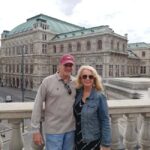
Near the end, the guide points out a practical local angle at the opera area. You’ll learn that daily changes happen, and that the cheapest tickets are 3 euros.
This is the kind of tip that can save you time and money. Vienna opera isn’t only about watching an event. It’s about knowing how to access it without building your whole budget around it.
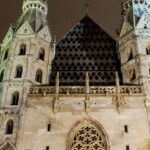
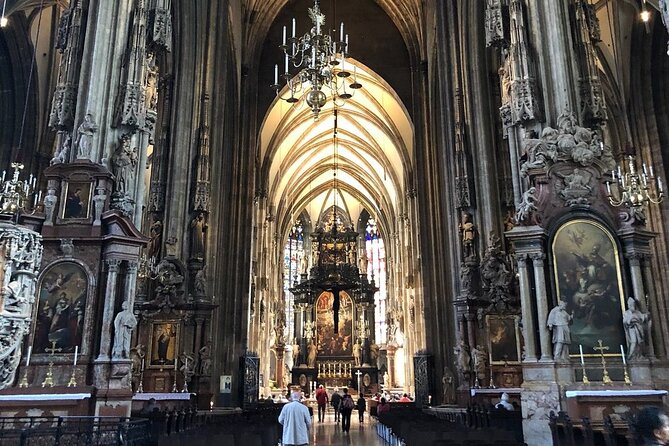
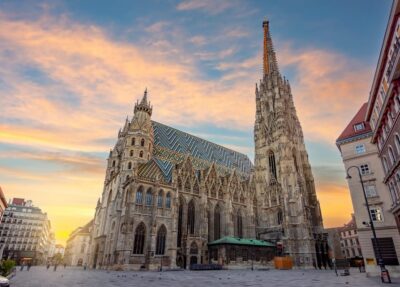
Then the tour finishes at Vienna center with St. Stephen’s Cathedral. This ending point is excellent. The cathedral area gives you an immediate “I get it now” moment: you’ve spent hours in the Habsburg orbit, and now you’re standing in one of the city’s most iconic spiritual and civic spaces.
If you still have energy, continue on your own. You’ll likely want to look around the square and nearby streets while the tour narrative is still in your head.
What it feels like on the ground: pace, weather, and group size
The tour is designed to work in all weather conditions, so you should expect to dress for rain, wind, or cold mornings. One review highlighted icy winds in March, which is exactly the kind of reminder that matters if you visit in shoulder season.
The walking itself is generally manageable. Reviews mention easy walking and flat terrain, and with a 2-hour total duration, you’re not committing to a long hike.
It’s not recommended for younger children, mostly because the focus is historical storytelling and the route is concentrated. If you’re traveling with kids who can handle 2 hours of guided interpretation, you might be fine, but don’t assume it’s a playground-style tour.
Who should book this Vienna walking tour
This is a great fit if:
- You want a first-day introduction to central Vienna and the Habsburg story
- You like history explained through buildings, not just dates
- You prefer small-group pacing and time for questions
- You’re interested in practical city tips, including opera ticket strategy
It may not be your best match if:
- You hate walking on paved streets for a solid couple of hours
- You expect long photo stops at every landmark
- You’re looking for a purely light, modern-food-and-shopping tour
Should you book this tour or build your own route?
I’d book it if you want the fastest path to understanding Vienna’s core. Two hours is short, but the route is packed with the main Habsburg anchors: Hofburg, Heldenplatz, Joseph’s Square, and the art-and-collection angle tied to Albertina.
The biggest reason to choose this tour over DIY is the guide’s role in turning the city into a story. Without that, you can still see the buildings—but you’ll likely miss why they matter.
If you go, do one simple thing: confirm the tour language on your ticket for your exact day, then show up with good walking shoes and a camera ready for quick stops. Once you’re done, you’ll be ready to explore the Stephansplatz area with a real sense of direction and context.
FAQ
How long is the Vienna walking tour?
The tour lasts about 2 hours.
How much does it cost per person?
The price is listed as $35.07 per person.
How big is the group?
The tour is limited to a maximum of 15 travelers.
Where do I meet the guide, and where does the tour end?
You meet at Michaelerplatz 3, 1010 Wien. The tour ends at Lindt Chocolate Boutique at Stephansplatz 8A, 1010 Wien.
Is the tour offered in English?
The tour is offered in English, but you should check your ticket to confirm the language for your specific day.
Does the tour run in bad weather?
It operates in all weather conditions.
What’s included in the price?
A professional certified tourist guide is included. Food and drinks, and hotel pickup/drop-off are not included.
Can I get a refund if my plans change?
Free cancellation is available, and you must cancel at least 24 hours before the experience’s start time for a full refund.
More Tours in Vienna
- Vienna: Schönbrunn Palace & Gardens Skip-the-Line Tour
★ 4.7 · 7,739 reviews - Vienna Spanish Riding School Guided Tour
★ 4.7 · 6,765 reviews - Vienna: Skip-the-Line Sisi Museum, Hofburg and Gardens Tour
★ 4.8 · 5,918 reviews - Vienna: Skip-the-Line Schönbrunn Palace & Gardens Tour
★ 4.8 · 5,411 reviews - Vienna: Guided Walking Tour of City Center Highlights
★ 4.7 · 4,989 reviews
More Tour Reviews in Vienna
- Vienna: Vivaldi’s Four Seasons Concert in Karlskirche
★ 4.7 · 14,951 reviews - Vienna: Schönbrunn Palace & Gardens Skip-the-Line Tour
★ 4.7 · 7,739 reviews - Vienna: Light of Creation Votive Church Immersive Light Show
★ 4.8 · 6,779 reviews - Vienna Spanish Riding School Guided Tour
★ 4.7 · 6,765 reviews - Vienna: Classical Concert in the World-Famous Musikverein
★ 4.6 · 6,673 reviews
Vienna on Foot, Continued
- Vienna: Guided Walking Tour of City Center Highlights
★ 4.7 · 4,989 reviews - Vienna: Vienna Central Cemetery Guided Walking Tour
★ 4.8 · 3,307 reviews - Vienna: Guided Walking Tour of City Highlights & Hidden Gems
★ 4.9 · 2,180 reviews - Vienna: Viennese Underworld Guided Walking Tour
★ 4.7 · 1,865 reviews - Vienna: World War II Historical Walking Tour
★ 4.8 · 1,772 reviews
Just In: New Vienna Reviews



Vienna Walking Tours, compared.
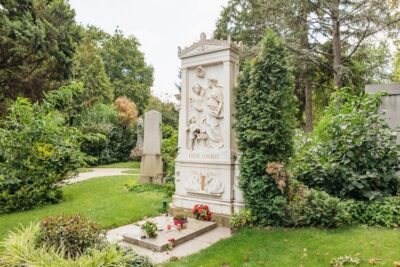 ★ 4.8Vienna Central Cemetery Guided Walking TourFrom $3353,307 reviews
 ★ 4.9Guided Walking Tour of City Highlights & Hidden GemsFrom $272,180 reviews
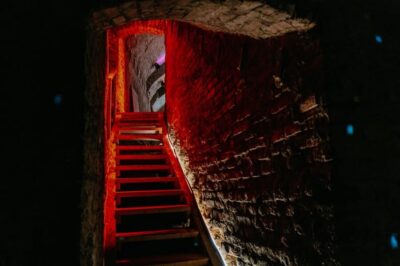 ★ 4.7Viennese Underworld Guided Walking TourFrom $371,865 reviews
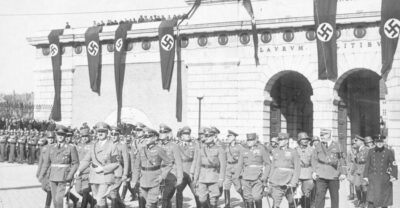 ★ 4.8World War II Historical Walking TourFrom $311,772 reviews
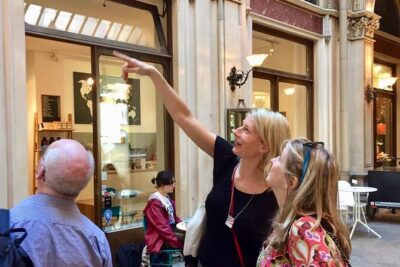 ★ 5.0Vienna Historic Center Small Group Walking TourFrom $721,746 reviews
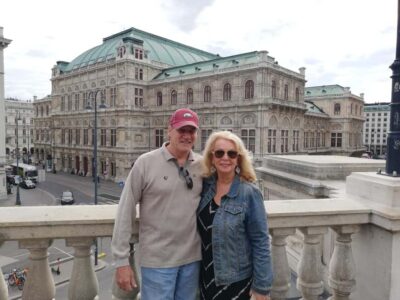 ★ 4.6Private Walking Tour with a LocalFrom $561,446 reviews
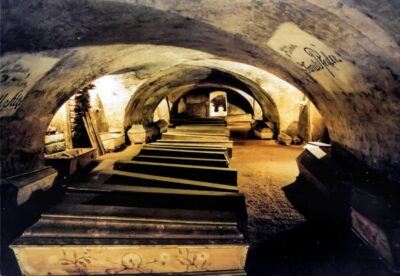 ★ 4.91.5-Hour Underground Walking TourFrom $321,146 reviews
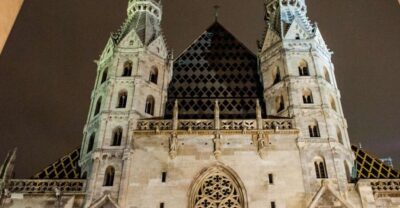 ★ 4.4Ghosts and Legends Guided Nighttime Walking TourFrom $201,088 reviews
Browse the lists this tour appears in