
Reviewed · VIENNA WALKING TOURS
Private Introduction to Vienna Walking Tour
Vienna can feel like one long museum day. This private walking intro turns big sights into a clear story. It’s built for orientation fast, so you understand why the city looks the way it does.
I really like two things here. First, you get a private historian guide for about three hours, so questions don’t get lost in a crowd. Second, the route hits both power and faith sites, plus modern cultural Vienna, giving you a smart balance instead of just photos.
One drawback to consider: it is a lot of ground for a short visit. If you’re hoping for slow strolling with lots of sit-down time, this pace may feel tight.
In This Review
- Key highlights worth planning for
- Why this Vienna walking intro works so well
- Starting at Michaelerplatz and the Hofburg power zone
- Loos House to Kohlmarkt and the Graben: architecture with a viewpoint
- Stephansdom: why the cathedral matters beyond photos
- The Habsburg burial circuit: entrails, hearts, and sarcophagi
- Old city walls, Ottoman sieges, and the Ringstrasse shift
- Schwarzenbergplatz memorials and the embassy-area feel
- Belvedere detour: a quick art-and-architecture reset
- Secession building view and Naschmarkt: seeing Vienna’s everyday rhythm
- MuseumsQuartier and Maria Theresien Platz: Austria’s present, not just its past
- Pace, groups, and why private matters in a city like Vienna
- Value check: is $566.25 per group worth it?
- Who this tour suits best
- Should you book it?
- FAQ
- How long is the private introduction to Vienna walking tour?
- What is the group size for this private tour?
- Where does the tour start, and where do I meet the guide?
- Does the tour offer pickup?
- What language is the tour in?
- What’s included in the price, and what is not included?
- Is free cancellation available?
Key highlights worth planning for
- Hofburg power start at Michaelerplatz, so Vienna’s imperial story has a strong opening anchor
- Loos House at street level, a quick stop that adds modern architectural context right beside classic landmarks
- The Habsburg burial triad: St. Stephen’s Cathedral (entrails), Capuchin Church (sarcophagi), and St. Augustine’s Church (hearts in silver urns)
- Ottoman siege remnants and the shift toward the Ringstrasse, explained as you walk the edge of the old city walls
- Schwarzenbergplatz memorial and embassies area, adding 20th-century context to the city core
- Karlsplatz to MuseumsQuartier ties landmarks to everyday culture, from the Secession building view to the museum concentration at Maria Theresien Platz
Vienna on foot, a couple more routes
- Vienna: Guided Walking Tour of City Center Highlights★ 4.7 · 4,989 reviews
- Vienna: Vienna Central Cemetery Guided Walking Tour★ 4.8 · 3,307 reviews
- Vienna: Viennese Underworld Guided Walking Tour★ 4.7 · 1,865 reviews
- Vienna: World War II Historical Walking Tour★ 4.8 · 1,772 reviews
Why this Vienna walking intro works so well
Vienna is unusual. It isn’t one past layered over a present. It’s many pasts sitting side by side, sometimes on the same street. This tour helps you read the city like a map, not like a guessing game.
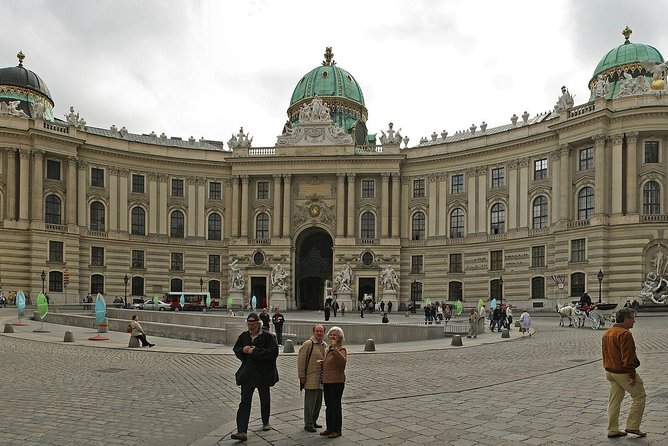
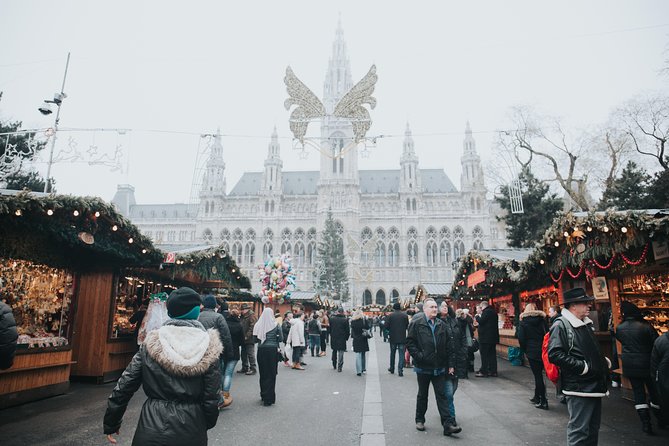
You start at Michaelerplatz, where the Hofburg dominates the square. That matters because the Habsburgs weren’t just a dynasty you pass in a textbook. They shaped the way Vienna organized power, worship, and even how it handled remembrance. From that first square, the guide keeps pointing you toward meaning: why this building exists, why it’s here, and what people were trying to signal.
I also like the human side of this experience. In the guide names shared in past experiences, you’ll see a mix like Katarina, Selin, Biljana, and Else. The common thread is the same: people feel cared for, with an approach that fits families and mixed-age groups. I’d expect that from a private guide built for an easy, personal pace.
One more practical reason this tour is a good first day choice: the route naturally orients you among the city center’s busiest corridors and landmark clusters. After three hours, you won’t just know what you saw. You’ll know how it connects.
Starting at Michaelerplatz and the Hofburg power zone
The tour begins at Dorotheergasse 6, 1010 Wien. If you don’t arrange hotel pickup, you meet the guide about 15 minutes early at Cafe Hawelka at the same address. That early timing is smart—Vienna’s streets are narrow, and good tours run smoothly when you start with everyone in the right spot.
From Michaelerplatz, the Hofburg sets the tone. You’ll be standing in a place tied to imperial rule since the 13th century, so it’s an immediate reminder that Vienna’s story is long. The guide then moves you in a clockwise flow around the square, which is ideal because you get different angles quickly without backtracking.
This is also where the tour’s “private” value shows. You’re not just looking at the building. You’re hearing the guide explain how the Hofburg sits at the center of power that kept echoing through the centuries.
Loos House to Kohlmarkt and the Graben: architecture with a viewpoint
After the Hofburg, the walk shifts toward street-level variety—especially around Kohlmarkt and the Graben. This part is great if you like seeing architecture in context. You can spot the classic and the new, not as separate stories, but as a changing city.
A standout stop here is the Loos House, designed by architect Adolf Loos. It’s close enough that you get it without a detour, and it gives you a helpful contrast. One moment you’re beside imperial structure energy; the next, you’re seeing modern architectural thinking reflected right in the inner city.
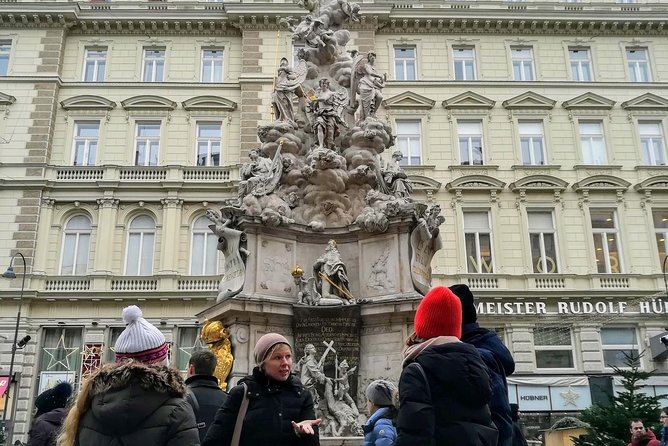
As you move down Kohlmarkt and the Graben, you’ll also pass a stack of sights that teach you how to watch Vienna with better instincts. The tour includes the plague column, a baroque church, and big-name buildings in different styles. That’s important because Vienna can look uniform at first glance—this walk teaches you to notice change.
Stephansdom: why the cathedral matters beyond photos

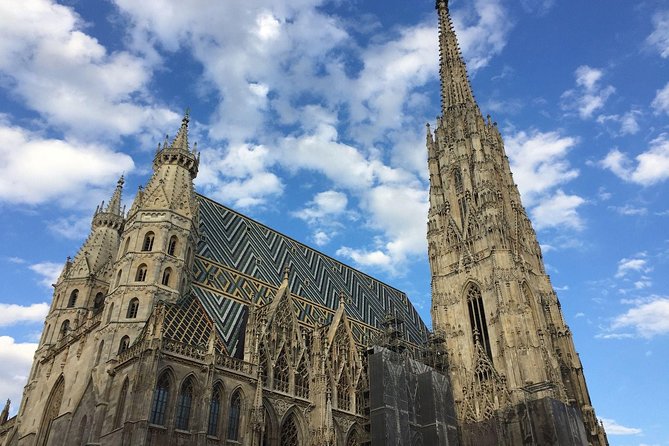
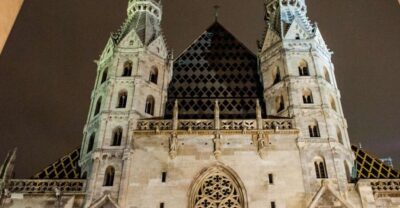
The walking continues toward Stephansdom, Vienna’s iconic cathedral. In many cities, a cathedral is mostly one big landmark. In Vienna, it becomes a hub for understanding how power and religion reinforced each other.
You’ll get stops and explanations that connect St. Stephen’s role to the Habsburgs’ ritual of remembrance. The tour specifically points to the idea that St. Stephen’s Cathedral is the final resting place for the imperial entrails. That sounds strange until you understand the logic: different body parts were handled through symbolism, burial traditions, and political theater.
This is the kind of detail that makes a tour memorable, because it gives you a line you can carry into your next museum visit or cathedral stop.
Only your group, at your own tempo



The Habsburg burial circuit: entrails, hearts, and sarcophagi
One of the strongest parts of this route is the focus on three locations tied to the Habsburgs’ tripartite burials.
Here’s what you can expect, in plain terms:
- You’ll start with the connection to St. Stephen’s Cathedral, tied to the imperial entrails.
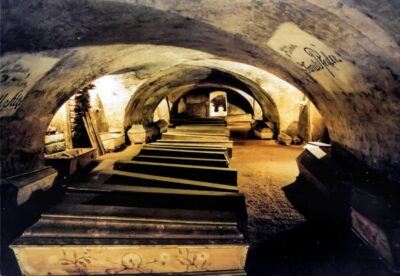
- You’ll then move to the Capuchin Church, which the tour describes as containing centuries of sarcophagi for Vienna’s rulers.
- Finally, you’ll reach St. Augustine’s Church, home to dozens of silver urns containing the hearts of the Habsburgs.
Walking this circuit works because your guide can keep the story coherent. Without that, these churches can feel like separate religious buildings. With the guide, you start seeing how burial practices became another way to talk about dynasty, legitimacy, and continuity.
If you’re visiting with kids or a multi-generational group, this is also a strong choice. The subject matter is unusual enough to hold attention, and the guide can turn it into clear storytelling rather than a lecture.
Old city walls, Ottoman sieges, and the Ringstrasse shift
Next, the tour moves toward the edge of the inner city to examine remnants of 12th-century city walls. This isn’t just a history stop. It’s a lesson in how Vienna changed its physical boundaries—and what that change meant.
The walls protected the city during two Ottoman sieges in 1529 and 1683. Then, later, the walls were torn down to make space for the grand circular boulevard known as the Ringstrasse—Vienna’s answer to the big boulevard tradition you might know from other European capitals.
This section is especially useful if you’re the type who likes to understand the city layout. You’re literally walking the line between defense and display. Vienna’s shift from fortification to ceremony is one of its big visual themes, and it becomes obvious when you’re guided to the exact spots.
Schwarzenbergplatz memorials and the embassy-area feel
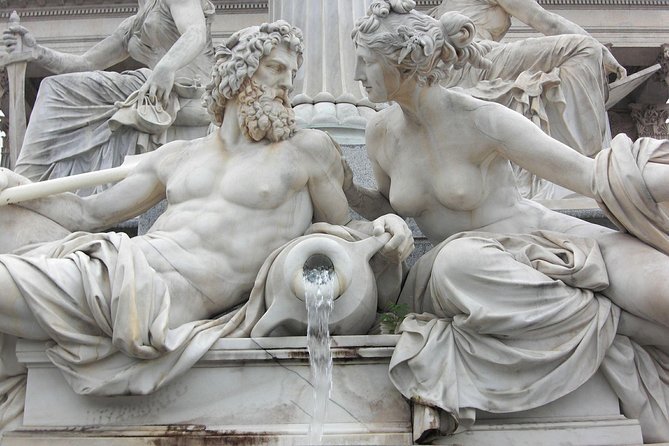
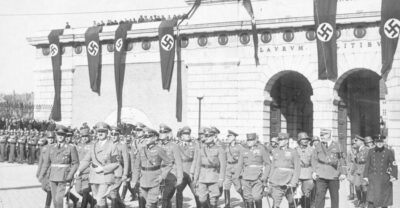
After the wall context, you’ll reach Schwarzenbergplatz. The tour includes a massive fountain and a memorial connected to Russian soldiers who died liberating Vienna from the Nazis.
This is a good stop for two reasons. First, it brings 20th-century history into the city center story, not as an afterthought. Second, it’s located in an area where many embassies cluster, so you get a sense of Vienna as a meeting place, not only a royal showcase.
If you’ve been thinking of Vienna as all palaces and churches, this part gently corrects that. The guide helps you see the city’s role in diplomacy and politics, which you’ll appreciate later when you look at museums and cultural spaces.
Belvedere detour: a quick art-and-architecture reset
The tour includes a quick detour to Belvedere Palace. The key word is quick: this isn’t a full palace visit. It’s more like a visual reset, giving you a memorable landmark moment while keeping the overall flow of the walk.
If you plan to return for a longer visit later, this detour is a smart preview. You’ll know what you want to see in detail once you’re back with more time.
Secession building view and Naschmarkt: seeing Vienna’s everyday rhythm
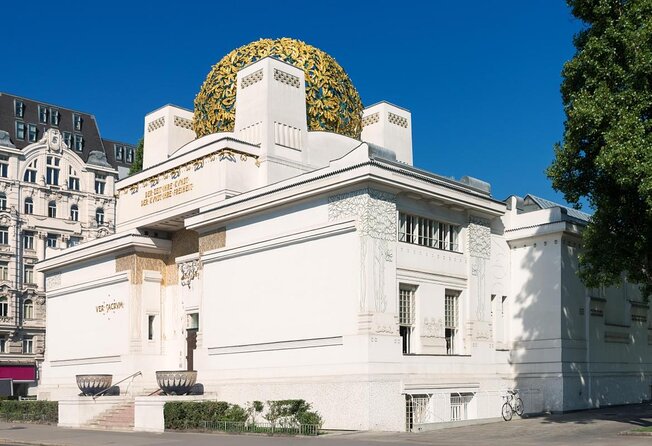
Back toward Karlsplatz, you’ll enjoy a stunning view of the gold-domed Secession building. This is another contrast stop, placing a more modern artistic identity in your mental map.
Then you move toward Naschmarkt, a place that helps you ground everything you’ve heard. Markets can sound generic until you’re in a city like Vienna where trade, daily life, and neighborhood character overlap with cultural institutions.
So this isn’t just a photo break. It’s where the tour shifts from imperial and religious themes to day-to-day city life.
MuseumsQuartier and Maria Theresien Platz: Austria’s present, not just its past
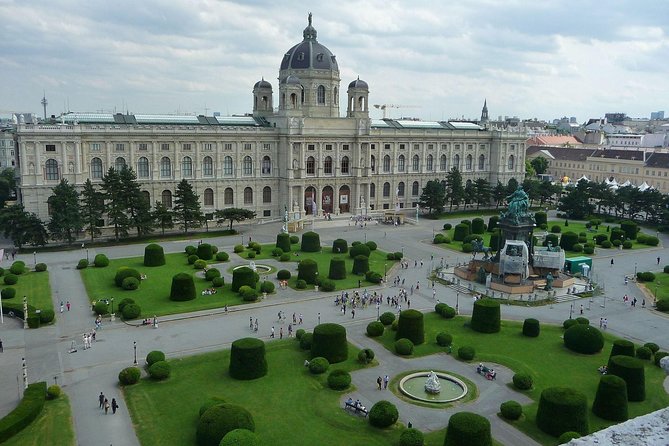
The final stretch takes you through MuseumsQuartier and over to Maria Theresien Platz. The tour points out that this area has the city’s largest concentration of museums.
What makes this section feel useful is that the guide connects landmarks to today. The tour is described as discussing the present-day cultural, political, and economic orientations of Austria and its capital. That matters because Vienna can look like a living “then” from the outside. A good guide helps you understand what’s still active now.
If you’re the kind of traveler who likes to decide where to go next, this ending helps you plan. You’re not leaving with only names. You’re leaving with a sense of how Vienna thinks today, and which museum areas match that feeling.
Pace, groups, and why private matters in a city like Vienna
This is a private tour for up to 10 people per group, with a tour lasting about three hours. That time window is long enough to connect themes, but short enough to keep you from burning out.
I’d recommend this format especially if:
- you want to ask follow-up questions without feeling rushed,
- you have kids or mixed ages and need a pace that can flex,
- you’re visiting Vienna for the first time and want a fast orientation.
Also, the private setup tends to make the walking feel smoother. In past experiences shared with this tour, people praised the guides for keeping a perfect pace and moving efficiently without making anyone feel chased.
Value check: is $566.25 per group worth it?
The price is $566.25 per group (up to 10). That can sound steep if you’re thinking per person. But if you’re traveling with family or friends, it’s closer to a shared guide experience than a solo-ticket expense.
Here’s the value logic I’d use:
- You’re paying for a historian guide plus a tightly planned route.
- You’re buying time saved. Vienna is easy to get “right next to” without understanding why it matters. A guided walk helps you avoid that dead time.
- It’s three hours. That’s enough to build context, not just collect highlights.
If you’re traveling solo, you’ll want to compare it to a group tour price. With solo travel, private can be a luxury. With a group, it becomes a smart way to make sure your first day in Vienna lands well.
Who this tour suits best
This private introduction works well if you want:
- a history-and-architecture orientation rather than a museum checklist,
- a route that ties imperial, religious, and modern cultural Vienna together,
- a guide who can tailor the storytelling for your group’s energy.
It also fits travelers who care about details and odd-but-important facts, like the burial traditions connected to the Habsburgs. People have specifically said their families enjoyed the experience, including adults with busy schedules who still wanted something that felt personal.
Should you book it?
If it’s your first time in Vienna and you want a guide to help you see the city clearly, I think this is a strong yes. The route covers the big landmark spine—Hofburg to Stephansdom—while also adding the kind of context that makes those landmarks mean something. And because it’s private, you’re far more likely to leave with answers, not just photos.
I’d only hesitate if you prefer long stops and lots of downtime. This is a walking story tour. If you want to sit and linger at every stop, plan extra time later for Belvedere, Stephansdom, or the museums area.
FAQ
How long is the private introduction to Vienna walking tour?
It runs for about 3 hours.
What is the group size for this private tour?
It’s a private experience, and the group size is up to 10 people.
Where does the tour start, and where do I meet the guide?
The start point is Dorotheergasse 6, 1010 Wien. If hotel pickup isn’t arranged, meet the guide 15 minutes before at Cafe Hawelka at the same address.
Does the tour offer pickup?
Pickup is offered if you arrange it, and otherwise you meet at the default meeting point.
What language is the tour in?
The tour is offered in English.
What’s included in the price, and what is not included?
Included is a 3-hour private guided walk with a historian guide. Food and drinks aren’t included unless specified.
Is free cancellation available?
Yes. You can cancel for a full refund up to 24 hours in advance of the experience’s start time.
More Tour Reviews in Vienna
- Vienna: Vivaldi’s Four Seasons Concert in Karlskirche
★ 4.7 · 14,951 reviews - Vienna: Schönbrunn Palace & Gardens Skip-the-Line Tour
★ 4.7 · 7,739 reviews - Vienna: Light of Creation Votive Church Immersive Light Show
★ 4.8 · 6,779 reviews - Vienna Spanish Riding School Guided Tour
★ 4.7 · 6,765 reviews - Vienna: Classical Concert in the World-Famous Musikverein
★ 4.6 · 6,673 reviews
Yours Alone Across Vienna
- Vienna: Private Walking Tour with a Local
★ 4.6 · 1,446 reviews - Vienna: Private Walking Tour with a Guide
★ 4.7 · 962 reviews - Vienna: Wine Tasting Experience in a Private Wine Cellar
★ 4.8 · 413 reviews - Private Day Tour Trip Salzburg Hallstatt and Melk from Vienna
★ 5.0 · 388 reviews - Private Day Tour of Hallstatt and Salzburg from Vienna
★ 5.0 · 263 reviews
Vienna on Foot, Continued
- Vienna: Guided Walking Tour of City Center Highlights
★ 4.7 · 4,989 reviews - Vienna: Vienna Central Cemetery Guided Walking Tour
★ 4.8 · 3,307 reviews - Vienna: Guided Walking Tour of City Highlights & Hidden Gems
★ 4.9 · 2,180 reviews - Vienna: Viennese Underworld Guided Walking Tour
★ 4.7 · 1,865 reviews - Vienna: World War II Historical Walking Tour
★ 4.8 · 1,772 reviews
Just In: New Vienna Reviews



Vienna Walking Tours, compared.
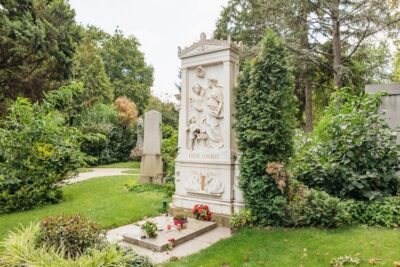 ★ 4.8Vienna Central Cemetery Guided Walking TourFrom $3353,307 reviews
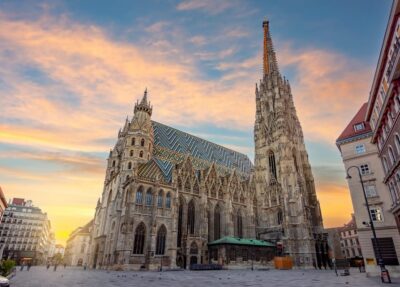 ★ 4.9Guided Walking Tour of City Highlights & Hidden GemsFrom $272,180 reviews
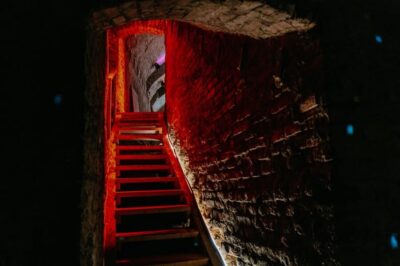 ★ 4.7Viennese Underworld Guided Walking TourFrom $371,865 reviews
 ★ 4.8World War II Historical Walking TourFrom $311,772 reviews
 ★ 5.0Vienna Historic Center Small Group Walking TourFrom $721,746 reviews
 ★ 4.6Private Walking Tour with a LocalFrom $561,446 reviews
 ★ 4.91.5-Hour Underground Walking TourFrom $321,146 reviews
 ★ 4.4Ghosts and Legends Guided Nighttime Walking TourFrom $201,088 reviews
Browse the lists this tour appears in