
Reviewed · VIENNA WALKING TOURS
Private Vienna Art Nouveau Walking Tour
Vienna’s Art Nouveau hits different up close. I love the way this tour turns metro stations and street façades into a clear story of Vienna’s Jugendstil. I also like that you get a private, expert guide who can answer your questions on the spot, even if you’re new to the style. One thing to plan for: several key interiors need paid admission, so your total cost won’t be just the tour price.
This is a smart 3-hour format if you want design nerd details without spending your whole day hopping between museums. It’s private, so you can set the pace and spend extra time where your eyes lock on. The main trade-off is that you’ll be doing a real walking loop, plus quick stops, so it’s not the best choice if you want long, slow museum time.
If you’re the kind of traveler who sees a building and wonders who designed it and why, this tour gives you those answers fast. And yes, you’ll also end up in metro spaces that most people rush through.
In This Review
- Key things I’d watch for on this tour
- Secession Building: Klimt’s Beethoven Frieze, and why the Vienna Secession mattered
- Stadtpark: a free breather between architecture stops
- Karlsplatz Stadtbahn: Otto Wagner’s Jugendstil on a transport stage
- Otto Wagner Pavillon Karlsplatz: modernist design in an Art Nouveau station building
- Postsparkasse: a postal bank building that feels like design is serious business
- Naschmarkt: use the short market stop to feel Vienna, not to rush dinner
- Ending at metro stations, including a tiny Emperor-linked stop
- Private price breakdown: how $490 per group can be good value
- Tickets, timing, and practical tips for a smooth 3-hour walk
- The kind of guide you’ll want on this tour
- Who should book this Vienna Art Nouveau private walk?
- Should you book this private Vienna Art Nouveau tour?
- FAQ
- How long is the Private Vienna Art Nouveau Walking Tour?
- Is this tour private or shared?
- How many people can be in a group?
- What is the price of the tour?
- Where does the tour start?
- Is pickup available?
- Are food and drinks included?
- Are entrance fees included for the sites?
- How much does Secession House cost on Tuesday through Sunday?
- Can I cancel for a full refund?
Key things I’d watch for on this tour
- Secession Building and the Beethoven Frieze inside Joseph Maria Olbrich’s manifesto hall
- Otto Wagner’s Karlsplatz station architecture, where Jugendstil shows up in transport design
- Paid interior stops only when they’re worth it, with guide help for ticketing
- Postal Savings Bank (Postsparkasse) as a standout Vienna Secession/Art Nouveau landmark
- A short Naschmarkt moment, where you can soak up the market energy without a full food stop
- A tiny Emperor-linked metro pause to close the tour with something unusual
Vienna on foot, a couple more routes
- Vienna: Guided Walking Tour of City Center Highlights★ 4.7 · 4,989 reviews
- Vienna: Vienna Central Cemetery Guided Walking Tour★ 4.8 · 3,307 reviews
- Vienna: Viennese Underworld Guided Walking Tour★ 4.7 · 1,865 reviews
- Vienna: World War II Historical Walking Tour★ 4.8 · 1,772 reviews
Secession Building: Klimt’s Beethoven Frieze, and why the Vienna Secession mattered
You start with the Secession Building, completed in 1898 by Joseph Maria Olbrich. Think of it as an architectural slogan from the Vienna Secession, a group of artists that broke away from the long-established fine art world of the day. The building itself is part of the message: Art Nouveau wasn’t only for artwork on paper and in frames. It was for how cities should look and how culture should be presented.
Inside, you can see the famous Beethoven Frieze painted by Gustav Klimt. Even if you’ve only heard the name, this is the moment where the style becomes visual and specific. The frieze is tied to one of the original Secession exhibitions, so it carries that rebel-art context in a way that feels more grounded than a generic “masterpiece” stop.
Plan on about 30 minutes here, but the key practical point is admission. Entrance isn’t included, and the cost depends on the day you go. If you visit from Tuesday to Sunday, Secession House admission is €9.50 for adults and €6 for students and seniors. The tour guide will help you handle payment.
Stadtpark: a free breather between architecture stops
After Secession, you get a short break in Stadtpark (City Park). It’s a large municipal park running from the Ringstraße area in the first district up toward Heumarkt. This isn’t just a pause to catch your breath. It also helps you reset your eyes so the next buildings don’t all blur together.
You’ll spend around 15 minutes here. Since it’s free to enter, you can use the time however you like: a quick stroll, a moment to sit if the weather is kind, or just a chance to look back at the city without reading captions.
Karlsplatz Stadtbahn: Otto Wagner’s Jugendstil on a transport stage
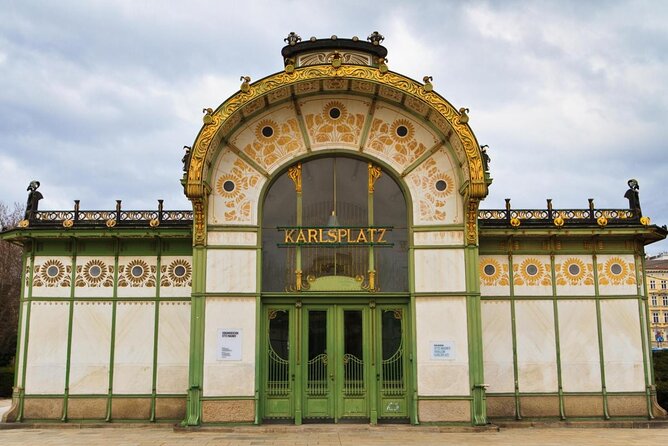
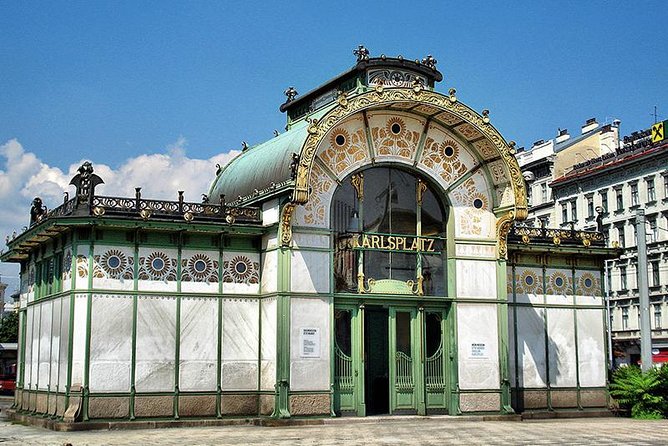
Next comes Karlsplatz Stadtbahn Station, a former station of the Viennese Stadtbahn. What makes it special isn’t only that it’s historical. It’s that the ground-level buildings above street level are a well-known example of Jugendstil, designed by Otto Wagner with help from Joseph Maria Olbrich.
This is where the tour’s theme clicks: Art Nouveau design wasn’t limited to “pretty buildings” you visit for an hour. It showed up in functional urban structures, including transport. When you see Jugendstil details on a station frontage, you start to understand the Vienna Secession era’s ambition—art and everyday life weren’t supposed to live in separate worlds.
You’ll have about 20 minutes for this stop. Admission isn’t included for the station-related spaces on the schedule, so focus on the exterior design and architectural features, and save “inside time” for the stops that specify paid entry.
Otto Wagner Pavillon Karlsplatz: modernist design in an Art Nouveau station building
From Karlsplatz, you’ll move to the Otto Wagner Pavillon Karlsplatz. This is an exhibit on Otto Wagner’s life and work inside an 1898 Art Nouveau station building he designed. That detail matters. You’re not just learning about Wagner in a lecture-room way; you’re reading design history from the architecture itself.
The tour flags that this stop ties to museum opening hours. If you’re traveling from April to October, when the museum is open, this becomes part of the experience. Admission is not included, and the tour lists these costs: €5 for general admission and €4 for senior citizens, students, holders of Vienna Card, and persons with disabilities.
Plan around 15 minutes here. In that time, you won’t turn into an Otto Wagner scholar, but you’ll get enough context to spot his design habits later, even when you’re walking on your own.
Only your group, at your own tempo

Postsparkasse: a postal bank building that feels like design is serious business
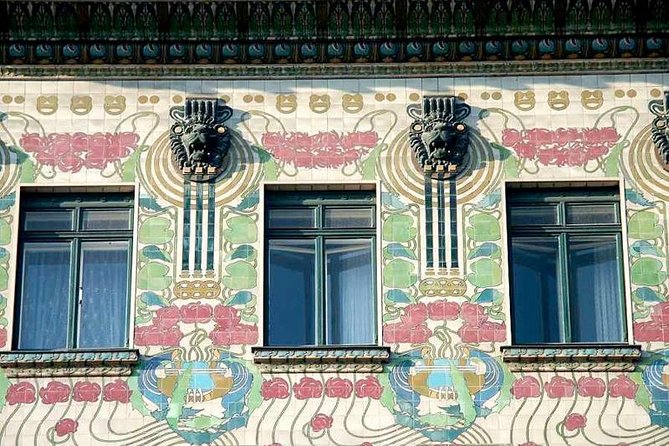
Postsparkasse is next, the Austrian Postal Savings Bank building designed and built by Otto Wagner. This is one of those Vienna landmarks that rewards attention. The building is regarded as an important work connected to Vienna Secession and Art Nouveau, so it carries that “design as identity” energy again—like you’re seeing the city’s ideals in stone and metal.
You’ll have about 25 minutes at this stop, and admission is free. That’s useful because it means you can spend time looking at details without thinking about adding ticket costs. If your feet are starting to feel it, this is also a good place to slow down slightly and take in the façades.
Naschmarkt: use the short market stop to feel Vienna, not to rush dinner
After Postsparkasse, the tour makes a quick move to Naschmarkt. This is Vienna’s best-known market, with around 120 market stands and plenty of lively restaurant options. The key here is time: you’ll have about 10 minutes.
This isn’t a long food tour. Food and drinks aren’t included unless specifically added later, so treat this stop like a sensory snapshot. If you want something to nibble, plan to buy it separately on your own. If you don’t eat market food, just walk the edges and look at how the market shapes the street-level vibe.
Ending at metro stations, including a tiny Emperor-linked stop
You finish at a pair of metro stations. The tour description highlights a particularly small stop built just for the Emperor, which is a great example of how Vienna’s transport history isn’t only about schedules. It’s also about power, status, and how the city served the people at the top.
Since the exact station names aren’t provided here, I’ll focus on what matters for you: this ending is a chance to see metro architecture as part of Vienna’s design story, not just as a way to get from A to B. After hours of looking at façades and exhibitions, it’s a fun twist to close with transit spaces that still have character.
Private price breakdown: how $490 per group can be good value
This tour costs $490 per group, up to 10 people. That’s a per-group rate, not per person. Translation: the value depends heavily on how many you have with you.
- If you’re a solo traveler or a couple, the price may feel steep because you’re effectively paying for the whole group slot.
- If you’re traveling with friends or family (even 4 to 6 people), your per-person cost drops fast, and the private format becomes a lot more sensible.
Where this rate also makes sense is in time and attention. You’re paying for a focused route and a professional guide, not a general admission pass and wandering. The guide’s job is to make Art Nouveau legible—what you’re seeing, who designed it, and why it mattered.
One more practical note: the tour runs about 3 hours. That’s long enough to cover multiple major Art Nouveau anchors, but short enough that you can still enjoy the rest of your day without booking another big activity.
Tickets, timing, and practical tips for a smooth 3-hour walk
You’ll get a mobile ticket, and the tour notes pickup is offered. Since hotel pickup and drop-off aren’t listed as included, I’d treat pickup as something to confirm when you book. The meeting point is Operngasse 7, 1010 Wien, and you’ll end back at Vienna generally (with the tour finishing at those metro stations).
Admission fees are the biggest variable:
- Secession House (for Klimt’s Beethoven Frieze) is €9.50 for adults and €6 for students and seniors on Tuesday to Sunday.
- Otto Wagner Pavillon admission depends on season and is €5 general and €4 for seniors/students/Vienna Card holders (and persons with disabilities), when the museum is open in April–October.
The good news: the guide helps you pay for the Secession House admission. That removes one headache.
For your comfort, wear shoes you’d trust for city walking. This is a metro-and-architecture loop, with short stops, and you’ll cover enough ground that flip-flops won’t make you friends.
The kind of guide you’ll want on this tour
This tour leans hard on explanation, not just photos. The standout theme in the guide experiences is depth without attitude: guides like Barbara are praised for historical background and for answering a wide range of questions on history and art. Wolfgang is noted for making the movement feel like a real education even if you’re not starting from a background. Annelie is described as a wealth of information on Vienna Secessionism and Vienna itself.
So if you want someone to connect the dots—Klimt to Secession, Wagner to modern design, stations to cultural identity—this tour delivers that “ask anything” energy in a polite, useful way.
Who should book this Vienna Art Nouveau private walk?
This fits you best if:
- You’re an architecture or design fan, including people who like to spot details (not only big-name museums)
- You want a guided route that keeps momentum and avoids option overload
- You like the idea of seeing Art Nouveau in real city spaces like stations and civic buildings
- You’re okay paying separate entrance fees for specific interiors
It might be less ideal if:
- You mainly want long, slow indoor museum time (the tour is built around multiple stops and walking)
- You don’t want to handle paid admissions at any point
- You’re traveling with very limited mobility or stamina, since it’s a walking-focused format with several quick segments (the tour indicates most travelers can participate, but the pacing is still active)
Should you book this private Vienna Art Nouveau tour?
If you want a concentrated Vienna design lesson in a manageable 3 hours, I’d book it. The mix of Secession culture (Olbrich and Klimt), Wagner’s transport-era architecture, and the built landmarks like Postsparkasse gives you a strong “how the city thinks” picture. Add the private guide format, and you get answers tailored to your curiosity.
The main reason to pause is money for entrances. If you’re going outside April–October or you’d rather keep everything included, you may feel the add-on fees more than you expect. Still, when Art Nouveau is explained well inside the right spaces, those paid stops can be exactly what makes the tour click.
If you’re going to spend your time in Vienna looking at design, this is a smart way to do it—without turning your trip into a lecture marathon.
FAQ
How long is the Private Vienna Art Nouveau Walking Tour?
It lasts about 3 hours.
Is this tour private or shared?
It’s private. Only your group participates.
How many people can be in a group?
Up to 10 people per group.
What is the price of the tour?
The price is $490.00 per group.
Where does the tour start?
The meeting point is Operngasse 7, 1010 Wien, Austria.
Is pickup available?
Pickup is offered, but hotel pickup and drop-off are not listed as included, so it’s worth confirming details during booking.
Are food and drinks included?
No. Food and drinks are not included unless specified.
Are entrance fees included for the sites?
No. Entrance fees are not included. Secession House and the Otto Wagner Pavillon have separate admission costs.
How much does Secession House cost on Tuesday through Sunday?
It’s €9.50 for adults and €6 for students and seniors on Tuesday to Sunday. The guide helps you pay.
Can I cancel for a full refund?
Yes. You can cancel up to 24 hours in advance for a full refund. Less than 24 hours before start time isn’t refundable.
More Tour Reviews in Vienna
- Vienna: Vivaldi’s Four Seasons Concert in Karlskirche
★ 4.7 · 14,951 reviews - Vienna: Schönbrunn Palace & Gardens Skip-the-Line Tour
★ 4.7 · 7,739 reviews - Vienna: Light of Creation Votive Church Immersive Light Show
★ 4.8 · 6,779 reviews - Vienna Spanish Riding School Guided Tour
★ 4.7 · 6,765 reviews - Vienna: Classical Concert in the World-Famous Musikverein
★ 4.6 · 6,673 reviews
Yours Alone Across Vienna
- Vienna: Private Walking Tour with a Local
★ 4.6 · 1,446 reviews - Vienna: Private Walking Tour with a Guide
★ 4.7 · 962 reviews - Vienna: Wine Tasting Experience in a Private Wine Cellar
★ 4.8 · 413 reviews - Private Day Tour Trip Salzburg Hallstatt and Melk from Vienna
★ 5.0 · 388 reviews - Private Day Tour of Hallstatt and Salzburg from Vienna
★ 5.0 · 263 reviews
Vienna on Foot, Continued
- Vienna: Guided Walking Tour of City Center Highlights
★ 4.7 · 4,989 reviews - Vienna: Vienna Central Cemetery Guided Walking Tour
★ 4.8 · 3,307 reviews - Vienna: Guided Walking Tour of City Highlights & Hidden Gems
★ 4.9 · 2,180 reviews - Vienna: Viennese Underworld Guided Walking Tour
★ 4.7 · 1,865 reviews - Vienna: World War II Historical Walking Tour
★ 4.8 · 1,772 reviews
Just In: New Vienna Reviews



Vienna Walking Tours, compared.
 ★ 4.8Vienna Central Cemetery Guided Walking TourFrom $3353,307 reviews
 ★ 4.9Guided Walking Tour of City Highlights & Hidden GemsFrom $272,180 reviews
 ★ 4.7Viennese Underworld Guided Walking TourFrom $371,865 reviews
 ★ 4.8World War II Historical Walking TourFrom $311,772 reviews
 ★ 5.0Vienna Historic Center Small Group Walking TourFrom $721,746 reviews
 ★ 4.6Private Walking Tour with a LocalFrom $561,446 reviews
 ★ 4.91.5-Hour Underground Walking TourFrom $321,146 reviews
 ★ 4.4Ghosts and Legends Guided Nighttime Walking TourFrom $201,088 reviews
Browse the lists this tour appears in