
Reviewed · SCHöNBRUNN PALACE TOURS
Skip the Line:Imperial Carriage Museum by Schönbrunn Kaiserliche Wagenburg Wien
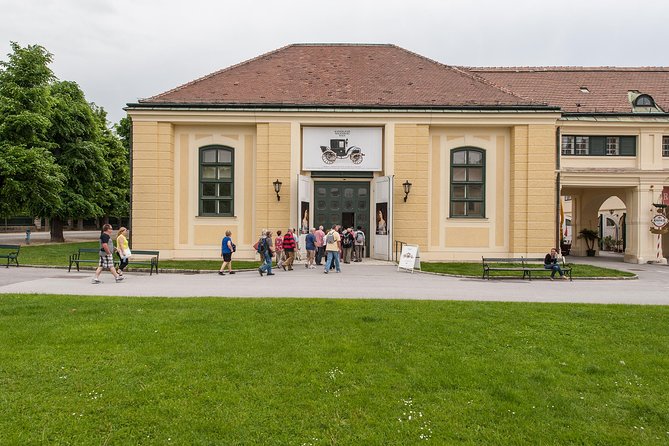
Carriages tell dynasties’ secrets. The Imperial Carriage Museum by Schönbrunn (Kaiserliche Wagenburg Wien) turns court transport into a walkable story, with standouts like the Imperial Coach and the Sisi Trail following Empress Elisabeth. It is an easy stop to pair with Schönbrunn Palace when you want something more hands-on than portraits and palaces.
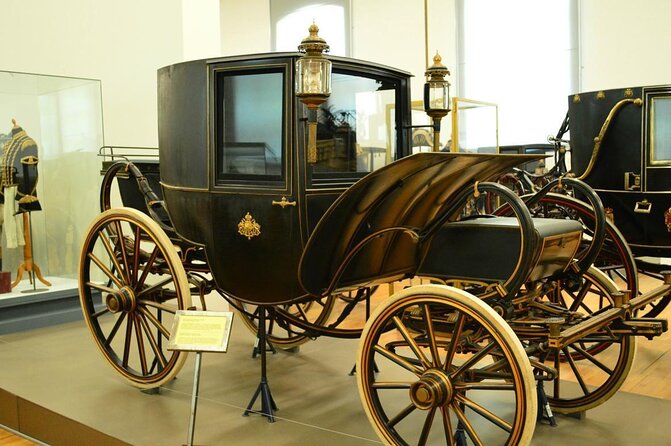
I love the sheer visual impact of the vehicles themselves. You get rare carriages of royalty like the ones associated with Maria Theresia, Napoleon, and Franz Joseph, plus exquisite state and traveling coaches. I also really like that the visit is built around an audio guide and self-paced viewing, so you can linger on the details that actually matter.
One thing to plan around: the museum halls can feel tight. If you want to read every label closely, a busy time slot can make it harder to look at objects while you’re trying to hear what’s being explained.
In This Review
- Key highlights you’ll feel right away
- Why Vienna’s Imperial Carriage Museum works near Schönbrunn
- What you’ll see: Imperial Coach, state carriages, and Habsburg family transport
- Following the Sisi Trail in the Carriage Museum
- Audio guide, films, and pacing a 45-minute plan (without rushing)
- Skip the line and avoid ticket headaches at the entrance
- Group size, hallway space, and how to keep your focus
- Price and value: is $14.48 worth it?
- Should you book this Imperial Carriage Museum entry?
- FAQ
- How long is the Imperial Carriage Museum visit?
- What’s included with the ticket?
- Is this a mobile ticket?
- Where is it and is it easy to get to?
- What are the opening hours?
- Can I cancel for a full refund?
Key highlights you’ll feel right away
- Baroque Imperial Coach: the star piece draws you in first.
- Sisi Trail path: Empress Elisabeth’s life story runs through specific carriages and originals.
- Real artifacts, not just photos: items tied to Elisabeth and her court are displayed alongside portraits and artwork.
- Built for self-guided pacing: an audio guide helps you move at your speed.
- Good museum time value: the visit is often doable in about an hour, even though it’s listed around 45 minutes.
- Photos tend to work well: you should be able to take pictures without the usual palace-level restrictions (and staff are helpful).
More ways through Schönbrunn's gilded rooms and gardens
- Vienna: Schönbrunn Palace & Gardens Skip-the-Line Tour★ 4.7 · 7,739 reviews
- Vienna: Skip-the-Line Schönbrunn Palace & Gardens Tour★ 4.8 · 5,411 reviews
- Vienna: Mozart and Strauss Concert at Schönbrunn★ 4.5 · 2,967 reviews
- Vienna: Skip the Line Schönbrunn Palace and Gardens Guided Tour★ 4.5 · 1,540 reviews
Why Vienna’s Imperial Carriage Museum works near Schönbrunn
Vienna has no shortage of big-name museums, but this one is special because it focuses on objects you can almost imagine hearing and smelling. You’re looking at the mechanics of power: how rulers moved, where they sat, and how ceremony looked from the inside out. Being near Schönbrunn Palace also helps—if you’re already in the area, this is a clean add-on with minimal extra logistics.
This is a good pick when you like history that’s specific. Instead of broad timelines, you see cars used in real moments: weddings, coronations, public travel, and even the aftermath of tragedy. And because the museum is set up for walking, you don’t need to be an expert to enjoy it. You can just follow the trail and let the details do the talking.
The museum is also priced in a way that feels fair for what you get. At $14.48 per person, the value comes from the ticketed entry itself and the time you can spend with the audio guide and exhibit explanations. For many people, that ends up being one of the better “time-per-dollar” choices around Schönbrunn.
What you’ll see: Imperial Coach, state carriages, and Habsburg family transport
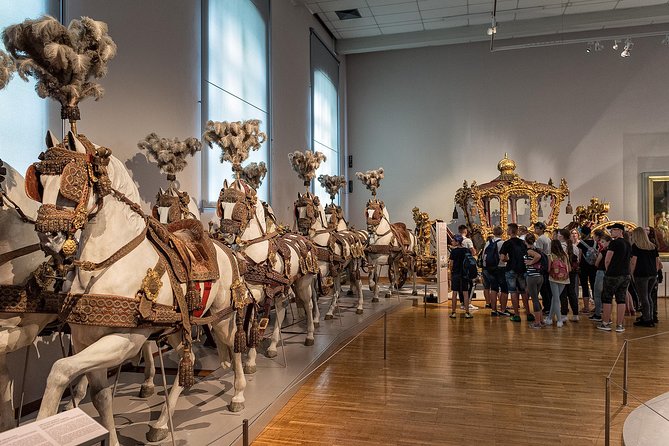
The main gallery puts you in front of carriages tied to major figures and eras. You’ll see royal transport associated with Maria Theresia, Napoleon, and Franz Joseph, which helps you place Vienna’s court culture into a bigger European picture. The museum isn’t trying to be huge; it’s trying to be memorable and legible.
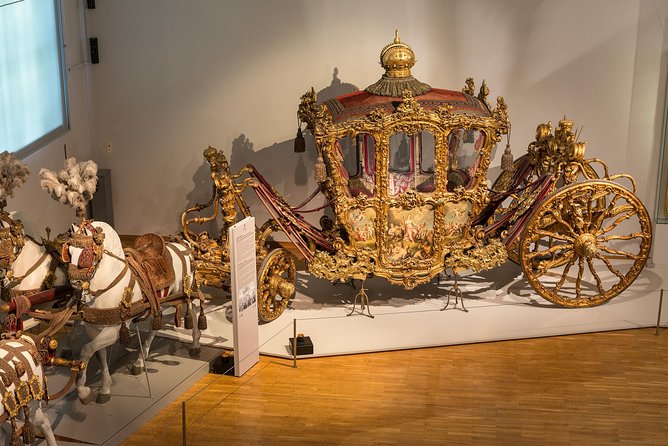
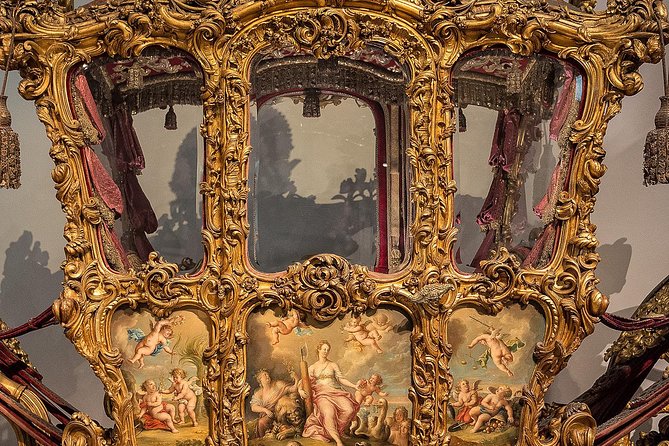
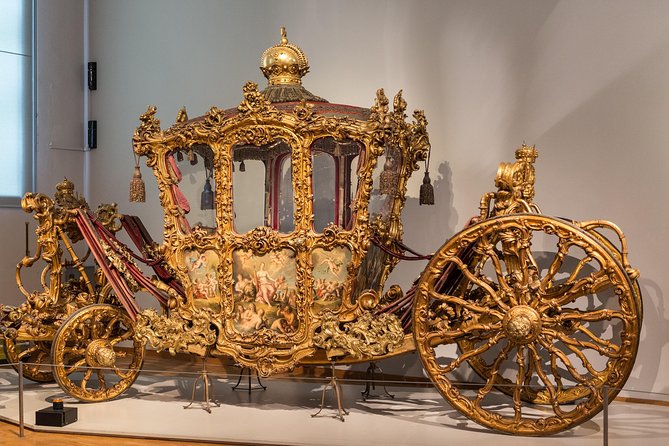
The headline attraction is the baroque Imperial Coach. It’s the type of object that makes you stop without reading anything first—then the labels start to make sense of the craftsmanship and purpose. You can learn why it mattered and how it reflected status and ceremony, not just travel.
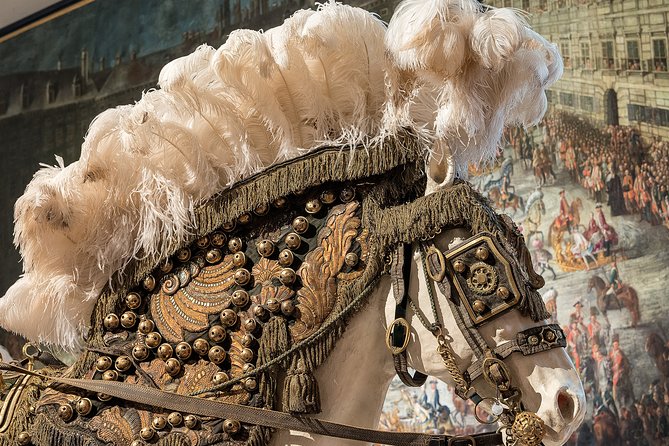
Beyond the big centerpiece, you’ll also find a mix of carriages that cover different roles. There are state carriages, more comfortable traveling coaches, and even children’s carriages connected to Habsburg princes and princesses. That family angle is surprisingly helpful because it keeps the museum from feeling like a parade of adults and wars. You see how childhood and education were built into court life, right down to the vehicle.
If you’re the kind of person who likes a “slow tour” where you read and stare at craftsmanship, this museum rewards that style. Even if you only catch the most striking carriages, you still come away with the feeling that court life had its own infrastructure—and that people moved through it in very specific ways.
Following the Sisi Trail in the Carriage Museum
If you want one clear reason to pick this museum, it’s the Sisi Trail. Since 2008, visitors can follow a themed route through the main gallery that tracks Empress Elisabeth from her wedding to her tragic death. It’s a guided-feeling path, even though the experience is self-paced.
This trail is built around carriages used at key moments, and it’s paired with portraits, paintings, and original mementos. That combination matters. Carriages alone can become decorative; with the accompanying images and objects, they turn into evidence. You understand what the vehicle meant in that moment, not just what it looked like.
A few of the standout items on the trail include:
- Elisabeth’s carriage as an imperial bride
- A golden Imperial Coach used at her coronation as queen of Hungary
- The carriage she left from just minutes before her assassination in Geneva
- A black hearse associated with her final journey
The museum also shows objects that Sisi fans tend to love, and you’ll recognize why once you see them. One iconic display is the sumptuous black robe with an endless train, designed by Fanny Scheiner around 1885. It’s displayed alongside Sisi-themed context and helps explain why her public image mattered so much.
You can also spot smaller details that make the exhibit feel real. The trail includes what’s described as the only extant saddle used by Elisabeth, and it connects to her reputation as one of her era’s best horsewomen. There’s even a reconstructed riding chapel with portraits of her favorite horses, so the exhibit isn’t only about court politics—it’s also about personal habits and identity.
If you’re not a Sisi superfan, it still works. The trail turns the museum into a story with a beginning and end, and that makes every carriage you pass feel connected.
Audio guide, films, and pacing a 45-minute plan (without rushing)
The official duration is listed around 45 minutes, but I’d treat that as a minimum. In practice, you can get a lot out of the visit by focusing on the highlights—yet the museum invites you to read and look closely, so an hour to 90 minutes can feel more comfortable if you want the best understanding.
The experience is built around walking through the exhibits with explanation support. You’ll have the audio guide for the carriages and their context, and the museum also includes informational films. That mix helps if you’re tired of reading the whole time, or if you want a different way to absorb details.
Here’s a practical pacing tip: if you’re short on time, start with the Imperial Coach and then commit to either the general set of carriages or the Sisi Trail. Trying to do everything at full attention in one go can make you feel like you’re sprinting through a gallery that’s meant for slow looking.
One more thing: some exhibits can be harder to see clearly depending on the lighting. If you’re someone who cares about fabric, metalwork, or smaller objects, plan to give yourself an extra few minutes near the pieces you care most about. The museum is worth it, but you do need to work slightly for the finest details.
Clip-clop through the centre by fiaker




Skip the line and avoid ticket headaches at the entrance
This is marketed as a skip-the-line experience, and the big practical win is the mobile ticket. That should mean less waiting at the gate and smoother entry if everything matches your booking. Keep your confirmation ready on your phone and be ready to show it quickly.
One caution worth taking seriously: some people have had trouble getting tickets accepted at the entrance after verbal back-and-forth. That tells me the entry process can be picky when it comes to how tickets are displayed or scanned. So do yourself a favor: open the ticket page before you arrive, check you’re looking at the correct date and time window, and be ready to hand over the screen immediately.
Timing helps too. Going around the later part of the day can make the visit feel calmer, and the museum is more enjoyable when you can stop next to a carriage and actually read. If you’re aiming for the smoothest experience, plan to arrive when you won’t be rushed between the palace and the museum.
Group size, hallway space, and how to keep your focus
The experience is capped at a small group size on paper, which is good news for comfort and attention. Still, the building layout matters. The museum has narrow hallways, and when a group moves through together—or when you’re trying to listen while walking—it can be harder to stop and stare at the artifacts.
To keep your experience enjoyable, use a simple strategy: slow down when you enter tighter sections. Let the group flow move ahead a bit if you need space, then circle back to read. This museum works best when you treat it like a slow walk with frequent pauses, not a hallway pass-through.
Also, the museum includes both audio guidance and exhibit signage. That’s a great combination, but it means your attention splits if you’re trying to do everything at once. If you want the most meaning, choose one lane at a time: listen to the audio for the carriages, then read the labels when you stop.
Price and value: is $14.48 worth it?
At $14.48 per person, the value comes from three things: you’re buying the entrance ticket, you’re getting help from an audio guide, and you’re spending time in an exhibit that can’t really be replicated elsewhere. You can see royal carriages in other contexts, but here the focus is narrow: you’re in a carriage museum for a set visit.
I also think the value is strong if you enjoy details. The Sisi Trail provides enough specific objects—carriages, a coronation coach, a robe tied to Fanny Scheiner, the extant saddle, and the reconstructed riding chapel—that it feels like more than just decorative history. It’s evidence of how court identity was built.
The best fit, value-wise, is someone who wants a break from the largest, crowd-heavy palace rooms. This is quieter, object-focused, and easier to enjoy on the same day as Schönbrunn. If you only have an hour, you can still get the core experience: see the Imperial Coach, follow the Sisi Trail highlights, and let the audio guide connect the dots.
Should you book this Imperial Carriage Museum entry?
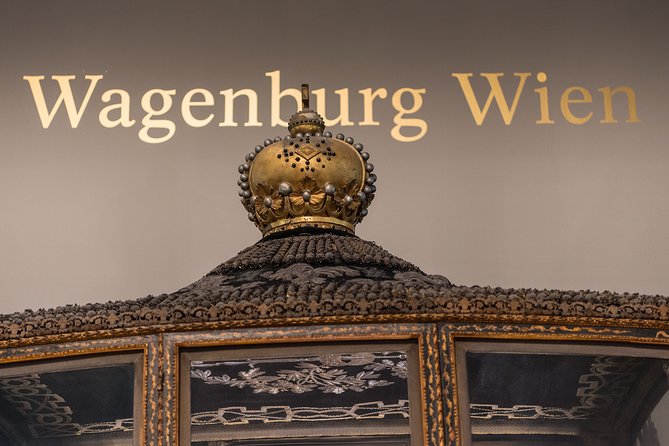
Book it if you:
- Like history that you can see up close, not just read about
- Want a memorable, specific theme with the Sisi Trail
- Are already planning to visit Schönbrunn and want a smart, nearby add-on
- Prefer a mostly self-guided style with audio support rather than a long, lecture-style tour
Skip it (or consider a different option) if you:
- Want a very short, strictly timed stop with minimal walking and reading
- Dislike small-room museums with tight hallways where it’s hard to stop freely
- Are hoping the visit will feel like a hands-on workshop or high-tech experience (this is about artifacts and interpretation)
If you’re on the fence, my advice is simple: go. This museum turns royal storytelling into something physical. The carriages are beautiful, yes—but the real win is how the exhibit helps you understand what those objects meant to the people who used them.
FAQ
How long is the Imperial Carriage Museum visit?
The experience is listed at about 45 minutes. If you read signs and use the audio guide carefully, you may want to plan closer to an hour to an hour and a half.
What’s included with the ticket?
The ticket includes entrance to the Imperial Carriage Museum near Schönbrunn Palace. An audio guide is part of how you learn around the exhibit, but a separate guide is not included.
Is this a mobile ticket?
Yes. You’ll receive a mobile ticket.
Where is it and is it easy to get to?
It’s near public transportation in Vienna, and it’s located at Kaiserliche Wagenburg Wien near Schönbrunn.
What are the opening hours?
For both 01/01/2026–02/28/2026 and 03/01/2026–12/31/2026, the museum is open daily from 10:00 AM to 4:00 PM.
Can I cancel for a full refund?
Yes. Free cancellation is available if you cancel at least 24 hours before the experience’s start time, using local time for the deadline.
More Tour Reviews in Vienna
- Vienna: Vivaldi’s Four Seasons Concert in Karlskirche
★ 4.7 · 14,951 reviews - Vienna: Schönbrunn Palace & Gardens Skip-the-Line Tour
★ 4.7 · 7,739 reviews - Vienna: Light of Creation Votive Church Immersive Light Show
★ 4.8 · 6,779 reviews - Vienna Spanish Riding School Guided Tour
★ 4.7 · 6,765 reviews - Vienna: Classical Concert in the World-Famous Musikverein
★ 4.6 · 6,673 reviews
By Fiaker Through the Centre
- Vienna: 30-Minute Fiaker Ride in the Old Town
★ 4.5 · 1,092 reviews - Vienna: Secrets of the Fiaker & Horse-Drawn Carriage Ride
★ 4.8 · 743 reviews - Vienna: Imperial Carriage Museum in Schönbrunn Palace Ticket
★ 4.7 · 339 reviews - Vienna: Culinary Horse-Drawn Carriage Experience
★ 4.7 · 291 reviews - Vienna: Carriage Ride Through Schönbrunn Palace Gardens
★ 4.6 · 96 reviews
Schönbrunn, a Few More Ways In
- Vienna: Schönbrunn Palace & Gardens Skip-the-Line Tour
★ 4.7 · 7,739 reviews - Vienna: Skip-the-Line Schönbrunn Palace & Gardens Tour
★ 4.8 · 5,411 reviews - Vienna: Mozart and Strauss Concert at Schönbrunn
★ 4.5 · 2,967 reviews - Vienna: Skip the Line Schönbrunn Palace and Gardens Guided Tour
★ 4.5 · 1,540 reviews - Vienna: Schönbrunn Palace & Garden Skip-the-Line Guided Tour
★ 4.1 · 1,240 reviews
Just In: New Vienna Reviews



Schönbrunn Palace Tours, compared.
 ★ 4.7Schönbrunn Palace & Gardens Skip-the-Line TourFrom $637,739 reviews
 ★ 4.8Skip-the-Line Schönbrunn Palace & Gardens TourFrom $765,411 reviews
 ★ 4.5Mozart and Strauss Concert at SchönbrunnFrom $422,967 reviews
 ★ 4.3Bus & Schönbrunn Palace Skip-the-Line Guided TourFrom $812,802 reviews
 ★ 4.5Skip the Line Schönbrunn Palace and Gardens Guided TourFrom $651,540 reviews
 ★ 4.1Schönbrunn Palace & Garden Skip-the-Line Guided TourFrom $571,240 reviews
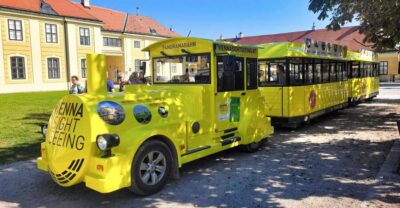 ★ 4.3Panorama Train Tickets to explore Schönbrunn PalaceFrom $181,164 reviews
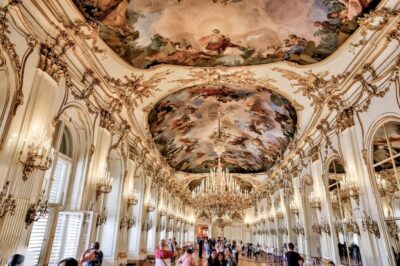 ★ 4.8Skip-the-Line Schönbrunn Palace and Gardens TourFrom $601,089 reviews
Browse the lists this tour appears in