
Reviewed · VIENNA WALKING TOURS
The best of Vienna on foot
Vienna feels sorted fast when you walk it. This tour is a practical way to connect the city center sights—starting at Maria-Theresa Memorial and ending at St. Stephen’s Cathedral—while a guide strings the monuments together with clear stories. I especially like the city-center route because it gives you an easy mental map for the rest of your stay.
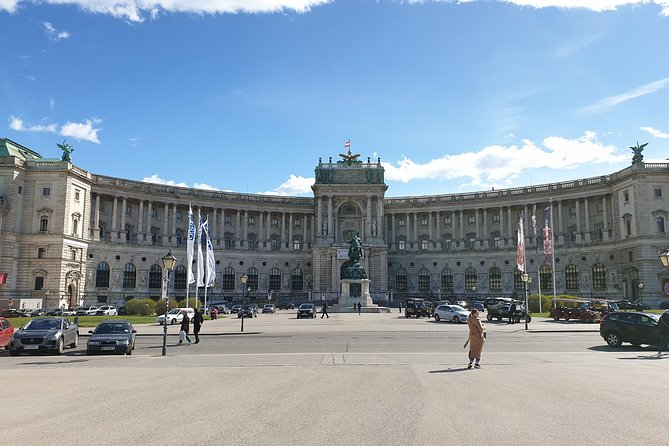
My other favorite part is how much you actually cover in just 2.5 hours, with stops past the Hofburg, the Capuchin Crypt, the Albertina, and the Vienna State Opera. The one drawback to plan for: it runs rain or shine, audio recording isn’t allowed, and the pace is built around walking, so bring warm layers and a flexible attitude.
In This Review
- Key highlights you should care about
- From Maria-Theresa Memorial to St. Stephen’s Cathedral: the route that sets your bearings
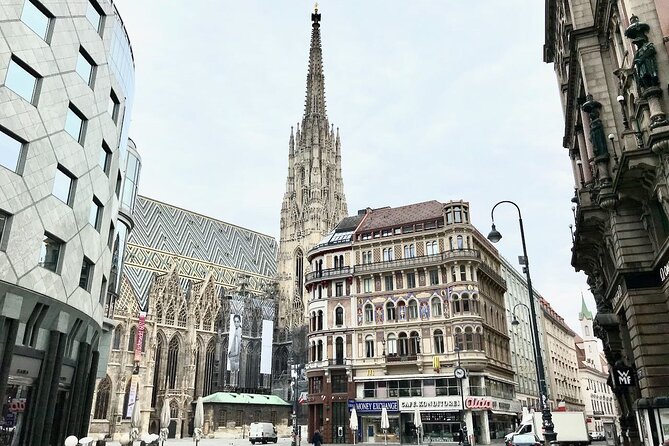
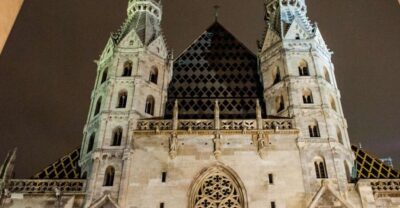
- St. Stephen’s Cathedral area: why it works as the finish point
- Hofburg, Franz Josef, and Sissi: the imperial palace story in human terms
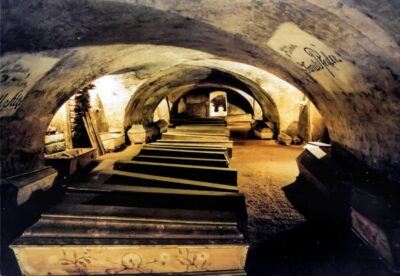
- Capuchin Crypt: the Habsburg burial place that adds weight to the walk
- Albertina and Vienna State Opera: Vienna’s arts reputation, explained where you can see it
- Plague Column and baroque facades: small monuments that explain big fears
- Stories and facts that make the city stick
- Getting great photos without feeling rushed
- Guides in Italian: what language means for your experience
- Pacing and comfort: walking tour reality checks
- Price and value: why $40 can make sense for a first Vienna day
- Who should book this Vienna on foot tour
- Should you book this tour
- FAQ
- Where do I meet the guide?
- How long is the tour?
- What are the start and finish points?
- What major sights does the tour cover?
- Is food or drinks included?
- What language is the guided tour in?
- Is the tour canceled if it rains?
- Is audio recording allowed?
- Is the tour suitable for wheelchair users or people with mobility impairments?
Key highlights you should care about
- St. Stephen’s Cathedral anchor point at the start route and the finish, so you always know where you are
- Hofburg and Heldenplatz context that explains power, ceremonies, and the Habsburg era in plain language
- Capuchin Crypt viewing area linked to the burial place of Habsburg monarchs
- Albertina and Vienna State Opera photo moments that mix architecture with Vienna’s arts reputation
- Plague Column stop that adds real historical texture beyond big palaces
- Time for questions and photos so you can ask what you should do next in Vienna
Vienna on foot, a couple more routes
- Vienna: Guided Walking Tour of City Center Highlights★ 4.7 · 4,989 reviews
- Vienna: Vienna Central Cemetery Guided Walking Tour★ 4.8 · 3,307 reviews
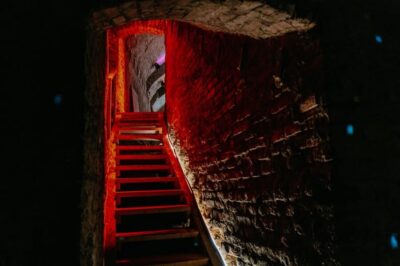
- Vienna: Viennese Underworld Guided Walking Tour★ 4.7 · 1,865 reviews
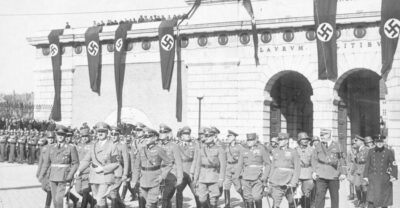
- Vienna: World War II Historical Walking Tour★ 4.8 · 1,772 reviews
From Maria-Theresa Memorial to St. Stephen’s Cathedral: the route that sets your bearings
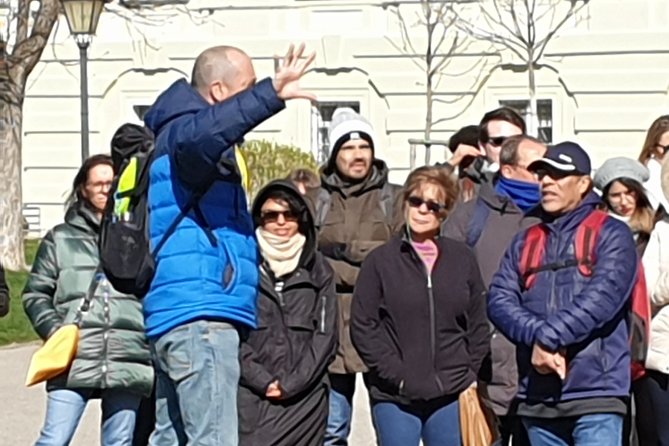
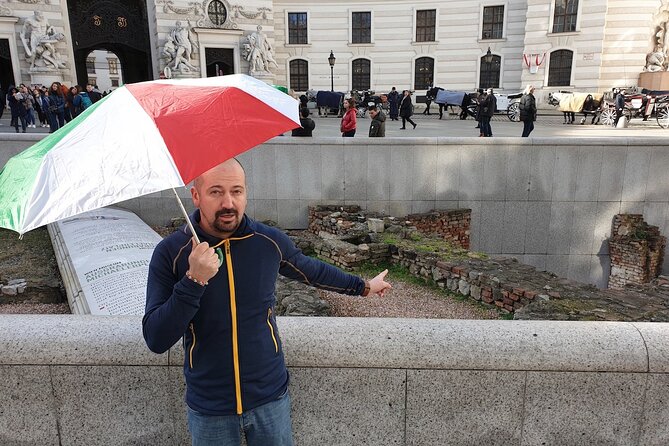
The tour starts at Maria-Theresa Memorial, where you’ll meet at the fountain of Maria Theresia on the square. Look for an Italian-colored umbrella (red, white, green). This matters more than it sounds. Vienna can be easy to get turned around in, and a clear meeting point gives you confidence right away.
From there, you move through the city center on foot, built around a straight, logical line of sights. In practice, that means you are not just ticking off landmarks. You are learning how Vienna’s different eras sit next to each other, from imperial rule to baroque grandeur to the everyday city life you see today. It is the kind of walk that helps you read the streets, not just see them.
The tour’s duration is 150 minutes. That is about 2.5 hours, which is a sweet spot for a first day. Long enough to get context and a real feel for the center, short enough that you still have energy to explore afterward on your own.
St. Stephen’s Cathedral area: why it works as the finish point
Even though the walk begins at Maria-Theresa Memorial, the tour experience is clearly framed around St. Stephen’s Cathedral as the end point. That is smart planning. By the time you reach the cathedral, you have already heard the stories that make it matter—Vienna’s role as a seat of power, and the way religious and political life were intertwined.
As you approach the area, you will get a sense of why St. Stephen’s is one of those places that feels like the city’s center of gravity. The walk is designed so you finish at a landmark you can actually keep using as your reference point for the rest of the day. If you’re trying to decide what to do next, finishing here makes it easier to pick directions without guessing.
One practical tip: wear shoes that can handle steady walking. This isn’t a sit-down museum tour. It is a guided city-center stroll where the guide keeps the flow moving and you follow the story from one impressive building to the next.
Hofburg, Franz Josef, and Sissi: the imperial palace story in human terms
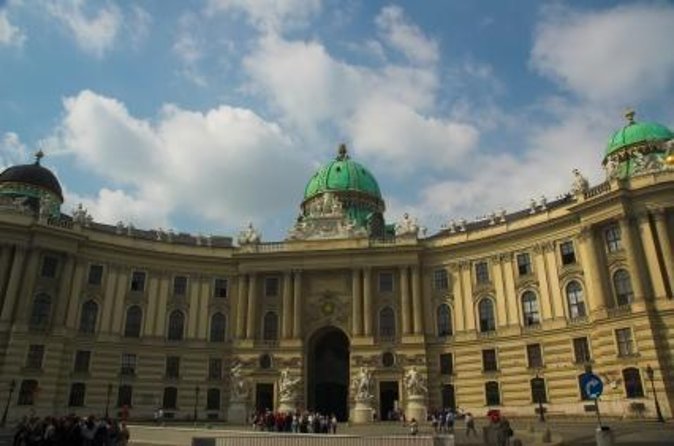
A big focus of the tour is the Hofburg, Vienna’s imperial palace connected with Franz Josef and Empress Sissi. This stop is not just about admiring walls. It is about understanding the Habsburg machinery—how the empire showed itself in public spaces and ceremonies, and how the people in power wanted to be remembered.
Heldenplatz is part of that same power story. When you stand in and around these areas, you start to see how Vienna’s political identity was built into its architecture and open spaces. Even if you only know the names Franz Josef and Sissi from pop culture, the guide’s job here is to connect those names to the physical setting you’re walking through.
I like this approach because it keeps you from treating the Hofburg as an isolated monument. Instead, you see it as a hub in a bigger network: palaces, ceremonial squares, and the kind of city planning that makes authority visible.
Capuchin Crypt: the Habsburg burial place that adds weight to the walk
The tour takes you in front of the Capuchin Crypt, the burial place of the Habsburg monarchs. This is the stop that gives the day a bit more gravity.
Big palaces can sometimes feel like scenery—impressive, but distant. A burial site is different. It shifts the tone from pageantry to mortality and legacy. You start to understand why these places mattered enough to be preserved with care, and why Vienna’s history still shows up in the streets in such tangible ways.
If you like history that feels grounded—facts tied to real locations—this is one of the most meaningful parts of the route. It is also a great reminder that Vienna’s beauty and Vienna’s power were never separate things.


Albertina and Vienna State Opera: Vienna’s arts reputation, explained where you can see it
Two stops that help you understand modern Vienna are the Albertina and the Vienna State Opera. These are not just famous names. When you pass by them, you’re seeing the city’s tradition of arts and culture in built form.
The Albertina is linked with art collecting and presentation, and the tour gives you context so it doesn’t remain a sightseeing label. The Vienna State Opera, meanwhile, is the kind of building that makes you understand why Vienna became a destination for music lovers long before it was a tourist brand.
What I like here is the balance. The walk is not only about royalty and stone. It also touches on Vienna’s popular culture and what residents value. That is especially useful if you want to plan your next day around performances or galleries rather than just walking.
And yes, the tour includes time to photograph the buildings. This is not a frantic stop-and-run. You get a window to capture the facade and move on without feeling totally rushed.
Plague Column and baroque facades: small monuments that explain big fears
The itinerary includes the Plague Column, and this is a perfect example of why a guided walk is valuable. Columns and statues can look like decoration if you do not know why they exist. But when your guide explains the background—why it was created and what it symbolized—you suddenly see it as a historical record of fear and survival.
Then you shift back into baroque building admiration. The tour highlights the magnificent baroque buildings along your route, with stops that are ideal for photos. This is also where you learn what to look for as you keep walking: symmetry, sculpture details, and the way Vienna’s street-level architecture mixes grandeur with everyday urban life.
If your goal is to experience the center in a way that teaches you how to notice things, this is a strong segment of the tour.
Stories and facts that make the city stick
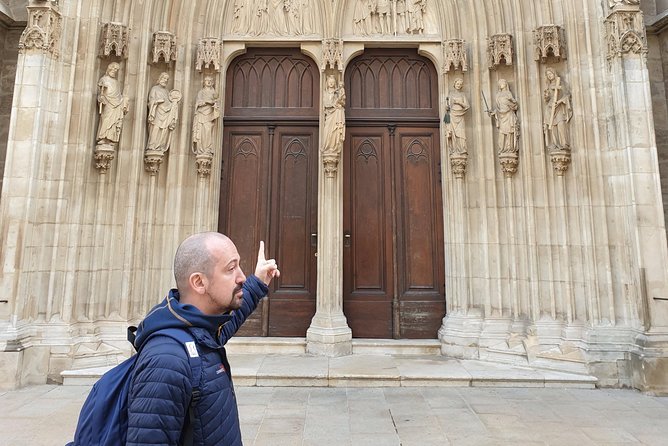
A good guided tour gives you two things: facts you can repeat later and stories that make the facts memorable. This one does that job.
You will learn specific data and historical facts tied to the places you see, plus entertaining stories that connect the sites to Vienna’s larger past. The guide also shares tips for your perfect stay in Vienna, including practical pointers on restaurant visits, cultural life, and public transport.
That last part is underrated. When you have a guide who talks about how locals move through the city, how they eat, and where culture shows up, you stop planning blindly. You’re not just sightseeing. You’re learning how to live like you belong for a day.
Getting great photos without feeling rushed
This tour includes time to take a perfect photo, and it shows in how the walk is paced. You are not constantly waiting in a crowd while the guide talks. Instead, the guide stops when there’s something worth seeing, and you get a chance to frame it.
In cold weather, that matters. The tour runs rain or shine, so you will want to keep moving. Photographing quickly and smartly helps you stay warm and still leave with good images.
If you’re someone who struggles with photos when crowds are heavy, this format helps: you’re often at the right spot with a small window to shoot, then the group continues.
Guides in Italian: what language means for your experience
The live tour guide is Italian. That’s a real factor in how much you’ll get from the stories and facts. If you understand Italian at least moderately, you’ll likely catch the details easily. If not, you can still enjoy the route and the visual landmarks, but you may miss some nuance in the explanations.
From the guide names reflected in the experience provider’s ecosystem, you may meet different guides. One example you might encounter is Raffaele, noted for being prepared, friendly, and never dragging the tour pace. Another name you might run into is Mara, who’s been praised for complete explanations, fun anecdotes, and making nearly three hours feel enjoyable even in difficult weather.
The good news: the main sights are visible and distinct. The guide’s words add depth, but the route still works as a sightseeing backbone even if your language skills are limited.
Pacing and comfort: walking tour reality checks
This is a guided walking experience with about 150 minutes on foot through the city center. That means you should plan for constant movement and regular stops.
A few rules you should know before you go:
- Audio recording isn’t allowed.
- Luggage or large bags aren’t allowed.
- Pets aren’t allowed.
Also, the tour is wheelchair accessible, but it is also marked not suitable for people with mobility impairments. That contradiction is worth paying attention to. If mobility is a concern for you, check directly with the provider before booking so you don’t get surprised by the physical reality of street walking.
Weather is also a factor: the tour runs rain or shine. You’ll want a rain layer and warm clothing, because the route continues either way unless there’s an environmental disaster. In other words, Vienna’s weather may test your patience, but the tour is designed not to fall apart.
Price and value: why $40 can make sense for a first Vienna day
The price is listed at $40 per person for 150 minutes. That is a very reasonable rate if you value two things: efficient route planning and guided context.
Here’s the value logic I use:
- You get more than 10 highlights within one tour, which saves you from researching each stop on your own.
- You also get a certified official tour guide, plus time to ask questions. That turns the tour into a planning session, not just a slideshow.
- The stops are major Vienna center landmarks, meaning you are paying for access to interpretation, not for the privilege of being outdoors.
Food and drinks aren’t included. That is normal for a sightseeing walk. If you want a quick snack or a warm drink, you’ll need to plan that separately.
One extra detail that can pop up: in at least one group, a stop at a punch kiosk was added as an extra after a group request. That kind of add-on isn’t guaranteed, but it gives you an idea of the guide style: responsive, practical, and open to small local breaks when it makes sense.
Who should book this Vienna on foot tour
This tour is especially good if:
- You want to do a first-day orientation of Vienna’s center.
- You like your history explained in a way that matches what you’re seeing on the street.
- You want a structured route that ends at a major landmark you can use again later.
- You prefer walking and learning rather than sitting in a museum all day.
If you’re an absolute beginner to Vienna history, this tour is a strong match. It connects Habsburg names and sites to real streets and buildings, including the Hofburg, Heldenplatz, the Capuchin Crypt, and St. Stephen’s Cathedral.
If you need audio recording for accessibility or learning, note that it’s not allowed here. And if you need very slow pacing or special mobility accommodations, double-check suitability before booking.
Should you book this tour
Yes, I’d book it if you’re heading to Vienna and want a clean introduction without spending hours building your own itinerary. For $40 and 150 minutes, you get a dense walk through the most important center landmarks, plus stories and practical tips that help you move through the city with less guesswork.
Skip it if you only want self-guided sightseeing, or if Italian-only commentary will make it hard for you to follow the details. Also be cautious with mobility fit, given the wheelchair-accessible note paired with a not-suitable-for-mobility-impairments label.
If you’re okay with rain or shine and you bring warm layers, this is a solid way to start your Vienna days with momentum.
FAQ
Where do I meet the guide?
Meet at the fountain of Maria Theresia on the square. Look for an Italian-colored umbrella (red, white, green).
How long is the tour?
The tour lasts 150 minutes (about 2.5 hours).
What are the start and finish points?
The tour starts at Maria-Theresa Memorial and finishes at St. Stephen’s Cathedral.
What major sights does the tour cover?
You’ll pass St. Stephen’s Cathedral area, the Hofburg, Capuchin Crypt, Albertina, Vienna State Opera, Heldenplatz, Plague Column, and other central monuments and buildings.
Is food or drinks included?
No. Food and drinks are not included.
What language is the guided tour in?
The live tour guide speaks Italian.
Is the tour canceled if it rains?
The tour runs rain or shine. It is only canceled in the event of an environmental disaster.
Is audio recording allowed?
No, audio recording is not allowed.
Is the tour suitable for wheelchair users or people with mobility impairments?
Wheelchair accessible is listed, but it is also marked not suitable for people with mobility impairments. If you have specific mobility needs, confirm details with the provider before booking.
More Tour Reviews in Vienna
- Vienna: Vivaldi’s Four Seasons Concert in Karlskirche
★ 4.7 · 14,951 reviews - Vienna: Schönbrunn Palace & Gardens Skip-the-Line Tour
★ 4.7 · 7,739 reviews - Vienna: Light of Creation Votive Church Immersive Light Show
★ 4.8 · 6,779 reviews - Vienna Spanish Riding School Guided Tour
★ 4.7 · 6,765 reviews - Vienna: Classical Concert in the World-Famous Musikverein
★ 4.6 · 6,673 reviews
Vienna on Foot, Continued
- Vienna: Guided Walking Tour of City Center Highlights
★ 4.7 · 4,989 reviews - Vienna: Vienna Central Cemetery Guided Walking Tour
★ 4.8 · 3,307 reviews - Vienna: Guided Walking Tour of City Highlights & Hidden Gems
★ 4.9 · 2,180 reviews - Vienna: Viennese Underworld Guided Walking Tour
★ 4.7 · 1,865 reviews - Vienna: World War II Historical Walking Tour
★ 4.8 · 1,772 reviews
Just In: New Vienna Reviews



Vienna Walking Tours, compared.
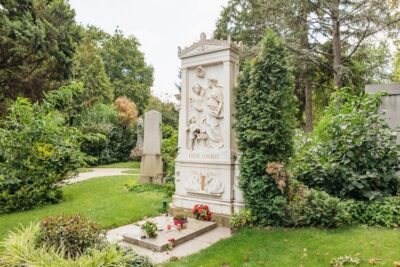 ★ 4.8Vienna Central Cemetery Guided Walking TourFrom $3353,307 reviews
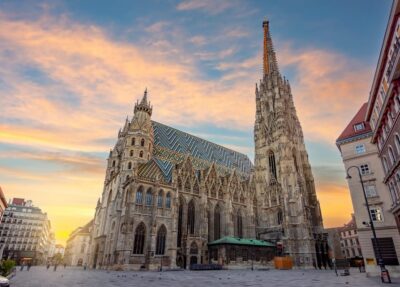 ★ 4.9Guided Walking Tour of City Highlights & Hidden GemsFrom $272,180 reviews
 ★ 4.7Viennese Underworld Guided Walking TourFrom $371,865 reviews
 ★ 4.8World War II Historical Walking TourFrom $311,772 reviews
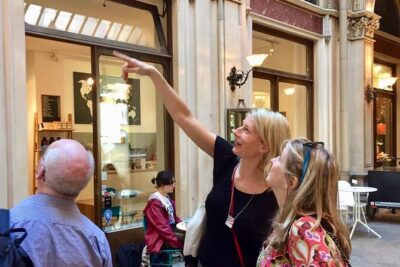 ★ 5.0Vienna Historic Center Small Group Walking TourFrom $721,746 reviews
 ★ 4.6Private Walking Tour with a LocalFrom $561,446 reviews
 ★ 4.91.5-Hour Underground Walking TourFrom $321,146 reviews
 ★ 4.4Ghosts and Legends Guided Nighttime Walking TourFrom $201,088 reviews
Browse the lists this tour appears in