
Reviewed · VIENNA WALKING TOURS
The Ringstrasse Project Walking Tour
Vienna’s Ringstrasse is best learned on foot. I love how the walk turns famous facades into a clear story of how Vienna ruled itself and celebrated culture, and I also really like the small-group feel that keeps the guide’s explanations personal. One thing to plan for: much of the time is spent outside, so wear good shoes and dress for the weather.
This 2.5-hour guided tour is offered in either the morning or afternoon and runs in English, with a mobile ticket you can have ready on your phone. You’ll hit a strong lineup of Ringstrasse landmarks with short stops and an easy pace, then end at a legendary coffee house where the building itself tells you why the Ring mattered.
If you’re the type who likes to understand what you’re looking at (not just photograph it), this tour fits perfectly. It even has a children’s family version where the guide focuses on symbols on buildings and everyday life around 1900, so it’s not only for adults who love architecture.
In This Review
- Key highlights worth your attention
- Ringstrasse explained fast, without the museum-march
- Price and what you’re actually getting for $177.44
- Where you start and how the walk finishes at Café Schwarzenberg
- The Ringstrasse itinerary: 6 stops that build a real picture
- Stop 1: Rathaus (Vienna City Hall) at the start of the Ring story
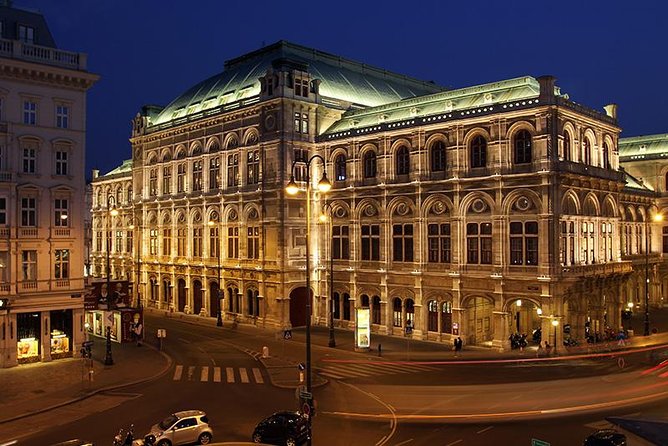
- Stop 2: Wiener Staatsoper and why opera mattered so much
- Stop 3: Kunsthistorisches Museum Vienna and the grand art-message
- Stop 4: Postsparkasse (Austrian Postal Savings Bank) and Vienna Secession design
- Stop 5: Stadtpalais Todesco and the aristocratic salon era
- Stop 6: Café Schwarzenberg and the 19th-century café culture payoff
- Small group energy: guides who know the story and the jokes
- Best for you if you like orientation, not just sightseeing
- Should you book the Ringstrasse Project Walking Tour?
- FAQ
- FAQ
- How long is the Ringstrasse Project Walking Tour?
- Where does the tour start and where does it end?
- Is the tour offered in English?
- What’s the maximum group size?
- What’s included in the price?
- Are there admission fees for the stops?
- Is free cancellation available?
Key highlights worth your attention
- Max 8 people means more back-and-forth and less standing around.
- Morning or afternoon departure so you can match it to your Vienna plan.
- Free admission tickets at each stop keep the focus on learning, not paying for entrances.
- Otto Wagner’s Postparkasse gives you a real taste of Vienna Secession design.
- Café Schwarzenberg ends the tour with a hands-on look at 19th-century café culture.
- Guides with personality can make the Ring feel like a living neighborhood, not a textbook.
Vienna on foot, a couple more routes
- Vienna: Guided Walking Tour of City Center Highlights★ 4.7 · 4,989 reviews
- Vienna: Vienna Central Cemetery Guided Walking Tour★ 4.8 · 3,307 reviews
- Vienna: Viennese Underworld Guided Walking Tour★ 4.7 · 1,865 reviews
- Vienna: World War II Historical Walking Tour★ 4.8 · 1,772 reviews
Ringstrasse explained fast, without the museum-march
The Ringstrasse is Vienna’s big idea made visible. It’s not just a street; it’s a statement about power, taste, and public life. What I like about this tour is that it gives you the “why” behind the buildings, using quick, readable context as you walk—so when you later wander on your own, the city makes more sense.
The two and a half hour length is key. It’s long enough to cover multiple landmarks in a logical order, but short enough that you’re not exhausted by the time you reach the coffee house. And because the group size tops out at 8, the guide can keep an eye on pace and questions.
The overall tone stays friendly and professional. You’ll hear clear explanations and get a bit of humor along the way, the kind that makes the details stick. On past tours, guides like Sussana and Biljana have been specifically praised for knowledge and a warm, capable manner—exactly what you want when you’re trying to make sense of 19th-century Vienna in a hurry.
Price and what you’re actually getting for $177.44
At $177.44 per person, this isn’t a budget-only walking tour. The value comes from what you’re buying: a professional guide, a tight itinerary, and multiple stops where the admission ticket is free. That combination matters because it reduces friction. You don’t have to chase separate tickets or figure out what to prioritize once you’re already in the area.
You should also pay attention to the “small group” angle. In a bigger crowd, it’s harder to ask questions and harder for a guide to tailor pace. Here, the max of 8 travelers helps keep things moving while still feeling personal.
There’s also a practical upside: you’re given a mobile ticket, so you’re not juggling paper vouchers during check-in. And there are group discounts available, which can help if you’re traveling with friends and want to keep the experience the same but the cost a bit lower.
Drawback to consider: since the tour is guided and timed, it’s not built for long museum hours. You’ll get context and a quick look, not a full in-depth visit to every interior. If you want to spend hours inside major museums or linger for performances, plan extra time on your own after the walk.
Where you start and how the walk finishes at Café Schwarzenberg
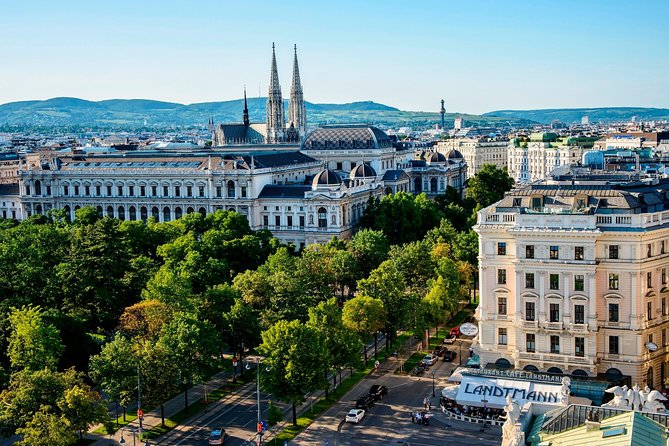
You begin at Café Landtmann, Universitätsring 4, 1010 Wien. The end point is Café Schwarzenberg, Kärntner Ring 17, 1010 Wien. Both are right in the Ring area, which makes the logistics simpler—especially because the tour is listed as near public transportation.
The ending matters. The tour closes with a visit to Café Schwarzenberg, opened in 1861. The interior is noted for staying largely unchanged since the 19th century, so you’re not just stopping for coffee—you’re stepping into a real slice of how the Ring functioned as a place to be seen and meet people.
Since food and drinks aren’t included, you can keep it simple: arrive for the café experience and order what you feel like. If you want a sit-down break, this is a very good place to do it. If you’d rather move quickly, you can still enjoy the setting and move on afterward.
The Ringstrasse itinerary: 6 stops that build a real picture
The stops are arranged so the Ringstrasse feels like a connected story: government, culture, art, architecture, aristocratic life, then the café culture that stitched it together for everyday social life.
Vienna at walking pace, more routes
Stop 1: Rathaus (Vienna City Hall) at the start of the Ring story
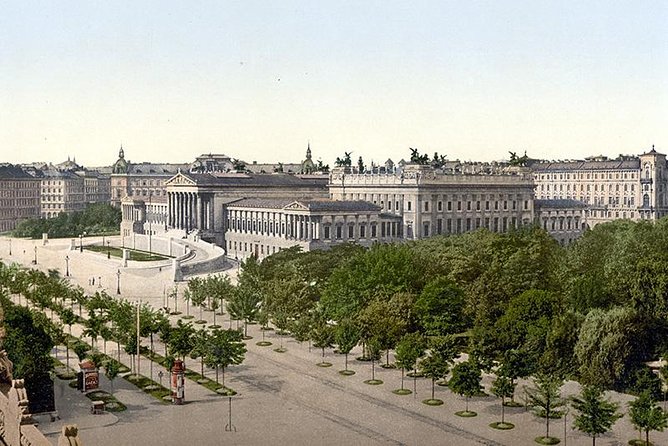
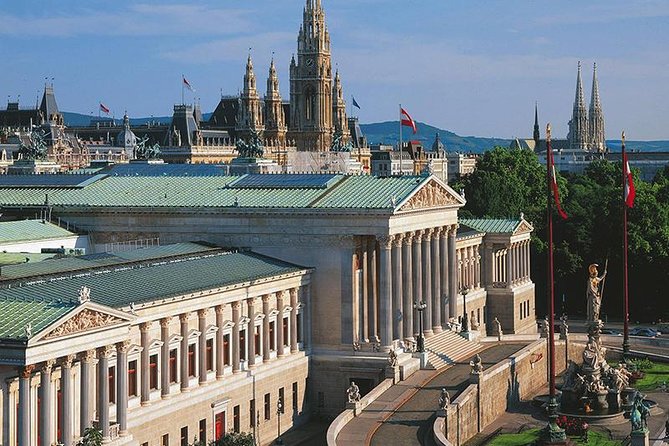
Your first stop is Rathaus on Rathausplatz. Vienna City Hall is the seat of local government, and it’s housed in a Neo-Gothic building constructed from 1872 to 1883. The building holds the office of the Mayor of Vienna, the chambers of the city council, and the Vienna Landtag diet.
This is a smart first stop because it frames the Ringstrasse as more than pretty buildings. You’re seeing how public power looked when Vienna wanted to project stability and importance through architecture. Admission is listed as free here, and the stop is about 15 minutes, which is enough for orientation without turning the walk into a long detour.
A small practical tip: look up. Neo-Gothic details reward you if you take a moment to scan the facade rather than just reading from street level.
Stop 2: Wiener Staatsoper and why opera mattered so much
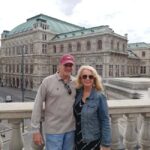
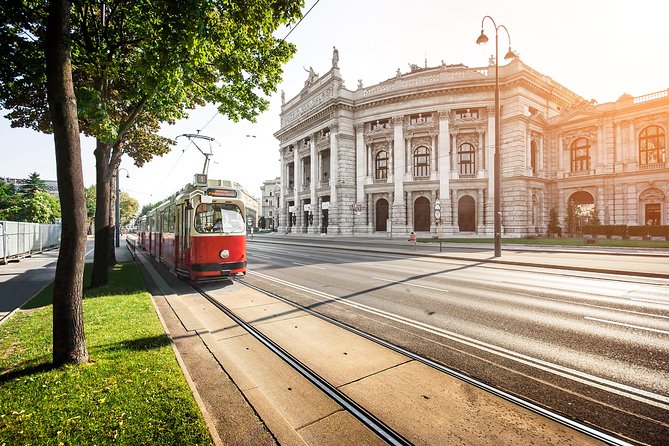
Next comes the Wiener Staatsoper, the Vienna State Opera. It seats 1,709 people and was the first major building on the Vienna Ring Road, built from 1861 to 1869. This stop is about 20 minutes and also lists admission ticket free.
The point here isn’t just that the opera house is famous. It’s that opera and music were central to Viennese identity, and the Ring made culture visible in public space. When you connect that to the government building you saw first, the whole Ringstrasse starts to feel like an organized world: state power on one end, high culture on the other.
If you’re a first-time Vienna visitor, this is a great moment to understand why the city talks about art the way other places talk about sports or politics.
Stop 3: Kunsthistorisches Museum Vienna and the grand art-message
Then you’ll stop at Kunsthistorisches Museum Vienna. The name refers to both the museum and its main building. It’s described as the largest art museum in Austria and one of the most important museums worldwide. Expect about 20 minutes here, with admission ticket free.
This stop works well because the museum is a scale marker. You’re seeing how Vienna put its art ambitions into architecture big enough to become part of the civic scene. After Rathaus and the State Opera, the museum stop adds a third layer: not just how Vienna governed and entertained, but how it presented knowledge and taste.
Even if you don’t spend lots of time inside (this tour keeps things short), you’ll get a better sense of why the building looks the way it does and why it belongs on this particular boulevard.
Stop 4: Postsparkasse (Austrian Postal Savings Bank) and Vienna Secession design
Now you shift from institutions of culture and government to a design-minded building: Postsparkasse. It’s the Austrian Postal Savings Bank building, designed and built by architect Otto Wagner. It’s regarded as an important work of the Vienna Secession, tied to Art Nouveau-style ideas.
This is also about 20 minutes, and admission is listed as ticket free.
If you want one stop that makes the Ring feel modern-in-a-19th-century-way, this is it. Otto Wagner’s work signals a Vienna that wasn’t stuck copying older styles forever. The guide’s explanations help you notice the design logic instead of just treating it as another grand facade.
Stop 5: Stadtpalais Todesco and the aristocratic salon era
Stop 5 takes you to Stadtpalais Todesco. This Ringstraßenplatz building was constructed from 1861 to 1864 for the aristocratic Todesco family. One resident was Baroness Sophie von Todesco, who established a renowned salon for artists and intellectuals.
Expect around 15 minutes, with admission ticket free.
This stop is valuable because it adds the human layer: Vienna’s big cultural ideas weren’t floating around in the clouds. They were tied to households, social networks, and salons where artists and thinkers met. You get a clearer picture of the Ring as a social engine, not just a photo backdrop.
Stop 6: Café Schwarzenberg and the 19th-century café culture payoff
Finally, you finish at Café Schwarzenberg. This is the tour’s emotional landing point. The café is traditional Viennese, located right on the Ringstrasse boulevard, and the interior is noted for remaining largely unchanged since it opened in the 19th century.
The schedule gives you about 25 minutes here, and it’s set up as a chance to get insight into the café culture that made the Ring a place to see and be seen.
This is where you can slow down. Grab a seat, watch people move through the Ring area, and think about how a city’s identity can be built through everyday rituals like meeting for coffee. Since food and drinks aren’t included, you’re free to choose how you want to handle the stop—just the coffee-house experience, or an actual order.
Small group energy: guides who know the story and the jokes
One of the biggest reasons this tour earns high marks is that it stays personal. With a maximum of 8 travelers, the guide can keep momentum without rushing you. It also means you’re less likely to feel like you’re stuck behind other people when you want a better look at details.
The guides described with standout performance—Sussana and Biljana—are praised for combining knowledge, professionalism, friendliness, and a sense of humor. That mix matters. Vienna’s architecture can feel intimidating if it’s delivered like a lecture. Here, the explanations are designed to be friendly, with the kind of clarity that makes you feel you’re getting it, not just hearing it.
If you want an experience that helps you stop looking at buildings like random landmarks and start seeing patterns—who built what, why it was built, and what it represented—this is exactly the right format.
Best for you if you like orientation, not just sightseeing
This walking tour makes the most sense for you if you want:
- a fast orientation to Vienna’s Ringstrasse,
- a guided connection between buildings and culture,
- short, timed stops that keep energy up,
- and a strong ending that shows café life on the Ring.
It’s also a good pick if you’re visiting for a short time and don’t want to spend your precious hours figuring out what to see first. The Ring is too big to wander randomly unless you already know the layout.
It may be less ideal if your dream Vienna day is long indoor museum time or a deep architectural study where you’re ready to spend hours in one place. This tour gives you the map and the meaning. For long dives into interiors, you’ll want extra standalone time after the walk.
Should you book the Ringstrasse Project Walking Tour?
I’d book it if you want a well-paced introduction to Vienna’s most symbolic boulevard, guided by a professional who can translate architecture into plain language. The price feels more justified when you add up the value of a small-group walk, free admission tickets at each listed stop, and the classic café finish at Café Schwarzenberg.
I would not book it as your only Vienna plan if you’re aiming for deep museum exploration. Think of it as your foundation day: you come away with names, context, and an easier way to understand the city when you roam afterward.
One practical note before you decide: the tour supports easy rescheduling with free cancellation up to 24 hours in advance, so you can hold the spot while you figure out your Vienna timing.
FAQ
FAQ
How long is the Ringstrasse Project Walking Tour?
It runs for about 2 hours 30 minutes.
Where does the tour start and where does it end?
It starts at Café Landtmann, Universitätsring 4, 1010 Wien, Austria, and ends at Café Schwarzenberg, Kärntner Ring 17, 1010 Wien, Austria.
Is the tour offered in English?
Yes, it’s offered in English.
What’s the maximum group size?
The tour has a maximum of 8 travelers.
What’s included in the price?
The price includes a 2.5-hour guided tour of Vienna’s Ringstrasse and a professional guide.
Are there admission fees for the stops?
For the listed stops, the admission ticket is free.
Is free cancellation available?
Yes. You can cancel for a full refund up to 24 hours in advance of the experience’s start time, based on local time.
More Tours in Vienna
- Vienna: Schönbrunn Palace & Gardens Skip-the-Line Tour
★ 4.7 · 7,739 reviews - Vienna Spanish Riding School Guided Tour
★ 4.7 · 6,765 reviews - Vienna: Skip-the-Line Sisi Museum, Hofburg and Gardens Tour
★ 4.8 · 5,918 reviews - Vienna: Skip-the-Line Schönbrunn Palace & Gardens Tour
★ 4.8 · 5,411 reviews - Vienna: Guided Walking Tour of City Center Highlights
★ 4.7 · 4,989 reviews
More Tour Reviews in Vienna
- Vienna: Vivaldi’s Four Seasons Concert in Karlskirche
★ 4.7 · 14,951 reviews - Vienna: Schönbrunn Palace & Gardens Skip-the-Line Tour
★ 4.7 · 7,739 reviews - Vienna: Light of Creation Votive Church Immersive Light Show
★ 4.8 · 6,779 reviews - Vienna Spanish Riding School Guided Tour
★ 4.7 · 6,765 reviews - Vienna: Classical Concert in the World-Famous Musikverein
★ 4.6 · 6,673 reviews
Vienna on Foot, Continued
- Vienna: Guided Walking Tour of City Center Highlights
★ 4.7 · 4,989 reviews - Vienna: Vienna Central Cemetery Guided Walking Tour
★ 4.8 · 3,307 reviews - Vienna: Guided Walking Tour of City Highlights & Hidden Gems
★ 4.9 · 2,180 reviews - Vienna: Viennese Underworld Guided Walking Tour
★ 4.7 · 1,865 reviews - Vienna: World War II Historical Walking Tour
★ 4.8 · 1,772 reviews
Just In: New Vienna Reviews



Vienna Walking Tours, compared.
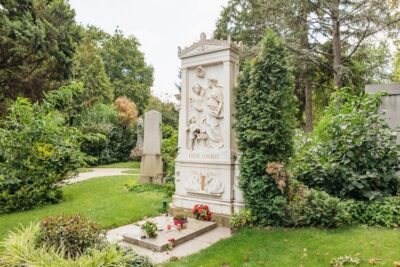 ★ 4.8Vienna Central Cemetery Guided Walking TourFrom $3353,307 reviews
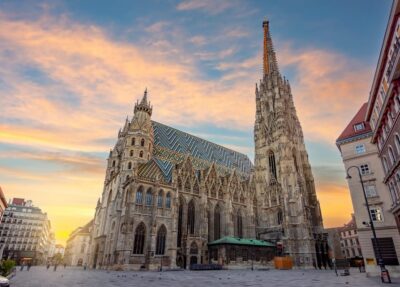 ★ 4.9Guided Walking Tour of City Highlights & Hidden GemsFrom $272,180 reviews
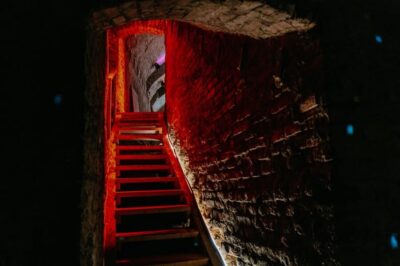 ★ 4.7Viennese Underworld Guided Walking TourFrom $371,865 reviews
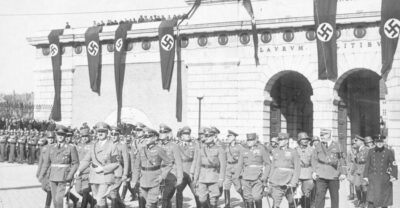 ★ 4.8World War II Historical Walking TourFrom $311,772 reviews
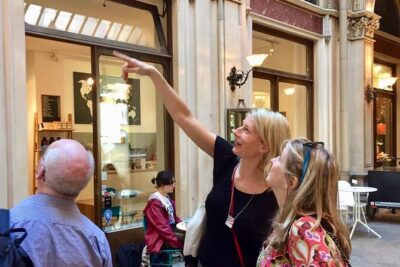 ★ 5.0Vienna Historic Center Small Group Walking TourFrom $721,746 reviews
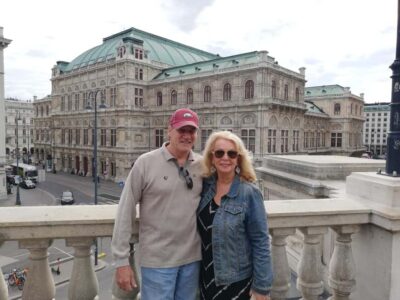 ★ 4.6Private Walking Tour with a LocalFrom $561,446 reviews
 ★ 4.91.5-Hour Underground Walking TourFrom $321,146 reviews
 ★ 4.4Ghosts and Legends Guided Nighttime Walking TourFrom $201,088 reviews
Browse the lists this tour appears in