
Reviewed · VIENNA WALKING TOURS
Vienna Art Nouveau Walking Tour
Art Nouveau isn’t just for museums in Vienna; it’s built into the city’s bones through Wagner’s metro. What makes this tour worth your time is the mix of Art Nouveau architecture and a practical look at how the metro shaped Vienna as it grew fast. I particularly love how the guide ties design choices to real city life, and I love that the route includes major Jugendstil icons like the Secession House. The main consideration: two key sights have extra admission, so you’ll want a few euros ready.
If you enjoy walking, you’ll have a good time. The pacing is built around stops you can actually see close up, plus short metro hops that keep it efficient. Because it’s a guided, outdoor-heavy route, you’ll feel it in your legs after a few streets and station stairs.
In This Review
- Key takeaways
- Why this Art Nouveau tour feels different than the usual architecture walk
- Getting started at Café Museum (and why the meeting point makes sense)
- The Karlsplatz pavilion and Otto Wagner’s museum angle (admission not included)
- Stadtpark station: the best-preserved original stop you’ll actually recognize
- Crossing from station to street: Sezession House and the Klimt payoff
- Otto Wagner’s apartment houses and the “why” behind the symbols
- Kettenbrücke station: where the route turns practical
- Österreichische Postsparkasse: where Wagner’s style hits a civic nerve
- Hietzing’s imperial station: why grandeur mattered to public critics
- Price and value: what you’re paying for
- What the 3 hours feels like in real life
- Who should book this tour (and who might not love it)
- Should you book Vienna’s Art Nouveau Walking Tour?
- FAQ
- Where does the Vienna Art Nouveau Walking Tour meet?
- How long is the tour?
- How much does it cost?
- What language is the guided tour in?
- What’s included in the price?
- What admissions are not included?
- How much is the Secession House admission if I visit?
- Does the tour include Klimt’s Beethoven Frieze?
- What kind of group size is offered?
- Is there free cancellation?
Key takeaways
- Otto Wagner’s metro plan made Art Nouveau public: design meant to be recognized fast and seen every day.
- You’ll walk among still-used stations and see what survived.
- The Secession House stop is a must for Vienna’s Jugendstil story, and it can include the Klimt Beethoven Frieze on Tue–Sun.
- Small groups matter here: guides can adapt and answer lots of questions.
- Expect design talk with real-world meaning, not only style spotting.
Vienna on foot, a couple more routes
- Vienna: Guided Walking Tour of City Center Highlights★ 4.7 · 4,989 reviews
- Vienna: Vienna Central Cemetery Guided Walking Tour★ 4.8 · 3,307 reviews
- Vienna: Viennese Underworld Guided Walking Tour★ 4.7 · 1,865 reviews
- Vienna: World War II Historical Walking Tour★ 4.8 · 1,772 reviews
Why this Art Nouveau tour feels different than the usual architecture walk
Vienna’s Art Nouveau, often called Jugendstil, can look like pure decoration if you only skim photos. This tour does something smarter: it connects the look of the buildings to the job they were built to do. Metro stations weren’t meant to be gloomy boxes. They were supposed to be easy to read, easy to navigate, and visually linked to the city’s modern identity.
The big idea you’ll hear is that late-1800s Vienna exploded in population, and leaders needed a modern transport system to connect suburbs to the city center along the Ringstrasse. They brought in urban planners and, for the design, Otto Wagner. His brief wasn’t shy. He aimed for something iconographic—instantly recognizable—and he chose an international avant-garde style because Vienna wanted to feel cosmopolitan.
Getting started at Café Museum (and why the meeting point makes sense)
You meet at Café Museum, Operngasse 7 (A-1010 Vienna). Starting near the Opera area is practical: it keeps the early minutes simple and helps you avoid a late-day scramble once you’ve been walking around Vienna on your own.
From the first guide briefing, you’ll be trained to look at details you might otherwise miss. You’re not just hunting pretty facades. You’re learning a way to read symbols and materials—what artists and architects were trying to say, and how they used form to express modernity.
If you’re the type who likes to ask questions, this route tends to reward it. In past groups, guides such as Wolfgang have handled the conversation well, even tailoring the tour when there were only a couple of people. And if Austrian history and why Vienna chose certain ideas matters to you, the energy from guides like Peter can make the architecture feel more connected to the world around it.
The Karlsplatz pavilion and Otto Wagner’s museum angle (admission not included)
The first true architecture stop is at the Wien Museum Otto Wagner Pavillon Karlsplatz. This is where you’ll get early context for the rest of the walk. It’s not just a pretty entry point; it sets up the Wagner mindset: create designs that are instantly readable and that represent the city’s modern face.
You’ll learn why Wagner’s approach leaned into Art Nouveau rather than treating it as a trend. The point was visibility and identity. In the late 19th century, Vienna wanted modern infrastructure that also looked like Vienna—confident, international, and unmistakable.
One practical note: admission to the Otto Wagner Pavillon isn’t included. If your group plans to go inside the pavilion, you’ll want to budget extra time and money. The tour focuses on the guided look and the surrounding context, but the museum entry is separate.
Stadtpark station: the best-preserved original stop you’ll actually recognize
Next comes the walk toward Stadtpark station, described as the best-preserved original metro station still in use. This is where I like to tell people: forget the idea that old transit is boring. Stations are where a city shows you its priorities—how it wants people to move, feel oriented, and trust the system.
Because Stadtpark is still in operation, you can compare what you see on the street to what you’d notice as a passenger. The design details feel more alive than they do in a museum display. You also get a chance to see how the Jugendstil language—curves, ornament, materials—works at human scale, not only as a facade.
Expect the guide to point out how Wagner translated something often associated with a more bourgeois style of Art Nouveau into architecture with civic confidence. That shift is key to understanding Vienna’s metro as an “icon system” rather than only functional engineering.
Vienna at walking pace, more routes
Crossing from station to street: Sezession House and the Klimt payoff
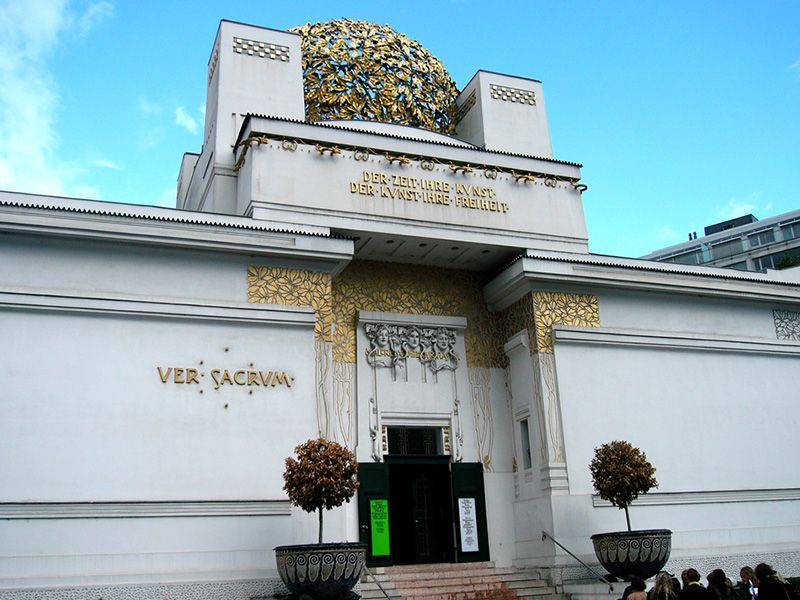
One of the stops you should circle on your mental map is the Sezession House. If you care about Viennese Jugendstil, this is the icon stop. The guide frames it in terms of ideology and artistic intent, so you’ll understand why it’s famous before you even start scanning the exterior details.
Depending on the day, you may also connect it to Gustav Klimt’s Beethoven Frieze. If your tour runs Tuesday through Sunday, the plan is to see that frieze, but the entrance is not included in the tour price. The cost is listed as €9.50 for adults and €6 for students and seniors, and your guide helps you with the payment.
Even if you don’t go inside, the Sezession House works as a visual “before and after” moment. Art Nouveau here stops being generic style and becomes an argument about modern culture, identity, and who Vienna wanted to be seen by.
Otto Wagner’s apartment houses and the “why” behind the symbols
Between stations and during the guided walk, you’ll also see two apartment houses designed by Otto Wagner. This is a smart move for your understanding, because it shows how Wagner’s Art Nouveau wasn’t limited to grand public buildings. His urban thinking carried over into housing—structures for ordinary life.
This part matters because symbols and materials are not random. The guide will get you thinking about what practitioners of Art Nouveau favored and what those choices meant. In other words, you learn the grammar of the style: what shapes communicate, how ornament relates to function, and how the city’s cosmopolitan self-image was translated into stone, metal, and design rhythms.
Kettenbrücke station: where the route turns practical
Kettenbrücke is the next metro stop, and it’s a key “pivot point” for the tour. You’ll step onto the metro for the last leg after this, which keeps the overall route manageable. It also reinforces the tour’s theme: Vienna’s transport system is part of the architecture story, not just the way to get between sights.
When you’re at Kettenbrücke, pay attention to how the guide connects station design to the broader metro narrative. Wagner didn’t treat stations as afterthoughts. The design was meant to be easy to recognize and tied to the city’s public face.
This is also where you’ll likely notice how the route balances walking and transit. If you’re trying to cram a lot into a short Vienna stay, that practical mix is a win. It’s not a long slog with only stairs and street corners.
Österreichische Postsparkasse: where Wagner’s style hits a civic nerve
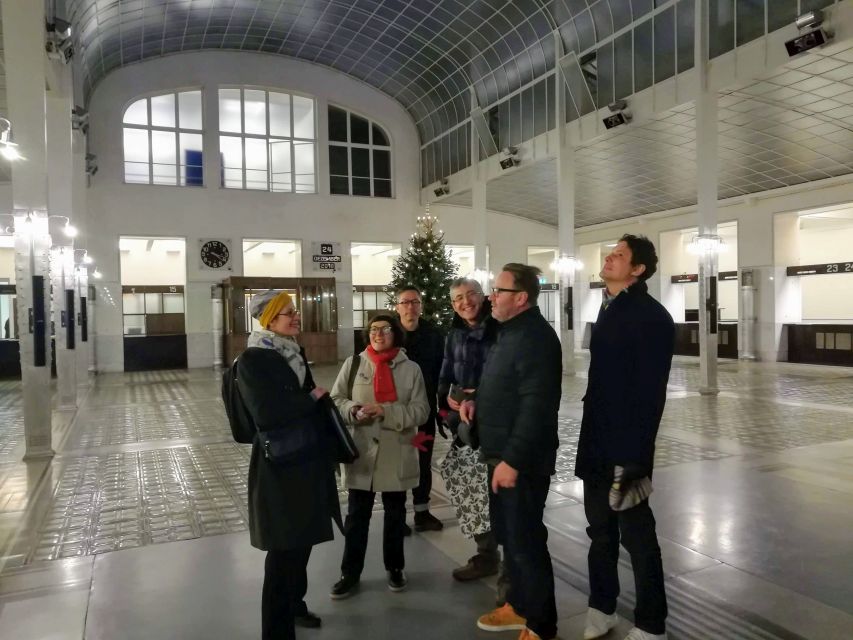
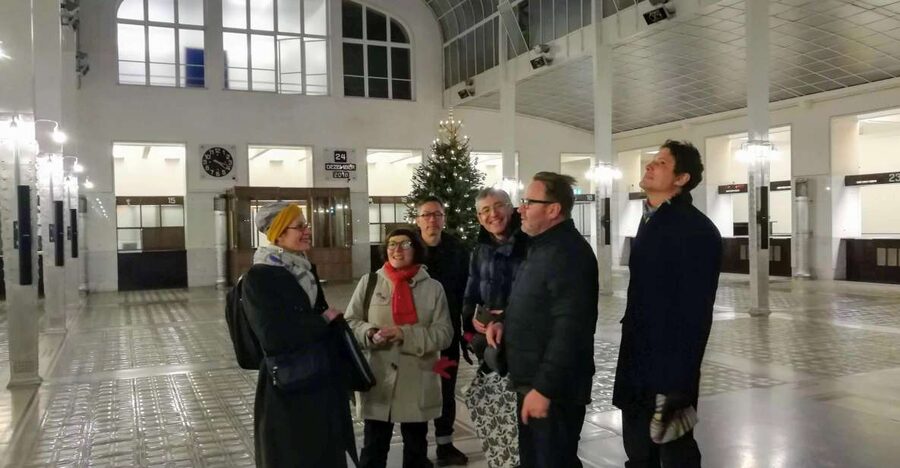
Another stop on the route is the Österreichische Postsparkasse. It’s included as part of the guided walk and gives you another layer beyond “stations and famous monuments.” You’re seeing Wagner’s design logic applied to a civic institution—again, reinforcing the idea that Art Nouveau in Vienna wasn’t just for private taste.
I like how this helps you stop thinking in single-photo moments. When you see multiple Wagner projects in a single tour, you start noticing recurring themes: how he uses shape, how ornament behaves, and how the architecture communicates stability and modern confidence.
Even if you don’t memorize every architectural term, you’ll finish with better instincts for what to look for next time you’re walking Vienna on your own.
Hietzing’s imperial station: why grandeur mattered to public critics
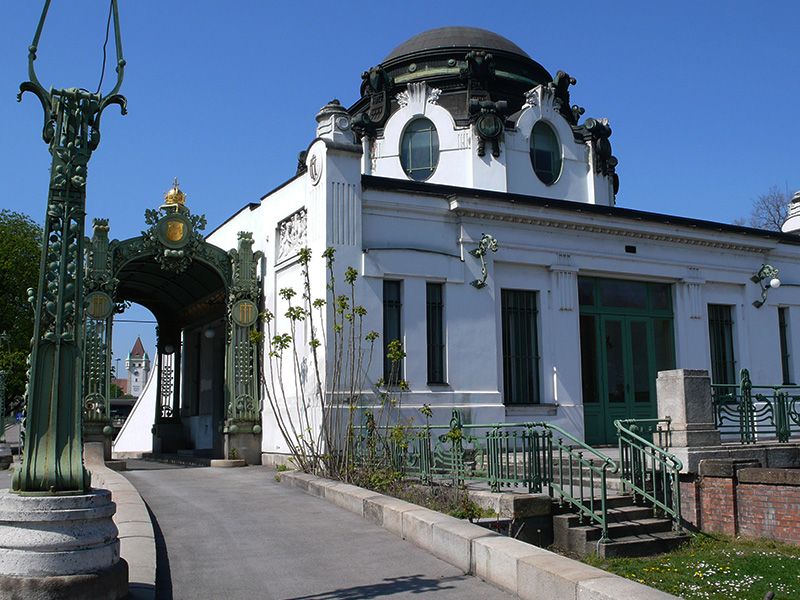
The final stop is the imperial station at Hietzing, built outside Schönbrunn solely for the emperor to use. This is the “crown jewel” moment on the line, and it has a political subtext. The station also symbolized the emperor’s support for the metro line—an answer to critics who questioned the system.
This detail changes how you view the architecture. It’s not only about beauty. It’s about authority. Wagner’s methods here translate a generally bourgeois Art Nouveau approach into something with imperial grandiosity, showing how design can serve both personal power and public persuasion.
If you’re the kind of person who enjoys how cities justify their spending, this is a great capstone. You can almost feel the argument embedded in the design.
Price and value: what you’re paying for
The price is $176 per person for a 3-hour guided experience with a historian guide. That’s not cheap, but the value comes from three areas:
- A focused theme (Wagner, metro design, and Jugendstil ideology) rather than a general Old City architecture walk.
- Guided interpretation at multiple key sites, including the metro-related architecture pieces and famous Jugendstil landmarks.
- Time efficiency, since part of the route uses the metro and the stops are arranged to make sense in sequence.
Two admissions aren’t included: the Otto Wagner Pavillon and the Sezession House entry (with the Beethoven Frieze on Tue–Sun). Budget extra for those, and the tour becomes more of a full “experience package.” Without those add-ons, you’re still getting an excellent guided walk and context, but if Klimt is on your list, plan ahead.
For small groups, this also tends to pay off. In prior experiences, guides like Wolfgang have been able to tailor the tour when there were only two people, and that kind of attention is hard to get with larger group city walks.
What the 3 hours feels like in real life
This is a walking tour with real distances and at least some metro rides. Even when the route is well planned, you should treat it like an active neighborhood + station route, not a sit-and-look tour. Comfortable shoes are the best “ticket” you can buy.
In terms of attention, the guide likely spends time on two big threads:
1) how the metro transformed Vienna as the city grew, and
2) how Art Nouveau became a public-facing language of identity.
If you like architecture that has a story behind it, you’ll enjoy that the tour keeps returning to meaning—why Wagner chose what he chose, and how design can be both modern and symbolic.
Who should book this tour (and who might not love it)
This tour is a good fit if you:
- love Vienna’s Art Nouveau and want more than surface-level spotting
- care about how public infrastructure can reflect politics, art movements, and identity
- enjoy guided Q&A and learning to read details in context
It may be less satisfying if you’re looking for a relaxed photo stroll with minimal explanation. This route rewards people who want the “why,” even if they’re not architecture experts.
Should you book Vienna’s Art Nouveau Walking Tour?
Yes, if you want a smarter way to see Vienna’s Jugendstil—one tied directly to metro design and Otto Wagner’s public vision. The biggest reason to book is the combination: you get stations that are still relevant in daily life, plus Art Nouveau icons like the Sezession House, plus the political-carrying finale at Hietzing.
If you’re tight on time, this is also a decent use of hours because it links multiple Wagner-era stops into one theme. Just plan for optional paid entries, especially if your dates fall Tuesday through Sunday and you want to see the Beethoven Frieze.
FAQ
Where does the Vienna Art Nouveau Walking Tour meet?
The meeting point is Café Museum, Operngasse 7, A-1010 Vienna.
How long is the tour?
The duration is 3 hours.
How much does it cost?
The price is listed as $176 per person.
What language is the guided tour in?
The tour is guided in English.
What’s included in the price?
The included items are the 3-hour Vienna Art Nouveau tour and a historian guide.
What admissions are not included?
Admission to the Otto Wagner Pavillon is not included, and admission to the Secession House is also not included.
How much is the Secession House admission if I visit?
It’s listed as €9.50 for adults and €6 for students and seniors.
Does the tour include Klimt’s Beethoven Frieze?
If the tour runs Tuesday to Sunday, it includes a visit to the Secession House to see Gustave Klimt’s Beethoven Frieze, but entrance is not included in the tour price.
What kind of group size is offered?
Private or small groups are available.
Is there free cancellation?
Yes, you can cancel up to 24 hours in advance for a full refund.
More Tours in Vienna
- Vienna: Schönbrunn Palace & Gardens Skip-the-Line Tour
★ 4.7 · 7,739 reviews - Vienna Spanish Riding School Guided Tour
★ 4.7 · 6,765 reviews - Vienna: Skip-the-Line Sisi Museum, Hofburg and Gardens Tour
★ 4.8 · 5,918 reviews - Vienna: Skip-the-Line Schönbrunn Palace & Gardens Tour
★ 4.8 · 5,411 reviews - Vienna: Guided Walking Tour of City Center Highlights
★ 4.7 · 4,989 reviews
More Tour Reviews in Vienna
- Vienna: Vivaldi’s Four Seasons Concert in Karlskirche
★ 4.7 · 14,951 reviews - Vienna: Schönbrunn Palace & Gardens Skip-the-Line Tour
★ 4.7 · 7,739 reviews - Vienna: Light of Creation Votive Church Immersive Light Show
★ 4.8 · 6,779 reviews - Vienna Spanish Riding School Guided Tour
★ 4.7 · 6,765 reviews - Vienna: Classical Concert in the World-Famous Musikverein
★ 4.6 · 6,673 reviews
Vienna on Foot, Continued
- Vienna: Guided Walking Tour of City Center Highlights
★ 4.7 · 4,989 reviews - Vienna: Vienna Central Cemetery Guided Walking Tour
★ 4.8 · 3,307 reviews - Vienna: Guided Walking Tour of City Highlights & Hidden Gems
★ 4.9 · 2,180 reviews - Vienna: Viennese Underworld Guided Walking Tour
★ 4.7 · 1,865 reviews - Vienna: World War II Historical Walking Tour
★ 4.8 · 1,772 reviews
Just In: New Vienna Reviews



Vienna Walking Tours, compared.
 ★ 4.8Vienna Central Cemetery Guided Walking TourFrom $3353,307 reviews
 ★ 4.9Guided Walking Tour of City Highlights & Hidden GemsFrom $272,180 reviews
 ★ 4.7Viennese Underworld Guided Walking TourFrom $371,865 reviews
 ★ 4.8World War II Historical Walking TourFrom $311,772 reviews
 ★ 5.0Vienna Historic Center Small Group Walking TourFrom $721,746 reviews
 ★ 4.6Private Walking Tour with a LocalFrom $561,446 reviews
 ★ 4.91.5-Hour Underground Walking TourFrom $321,146 reviews
 ★ 4.4Ghosts and Legends Guided Nighttime Walking TourFrom $201,088 reviews
Browse the lists this tour appears in