
Reviewed · VIENNA WALKING TOURS
Vienna: City of Music Private Walking Tour
Vienna sounds different on foot. This private walking tour is built around composer locations, so you connect the music you know with the exact streets it grew from, plus you’ll hear famous excerpts on headphones as you move through town. I love the way it mixes big-name sites with story-level details, and I love that it works even if classical music isn’t your thing. One drawback to plan for: some stops (like the Mozarthaus and several major venues) have admission not included, so you’ll want a bit of extra budget if you decide to go inside.
You also get real schedule control. There are morning or afternoon departures, and your guide can meet you right at your hotel or holiday flat, which makes the whole thing feel less like logistics and more like a day in motion.
For value, the pricing is refreshingly straightforward for groups. It’s a flat per-group fee for up to 10, so the cost per person drops fast when you travel with friends or family, and you spend about three hours covering a tight cluster of central highlights.
In This Review
- Key things you’ll like about this Vienna music tour
- Vienna’s “City of Music” label works best with real locations
- Private guide energy: what you get with a group of up to 10
- Stop 1: St. Stephen’s Cathedral and the performance history around it
- Stop 2: Mozarthaus Vienna and following Mozart by address
- Stop 3: The Beethoven statue and the “sixty apartments” idea
- Stop 4: Wiener Staatsoper area and Vienna’s present-day musical power
- Stop 5: Mölker Bastei and Pasqualati-House across from the University
- Stop 6: The Hofburg and Beethoven’s ties to Archduke Rudolph
- Stop 7: Inner City listening with headphones for 45 minutes
- Price and value: when $564.72 per group makes sense
- Who should book this Vienna music tour
- Quick booking thoughts to plan your best day
- Should you book it?
- FAQ
- How long is the Vienna City of Music Private Walking Tour?
- What does the price include?
- Is this tour private?
- Are there different departure times?
- Does the guide offer pickup?
- Is public transport covered?
- Are headphones part of the experience?
- What is the cancellation policy?
Key things you’ll like about this Vienna music tour
- Private guide, just for your group: no merging with strangers.
- Headphone listening while you walk: you hear musical selections as you explore key sites.
- Composer stories tied to addresses: Mozart and Beethoven aren’t just names on plaques here.
- Easy rhythm for mixed interest levels: great even if you’re not a classical music superfan.
- Pickup or a central meeting option: meet at your place or at Café Mozart (Albertinaplatz 2).
- Most entry points are low-friction: some stops are free, while others are clearly marked as not included.
Vienna on foot, a couple more routes
- Vienna: Guided Walking Tour of City Center Highlights★ 4.7 · 4,989 reviews
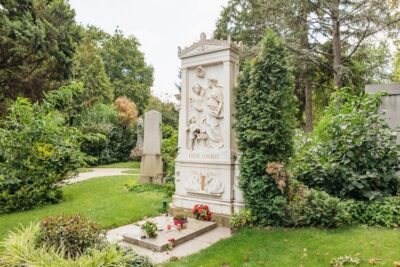
- Vienna: Vienna Central Cemetery Guided Walking Tour★ 4.8 · 3,307 reviews
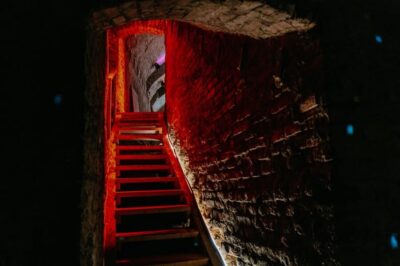
- Vienna: Viennese Underworld Guided Walking Tour★ 4.7 · 1,865 reviews
- Vienna: World War II Historical Walking Tour★ 4.8 · 1,772 reviews
Vienna’s “City of Music” label works best with real locations
Vienna is full of famous buildings, but this tour does something smarter than just sightsee. It links music to place: you’re standing near where Mozart lived and worked, where Beethoven kept resetting his life apartment to apartment, and where major musical institutions continue the tradition today.
That location-first approach matters. If you only read about composers, Vienna can feel like a set of museum facts. If you walk the city with a guide who explains how the music relates to the street level, it becomes easier to remember, and easier to understand why these people mattered to the city’s identity.
This is also a format that’s comfortable for most people. It’s about three hours, it’s a walking tour, and you get natural breaks as you stop, listen, and move on.
Private guide energy: what you get with a group of up to 10
This is a private tour/activity, so it’s only your group. That’s a big deal in a city like Vienna, where timing and pacing can make or break an experience. You can ask questions, slow down for photos, or focus more on the composer stories that hook you.
The group size cap is up to 10, and that’s part of why the pricing can feel reasonable when you split it. In practical terms, if you bring a full group, you’re paying one set price for your entire party, not a ticket-style fee per person. (For reference, $564.72 per group works out to roughly $56 per person if you’re at 10, though fewer people obviously changes the per-person math.)
One reason this tour tends to feel personal: some guides use photos to bring the stories to life, not just a steady lecture. If you’re the type who likes context—people, habits, and relationships—you’ll probably enjoy the way the tour connects famous compositions to the lives around them.
And if you’re worried you need deep classical training, you don’t. The tour is set up so a general visitor can follow along. You get the meaning behind the music references without assuming you already know every term.
Stop 1: St. Stephen’s Cathedral and the performance history around it
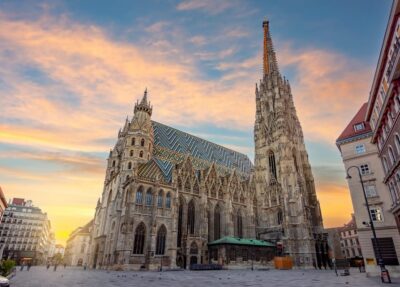
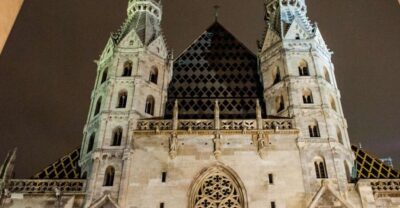
You start at St. Stephen’s Cathedral (Stephansdom), and the key idea is that this isn’t just a beautiful landmark. It also connects to Vienna’s older musical life—this cathedral served as an important performance venue in earlier centuries, where composers like Haydn and Mozart, Salieri, and Vivaldi were part of the city’s musical ecosystem.
What I like about this first stop is the grounding. You’re not starting with distant theories. You’re starting where Vienna’s public life and cultural life intersected.
Practical notes:
- The stop is about 20 minutes.
- Admission ticket is free for this cathedral visit.
Potential drawback: this is a cathedral, so if you’re sensitive to crowds or want quiet, you may need to be patient while you wait for your best viewing moments.
Stop 2: Mozarthaus Vienna and following Mozart by address
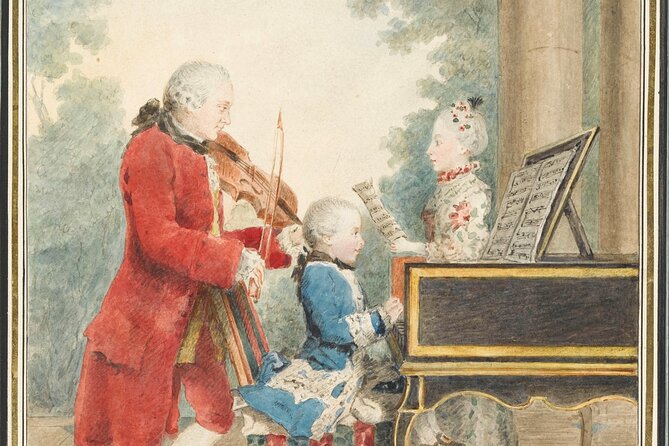
Next is Mozarthaus Vienna, with time near Mozart’s residence from 1784 to 1787—often connected with the Figaro House / Mozarthaus area. This is where the tour shifts from “composer as idea” to “composer as neighbor.”
The story angle here is straightforward but effective: Mozart lived there for those years, and you’re told he wrote many of his famous operas and instrumental works during that period. Even if you don’t memorize dates, hearing that Mozart’s major output is tied to a specific place you can stand near makes his work feel less abstract.
Practical notes:
- The stop is about 20 minutes.
- Admission ticket is not included.
What to consider: since admission isn’t included, you’ll need to decide on-site whether it’s worth paying extra to go in. If your group likes buildings, go for it. If you’re more focused on walking and story than museums, you might be fine appreciating this stop from outside and keeping moving.
Only your group, at your own tempo



Stop 3: The Beethoven statue and the “sixty apartments” idea
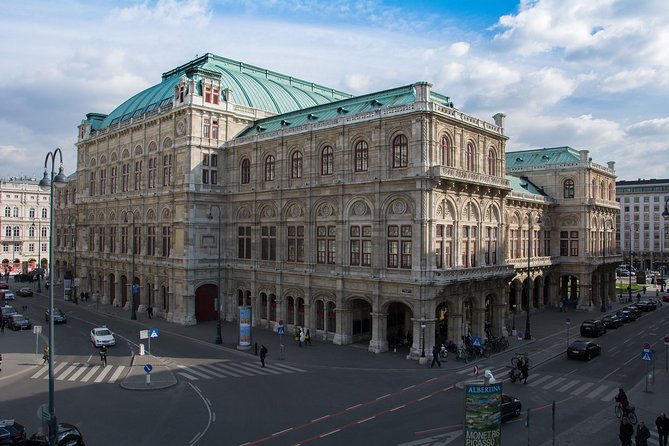
Then you hit Beethoven’s statue, a stop that’s doing double duty. It’s one of the easiest photo moments on the route, and it also sets up Beethoven’s personality and restlessness.
You’re told about Beethoven’s erratic life in Vienna, including that he lived in around sixty different apartments. That detail matters because it explains how he experienced the city: not as one stable “home base,” but as a changing network of addresses that shaped his day-to-day life.
Practical notes:
- About 20 minutes.
- Admission ticket free.
Potential drawback: this stop is short. If you’re expecting a long storytelling pause, don’t. It’s designed to keep momentum while the guide threads together the bigger narrative.
Stop 4: Wiener Staatsoper area and Vienna’s present-day musical power
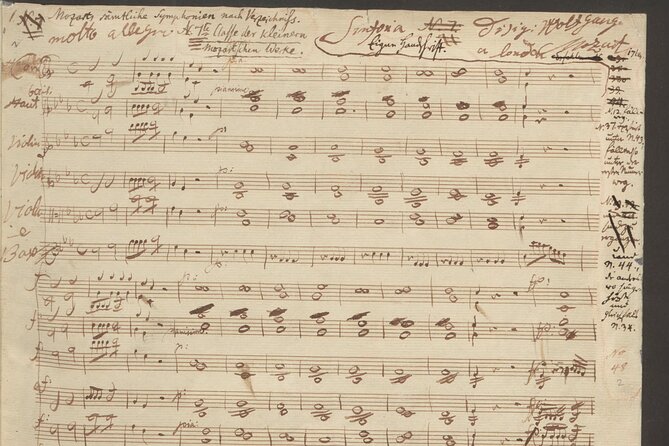
From Beethoven’s monument you move into a broader musical “now” moment: Wiener Staatsoper. You’re encouraged to think about Vienna’s continued musical dominance beyond the legend of the State Opera House.
The tour also ties the wider classical ecosystem into the conversation, mentioning major performance spaces like the Musikverein, with the Vienna Philharmonic in mind. Even if you don’t go inside, the point is to show you how Vienna’s musical identity isn’t stuck in the past. It’s still active and still world-facing.
Practical notes:
- About 20 minutes.
- Admission ticket not included.
What to consider: you’re likely viewing from outside or in a way that doesn’t guarantee entry, since admission isn’t included. If you want guaranteed interior access, this tour may not be the right tool by itself. But it’s a strong way to orient yourself to the city’s major institutions.
Stop 5: Mölker Bastei and Pasqualati-House across from the University
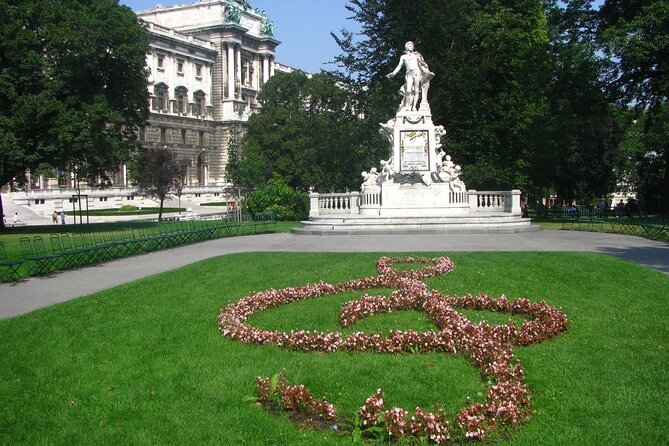
Then the walk turns into a “Beethoven on repeat” story. You pass by Beethoven’s many flats and reach the Pasqualati-House at Mölker Bastei, located opposite the University of Vienna.
This stop is about his restless rhythm and the meaning behind his musical evolution. You’re told that his music symbolizes the apex of the Classic era and helped herald important developments of the Romantic era. That’s not just trivia; it’s a bridge between “what he did” and “why it mattered historically.”
Practical notes:
- About 20 minutes.
- Admission ticket not included.
Potential drawback: because entry isn’t included, you’re relying on the guide’s narrative and what you can see around the area. If you’re someone who needs an indoor setting to feel satisfied at each stop, you might want to plan one or two paid entries on your own later.
Stop 6: The Hofburg and Beethoven’s ties to Archduke Rudolph
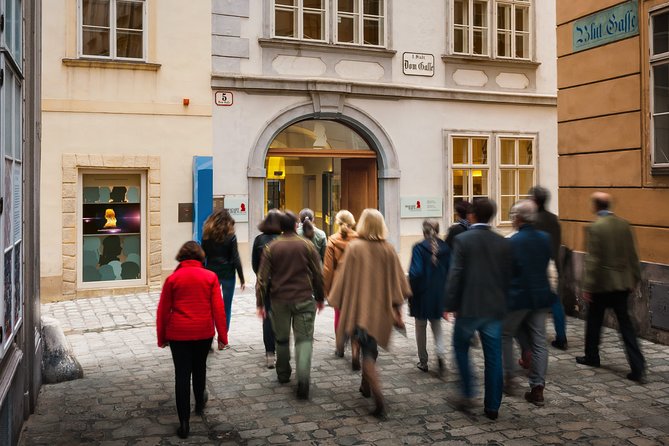
Next is the Hofburg area, where the tour connects Beethoven not only to artists, but to aristocratic support.
The theme here is relationship complexity. Beethoven’s connection with the high aristocracy was often strained, but he called Archduke Rudolph—youngest son of Emperor Leopold II—one of his best friends. The route finishes at a residence tied to Rudolph taking piano lessons with Beethoven.
This stop also highlights a direct musical link: Beethoven dedicated Missa Solemnis to Archduke Rudolph, and you’re given a sense of how the Habsburg family and major musicians in Vienna interacted across the 18th and 19th centuries.
Practical notes:
- About 20 minutes.
- Admission ticket not included.
What I like about this stop is that it gives you a “Vienna power map” for music. You see that composers weren’t only writing alone—they were part of a social structure with patrons, audiences, and political-cultural relationships.
Potential drawback: if your group’s interest is almost entirely “hear the music, not the politics,” you may need the guide to keep this section focused on musical meaning rather than court history.
Stop 7: Inner City listening with headphones for 45 minutes
The final segment is Inner City, and it’s where the tour takes advantage of modern presentation. Throughout the walk, you pause to listen to selections of Vienna’s musical masterpieces on headphones while you explore major sites.
This part is the payoff for people who came for music first. You’re not only seeing places; you’re hearing what the guide is referencing in that moment. The listening time is about 45 minutes, and because it’s woven into the walk, it avoids the feeling of a long seated lecture.
Practical notes:
- About 45 minutes.
- Admission ticket free.
What to consider: headphones are great for focus, but they also mean you’ll want to be mindful of comfort and crowd noise. If your ears get tired easily, take short breaks when the guide offers transitions.
Price and value: when $564.72 per group makes sense
Let’s talk value like a real budget decision, not a marketing line.
You’re paying $564.72 per group with up to 10 people for about three hours. That’s not cheap if it’s just you or two people. But if you’re traveling with a family, a couple plus friends, or a small group who wants one itinerary and one guide, it can turn into a sensible way to get a tailored experience in the center of Vienna.
Where the money often feels worth it:
- You get private pacing with time at major composer-linked places.
- You get headphone listening, which adds a “soundtrack” layer you can’t easily recreate alone.
- The guide can tailor the explanations to what you actually care about (composer life, music references, or the city context).
Where it might feel less worth it:
- If your main goal is to enter paid museums and you don’t care about outside viewing and guided interpretation, the tour’s “admission not included” stops may not match your priorities.
- If your group wants a full-day program, this is a focused 3-hour route, not an all-day deep museum plan.
Who should book this Vienna music tour
This tour is a great match if you want:
- A private walking route with a guide who tells composer stories tied to real addresses.
- Music references that don’t require you to already be a classical expert.
- A shared experience for a group up to 10, where one guide and one itinerary keeps everyone aligned.
It’s also a good fit if you’re visiting Vienna for the first time and want a fast way to understand why Vienna’s music history feels so central to everything else you’ll see.
Quick booking thoughts to plan your best day
Here are a few practical ways to set yourself up for a smooth 3 hours:
- Pick morning or afternoon based on when you want to hear the music excerpts. Inner-city walking can feel different depending on light and street rhythm.
- If you don’t want to manage meeting on busy streets, use hotel pickup. The guide meets you at your hotel or holiday flat.
- If you’d rather meet centrally, Café Mozart at Albertinaplatz 2 is offered as an alternative meeting point.
- Since some admissions are not included, decide ahead of time whether you’ll want to pay for specific indoor stops like Mozarthaus Vienna. If not, plan on enjoying the exterior context and let the headphone segment do the heavy lifting.
If you prefer to move by public transport, know that tram or metro tickets aren’t included, but the guide can help you buy them if you don’t have a pass.
Should you book it?
Yes, if you want Vienna to feel like a living music story instead of a checklist. The combination of composer-linked locations, short focused stops, and headphone listening is exactly the kind of guided structure that helps music history click fast.
Skip it only if your priority is inside-the-building admissions at every stop, or if you dislike walking. Otherwise, this is one of the more sensible ways to experience Vienna’s music reputation in a short amount of time—especially when you travel with a group and can spread the per-group cost.
FAQ
How long is the Vienna City of Music Private Walking Tour?
It runs for about 3 hours.
What does the price include?
The tour has a flat per-group price of $564.72 for up to 10 people. A mobile ticket is offered. Admission tickets are not included for some stops and are free for others.
Is this tour private?
Yes. It is a private tour/activity, and only your group participates.
Are there different departure times?
Yes. You can choose either a morning or an afternoon departure.
Does the guide offer pickup?
Yes. Pickup is offered, and your guide can meet you at your hotel or holiday flat. A central meeting point option is Café Mozart, Albertinaplatz 2.
Is public transport covered?
The tour is near public transportation. Tram or metro tickets are not included, but your guide can help you purchase them if you do not have a pass.
Are headphones part of the experience?
Yes. During the Inner City portion, you pause to listen to selections of Vienna’s musical masterpieces on headphones while exploring major sites.
What is the cancellation policy?
Free cancellation is available. You can cancel up to 24 hours in advance for a full refund; cancellations less than 24 hours before the start time are not refunded.
More Tour Reviews in Vienna
- Vienna: Vivaldi’s Four Seasons Concert in Karlskirche
★ 4.7 · 14,951 reviews - Vienna: Schönbrunn Palace & Gardens Skip-the-Line Tour
★ 4.7 · 7,739 reviews - Vienna: Light of Creation Votive Church Immersive Light Show
★ 4.8 · 6,779 reviews - Vienna Spanish Riding School Guided Tour
★ 4.7 · 6,765 reviews - Vienna: Classical Concert in the World-Famous Musikverein
★ 4.6 · 6,673 reviews
Yours Alone Across Vienna
- Vienna: Private Walking Tour with a Local
★ 4.6 · 1,446 reviews - Vienna: Private Walking Tour with a Guide
★ 4.7 · 962 reviews - Vienna: Wine Tasting Experience in a Private Wine Cellar
★ 4.8 · 413 reviews - Private Day Tour Trip Salzburg Hallstatt and Melk from Vienna
★ 5.0 · 388 reviews - Private Day Tour of Hallstatt and Salzburg from Vienna
★ 5.0 · 263 reviews
Vienna on Foot, Continued
- Vienna: Guided Walking Tour of City Center Highlights
★ 4.7 · 4,989 reviews - Vienna: Vienna Central Cemetery Guided Walking Tour
★ 4.8 · 3,307 reviews - Vienna: Guided Walking Tour of City Highlights & Hidden Gems
★ 4.9 · 2,180 reviews - Vienna: Viennese Underworld Guided Walking Tour
★ 4.7 · 1,865 reviews - Vienna: World War II Historical Walking Tour
★ 4.8 · 1,772 reviews
Just In: New Vienna Reviews



Vienna Walking Tours, compared.
 ★ 4.8Vienna Central Cemetery Guided Walking TourFrom $3353,307 reviews
 ★ 4.9Guided Walking Tour of City Highlights & Hidden GemsFrom $272,180 reviews
 ★ 4.7Viennese Underworld Guided Walking TourFrom $371,865 reviews
 ★ 4.8World War II Historical Walking TourFrom $311,772 reviews
 ★ 5.0Vienna Historic Center Small Group Walking TourFrom $721,746 reviews
 ★ 4.6Private Walking Tour with a LocalFrom $561,446 reviews
 ★ 4.91.5-Hour Underground Walking TourFrom $321,146 reviews
 ★ 4.4Ghosts and Legends Guided Nighttime Walking TourFrom $201,088 reviews
Browse the lists this tour appears in