
Reviewed · JEWISH VIENNA TOURS
Vienna: Private Jewish Walking Tour
Vienna’s Jewish story is written in street corners. This private walking tour strings together Jewish Vienna across centuries—from Salomon, described as the first Jewish person in Austria, through 1900s intellectual life and the Holocaust—while still keeping the walk human and readable. I especially like the way it makes culture concrete with stops such as Sigmund Freud’s favorite hangout, Café Landtmann, and big public markers like Judenplatz. One thing to consider: it’s a 150-minute walking tour, so you’ll want steady walking energy.
Because it’s private, you get a real back-and-forth with your guide in English or German, plus hotel pickup and drop-off within Vienna’s inner city. You start at Helmut-Zilk-Platz in front of the Memorial against War and Fascism, with your guide holding a red and white striped umbrella, and you finish at 1010 Vienna.
In This Review
- Key Things That Make This Tour Worth Your Time
- Helmut-Zilk-Platz to the Memorial Theme: Start With the City’s Choices
- Salomon and the Big Idea: How One Story Explains Many Eras
- University of Vienna and the 1900s Mindset: Culture as a Location
- Café Landtmann for Freud: When a Coffee House Becomes a Time Machine
- Palais Ephrussi and the 1900s Visual Clues: Why Architecture Fits the Story
- Seitenstettengasse Synagogue: Outside Only, But Still Meaningful
- Judenplatz and Joseph’s Square: Public Memory in Plain Sight
- Vienna State Opera and the Cultural Context You Can Actually Feel
- Price and Value: What $530 Per Group Really Means
- Guide Quality You Can Feel From the Small Details
- Should You Book This Private Jewish Walking Tour?
- FAQ
- Where is the meeting point?
- How long is the tour?
- Is this tour private?
- Which languages are offered?
- Is hotel pickup and drop-off included?
- What’s included in the tour route?
- Where does the tour end?
- Is the tour wheelchair accessible?
- Can I cancel for a full refund?
- Can I pay later?
Key Things That Make This Tour Worth Your Time
- Salomon as the opening thread: you start with the early story of Jewish presence in Austria, then follow how it unfolds in Vienna.
- Freud and Café Landtmann: you see where ideas and conversation met a classic Viennese coffee-house culture.
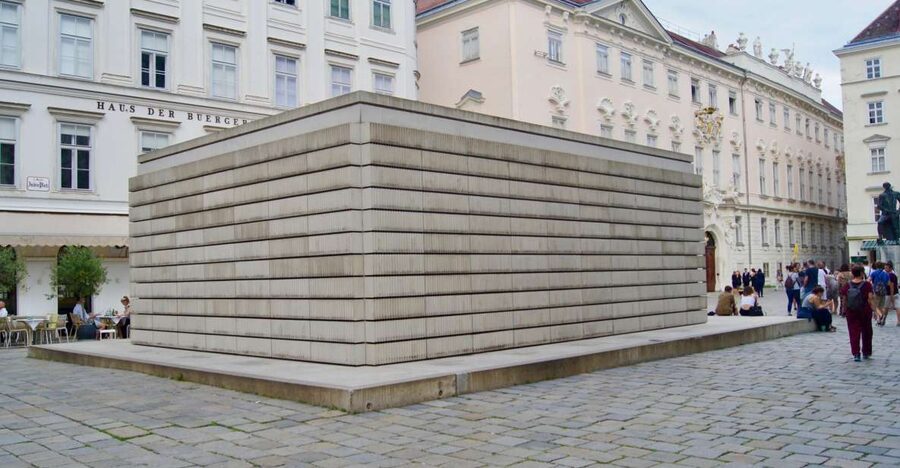
- Judenplatz and Joseph’s Square: big, central places that help you understand the scale of community life—and what happened to it.
- Seitenstetten Synagogue outside only: you still get the context, but you’re not counting on going inside.
- Dark chapters included: banishment and the Holocaust are part of the route, not treated like a side note.
The city's Jewish quarter, walked slowly
- Jewish Vienna: City Synagogue Guided Tour★ 4.6 · 208 reviews
- Vienna: Jewish Museum Vienna and Museum Judenplatz Tickets★ 4.5 · 170 reviews
- Vienna: Jewish Life in Leopoldstadt 2-Hour Walking Tour★ 4.9 · 109 reviews
- Jewish Vienna Walking Tour★ 5.0 · 36 reviews
Helmut-Zilk-Platz to the Memorial Theme: Start With the City’s Choices
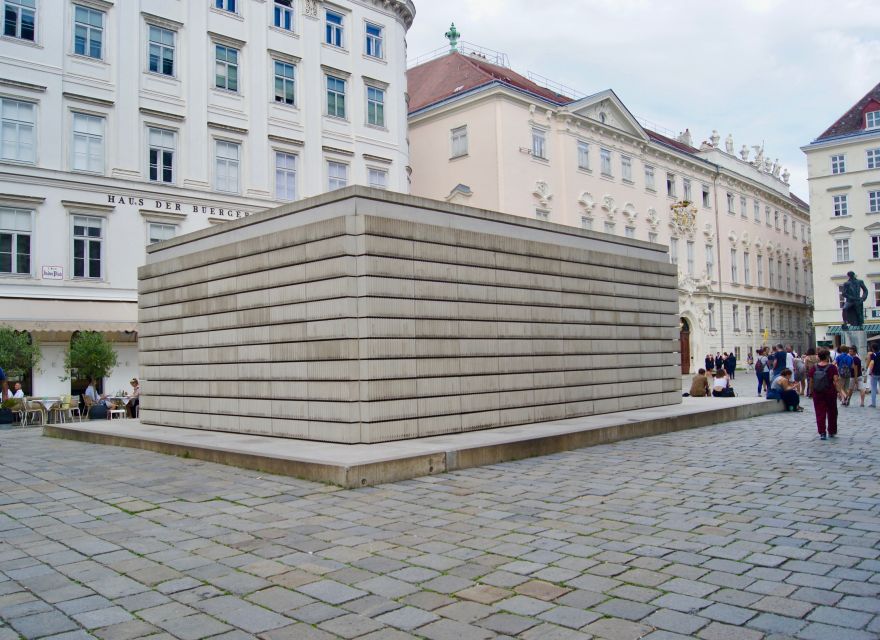
I like tours that don’t pretend history is one tone. This one begins at Helmut-Zilk-Platz, in front of the Memorial against War and Fascism. That matters. It sets the emotional frame early, so later stops don’t feel like unrelated sightseeing.
From this starting point, the tour quickly signals what you’ll be doing for the next 2.5 hours: walking through places that connect intellectual life, public institutions, and the darker turning points that affected the Jewish community in Vienna.
Because the group is private, you can ask for clarification without feeling like you’re hijacking a busy departure time. And since you’ll be in central Vienna, the route is built for seeing key landmarks close together rather than spending most of your time hunting down addresses.
Salomon and the Big Idea: How One Story Explains Many Eras
A lot of history tours pick a century and stick to it. This one uses Salomon—presented here as the first Jewish person in Austria—as a starting anchor. Then it expands outward, rather than jumping randomly from era to era.
That approach works because it gives you a way to track change. You’re not just hearing dates; you’re seeing how the Jewish presence in Vienna is described as evolving through:
- the artists, doctors, and scientists who helped shape Viennese culture in the 1900s
- the periods when the community was banished from Vienna
- the Holocaust period
- the Jewish community that exists in Vienna today
The benefit for you is mental organization. When a tour offers a clear through-line, you remember more. You also leave with a better sense of cause and effect—what changed, why it mattered, and how it connects back to what you can still see in the city now.
If you care about Vienna as an ideas-and-culture capital, this is where the tour starts to feel more than “a walking list.” It becomes a guided way to read the city.
University of Vienna and the 1900s Mindset: Culture as a Location
One of the stops on the route is the University of Vienna. Even if you’ve visited big universities before, I find it useful when a guide ties a campus to the people and currents that shaped a city’s intellectual life.
In this tour’s case, the theme is the way Jewish artists, doctors, and scientists contributed to Viennese culture, especially in the 1900s. Having the University of Vienna as a marker helps you connect the idea of learning and research to the real streets you’re walking.
This is one of the reasons I think the private format is worth it. If you want more detail on how ideas move through cities, you can ask. If you’d rather keep it broad, your guide can pace it that way.
Café Landtmann for Freud: When a Coffee House Becomes a Time Machine
Then you get one of the most fun parts of the tour: the stop connected with Sigmund Freud’s favorite coffee house, Café Landtmann.
You don’t need to be a Freud superfan to enjoy this. The payoff is how the guide uses the coffee-house setting to explain the social side of intellectual Vienna. Coffee houses in Vienna aren’t just places to drink something; they’re places where conversation and debate take center stage.
And because Café Landtmann is specifically called out as Freud’s favorite, it gives you a crisp landmark tied to a recognizable name. That makes the history easier to hold in your head as you walk onward.
Practical tip: if you’re the kind of person who likes to “check” a location by grabbing a drink, this is the moment to plan for it mentally. The tour is 150 minutes, so you’ll likely be moving between sites. Still, having Café Landtmann in the route gives you an option to slow down slightly or at least look around thoughtfully.
Vienna on foot, a couple more routes

Palais Ephrussi and the 1900s Visual Clues: Why Architecture Fits the Story
You’ll also see Palais Ephrussi on the route. I like stops like this because they turn an abstract theme into something you can actually look at with your feet.
The tour is centered on Jewish influence on Viennese culture, including the 1900s flowering of artists, doctors, and scientists. When the route includes a prominent palatial landmark, it encourages you to notice how Vienna’s visual identity intersects with the people who shaped it.
Here’s the key: you’re not just looking at beauty. You’re learning to “read” status, public presence, and the way communities can shape a city’s look and reputation.
If you enjoy architecture but hate tours where buildings become wallpaper, this stop is a good sign. It’s included because it matches the tour’s bigger story.
Seitenstettengasse Synagogue: Outside Only, But Still Meaningful
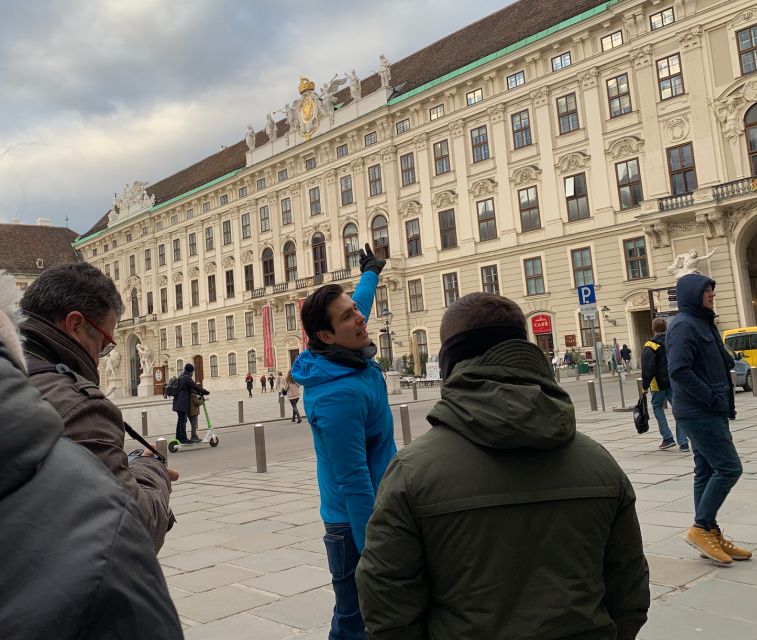
The tour includes Seitenstettengasse Synagogue (outside only). This is the one detail I’d highlight in advance so expectations are clear.
Outside-only can feel like a limitation, especially if you’re hoping to step inside. But from a historical walking-tour perspective, it still serves a purpose: it gives you a tangible link to Jewish religious and community life within Vienna’s urban fabric.
I’d treat this stop as a moment for looking closely at the street-level reality—how a community’s presence is expressed in a neighborhood—rather than counting on interior interpretation.
And since the tour is private, if the guide can share context about the synagogue area in a way that fits your interests, the outside-only limitation matters less. You’re still getting the connection, not just a photo stop.
Judenplatz and Joseph’s Square: Public Memory in Plain Sight
Two of the most important named stops are Judenplatz and Joseph’s Square. I love places like these because they’re public spaces. They aren’t locked behind museum doors.
In a tour that spans intellectual achievements and darker periods like banishment and the Holocaust, these sites help you understand scale. They put the story into a part of the city where people continue to live, walk, and pass by daily.
Judenplatz, in particular, is the kind of place where a good guide can help you see layers:
- community life and contribution
- the disruptions and persecution
- what survives in the city today
Joseph’s Square supports that same “public memory” feeling. When you see multiple landmarks tied to the same theme, your brain starts building a map of what happened where, and why the city marked it the way it did.
If you’re worried that dark history will ruin the pacing, don’t be. The structure of this tour is meant to connect light and dark. That’s harder to do than it sounds. Here, it’s built into the route, not added at the end.
Vienna State Opera and the Cultural Context You Can Actually Feel
The tour also includes Vienna State Opera as a landmark. In most Jewish-history routes, opera appears as part of the broader “Vienna as a cultural machine” picture.
The value here is that it supports the tour’s stated focus on intellectual, cultural, and artistic developments. When you stand near a grand institution like the opera, the city’s self-image becomes visible. Then your guide can connect that to the Jewish artists, doctors, and scientists who shaped Vienna’s cultural life in the 1900s.
This is where I think the guide matters most. Not because you’re learning trivia. Because you’re learning what to look for: how culture, power, and public life intersect.
If you’re the type who likes to ask questions on the spot, this tour’s private format makes it easier to steer the conversation toward what you care about: culture, institutions, or the heavy parts of history.
Price and Value: What $530 Per Group Really Means
Let’s talk money without pretending this is cheap.
The price is $530 per group up to 20, for about 150 minutes. That sounds high if you think per person first. But because it’s private and includes hotel pickup and drop-off within the inner city, you’re paying for more than a guide standing next to you.
You’re paying for:
- a focused route through central Vienna with multiple major landmarks
- English or German live interpretation throughout
- private-group pacing, meaning you’re not rushed into someone else’s schedule
- a guide who can tailor the conversation to your questions
In practice, the value improves if your group has a few people and you want the comfort of being collected and dropped off. It also improves if you care about context, not just photos. This tour’s theme is the kind of thing where a good guide can make the difference between seeing sites and actually understanding them.
If you’re traveling solo or as a couple and want maximum savings, you might be able to do a DIY route. But if you want someone to stitch the story together across Salomon, Freud, major public squares, and Holocaust-era remembrance, the private format is the point.
Guide Quality You Can Feel From the Small Details
One reason this tour gets such strong marks is the consistency of the guide experience.
The names that show up in the guide praise include Lisa, Horlando, and Dr. Reinhard Travnicek. What those different guides have in common, based on the feedback you’re likely to see, is clarity, professionalism, and the ability to make the tour feel tailored. People also highlight that the guides connect past and present rather than leaving you with only monuments and dates.
For you, that translates into practical benefit: you’ll get answers to questions during the walk, and you won’t feel like you’re reading a script. If you’re picky about explanations that are structured but not stiff, this is a strong sign.
Should You Book This Private Jewish Walking Tour?
Book it if you want a story-driven walk through Vienna that connects major cultural touchpoints (like Café Landtmann and Freud) with public memory sites (like Judenplatz and remembrance locations). It’s also a smart fit if you prefer private pacing and like asking questions instead of following a group headset.
Skip—or at least think twice—if you only want light sightseeing. This route includes the heavy chapters: banishment from Vienna and the Holocaust period are part of the narrative. And since it lasts 150 minutes, plan for real walking in central streets.
If you’re somewhere in the middle—curious, respectful, and ready for context—this tour is a very good use of a couple of hours in Vienna. You’ll leave with a clearer map of how Jewish life shaped the city, and how Vienna remembers what it tried to erase.
FAQ
Where is the meeting point?
You meet at Helmut-Zilk-Platz in front of the Memorial against War and Fascism. Your guide will be holding a red and white striped umbrella.
How long is the tour?
The duration is 150 minutes (about 2.5 hours).
Is this tour private?
Yes, it’s listed as a private group tour.
Which languages are offered?
The tour is available in English and German.
Is hotel pickup and drop-off included?
Yes—pickup and drop-off are included within Vienna’s inner city.
What’s included in the tour route?
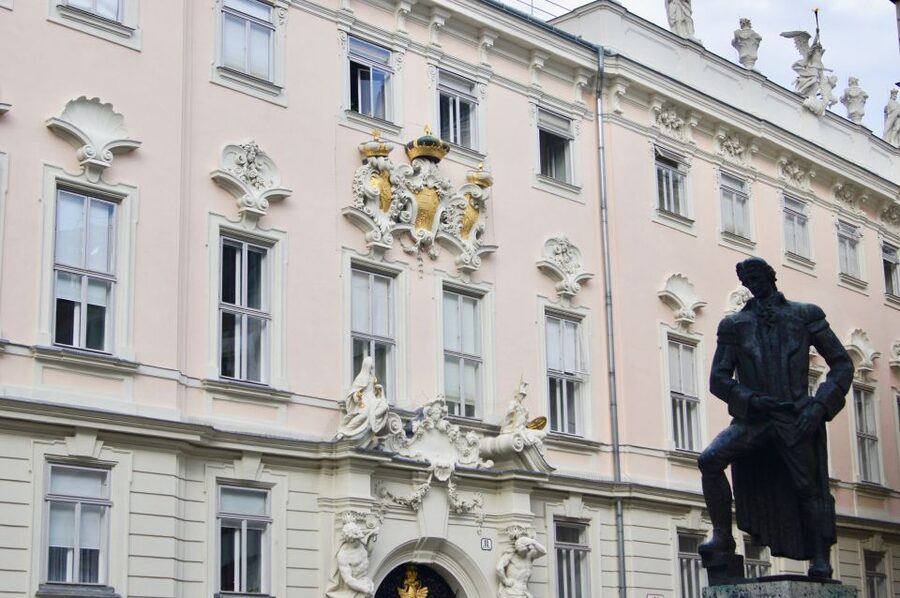
The highlights include stops and landmarks such as the University of Vienna, Café Landtmann (Freud’s favorite coffee house), Palais Ephrussi, Seitenstettengasse Synagogue (outside only), Judenplatz, Joseph’s Square, Memorial against War and Fascism, Vienna State Opera, and more.
Where does the tour end?
The tour finishes at 1010 Vienna, Austria.
Is the tour wheelchair accessible?
Yes, it’s listed as wheelchair accessible.
Can I cancel for a full refund?
Yes. Free cancellation is available up to 24 hours in advance for a full refund.
Can I pay later?
Yes. You can reserve now and pay later.
Yours Alone Across Vienna
- Vienna: Private Walking Tour with a Local
★ 4.6 · 1,446 reviews - Vienna: Private Walking Tour with a Guide
★ 4.7 · 962 reviews - Vienna: Wine Tasting Experience in a Private Wine Cellar
★ 4.8 · 413 reviews - Private Day Tour Trip Salzburg Hallstatt and Melk from Vienna
★ 5.0 · 388 reviews - Private Day Tour of Hallstatt and Salzburg from Vienna
★ 5.0 · 263 reviews
Vienna on Foot, Continued
- Vienna: Guided Walking Tour of City Center Highlights
★ 4.7 · 4,989 reviews - Vienna: Vienna Central Cemetery Guided Walking Tour
★ 4.8 · 3,307 reviews - Vienna: Guided Walking Tour of City Highlights & Hidden Gems
★ 4.9 · 2,180 reviews - Vienna: Viennese Underworld Guided Walking Tour
★ 4.7 · 1,865 reviews - Vienna: World War II Historical Walking Tour
★ 4.8 · 1,772 reviews
Jewish Vienna, Walked
- Jewish Vienna: City Synagogue Guided Tour
★ 4.6 · 208 reviews - Vienna: Jewish Museum Vienna and Museum Judenplatz Tickets
★ 4.5 · 170 reviews - Vienna: Jewish Life in Leopoldstadt 2-Hour Walking Tour
★ 4.9 · 109 reviews - Jewish Vienna Walking Tour
★ 5.0 · 36 reviews - The Cultural Heritage of Jewish Vienna walking tour
★ 4.0 · 30 reviews
Just In: New Vienna Reviews



Jewish Vienna Tours, compared.
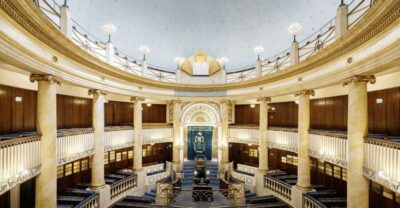 ★ 4.6Jewish Vienna: City Synagogue Guided TourFrom $23208 reviews
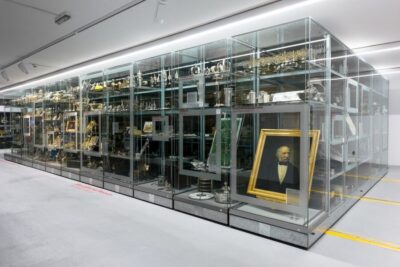 ★ 4.5Jewish Museum Vienna and Museum Judenplatz TicketsFrom $17170 reviews
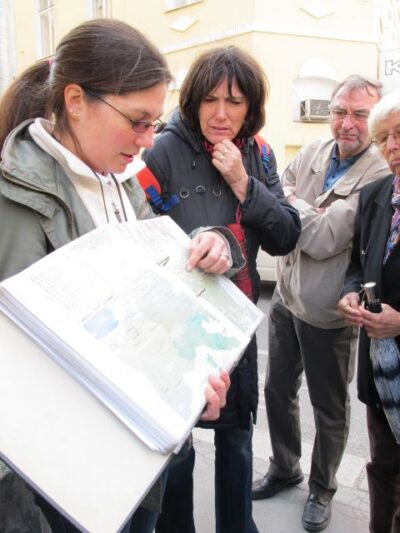 ★ 4.9Jewish Life in Leopoldstadt 2-Hour Walking TourFrom $25109 reviews
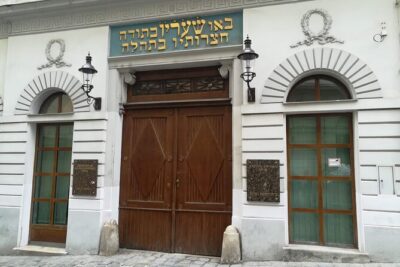 ★ 5.0Jewish Vienna Walking TourFrom $17936 reviews
 ★ 4.0The Cultural Heritage of Jewish Vienna walking tourFrom $5230 reviews
 ★ 5.0Private Jewish Walking Tour ViennaFrom $45030 reviews
 ★ 5.0Jewish in Vienna TourFrom $24010 reviews
 ★ 4.5Private Jewish Vienna Walking TourFrom $5648 reviews
Browse the lists this tour appears in