
Reviewed · VIENNA WALKING TOURS
Vienna Walking Tour with Audioguide on Your Smartphone
Vienna becomes easier when you have a story in your pocket. This smartphone audio walk strings together the city’s most recognizable landmarks with 29 historian-narrated stops and an offline map that helps you keep moving at your own rhythm.
I love how it gives you freedom to pause, look longer, and choose when you want the next chunk of walking. I also like that the narration is practical—history with enough detail to make the buildings feel real, not just postcard scenery. The main consideration is that you’re fully responsible for phone navigation, and the route can be annoying if GPS is slow or the app doesn’t lock onto your location.
One more reality check: even though it’s listed around 2 hours 30 minutes, plan for a longer day if you want to see everything closely. And since it’s a self-guided format, you’ll need your own headphones to hear the audio clearly as you go.
In This Review
- Key things that make this tour work well
- Smartphone audio that covers central Vienna in one loop
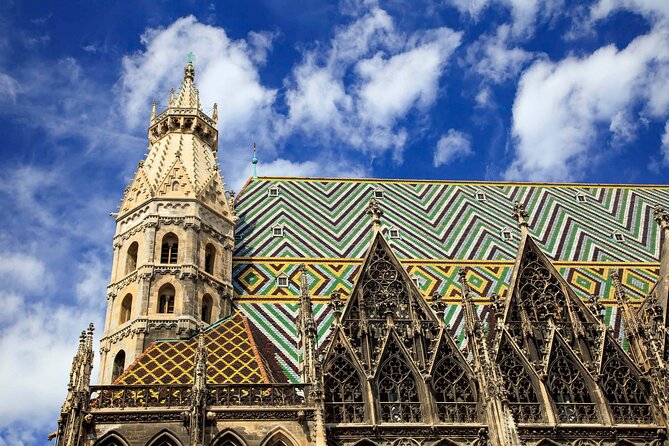
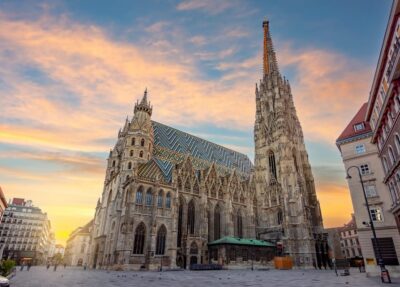
- St. Stephen’s Cathedral: the Gothic “start here” moment
- Teutonic Order, the Plague Column, and Peterskirche
- Two café stops that turn a walking tour into a real day
- Hofburg, Joseph II, and the imperial spine of Vienna
- Donnerbrunnen, war memory, and the art-and-opera corridor
- Mozart, Maria Theresien Square, and the Hofburg stretch
- Vienna City Hall, the University of Vienna, and Beethoven’s house
- Collalto Palace, Schonbrunn’s Marriage Fountain, and the Anker Clock
- How long it really takes: pacing, GPS issues, and skipping without guilt
- Price and value: what $8.40 buys you (and what it doesn’t)
- Should you book this Vienna smartphone walking tour?
- FAQ
- Do I need a human guide for this tour?
- What equipment do I need to use the audio guide?
- Is this tour available in English?
- How does the navigation work?
- How long and how much walking should I plan for?
- Can I cancel and get a full refund?
Key things that make this tour work well
- Smartphone audio with 1-year access so you can revisit stops after you’ve already walked them
- Offline route map + on-screen landmark icons to cut down on getting lost
- Professional historian narration across 29 recordings, focused on what you’re actually seeing
- Flexible pacing that lets you pause for cafés, photos, and tired-knee moments
- Good value for the price when you treat it like a city “orientation pass” rather than a strict timed hike
Vienna on foot, a couple more routes
- Vienna: Guided Walking Tour of City Center Highlights★ 4.7 · 4,989 reviews
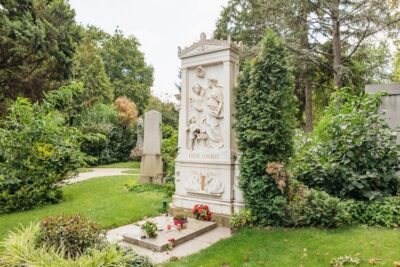
- Vienna: Vienna Central Cemetery Guided Walking Tour★ 4.8 · 3,307 reviews
- Vienna: Viennese Underworld Guided Walking Tour★ 4.7 · 1,865 reviews
- Vienna: World War II Historical Walking Tour★ 4.8 · 1,772 reviews
Smartphone audio that covers central Vienna in one loop
This is a self-guided walking tour using a mobile app (iPhone and Android). You buy the tour, download the app, activate your purchase, then follow the route on your phone using the included offline map and navigation tools. There’s no human guide walking with you—so your phone (and your attention to the map) is the “guide.”
What I appreciate is how the package is built for real strolling. You get 29 audio recordings narrated by a professional historian, plus illustrations meant to help you identify landmarks when signage is small or you’re standing at the wrong corner. The tour is offered in English, and it stays available for 1 year, which is handy if you want to re-walk a section on a different day or verify what you missed.
Also: bring your own headphones. The tour doesn’t include them, and trying to listen without them defeats the point.
St. Stephen’s Cathedral: the Gothic “start here” moment
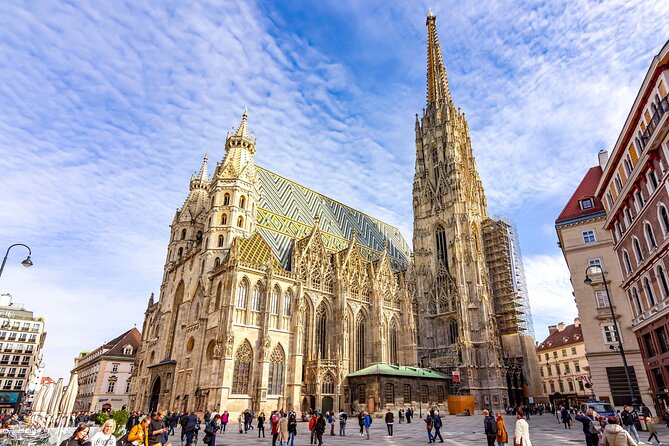
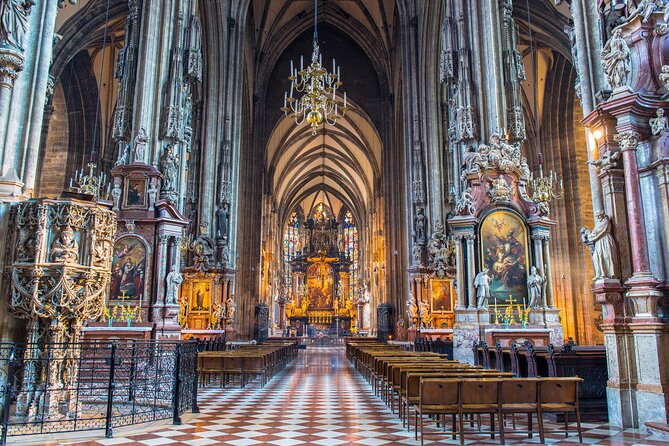
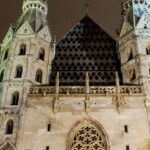
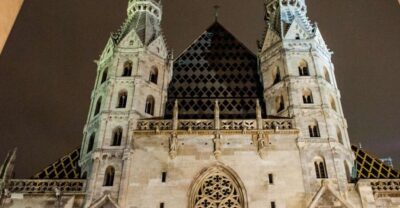
You begin at Stephansplatz, and the first major payoff is St. Stephen’s Cathedral. The narration sets you up to look up: spires, the carved façade, stained glass, and then the interior focus—things like the High Altar and the cathedral’s catacombs route. If you like the feeling of arriving at the city’s main stage, this stop delivers fast.
If you’re choosing where to spend extra time, put some of it here. St. Stephen’s is one of those places where a little context makes details pop. And if you want views, the tour includes the option to ascend the South Tower, which is the kind of payoff that makes you glad you planned your shoes and walked in the first place.
Practical note: the cathedral area is busy. If you want photos without stress, start listening, then wait for a less crowded angle while the next audio segment loads.
Teutonic Order, the Plague Column, and Peterskirche
From the cathedral, the walk shifts into “Vienna’s storybook corners,” where the buildings are still central but less overwhelming than the big draw. The Church of the Teutonic Order gives you Baroque architecture with a calmer mood, and the audio guides you through what to notice—frescoes and sculptures inside the church.
Next comes the Colonna Della Peste (Pestsäule), the plague column. This is one of those stops that changes how you look at a statue in a square. Instead of just admiring the craftsmanship, the narration explains why it was built—gratitude after surviving the plague—and that emotional layer makes the Baroque details feel more than decorative.
Then you reach Peterskirche, a Baroque church with a majestic dome and frescoes. The stop includes an idea worth remembering: if you can, pair your walk with a classical concert in the same historic setting. Even if you don’t book anything right away, this is a good moment to plan your evenings around Vienna’s music life.
Two café stops that turn a walking tour into a real day
This tour has café breaks baked into the flow, and that’s a huge part of why it feels livable instead of exhausting.
First: Café Demel (established 1786). The audio frames it as a classic place to try Viennese baking, including Sachertorte. Even if you don’t order it, Demel is a great place to reset—sit down, refuel, and let your feet recover while the city keeps moving around you.
Later you’ll also hit Café Central (established 1876). This stop is less about a specific dessert recommendation and more about café culture: historic gathering spaces where intellectuals and artists used to meet. If you’ve only heard about Viennese cafés as an idea, this is the sort of stop that turns it into something you can feel.
My advice: treat at least one of these cafés as a full stop, not just “quick coffee.” The tour is easiest to enjoy when you give your legs a break and let the narration finish its point before you move on.
Vienna at walking pace, more routes


Hofburg, Joseph II, and the imperial spine of Vienna
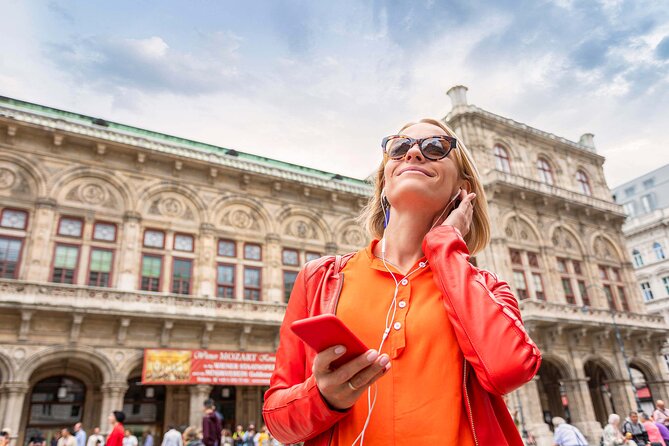
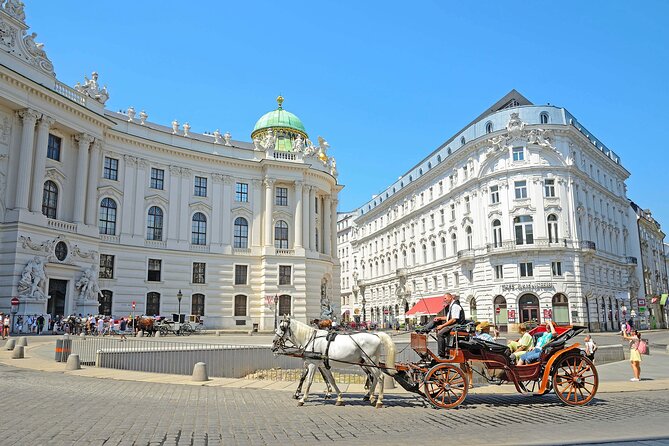
A big chunk of the route runs through the city’s imperial heartbeat. Michaelerplatz is one of the best examples: you get a view of Hofburg Palace from a square position, the Michaelerkirche, and the chance to think about the layered city beneath the street. The narration references the Michaelerplatz Archaeological Excavations, which is a reminder that Vienna is built like a set of time capsules.
Then you hit the Emperor Joseph II Monument at Josefsplatz. The audio ties him to reform and Enlightenment ideals, and it helps to know that this isn’t just a statue—it’s a symbol of a ruler who tried to reshape society.
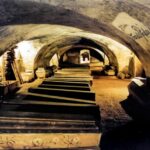
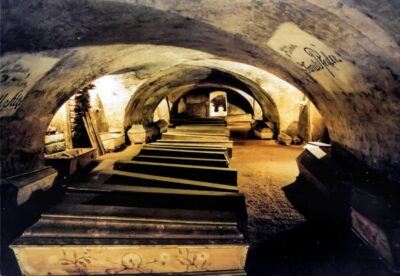
Next comes Vienna’s Imperial Crypt (Habsburg burial vault). This is the kind of stop where the atmosphere does half the work: opulent tombs, imperial names, and a sense of continuity stretching across generations. If you’re the type who likes history that feels personal (not just dates on a timeline), this is worth your attention.
You’ll also encounter the Monument to Empress Elisabeth (Sisi) in Volksgarten, which shifts the story from politics to personality. That change in tone is useful. Vienna can feel like “power architecture” if you only look at palaces—so having Elisabeth’s memorial in the middle of the route gives you breathing room.
Donnerbrunnen, war memory, and the art-and-opera corridor
After the imperial focus, the tour pivots into public space and culture.
Donnerbrunnen (Donner Fountain) shows up as a tranquil stop in motion—an ornate fountain in the area of Neuer Markt. The narration highlights the mythological sculpture program, so you’re not just passing a pretty feature; you’re learning what you’re looking at.
Then you’ll visit the Memorial Against War & Fascism, centered on victims of oppression and symbolized by a shattered column. It’s a heavy stop, but it matters because the story isn’t only about Vienna’s “glory.” It’s also about consequences.
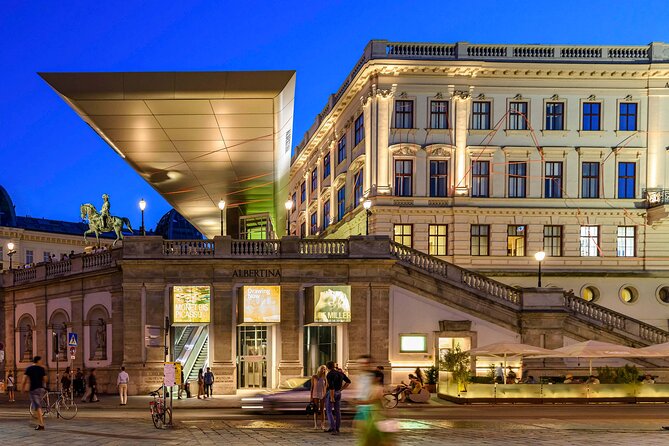
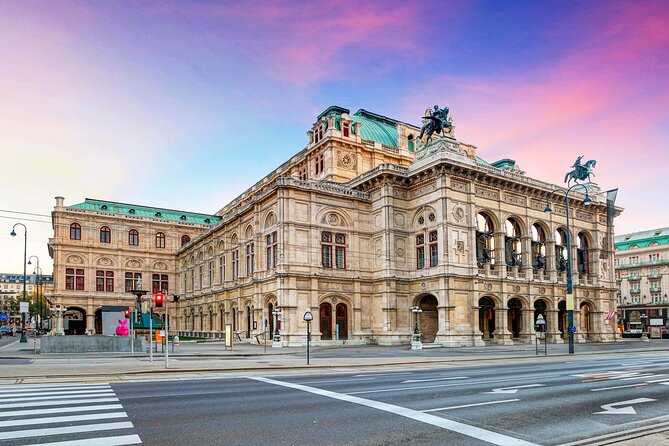
From there, you’re set up for two major cultural institutions. The route includes Albertina Gallery, with the narration pointing to its range (from Renaissance to modern works, with names like Dürer, Monet, and Picasso). It also includes the Vienna State Opera—even if you don’t attend a performance, the audio helps you understand why this opera house is such a pillar of the city’s identity. If you plan to see a show, remember that performance access depends on scheduling, and entrance tickets are not included in the tour.
Mozart, Maria Theresien Square, and the Hofburg stretch
The route lands on Mozart Monument in Burggarten Park, which is a sweet change of pace from palace walls and stone memorials. It’s a straightforward stop—looking at the bronze statue and getting the sense of how Vienna turns musical legacy into public art.
Then it’s on to Maria Theresien Square, anchored by her statue. The audio frames her influence and sets up why this plaza feels like a “classroom” for the imperial era. If you like walking through big squares, this is where it feels easiest to take your time and let the city open up around you.
The tour also keeps returning to the Hofburg Palace area, so by this point you’ll have enough context to notice the difference between grand façades and what you’re actually seeing as you walk past.
Vienna City Hall, the University of Vienna, and Beethoven’s house
As you move away from the densest imperial landmarks, you reach civic and intellectual Vienna.
Vienna City Hall (Rathaus) appears as a Gothic Revival centerpiece with spires and a façade that reads like theatre set design. The narration also brings in Rathausmann, a statue connected to civic pride, which makes the building feel more human than just architectural style.
Next is University of Vienna, dating back to 1365. The audio helps you understand why this institution matters—and it points you toward recognizable landmarks like the main building and university library.
Then comes Beethoven’s House, where Beethoven lived from 1804 to 1815. For music lovers, this stop is one of the most direct “you are here” moments in Vienna. For everyone else, it still works because it ties the composer to real space instead of leaving him floating in textbooks.
Collalto Palace, Schonbrunn’s Marriage Fountain, and the Anker Clock
The later stages of the route bring in a mix of aristocratic architecture and quirky design details.
The tour includes Collalto Palace, described as a 17th-century Baroque building with ornate interior features. This is a good stop if you enjoy seeing how the city’s grand look extends beyond the most famous palaces and museums.
Then you reach the Marriage Fountain (Vermahlungsbrunnen), set in the courtyard of Schönbrunn Palace. The audio frames the fountain through the theme of union—depicting the rivers’ meeting—so it lands as a romantic pause rather than another “look at history” moment.
Finally, there’s the Anker Clock (Ankeruhr) on Hoher Markt, described as an Art Nouveau engineering highlight with whimsical figures that move every hour. If you’ve had enough heavy stone by this point, this kind of clock is a fun reward—one last way for the city to show personality before you circle back to Stephansplatz.
How long it really takes: pacing, GPS issues, and skipping without guilt
Even though the tour is listed around 2 hours 30 minutes, treat that as a baseline for people who keep moving and don’t get distracted. Multiple comments in the provided feedback mention a longer walk when you fully complete the circuit, with planning that can reach about 7 km.
That matters because the tour is flexible by design. If your legs are feeling it, you can stop early, pause the tour, and continue later. The route loop also means you can split the experience across two days and still get the overview you’re paying for.
Navigation is the biggest wildcard. Some people found the app map accurate with a visible position marker (and it can be easier than expected). Others reported needing to restart the app at stops or struggling when the app didn’t recognize where they were. Your best defense is simple:
- Download and activate the tour before you start.
- Use your phone’s GPS when the app asks for it.
- Keep a backup map ready on your phone if a small landmark is hard to confirm.
Price and value: what $8.40 buys you (and what it doesn’t)
At $8.40 per person, this is priced like an “orientation and background” tool, not a full guided museum pass. What you get for that price is the audio itself plus offline navigation support: the app, offline map, landmark identification illustrations, and 1 year of access.
What you don’t get is the human guide, and you also don’t get entrance fees. The tour indicates many stops as free for admission, but the provider also states that entrance tickets aren’t included. So if you choose to go inside a cathedral section, a museum, or an opera performance, you’ll need to handle those costs separately.
In real terms, this price works best if you:
- Want explanations while walking (so you don’t spend your trip reading your phone).
- Plan to see the highlights in central Vienna over a day or two.
- Prefer a smaller, self-paced format over a large group.
Should you book this Vienna smartphone walking tour?
I’d book it if you want a low-cost way to connect Vienna’s big sights to stories that actually help you look. It’s especially good for first-timers because it hits the central cluster—cathedral, imperial landmarks, music, cafés, and major monuments—without forcing you into a rigid schedule.
I wouldn’t book it as your only plan if you hate phone navigation. If you’re the type who needs crystal-clear directions between every step, this kind of audio-only route may frustrate you when GPS or app location tracking acts up. In that case, consider pairing it with a second map app or choosing a tour with a live guide.
If you can handle a little tech and a solid walk, you’ll likely find this tour a fun way to get your bearings fast and then decide what deserves a second visit.
FAQ
Do I need a human guide for this tour?
No. It’s a self-guided smartphone audio tour. You follow the route in the app rather than walking with a person.
What equipment do I need to use the audio guide?
You need your own smartphone, plus headphones (the tour doesn’t include headphones). The app is available for iPhone and Android.
Is this tour available in English?
Yes, the tour is offered in English.
How does the navigation work?
You use the mobile app map and an offline map with the route. You can use GPS navigation as you follow the stops.
How long and how much walking should I plan for?
The tour is listed at about 2 hours 30 minutes, but you should expect it can take longer if you want to finish the full circuit. Some feedback notes it’s close to a 7 km walk.
Can I cancel and get a full refund?
Yes. You can cancel up to 24 hours in advance for a full refund.
More Tours in Vienna
- Vienna: Schönbrunn Palace & Gardens Skip-the-Line Tour
★ 4.7 · 7,739 reviews - Vienna Spanish Riding School Guided Tour
★ 4.7 · 6,765 reviews - Vienna: Skip-the-Line Sisi Museum, Hofburg and Gardens Tour
★ 4.8 · 5,918 reviews - Vienna: Skip-the-Line Schönbrunn Palace & Gardens Tour
★ 4.8 · 5,411 reviews - Vienna: Guided Walking Tour of City Center Highlights
★ 4.7 · 4,989 reviews
More Tour Reviews in Vienna
- Vienna: Vivaldi’s Four Seasons Concert in Karlskirche
★ 4.7 · 14,951 reviews - Vienna: Schönbrunn Palace & Gardens Skip-the-Line Tour
★ 4.7 · 7,739 reviews - Vienna: Light of Creation Votive Church Immersive Light Show
★ 4.8 · 6,779 reviews - Vienna Spanish Riding School Guided Tour
★ 4.7 · 6,765 reviews - Vienna: Classical Concert in the World-Famous Musikverein
★ 4.6 · 6,673 reviews
Vienna on Foot, Continued
- Vienna: Guided Walking Tour of City Center Highlights
★ 4.7 · 4,989 reviews - Vienna: Vienna Central Cemetery Guided Walking Tour
★ 4.8 · 3,307 reviews - Vienna: Guided Walking Tour of City Highlights & Hidden Gems
★ 4.9 · 2,180 reviews - Vienna: Viennese Underworld Guided Walking Tour
★ 4.7 · 1,865 reviews - Vienna: World War II Historical Walking Tour
★ 4.8 · 1,772 reviews
Just In: New Vienna Reviews



Vienna Walking Tours, compared.
 ★ 4.8Vienna Central Cemetery Guided Walking TourFrom $3353,307 reviews
 ★ 4.9Guided Walking Tour of City Highlights & Hidden GemsFrom $272,180 reviews
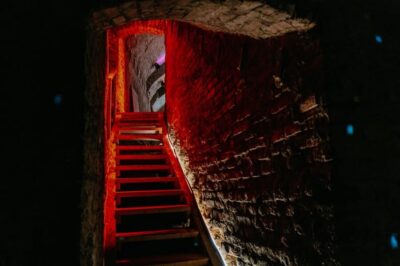 ★ 4.7Viennese Underworld Guided Walking TourFrom $371,865 reviews
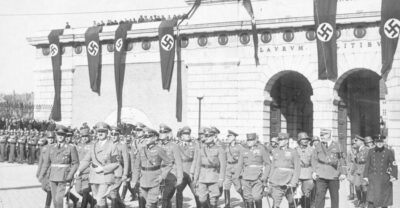 ★ 4.8World War II Historical Walking TourFrom $311,772 reviews
 ★ 5.0Vienna Historic Center Small Group Walking TourFrom $721,746 reviews
 ★ 4.6Private Walking Tour with a LocalFrom $561,446 reviews
 ★ 4.91.5-Hour Underground Walking TourFrom $321,146 reviews
 ★ 4.4Ghosts and Legends Guided Nighttime Walking TourFrom $201,088 reviews
Browse the lists this tour appears in