
Reviewed · VIENNA PRIVATE TOURS
Private Vienna Highlights History Walk — WWII and Post War Vienna
Vienna’s WWII story lives in plain sight. This private, 3-hour walk strings together palaces, squares, and memorials so you can read how the city shifted after 1938 and after 1945. I like that it’s private (so the pace and focus can bend to your interests) and that it uses major landmarks to explain what changed and what stayed.
My favorite part is the flow: you start at the big views of Upper Belvedere and keep moving through places tied to occupation, propaganda, and remembrance. The second big win is the hotel pickup, which makes a walking-and-transit mix feel effortless instead of like a scavenger hunt.
The one thing to plan around is that it’s still a walk (with a short tram ride), so moderate fitness helps, and rain can make the streets slick underfoot.
In This Review
- Key things to know before you go
- How WWII and post-war Vienna show up in everyday streets
- Private walking route, hotel pickup, and the 3-hour pacing
- Upper Belvedere panorama: Prince Eugene, 1955 symbolism, and the view of change
- Schwarzenbergplatz and the Soviet monument: liberation memory is complicated
- Hochstrahlbrunnen, French Embassy, and the Ringstraße tram ride
- Burggarten and Mozart’s presence beside uncomfortable history
- MuseumsQuartier, Maria Theresa’s square, and the FLAK towers in concrete
- Heldenplatz and the Anschluss speech: a square built for power
- The Hofburg: from seven centuries of rule to modern presidency
- Judenplatz Holocaust Memorial: quiet, essential remembrance
- Pestsäule and St. Stephen’s: crisis, counter-reformation, and April 1945
- Guide impact: Brigitte, Walter, Alex, Hannes, and Andrea set the tone
- Value check: $342.40 per group and what you actually get
- Who this fits best (and when another option might work better)
- Should you book this WWII and post-war Vienna highlights walk?
- FAQ
- How long is the tour?
- What group size is this tour?
- Is hotel pickup included?
- Where does pickup happen?
- What time does the tour start?
- Is the tour in English?
- Do I need to buy admission tickets for the stops?
- Does the tour include food and drinks?
- Is public transport to and from the attractions included?
- Are service animals and pets allowed?
- What is the cancellation window?
Key things to know before you go
- Hotel pickup included for a smooth start (and no stress finding the group)
- Private group up to 10, so your questions can steer the conversation
- WWII-to-postwar theme built through real landmarks and memorials, not just general commentary
- Belvedere + gardens axis to connect imperial ambition to post-war meaning
- A Ringstraße tram segment to cover more ground than pure walking
- Free-entry stops are built in, so you spend time on stories more than tickets
Only your group, at your own tempo
- Vienna: Private Walking Tour with a Local★ 4.6 · 1,446 reviews
- Vienna: Private Walking Tour with a Guide★ 4.7 · 962 reviews
- Vienna: Wine Tasting Experience in a Private Wine Cellar★ 4.8 · 413 reviews
- Private Day Tour Trip Salzburg Hallstatt and Melk from Vienna★ 5.0 · 388 reviews
How WWII and post-war Vienna show up in everyday streets
If you only visit Vienna for palaces and classical music, you can miss the “other layer” the city carries. This tour is designed around that second layer: the way WWII, Nazi rule, liberation, occupation, and post-war identity show up in architecture and public space. You’re not just looking at sights—you’re learning how people used those sights to shape memory.
What I like is that the theme stays consistent. Each stop answers a simple question: what did this place mean during the war, and what did it mean afterward? At Belvedere, you’re looking at power and symbolism shifting from imperial messaging to post-war framing. At squares like Schwarzenbergplatz and Heldenplatz, you’re seeing how commemoration can hold competing narratives in the same city.
You’ll also get a useful Vienna skill: how to navigate the city while keeping your bearings. The tour mixes walking with a short tram segment so you get coverage without turning the day into marathon logistics.
Private walking route, hotel pickup, and the 3-hour pacing
This is a private tour for your group only, sized up to 10 people. That matters because a private guide can slow down when you want photos, pause when the route crosses a particularly important story, or speed up if you’re just trying to get your bearings fast.
It runs about 3 hours, with start times at 09:30 and 14:00. Pickup is offered from hotels and vacation rentals in town, and also from Vienna Hbf, Vienna West, or the Reichsbruecke pier. If you’re staying at A’Rosa, there’s a specific meeting point at Pier Handelskai 265 (1020 Wien).
One practical point: the tour includes hotel pickup, but it does not include public transport to/from attractions. In practice, that means you may use local transport during the route (the itinerary includes a short tram ride), but you shouldn’t count on the operator to cover everything outside the scheduled plan.
Fitness-wise, they ask for moderate physical fitness. You’ll be on city sidewalks for stretches, so plan for walking shoes. If you’re the type who hates getting cold, bring a layer—especially if you’re touring in shoulder season or winter.
Upper Belvedere panorama: Prince Eugene, 1955 symbolism, and the view of change
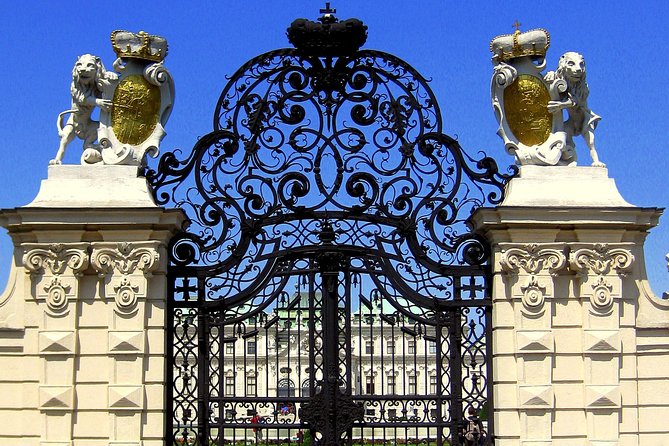
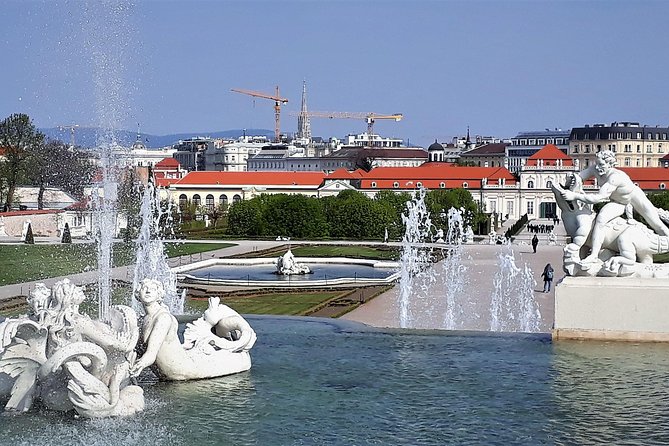
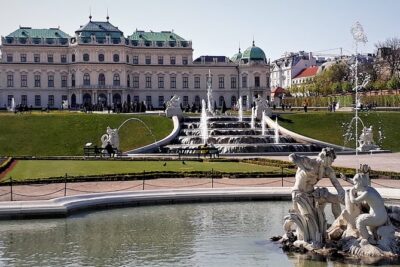
Your first major “wow” moment is at the Belvedere gardens area. The Upper Belvedere terrace gives you one of Vienna’s classic viewpoints—wide, open, and memorable. More importantly, your guide uses that view to explain why it became a kind of stage for political meaning.
You’ll hear the story tied to Prince Eugene, described here as a military genius who never ruled. Then you connect that imperial ambition to a later turning point: 1955, when Upper Belvedere became symbolically linked with the start of Austria’s Second Republic. The point isn’t to memorize dates like a quiz. It’s to understand how the same setting can be re-framed after a national trauma.
From there you move into the Belvedere gardens axis—a baroque garden layout that reads like a deliberate design. The way the grounds descend and align isn’t just pretty. It’s a statement about order, hierarchy, and power. You’ll see the garden as a political design, then compare that “controlled” feeling to the war-era disruption you’ll tackle later in the route.
This is also one of the easier segments because the stop is built around exterior viewing and garden space. Admission is marked as free for the tour’s Belvedere garden portion, so you can focus on the narrative without juggling entry logistics.
Schwarzenbergplatz and the Soviet monument: liberation memory is complicated
Next comes Schwarzenbergplatz, a square where international memory is carved into stone. The stop centers on the Soviet War Memorial honoring Red Army soldiers who died in 1945 and helped end Nazi rule in Vienna.
Here’s why this part matters: it challenges the simple story that liberation is always remembered the same way by everyone. In the same city where the Nazis made propaganda part of daily life, you now see another power’s memorial language—one that also becomes part of the official public record.
The design and placement make it hard to treat the subject lightly. Even if you don’t have a deep background in Eastern Front history, you can still read what the monument is doing: marking sacrifice, confirming presence, and shaping how future generations interpret that ending.
This stop is short, but it’s a key pivot. After Belvedere’s imperial-to-republic symbolism, Schwarzenbergplatz pushes you into the reality that Vienna’s post-war identity was shaped under pressure, not in a vacuum.
Vienna at walking pace, more routes
Hochstrahlbrunnen, French Embassy, and the Ringstraße tram ride
You’ll then move to Hochstrahlbrunnen, a monumental fountain that celebrates Vienna’s alpine tap water—an everyday infrastructure story told through grand architecture. The fountain’s setting next to the French Embassy adds another layer: two Allied powers, and two very different architectural messages placed side by side.
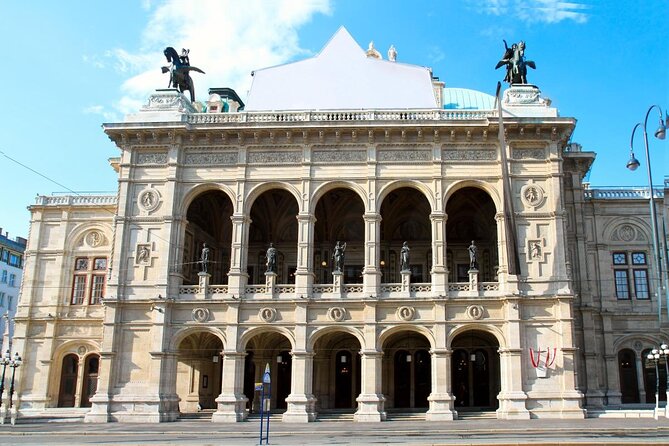
From there, you take a short tram ride along the Ringstraße, Vienna’s big 19th-century prestige project. The Ring isn’t just a scenic loop here; it’s a measuring stick. You pass key city landmarks, including the rebuilt State Opera, which becomes a symbol of cultural continuity after wartime destruction.
That tram segment is practical value. Pure walking would take longer and reduce time at the more meaningful stops. This ride lets you cover ground while keeping your guide’s storytelling thread intact.
If you want an easy way to “learn Vienna’s shape,” Ringstraße is one of the best routes. And on a history-themed walk, it helps you connect the physical city plan to what the city chose to rebuild.
Burggarten and Mozart’s presence beside uncomfortable history
At Burggarten, you get another classic Vienna scene: Mozart overlooking a garden tied to the imperial court. It’s the kind of place that feels timeless, which is exactly why your guide’s framing matters.
This stop also connects culture, institutions, and political fallout. You’re steps away from the Academy of Fine Arts, where the account you’ll hear is that a young Adolf Hitler was rejected. This is one of those uncomfortable “history footnotes” that turns into a headline because of what happened later.
I like this portion because it doesn’t stay abstract. You see how art institutions, education, and careers intersected with the era’s ideology. It’s not about turning Vienna into a thriller. It’s about showing how ordinary cultural systems can end up tangled in extreme outcomes.
This stop is brief, and that’s fine. Think of it like a spotlight—one focused moment to remember that the city’s beauty and its political danger can sit in the same frame.
MuseumsQuartier, Maria Theresa’s square, and the FLAK towers in concrete
Now you head toward MuseumsQuartier Wien, anchored by Maria Theresa’s presence and lined by twin museums. It’s easy to treat this area like a modern art zone. Your guide pulls it back into a longer timeline—especially by pointing out Vienna’s wartime infrastructure.
In the background you’ll see reference to one of six FLAK towers, described as indestructible concrete witnesses to the city’s final months when militarization intensified. Even if you’re not a structural-history person, seeing those elements gives the tour weight. You’re watching the city layer time: imperial rule, modern culture, and the blunt material reality of air defense.
This is where the tour stays honest about the war’s physical mark. MuseumsQuartier can look “cool and contemporary,” but the guide ties it to how the city endured bombardment and how some scars stayed in place.
Heldenplatz and the Anschluss speech: a square built for power
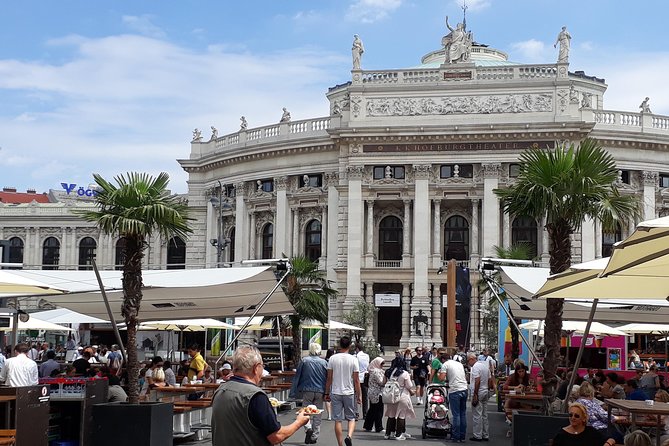
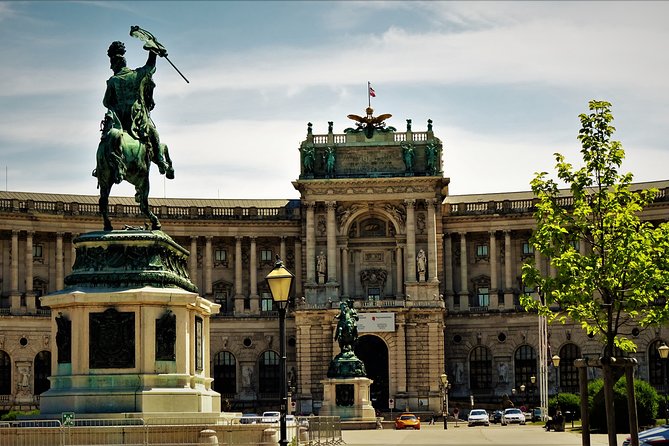
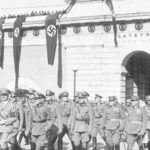
Heldenplatz is one of the most dramatic stops on the route because the square carries multiple eras at once. It was a stage for imperial ceremony and military pride, and then in March 1938 it hosted Hitler’s Anschluss speech—the point where Nazi power was made public on Austrian soil.
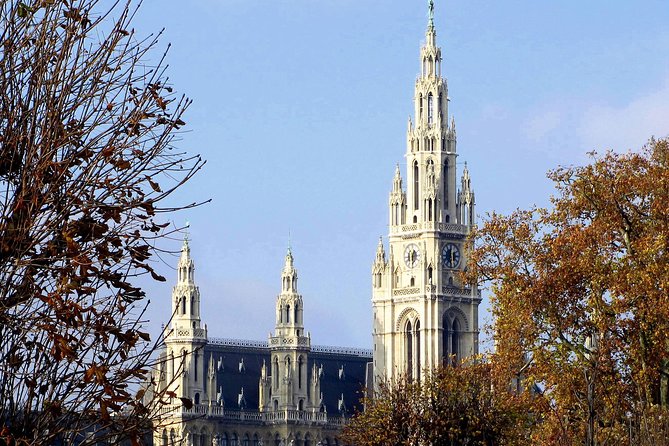
What you’ll notice here is the surrounding framing: parliament, city hall, museums, and Burgtheater create a panorama of power and culture. That contrast can feel eerie once you know the story your guide is giving you. The spaces that host public culture also hosted political theater.
This is a good stop for photos, but it’s also a stop for listening. The guide’s job is to help you read the symbolism without turning the story into shock value.
The Hofburg: from seven centuries of rule to modern presidency
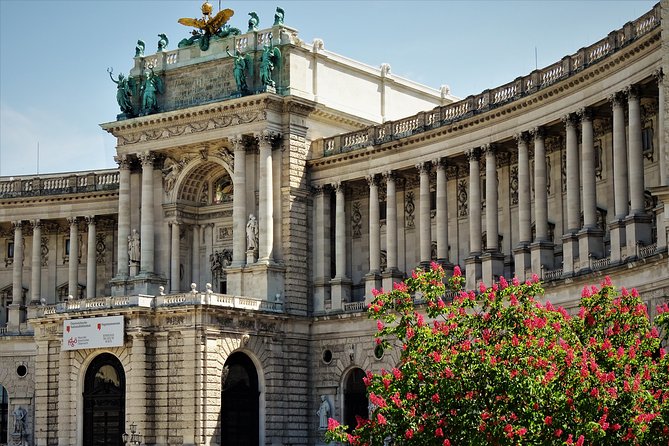
After Heldenplatz, you move to the Hofburg. This is Vienna’s palace-city—served as a seat of power for about seven centuries. The tour frames it as a continuous institution that shifted hands and meanings over time.
You’ll hear the big arc: from dukes and emperors to today’s presidential role. That makes the building more than a pretty backdrop. It becomes a symbol of how the state changed after monarchy, and how the government itself learned to speak in new “language.”
This is also one of those stops where your guide can tailor the conversation. If you want deeper political storytelling, you’ll get it. If you’d rather keep it visual, you can focus on what the architecture tells you about authority and continuity.
You also get a transition moment where imperial façades meet ecclesiastical grandeur and then—today—luxury boutiques. That blend is part of what makes Vienna feel like itself: ceremony, faith, and commerce have long shared the same streets.
Judenplatz Holocaust Memorial: quiet, essential remembrance
At Judenplatz, the tone shifts. On the site tied to Vienna’s medieval Jewish community—destroyed in 1421—there’s the Holocaust Memorial, described as the Nameless Library commemorating 65,000 Austrian Jews murdered in the Shoah.
This stop is built for reflection, not performance. It’s one you shouldn’t rush. The tour gives you enough time to absorb what you’re seeing and to understand why this memorial exists where it does—on a site of prior community life.
If you’re someone who wants history with context but also respects silence, this is the part that tends to hit hardest. It anchors the tour’s WWII focus in the reality of genocide, not just political speeches and monuments.
Pestsäule and St. Stephen’s: crisis, counter-reformation, and April 1945
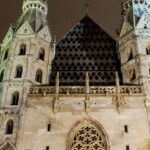
Next is the Colonna Della Peste (Pestsäule), the Plague Column. It’s described as counter-reformation in marble—art and devotion used to reclaim a city after crisis. This stop adds an important angle: Vienna’s suffering and recovery are not only a 20th-century story.
Then you end at St. Stephen’s Cathedral, Vienna’s Gothic heart. The guide connects it to the war’s final months: in April 1945, parts of the cathedral burned because looters set fire to nearby shops. It’s a sobering note that ties even famous landmark survival to the chaos of late-war collapse.
This ending works because it brings you back to a place many visitors recognize instantly. The point isn’t the architecture alone. It’s the reminder that even in the middle of Europe’s greatest cultural cities, war can touch everything.
Guide impact: Brigitte, Walter, Alex, Hannes, and Andrea set the tone
In a history walk, the guide is the difference between a list of facts and a city you can actually understand. This tour’s reputation for guide quality shows up in the names you’ll hear.
I’ve seen strong feedback tied to Brigitte, praised for making Vienna feel like it’s coming alive with warm, friendly storytelling and careful local tips. Walter shows up again and again for organization and a pace that still leaves time for a coffee break—meaning the tour doesn’t feel like a sprint. Alex is described as fun and engaging while still answering questions beyond the planned stops. Hannes and Andrea are both recognized for tailoring and handling group needs smoothly.
Even the small behaviors matter. When a guide answers questions that aren’t directly on the itinerary, you learn how the city connects. That’s what you want from a WWII/post-war theme: the ability to connect what you see today with what was happening beneath the surface.
Value check: $342.40 per group and what you actually get
The price is $342.40 per group for up to 10 people, for about 3 hours. That sounds like a lot until you divide it. At the full group size, that’s roughly $34 per person—for a private, licensed guide plus hotel pickup.
Is it good value? For first-time visitors with limited time, yes—because you’re paying for someone to stitch together the city’s meaning. Vienna is big. Doing this kind of thematic walking solo would mean spending extra time figuring out routes, and you’d lose the “why this place matters” context.
The one tradeoff: you’re not paying for entry tickets or meals, and public transport to/from attractions isn’t included. But the tour’s planned stops are marked with free admission in the itinerary notes, which keeps costs from creeping up on you.
If your group wants the city’s WWII and post-war stories organized into a smart route, this price can feel quite fair.
Who this fits best (and when another option might work better)
This tour is a strong match if:
- you want a private history-focused orientation in a short window
- you like your history tied to specific places, not lectures in a classroom
- you want some flexibility so your guide can lean into your questions
- your group includes people with different interests (palaces, memorials, architecture, transit)
It may be less ideal if you:
- hate walking for extended periods (moderate fitness is requested)
- want a purely interior museum day (this is mostly an outdoor-and-public-space route)
- plan to eat as part of the tour—food and drinks aren’t included, and you may want to step off the route for lunch or a coffee
Also, plan for weather. One review mentioned getting very wet in poor weather, which is a reminder that this is a walking experience. Bring a rain layer and you’ll keep enjoying it instead of tolerating it.
Should you book this WWII and post-war Vienna highlights walk?
I’d book it if you want Vienna with context: how the city’s power symbols changed after 1938, how occupation memories were preserved, and how post-war identity was shaped in public space. The route is efficient—Belvedere views, memorial squares, a tram hop along Ringstraße, then the heavy stops around Judenplatz and St. Stephen’s.
I’d skip it (or pair it with something else) if you’re already deep into Vienna history and just want classic sights without the WWII thread. But for many visitors, this is exactly the right “first serious history walk” tone: guided, practical, and anchored in what you can actually see in the street.
If you’re going with a group, the private pricing can be an easy win. If you’re going solo, it’s still workable—just know you’re paying for guide attention and pickup convenience, not for a cheap shared-group deal.
FAQ
How long is the tour?
It runs for about 3 hours.
What group size is this tour?
It’s private, with up to 10 people per group.
Is hotel pickup included?
Yes, hotel pickup is included. Hotel drop-off is not included.
Where does pickup happen?
Pickup is available at hotels and vacation rentals in town, Reichsbruecke pier, or train stations including Vienna Hbf and Vienna West. Other meeting points can be arranged, including a specific location for A’Rosa guests.
What time does the tour start?
The tour starts at 09:30 or 14:00.
Is the tour in English?
Yes, it’s offered in English.
Do I need to buy admission tickets for the stops?
The listed stops in the itinerary are marked as Admission Ticket Free.
Does the tour include food and drinks?
No, food and drinks aren’t included.
Is public transport to and from the attractions included?
Public transport to/from attractions isn’t included. The route includes a short tram ride, and the guide can help with ease of movement, but you should still plan on using local transport as needed.
Are service animals and pets allowed?
Service animals are allowed. Pets are not permitted in certain areas visited.
What is the cancellation window?
Free cancellation is available up to 24 hours in advance for a full refund.
More Vienna Walks, Step by Step
- Vienna: Guided Walking Tour of City Center Highlights
★ 4.7 · 4,989 reviews - Vienna: Vienna Central Cemetery Guided Walking Tour
★ 4.8 · 3,307 reviews - Vienna: Guided Walking Tour of City Highlights & Hidden Gems
★ 4.9 · 2,180 reviews - Vienna: Viennese Underworld Guided Walking Tour
★ 4.7 · 1,865 reviews - Vienna: World War II Historical Walking Tour
★ 4.8 · 1,772 reviews
More Tour Reviews in Vienna
- Vienna: Vivaldi’s Four Seasons Concert in Karlskirche
★ 4.7 · 14,951 reviews - Vienna: Schönbrunn Palace & Gardens Skip-the-Line Tour
★ 4.7 · 7,739 reviews - Vienna: Light of Creation Votive Church Immersive Light Show
★ 4.8 · 6,779 reviews - Vienna Spanish Riding School Guided Tour
★ 4.7 · 6,765 reviews - Vienna: Classical Concert in the World-Famous Musikverein
★ 4.6 · 6,673 reviews
Yours Alone Across Vienna
- Vienna: Private Walking Tour with a Local
★ 4.6 · 1,446 reviews - Vienna: Private Walking Tour with a Guide
★ 4.7 · 962 reviews - Vienna: Wine Tasting Experience in a Private Wine Cellar
★ 4.8 · 413 reviews - Private Day Tour Trip Salzburg Hallstatt and Melk from Vienna
★ 5.0 · 388 reviews - Private Day Tour of Hallstatt and Salzburg from Vienna
★ 5.0 · 263 reviews
Just In: New Vienna Reviews



Vienna Private Tours, compared.
 ★ 4.6Private Walking Tour with a LocalFrom $561,446 reviews
 ★ 4.7Private Walking Tour with a GuideFrom $55962 reviews
 ★ 4.8Wine Tasting Experience in a Private Wine CellarFrom $22413 reviews
 ★ 5.0Private Day Tour Trip Salzburg Hallstatt and Melk from ViennaFrom $930388 reviews
 ★ 5.0Private Day Tour of Hallstatt and Salzburg from ViennaFrom $919263 reviews
 ★ 5.0Private Hidden Vienna Walk — Stories Behind Quiet CornersFrom $344137 reviews
★ 4.5Vienna Private Walking Tour with a LocalFrom $58131 reviews
★ 5.0Private Hidden Vienna Walk — Stories Behind Quiet CornersFrom $344137 reviews
★ 4.5Vienna Private Walking Tour with a LocalFrom $58131 reviews
 ★ 5.0Vienna at First Glance a Private Walking Tour for First TimersFrom $344131 reviews
Browse the lists this tour appears in