
Reviewed · ST STEPHEN'S & OLD TOWN TOURS
World War II History Vienna Old Town Private Walking Tour
Vienna has dark corners worth seeing. This private WWII history tour in Vienna’s Old Town tracks how Europe’s fractures turned into catastrophe, with a strong timeline and expert, fluent guiding. I especially like the chance to ask questions in your language, plus the way the route points you to visible reminders in the streets, not just dates in a textbook; guides such as Peter, Sanda, Alexander, and Frau Heuberger come up for being attentive and professional, including patience during a stop with a small child. One possible drawback: this is Holocaust and Nazi-occupation focused, so the emotional weight can be heavy.
You start in Morzinplatz at the Memorial to the Victims of Nazi Terror (near the former Hotel Metropol, used as Gestapo headquarters in 1939). From there, you walk through Inner Stad past WWII and Holocaust remembrance sites, then reach major imperial landmarks like the Hofburg area and Heldenplatz’s memorial spaces, before finishing near the Vienna State Opera with a monument tied directly to the 1945 bombing.
In This Review
- Key takeaways before you book
- Why a WWII-focused walk in Vienna’s Old Town feels different
- Morzinplatz to Hotel Metropol: starting at Nazi terror’s doorstep
- Inner Stad streets: propaganda, daily life, and the Jewish tragedy
- Hofburg and Heldenplatz: where imperial Vienna meets wartime memory
- Seeing St. Stephen’s area without losing the WWII thread
- End near the Vienna State Opera: the 1945 bombing in plain sight
- Language, guide quality, and pacing that actually works
- Price check: what $214 per person buys you
- Who this tour suits best (and who may want a different pace)
- Should you book this WWII history tour in Vienna?
- FAQ
- FAQ
- Where does the tour start?
- How long is the tour?
- Is this a private tour?
- What sites and areas do we see?
- What does the guide cover about WWI and WWII?
- What languages are available?
- Is free cancellation available?
- Is there an option to pay later?
Key takeaways before you book
- Start at Morzinplatz, at the memorial tied to Nazi terror and the nearby Hotel Metropol Gestapo headquarters
- A clear WWI-to-WWII timeline, with causes and consequences explained on the walk
- Stops that link politics to daily life, including propaganda in German-occupied Austria
- Holocaust remembrance along the route, with memorials and remembrance stones you can actually read and discuss
- Hofburg/Heldenplatz context, where imperial Vienna meets wartime memory (exterior viewing where noted)
- Two hours, private pacing, sized to keep questions audible for groups up to 1–25
Around the Stephansdom and the old lanes
- Vienna: Guided Walking Tour of City Center Highlights★ 4.7 · 4,989 reviews
- Vienna Historic Center Small Group Walking Tour★ 5.0 · 1,746 reviews
- Vienna: St. Stephen’s Cathedral & Dom Museum Wien Tickets★ 4.5 · 1,652 reviews
- Vienna: Old Town Sightseeing Tour in a Vintage-Style E-Car★ 4.5 · 1,107 reviews
Why a WWII-focused walk in Vienna’s Old Town feels different
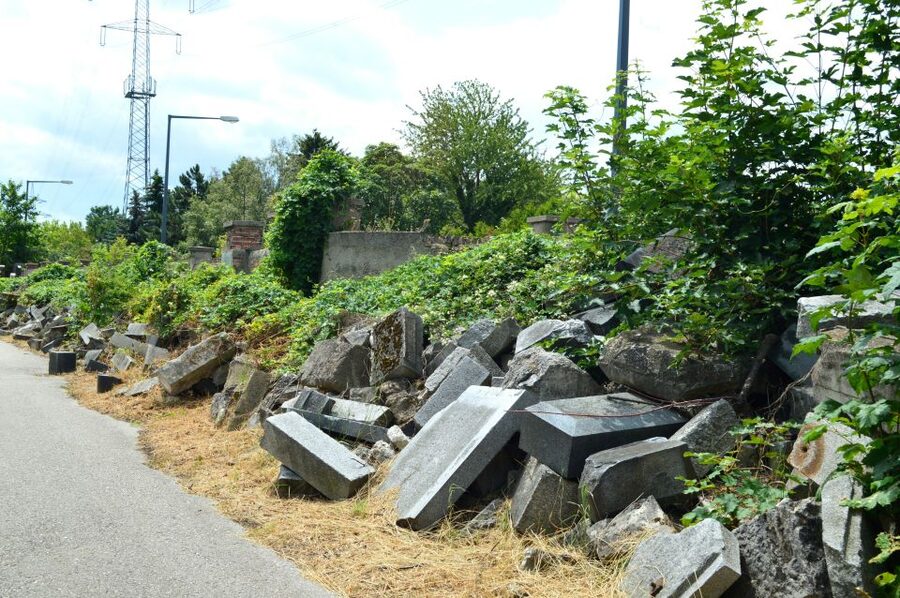
A lot of history tours in Vienna stay safely elegant. This one does something harder: it shows you how power, ideology, and fear changed the city street by street, especially for Jewish Austrians and other targeted communities. The best part is that the story is built as you walk, so the monuments stop feeling random and start feeling connected.
I also like that it does more than list big names. You’ll learn about Adolf Hitler, Ernst Kaltenbrunner, and other Austrian Nazis, but the guide ties them to the timeline and the consequences you can see in the urban fabric. That’s how you start to understand why Vienna’s wartime role wasn’t an abstract concept.
At two hours, you won’t be out all day. You’ll still get a lot of structure: WWI setup, the interwar slide, Austrofascism, the Holocaust, German occupation, bombing, and liberation—framed in a way you can keep straight later.
Morzinplatz to Hotel Metropol: starting at Nazi terror’s doorstep
Your tour meeting point is in Morzinplatz at Denkmal der Opfer des Faschismus (Memorial to the Victims of Nazi Terror), Morzinplatz 4, 1010 Wien. The guide starts you here on purpose: it anchors the tour’s emotional tone and gives you a concrete place to understand the Nazi machinery of terror.
From this spot, the story connects to the former Hotel Metropol, which was used as the Gestapo headquarters in Vienna in 1939. Even if you’ve read about the Gestapo before, seeing how the city’s buildings were repurposed for repression changes how the history lands in your head. It turns “occupation” from a word into a lived reality.
One practical note: because this opening matters, arrive a few minutes early so you’re not distracted. Also, if you’re the type who needs time to process, tell your guide up front. A good guide will pace the tone for your group.
Inner Stad streets: propaganda, daily life, and the Jewish tragedy
After you leave the memorial area, you’re in Inner Stad (Old Town), and the tour becomes a slow guided walk through the kind of places people actually moved through during occupation. The guide explains how daily life functioned under German-occupied Austria and how propaganda shaped what people believed, what they feared, and what they were pressured to ignore.
A key part of the route focuses on the tragic fate of Vienna’s Jewish citizens. As you pass the Holocaust Memorial and some remembrance stones, the guide helps you connect the physical markers to the human story behind them. You’re not just looking; you’re learning how these memorials were meant to keep memory specific.
This is also where the “private” format matters. When you’re walking a dense Old Town, it’s easy for history tours to rush. With a private group, you can ask clarifying questions as you go—especially if you want help understanding the timeline or why Vienna’s role is discussed the way it is.
If you’re visiting with a child or someone who may need breaks, it’s worth knowing that the tour has been described as patient during a stop when a very young child needed attention. That kind of flexibility can make a difference, even on a compact, two-hour route.
Hofburg and Heldenplatz: where imperial Vienna meets wartime memory
Next, you shift from the occupation story to major landmark ground. You’ll see the imperial palace complex of the Hofburg (exterior only) and then reach the Memorial Crypt dedicated to WWI and WWII victims at Heldenplatz.
This combination works well because it forces a contrast. Hofburg is about empire, state, and ceremony; the Heldenplatz memorial spaces are about the cost of war and the grief left behind. Standing in view of these places, you get a clearer sense of how political power and public life can coexist with devastation—sometimes only a short distance apart.
The guide’s job here is to keep the story from becoming purely architectural. You don’t want a quick “this is important because it’s famous.” You want meaning. A strong guide connects what happened—WWI’s aftermath, the way WWII’s violence reshaped Austria, and how memory is recorded in public space—to what you’re seeing around you.
You’ll also see the monument to Emperor Franz Joseph I in Burggarten. That stop helps set context for the pre-WWI mindset and the older structures of authority that later got overwhelmed by ideological upheaval. Even if you’re not a monarchy person, it’s useful for understanding what changed when Europe’s political center broke.
Vienna on foot, a couple more routes

Seeing St. Stephen’s area without losing the WWII thread
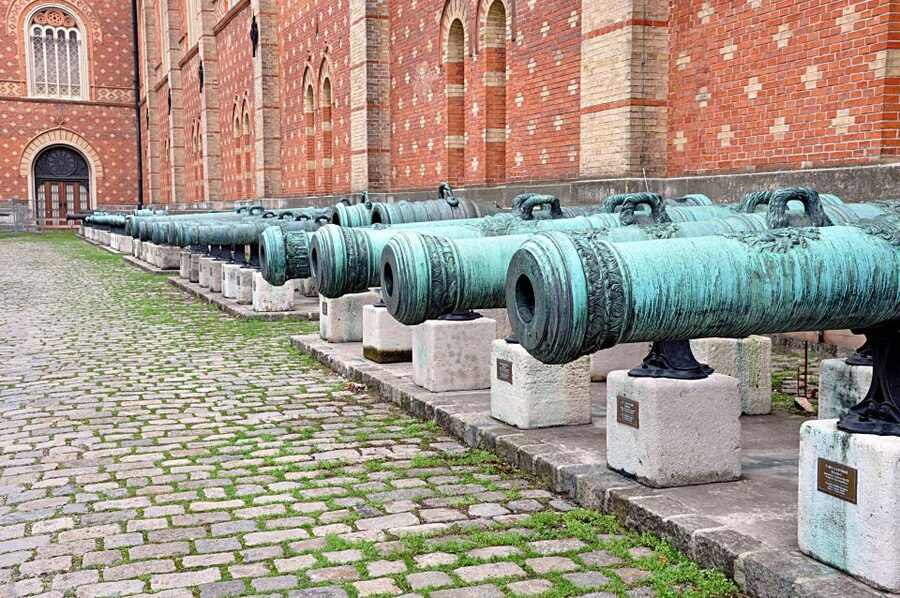
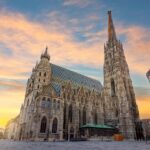
Vienna’s skyline can tempt you to forget the plot. This tour keeps you on the WWII theme even as you’re within reach of famous Old Town sites, including St. Stephen’s Cathedral.
The way to get value here is simple: don’t treat it like a separate sightseeing detour. Let the guide use it as a reference point to keep the city’s layers in view—old Vienna side by side with the wartime markers and what came after.
If you want photos, plan them quickly. A two-hour tour moves at a history-focused pace, so you’ll get better results by capturing the key landmarks while the guide is talking rather than stopping repeatedly after the explanation.
End near the Vienna State Opera: the 1945 bombing in plain sight
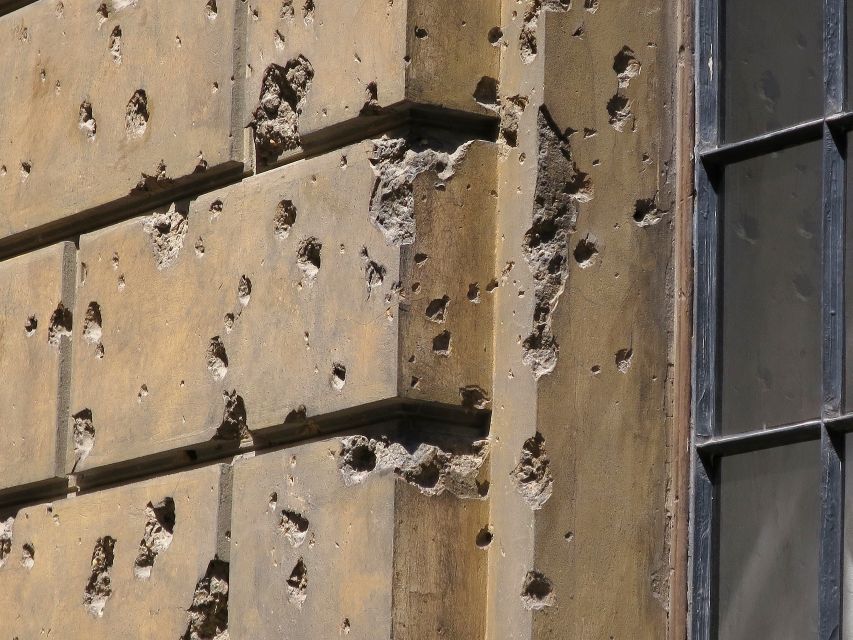
Your tour ends at the Monument Against War and Fascism near the Vienna State Opera. This is a fitting finish because the area was heavily damaged by the 1945 bombing, tying the end of the walk to the endgame of the war in Vienna.
Ending here helps you close the story with a theme: not only how violence happened, but how it was supposed to be prevented afterward. You’ll likely leave with a different lens on the Opera area than the one most first-time visitors carry, because you’ll understand why the monument exists right where people now go for performances.
It’s a solid choice for a 2-hour format. You don’t spend your last minutes sprinting from stop to stop, and you don’t end on a marker that feels disconnected from the final chapters of WWII in Vienna.
Language, guide quality, and pacing that actually works
This is a private walking tour, and it’s designed to be talk-heavy in a good way. Your guide is licensed and fluent in the language you select, with options including English, German, Italian, French, Spanish, Russian, Polish, Chinese, Japanese, Croatian, Portuguese, Arabic.
I like that the tour is tailored to your interests. That means if your questions lean toward political events, the guide can anchor them in the timeline; if you’re focused on cultural memory, they can point you toward how monuments and memorial spaces communicate.
Pacing is also a real-world factor. One booking described a guide—Frau Heuberger—finding a balance between explanation and well-timed pauses during a hot day, moving visitors safely from shade point to shade point. On a city walk, that kind of pacing can decide whether the tour feels comfortable or exhausting.
Bring comfortable shoes. You’re walking in the Old Town streets, and the guide’s best work depends on you being able to keep up without constant stops to recover.
Price check: what $214 per person buys you

At $214 per person for a 2-hour private walk, you’re paying for a few things that group tours often can’t provide. First, you’re getting a 5-star expert guide (licensed) who can answer questions in your language. Second, you’re getting a route built around specific WWII and Holocaust reminders across major Old Town and central sites.
Is it “cheap”? No. But value depends on your priorities. If you want a guided explanation that connects Gestapo-era context at Morzinplatz to Heldenplatz memorial spaces, without you having to stitch together the story from multiple guidebooks, the cost starts to make sense. It’s also easier to absorb when you’re not juggling crowds and noise.
If you’re traveling as a small group and want real conversation, private guiding usually pays off. If you’re on a tight budget, you might consider a self-guided option using the same monuments as reference points—but you’ll lose the guided timeline and the chance to ask why these locations matter.
Who this tour suits best (and who may want a different pace)
This tour is best for you if you:
- want WWI-to-WWII context in Vienna, not just WWII headlines
- care about how history shows up in monuments, memorial crypts, and remembrance stones
- prefer a guide who can tailor the talk to your interests and answer questions in your language
It may not be the right fit if you’re hoping for a lighter sightseeing day. The material covers Austrofascism and the Holocaust, and the tour begins at a Nazi terror memorial. If you know you’ll struggle with emotionally heavy content, consider a different kind of history tour or ask the guide to set a gentler pace from the start.
It also helps to plan for walking time. Even with stops, you’ll want to wear comfortable shoes and dress for weather, because this is a walking tour in an outdoor city setting.
Should you book this WWII history tour in Vienna?
Yes—if your goal is to understand Vienna’s WWII story through the places themselves. Starting at Morzinplatz near the Gestapo headquarters context, moving through Holocaust remembrance points, and ending near the Opera with a monument tied to the 1945 bombing creates a satisfying narrative arc.
If you choose to book, do one thing that boosts the experience: go in ready to ask questions. The private format is built for that, and the guide’s job is to make the timeline click while you’re standing in front of the relevant reminders.
FAQ
FAQ
Where does the tour start?
The meeting point is in front of the Memorial to the Victims of Nazi Terror (Denkmal der Opfer des Faschismus), Morzinpl. 4, 1010 Wien, Austria.
How long is the tour?
The tour lasts 2 hours.
Is this a private tour?
Yes. It’s listed as a private group experience.
What sites and areas do we see?
You’ll see places in Vienna’s Old Town, including the Hofburg (exterior only), St. Stephen’s Cathedral, and several WWII and Holocaust monuments, plus the Memorial Crypt dedicated to WWI and WWII victims in Heldenplatz. The tour ends at the Monument Against War and Fascism near the Vienna State Opera.
What does the guide cover about WWI and WWII?
Expect a timeline of major events leading up to and after World War I and World War II, including causes and consequences, Austrofascism, and the Holocaust, with mention of key figures such as Adolf Hitler and Ernst Kaltenbrunner.
What languages are available?
The live guide is available in English, German, Italian, French, Spanish, Russian, Polish, Chinese, Japanese, Croatian, Portuguese, Arabic.
Is free cancellation available?
Yes. You can cancel up to 24 hours in advance for a full refund.
Is there an option to pay later?
Yes. It offers a reserve now & pay later option so you can book without paying today.
Yours Alone Across Vienna
- Vienna: Private Walking Tour with a Local
★ 4.6 · 1,446 reviews - Vienna: Private Walking Tour with a Guide
★ 4.7 · 962 reviews - Vienna: Wine Tasting Experience in a Private Wine Cellar
★ 4.8 · 413 reviews - Private Day Tour Trip Salzburg Hallstatt and Melk from Vienna
★ 5.0 · 388 reviews - Private Day Tour of Hallstatt and Salzburg from Vienna
★ 5.0 · 263 reviews
Vienna on Foot, Continued
- Vienna: Guided Walking Tour of City Center Highlights
★ 4.7 · 4,989 reviews - Vienna: Vienna Central Cemetery Guided Walking Tour
★ 4.8 · 3,307 reviews - Vienna: Guided Walking Tour of City Highlights & Hidden Gems
★ 4.9 · 2,180 reviews - Vienna: Viennese Underworld Guided Walking Tour
★ 4.7 · 1,865 reviews - Vienna: World War II Historical Walking Tour
★ 4.8 · 1,772 reviews
The Old Town Around St Stephen's
- Vienna: Guided Walking Tour of City Center Highlights
★ 4.7 · 4,989 reviews - Vienna Historic Center Small Group Walking Tour
★ 5.0 · 1,746 reviews - Vienna: St. Stephen’s Cathedral & Dom Museum Wien Tickets
★ 4.5 · 1,652 reviews - Vienna: Old Town Sightseeing Tour in a Vintage-Style E-Car
★ 4.5 · 1,107 reviews - Vienna: 30-Minute Fiaker Ride in the Old Town
★ 4.5 · 1,092 reviews
Just In: New Vienna Reviews



St Stephen's & Old Town Tours, compared.
 ★ 5.0Vienna Historic Center Small Group Walking TourFrom $721,746 reviews
 ★ 4.5St. Stephen’s Cathedral & Dom Museum Wien TicketsFrom $341,652 reviews
 ★ 4.5Old Town Sightseeing Tour in a Vintage-Style E-CarFrom $281,107 reviews
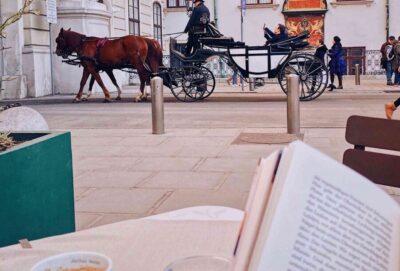 ★ 4.530-Minute Fiaker Ride in the Old TownFrom $1111,092 reviews
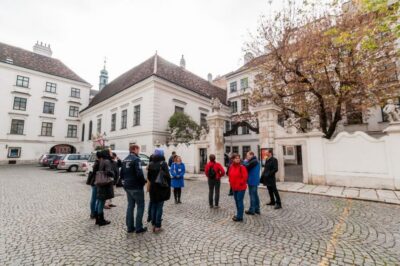 ★ 4.7Romantic Old Town 2-Hour Discovery TourFrom $352816 reviews
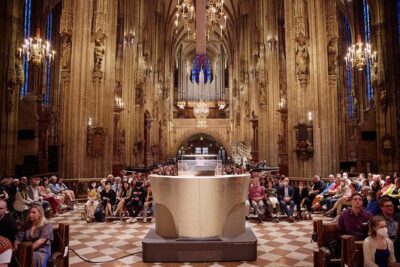 ★ 4.0Concert at Vienna’s St. Stephen’s CathedralFrom $12432 reviews
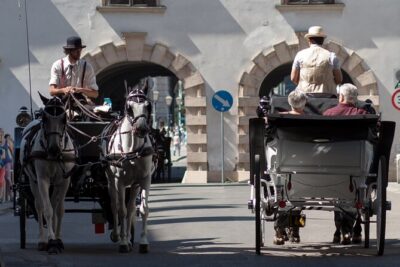 ★ 5.0Exclusive Vienna Old Town Highlights Walking Tour (max. 6 persons)From $151252 reviews
 ★ 4.7Hidden Gems near St. Stephen’s & Old UniversityFrom $353153 reviews
Browse the lists this tour appears in