
Reviewed · MOZART & STRAUSS EVENINGS
Vienna: Strauss Museum – Music&History in Historic 1837 Hall
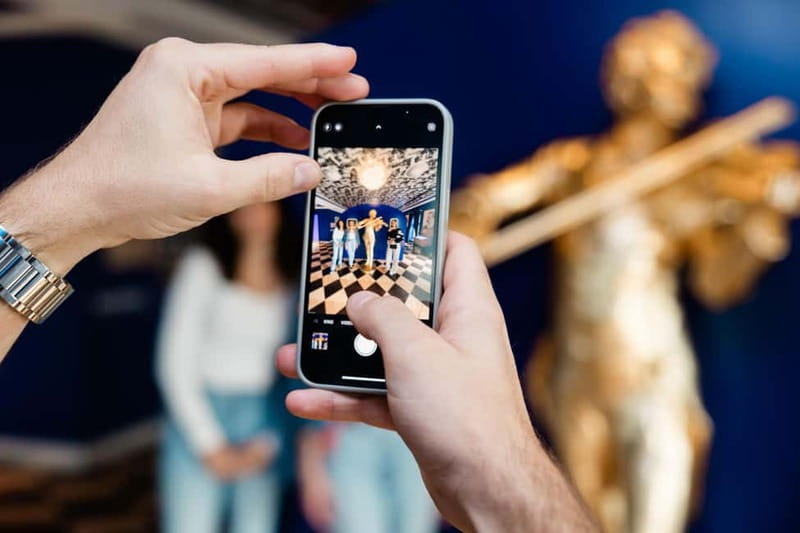
A concert hall you can walk through. The Strauss Museum in the restored Gartenpalais Zögernitz puts you right where the Strauss family performed, then threads the story through interactive rooms and a moving multimedia finale. I especially like how the experience is anchored in the Strauss Concert Hall itself, not just text on walls.
Two things I’d plan around from the start: first, the chance to explore a museum built around four Strauss composers, in their original style of Viennese high-society entertainment. Second, you get a 2,000 m² self-guided route with interactive displays and rare archival material, so you can go deeper without feeling stuck in a classroom.
One drawback to keep in mind: this is mainly a self-paced visit using the audio guide app (English and German). If you prefer lots of printed explanations or want quick English summaries on the spot, you may wish there were more written recap material available beyond the audio.
In This Review
- Key things to know before you go
- The 1837 Strauss Concert Hall experience in one ticket
- Arriving at Gartenpalais Zögernitz: Vienna’s only Strauss museum
- What you’ll see in the concert hall before the show
- 2,000 m² of interactive classical music history, room by room
- How the audio guide app makes the self-paced tour work
- The multimedia finale for Johann Strauss Jr.: timing and mindset
- Price and value: is $22 worth your time?
- Who should go (and who might prefer another Vienna stop)
- Should you book the House of Strauss in Vienna?
- FAQ
- How long is the Strauss Museum visit?
- What’s included with the ticket?
- What languages are available for the audio guide and host?
- Do I need to buy tickets on site?
- Is the museum wheelchair accessible?
- Is cancellation free?
- Can I reserve without paying right away?
Key things to know before you go
- A historic 1837 concert hall tied to all four Strauss family members: Johann I, Johann II, Josef, and Eduard
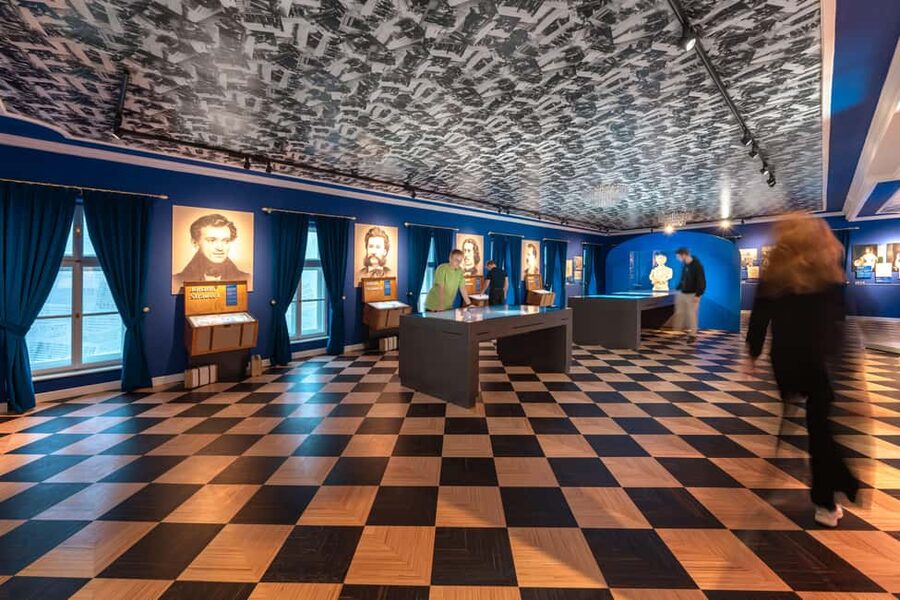
- 2,000 m² of interactive Strauss-era music history spread across restored rooms
- Audio guide app included in English and German for a personalized pace
- A multimedia finale for Johann Strauss Jr. with music, light, and projection
- Vienna’s only museum dedicated to the Strauss dynasty, plus a major exhibition collection
More Mozart and Strauss after dark
- Vienna: Mozart Concert at the Musikverein – Golden Hall★ 4.6 · 5,194 reviews
- Vienna: Mozart and Strauss Concert at Schönbrunn★ 4.5 · 2,967 reviews
- Vienna: Classical Concert at Mozart’s First House2,423 reviews
- Vienna Mozart Concert in Historical Costumes at the Musikverein★ 4.5 · 888 reviews
The 1837 Strauss Concert Hall experience in one ticket
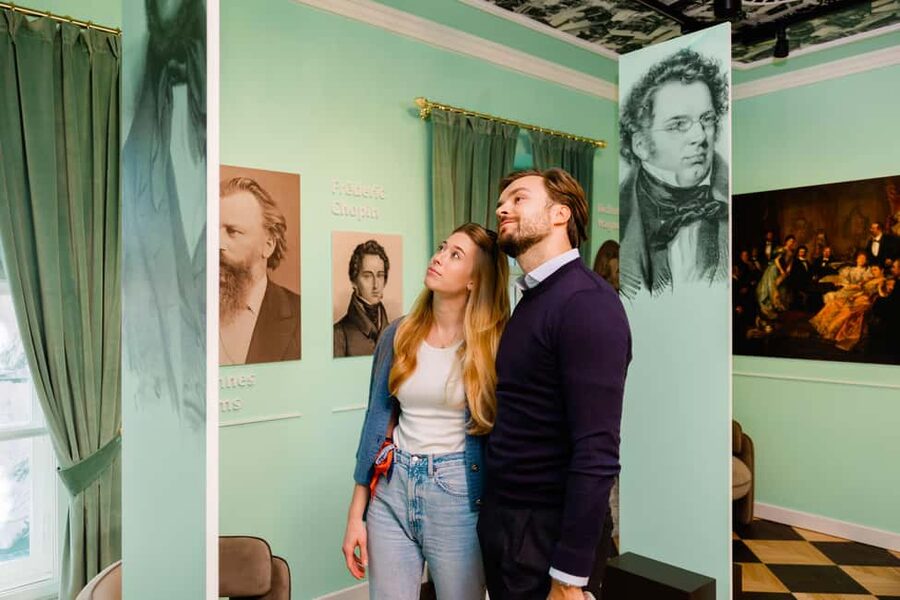
This isn’t a standard museum where you mainly look and read. The core of the visit is the Strauss Concert Hall, the big, historic room that ties the story to performance. You’re essentially seeing how Viennese waltz culture worked in real life: elegant rooms, public-facing music, and a family dynasty that knew how to entertain.
On top of that, the museum’s design makes the music feel present. As you move through the halls and salons, Strauss-related sounds play along with your route, and the displays are built to keep you engaged with the way the composers lived and worked. It’s a smart format if your brain gets bored with timelines, because the museum nudges you from theme to theme.
Then comes the emotional payoff: a multimedia concert-style show in the original hall, centered on Johann Strauss Jr. That’s where music, light, and projection do the heavy lifting. If you like your classical history with a little theater energy, plan to watch this part with your full attention, not just half-listening while you multitask.
Arriving at Gartenpalais Zögernitz: Vienna’s only Strauss museum
The House of Strauss sits in the Gartenpalais Zögernitz, a restored historic setting that helps you understand why this family mattered in Vienna’s social life. You’re not just learning about composers; you’re stepping into the kind of environment where high society would have expected music to be part of the evening.
A key practical win: your ticket covers both the Strauss Concert Hall with the multimedia concert show and the House of Strauss Exhibition. The exhibition includes complimentary entry, and it’s described as featuring the world’s largest private Strauss collection. That means you’re not stuck in the show-only part of the experience. You get time to connect names, objects, and themes before the finale.
Also, the museum has a “welcome” element. There’s a host/greeter, with English and German support listed, which can help you get oriented quickly—especially if you’re arriving without a plan and want to know where to start.
And yes, it’s wheelchair accessible, so the layout is set up for a wider range of visitors. If you use mobility aids, this matters because music museums can sometimes be hard to navigate in older buildings without thoughtful access.
What you’ll see in the concert hall before the show
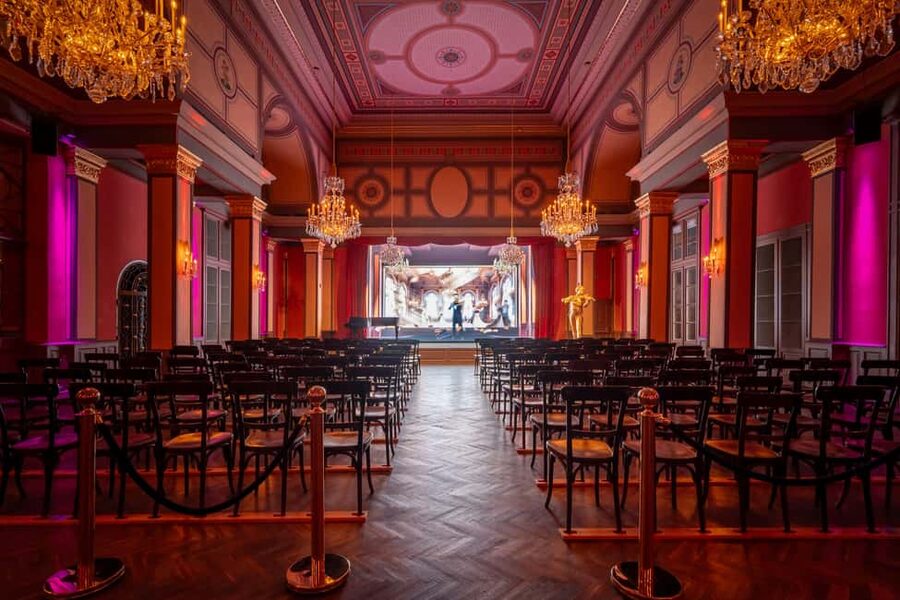
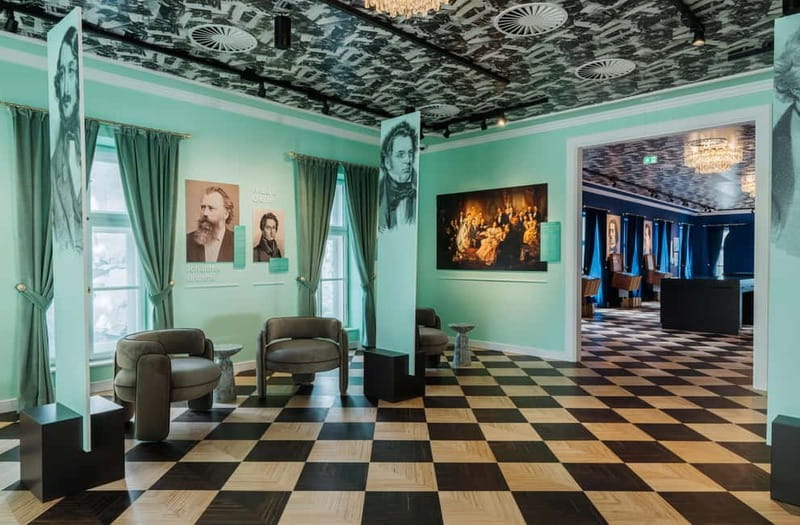
Your visit centers on the Strauss Concert Hall, where all four Strauss family composers once performed for Vienna’s high society: Johann I, Johann II, Josef, and Eduard Strauss. That detail is bigger than it sounds. Many music museums focus on one famous name. Here, you get the broader family picture.
Even before the multimedia finale, the hall works like a memory machine. Being inside the space helps you feel the museum’s intention: classical music as a social event, not only concert-hall “listening time.” As you look around, the setting encourages you to imagine how the music would have moved through a room like this—closer, livelier, and more connected to the people in it.
You’ll also want to pay attention to how the museum frames Strauss and the surrounding Viennese waltz culture. The galleries and audio content guide you toward the connections between composers, styles, and the personalities behind the music. It’s the kind of approach that helps you remember names, because you’re learning them as part of a scene.
After that preparation, the show lands with more force. You’re not meeting Johann Strauss Jr. for the first time at the finish line. You’ve been building context, which is why the finale can feel like a payoff rather than a random add-on.
2,000 m² of interactive classical music history, room by room
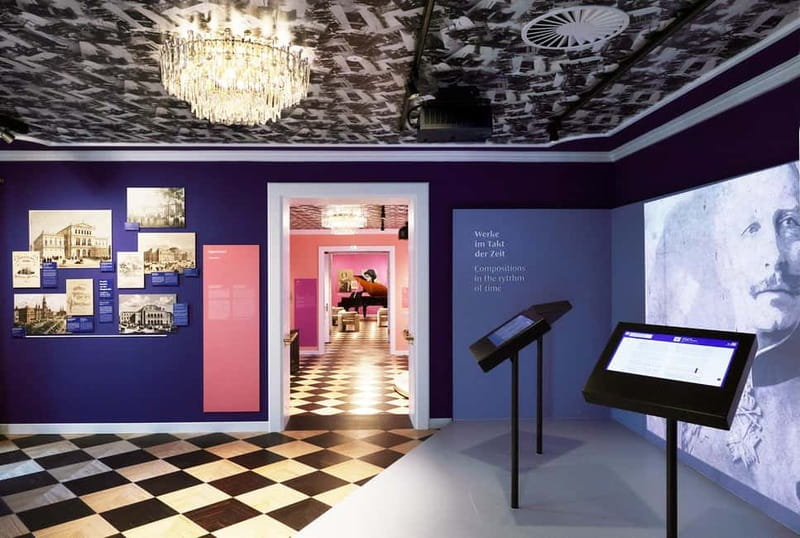
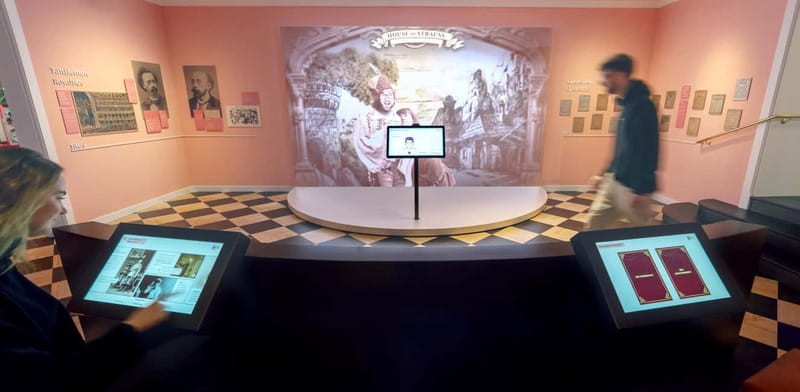
Spread across 2,000 m², the museum is designed for a self-guided journey. The route includes beautifully preserved salons and interactive exhibits, plus rare archival materials that help explain not only what the Strauss family composed, but what life around those compositions looked like.
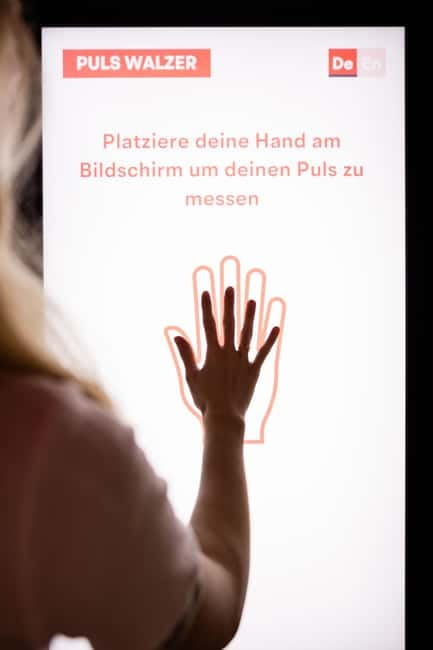
Here’s what I’d expect you to do during this part: slow down at the interactive stations long enough to “get it.” These displays are built to make classical music history feel like something you can actually touch and move through. You’re not just consuming facts—you’re using the exhibits as prompts to understand how the music developed.
You’ll also hear music woven into the experience as you go room to room. The museum description specifically mentions music of Strauss, Lanner, and Ziehrer accompanying you through the elegant rooms and historical displays. That’s useful if you’re new to Viennese music, because it gives you a larger context beyond the Strauss family bubble.
A good strategy: decide what you’re chasing. If you love composer stories, aim to linger at the parts of the route focused on the dynasty itself. If you’re more into musical style, focus on the interactive pieces that explain the waltz world. Since it’s self-paced, you can choose your path instead of marching through a fixed script.
One more practical point: because it’s self-guided, you’re responsible for pacing yourself. If you sprint through the early rooms, you’ll likely rush the show section. If you take your time on the interactive areas, you’ll usually enjoy the finale more.
Deeper into old Vienna




How the audio guide app makes the self-paced tour work
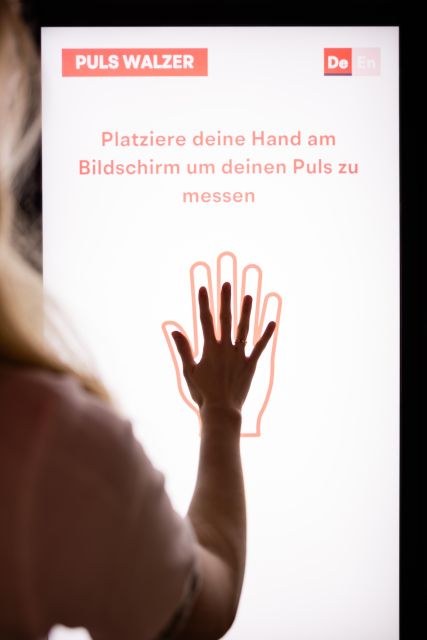
The museum includes an audio guide app (English and German), and that’s not just a nice extra. In this kind of museum, the audio guide is the thread that turns rooms into understanding.
When you start, give yourself a few minutes to get oriented in the app. Then use it the way you’d use subtitles with a movie: don’t listen blindly while walking fast. Pause, look, and let the commentary connect the visuals to the story.
You’ll likely find the audio guide especially helpful for the archival material and the historical context. The museum description highlights preserved salons, interactive exhibits, and rare materials; the app is what helps those pieces snap into a coherent narrative rather than feeling like separate displays.
This also brings up the one caveat I mentioned earlier. The audio is available in English and German, but the museum experience may still feel more “audio-first” than “reading-first.” One of the issues raised in the feedback I’ve seen is that if you want quick printed recaps—especially in English—you might not find them in the way you expect. So if you’re the kind of person who likes to follow along with a written guide, plan to rely on the audio app instead.
If you do, you’ll get the best of what the museum is built to do: a personalized pace with explanations that match what you’re actually seeing in the rooms.
The multimedia finale for Johann Strauss Jr.: timing and mindset
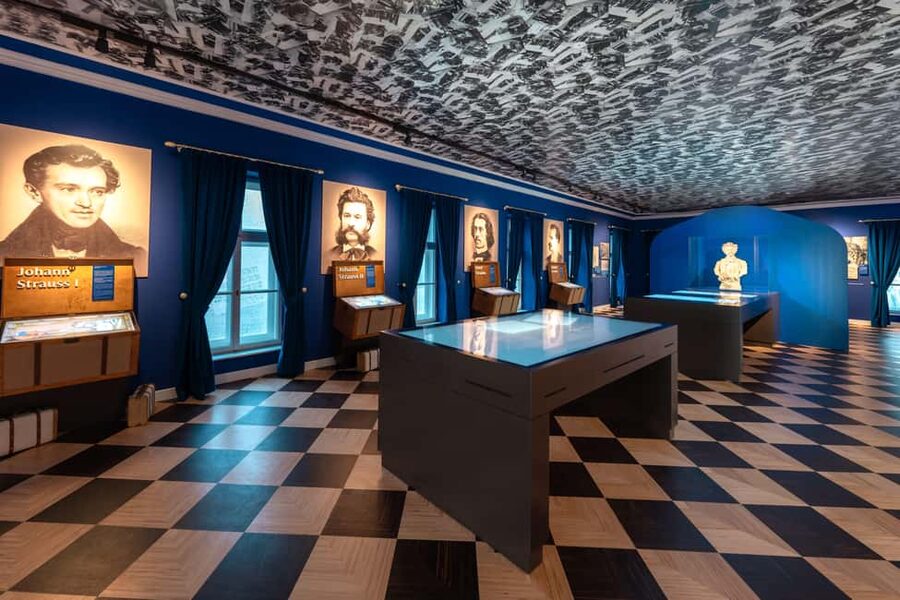
The tour culminates in a “spectacular” audiovisual show celebrating Johann Strauss Jr. The point of this section is straightforward: take everything you learned in the earlier rooms and express it through performance-style storytelling.
The description says the finale is brought to life through music, light, and projection, and it happens in the original concert hall. That combination matters. Light and projection do the background work—so you don’t have to read your way through the emotional beats. Music gives the meaning, and the visuals give you a sense of scale and occasion.
I’d treat this finale like the main event. Don’t plan to snack, scroll, or rush through it. If you go into it thinking it’s just a video you can watch while half-paying attention, you’ll miss what the museum is trying to do: make the story of Johann Strauss Jr. feel like something that happened in Vienna’s social calendar.
Also, this is the section that tends to click for different types of visitors. If you’re not a hardcore classical listener, the audiovisual presentation can still carry you. If you are a classical fan, you’ll likely enjoy recognizing the connections you’ve heard about earlier in the exhibits.
Price and value: is $22 worth your time?
At $22 per person (for a 1-day ticket), the value question comes down to how much you’ll use the two big inclusions: the concert hall experience and the exhibition.
First, you’re paying for access to the Strauss Concert Hall with the multimedia concert show. That’s not just a self-guided room; it’s a programmed finale in a historic space. Second, your ticket also includes complimentary entry to the House of Strauss Exhibition, with the world’s largest private Strauss collection. Combining these two parts under one price is where the math works.
You’re also not paying extra for the audio guide app. In many museums, that kind of guided support costs more, and it can be the difference between feeling lost and feeling engaged. Here, it’s included, and it’s available in English and German, which helps if you’re traveling with someone whose language comfort differs.
So the real value test is personal: if you want a performance-style experience tied to a historic room plus interactive music history in one place, $22 can feel like a fair deal. If you prefer only traditional museums with lots of reading and no audiovisual elements, you might still enjoy it, but you may not feel you’re getting your money’s worth from the finale portion.
Who should go (and who might prefer another Vienna stop)
This museum fits well if you like music history that stays human-sized. It’s built around a family story you can follow, and the space is designed for people who want to learn without being lectured.
You’ll likely enjoy it if:
- You’re curious about Viennese waltz culture and want more than the one-name highlights
- You want something calmer than a full concert schedule but still performance-focused
- You like self-guided museums where you control your pace with an audio guide
- You’re traveling with kids or multiple age groups, since the experience is described as interactive and fun
On the other hand, you may want to think twice if you’re chasing a deep research-style exhibit with lots of academic text. The museum is interactive and audio-driven, so if your ideal museum day is mostly quiet reading, you might find the format more playful than scholarly.
If you’re short on time in Vienna and want a single culture stop that’s both atmospheric and structured, this is one of the easier calls to make. It’s also a smart pick if you’ve already done the big classics and want a more specific angle.
Should you book the House of Strauss in Vienna?
I’d book this if you want a one-day experience that blends historic performance space, interactive exhibits, and a real multimedia finale in the original concert hall. For the price, the combination of the concert show plus the exhibition collection makes it feel efficient, not chopped up.
I’d be cautious if you strongly prefer printed guides over audio, or if you expect lots of written English recap materials on the spot. In that case, commit to using the audio app and plan to spend time in the rooms rather than skimming.
If you like stepping into a story where the setting matters, the House of Strauss is one of the more satisfying cultural choices in Vienna. It’s specific, it’s designed well, and it gives you more than one way to connect to the Strauss dynasty—through rooms, sound, and finally, a show.
FAQ
How long is the Strauss Museum visit?
The activity is listed as valid for 1 day, so you can plan your visit around your schedule and explore at your own pace.
What’s included with the ticket?
Your admission includes the Strauss Concert Hall with the multimedia concert show, complimentary entry to the House of Strauss Exhibition, and an audio guide.
What languages are available for the audio guide and host?
The audio guide app is available in English and German, and the host/greeter is listed as English and German as well.
Do I need to buy tickets on site?
You can use the listed option to skip the ticket line.
Is the museum wheelchair accessible?
Yes, the experience is described as wheelchair accessible.
Is cancellation free?
Yes. Free cancellation is available up to 24 hours in advance for a full refund.
Can I reserve without paying right away?
Yes. The option Reserve now & pay later is listed as available, with payment due later.
Old Vienna, Corner by Corner
- Vienna: Time Travel and Magic Vienna History Tour
★ 4.6 · 3,879 reviews - Vienna: World War II Historical Walking Tour
★ 4.8 · 1,772 reviews - Vienna Historic Center Small Group Walking Tour
★ 5.0 · 1,746 reviews - Time Travel-Magic Vienna History Tour Ticket
★ 4.5 · 1,099 reviews - Skip-the-Line Schonbrunn Palace Guided Tour and Vienna Historical City Tour
★ 3.5 · 940 reviews
More Tour Reviews in Vienna
- Vienna: Vivaldi’s Four Seasons Concert in Karlskirche
★ 4.7 · 14,951 reviews - Vienna: Schönbrunn Palace & Gardens Skip-the-Line Tour
★ 4.7 · 7,739 reviews - Vienna: Light of Creation Votive Church Immersive Light Show
★ 4.8 · 6,779 reviews - Vienna Spanish Riding School Guided Tour
★ 4.7 · 6,765 reviews - Vienna: Classical Concert in the World-Famous Musikverein
★ 4.6 · 6,673 reviews
More Mozart and Strauss Evenings
- Vienna: Mozart Concert at the Musikverein – Golden Hall
★ 4.6 · 5,194 reviews - Vienna: Mozart and Strauss Concert at Schönbrunn
★ 4.5 · 2,967 reviews - Vienna: Classical Concert at Mozart’s First House
2,423 reviews - Vienna: Mythos Mozart Experience
★ 4.5 · 895 reviews - Vienna Mozart Concert in Historical Costumes at the Musikverein
★ 4.5 · 888 reviews
Just In: New Vienna Reviews




Mozart & Strauss Evenings, compared.
 ★ 4.6Mozart Concert at the Musikverein – Golden HallFrom $815,194 reviews
 ★ 4.5Mozart and Strauss Concert at SchönbrunnFrom $422,967 reviews
 Classical Concert at Mozart’s First House2,423 reviews
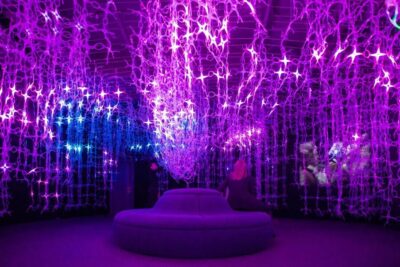 ★ 4.5Mythos Mozart ExperienceFrom $27895 reviews
 ★ 4.5Vienna Mozart Concert in Historical Costumes at the MusikvereinFrom $83888 reviews
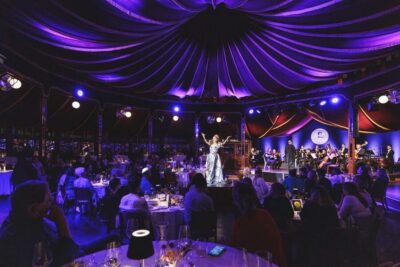 ★ 4.5Johann Strauss Dinner Show at the PraterFrom $93730 reviews
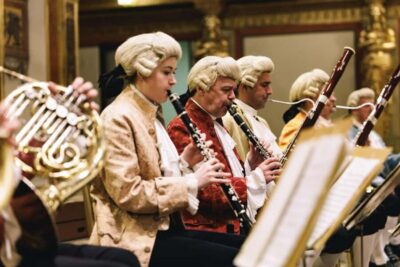 ★ 4.6Mozart Concert at the Vienna State OperaFrom $81461 reviews
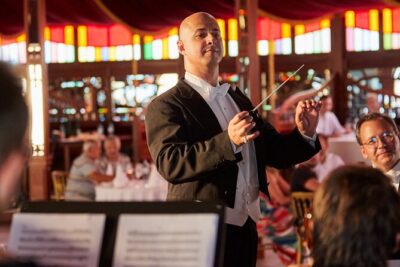 ★ 4.5Strauss Dinner ShowFrom $95395 reviews
Browse the lists this tour appears in