

Reviewed · HISTORICAL TOURS
Vienna: Ticket to the Museum of Natural History
Vienna has fossils worth your time. With a ticket to the Natural History Museum, you get to stand close to the Venus of Willendorf and take in the museum’s famous Ringstrasse exterior in the same day. I also love how the collections feel personal: you’re not just looking at displays, you’re watching how scientists and history connect. One catch: the museum is huge, so without a quick plan you can spend hours walking and miss the exact rooms you wanted.
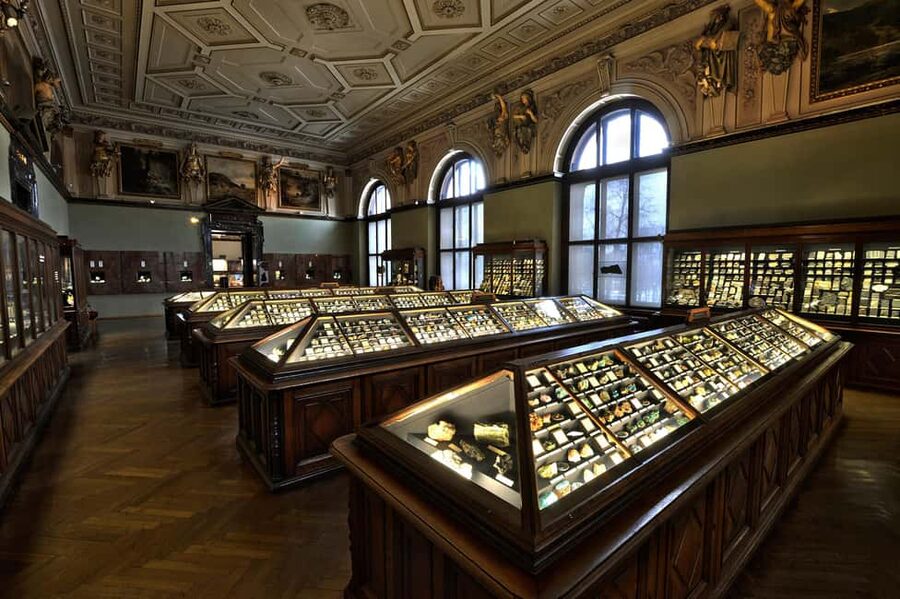
This isn’t a quick stop-and-snap kind of place. Expect 39 exhibition halls across two floors and an astounding number of objects (over 30 million), all organized around natural science, prehistory, and anthropology.
If you like a payoff at the end of the visit, plan for the museum’s rooftop guided tour opportunity, which gives you a city-center view over the Ringstrasse buildings. Just know you’ll want to fit it around your pace, not the other way around.
In This Review
- Key things to love about the Naturhistorisches Museum Vienna
- Ringstrasse Exterior First: The Museum You Notice Before You Enter
- Your One-Day Plan: How to Make a Huge Museum Feel Manageable
- Lower Floor Must-Dos: Minerals, Meteorites, and the Giant Dinosaur Moment
- Venus Cabinet: Why Two Ancient Figurines Are a Big Deal
- Gold Cabinet and Hallstatt: Prehistoric Treasure Meets Salt-Mine Reality
- Upper Floor Animal World: Rare Mounted Specimens and Extinct Species
- Rooftop Guided Tour Option: The View That Changes How You See Vienna
- What the $21 Ticket Really Buys You
- Timing and Pacing: How to Survive a One-Day Science Marathon
- Who This Ticket Fits Best (and Who Might Find It Too Much)
- Should You Book This Natural History Museum Ticket?
- FAQ
- How long is this experience?
- What’s included in the ticket?
- What are the main highlights I should plan around?
- Is the Venus of Willendorf the only Venus figure on display?
- What can I expect on the lower floor?
- What can I expect on the upper floor?
- Does the museum have rooftop tours?
- Who designed the museum building, and when did it open?
- Can I cancel for a refund?
- Is the museum wheelchair accessible?
Key things to love about the Naturhistorisches Museum Vienna

- Venus of Willendorf in the Venus Cabinet plus another famous counterpart, the Venus of Galgenberg
- Lower floor focus on Earth history, from gemstones and minerals to meteorites and giant dinosaurs
- Hallstatt salt-mine archaeology tied to 7,000 years of uninterrupted salt mining
- Gold and silver prehistoric finds in the Gold Cabinet, including a major early gold discovery
- Upper floor animal world with rare mounted specimens, including extinct species
Worth a look before you book this Vienna tour:
- Vienna Kunsthistorisches Museum Day Admission Ticket★ 4.6 · 3,690 reviews
- Vienna: Tickets for Mozarthaus Vienna with Audio Guide★ 4.2 · 2,344 reviews
- Vienna: Skip-the-Line Entrance Ticket to the Danube Tower★ 4.5 · 2,303 reviews
- Tickets for the Albertina Exhibitions★ 4.7 · 2,126 reviews
Ringstrasse Exterior First: The Museum You Notice Before You Enter
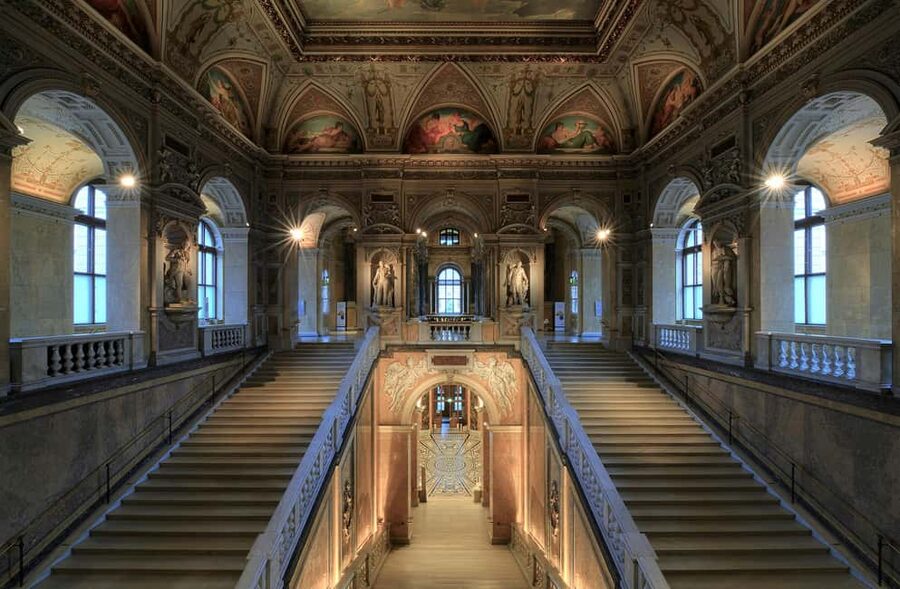
I like starting outside, and this museum makes it easy. The Natural History Museum Vienna is one of the most impressive buildings along the Ringstrasse, the grand boulevard lined with monuments from the era when Vienna loved big ideas and even bigger facades.
The building was designed as a Palace of Natural Science and Evolution by Gottfried Semper and Carl von Hasenauer, and it opened on August 10, 1889, under Emperor Franz Joseph I. Even if you’re not hunting for architecture details, you’ll feel the intention: it looks built to impress, and it also sets the mood for what comes next—Earth, life, and time on a serious scale.
Practical tip: give yourself a few minutes to look around before your ticket turns into a sprint. You’ll enjoy the interior more when you’ve already absorbed the “palace” vibe.
Your One-Day Plan: How to Make a Huge Museum Feel Manageable
You’re getting a 1-day admission ticket, not a timed route. That’s great for flexibility, but it means you should pick priorities first.
A good approach for a one-day visit is:
- Start on the side you’re most excited about, then work your way through the two-floor layout.
- Don’t try to see every room. The museum has dozens of halls, and the collections are deep.
- Use the “big anchors” (like the Venus Cabinet, Hallstatt room, dinosaur/fossil spaces) as your backbone.
If you only have one day in Vienna, this ticket works because it gives you both science and storytelling. The museum is built around the history of the Earth, the diversity of life, and how humans fit into that larger story.
Lower Floor Must-Dos: Minerals, Meteorites, and the Giant Dinosaur Moment
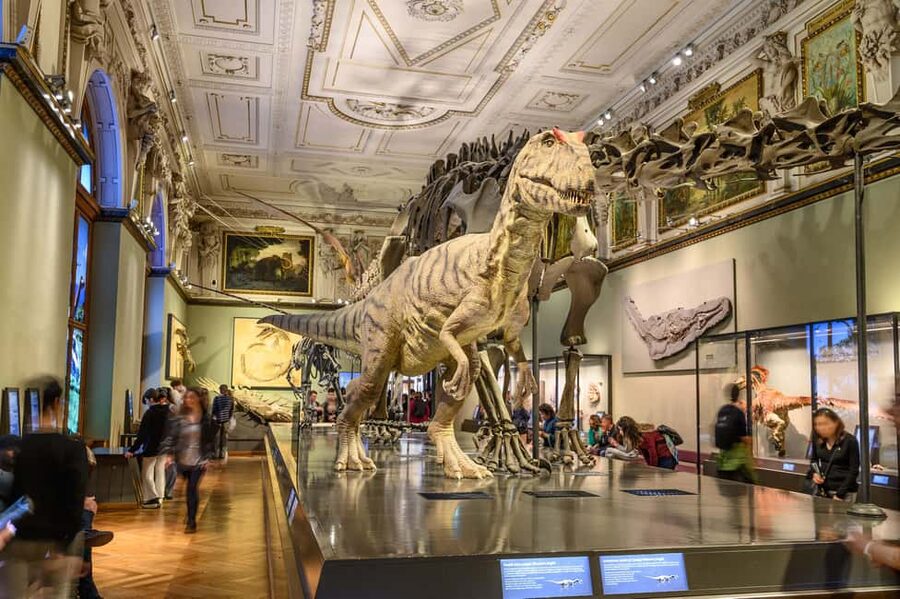
The lower floor is where you can really feel the museum’s Earth-science focus. This level brings together precious materials, fossils, and meteorites—plus a path into prehistory and anthropology.
Here are the kinds of rooms you should actively aim for:
- Gemstones and minerals: These displays make geology feel tangible. You’re not reading about minerals; you’re seeing the objects themselves.
- Rare fossils and giant dinosaurs: If you want one or two “wow” stops, this is where you’ll find them. Dinosaur displays here are part of the museum’s strong fossil reputation.
- Meteorites: The museum has the largest and oldest collection of meteorites in the world. That matters because meteorites are physical evidence of space material that fell to Earth. Seeing them in one place is the real advantage of this museum.
- Human origins and development of mankind: Even with a natural-science focus, the museum connects the dots to people and prehistory rather than treating humans as an afterthought.
A fun detail I’d absolutely factor into your route: there’s a spectacular exhibit called the gemstone bouquet, described as a gift from Maria Theresa to her husband, Emperor Franz I Stephan of Lorraine. It’s the kind of object that turns a case display into a human story.
Practical pacing idea: the lower floor can move you from wonder to fatigue. If you find yourself getting numb to displays, slow down and pick one object type to focus on for 10–15 minutes—minerals, then meteorites, then fossils—before moving on. Your brain processes it better that way.
Venus Cabinet: Why Two Ancient Figurines Are a Big Deal
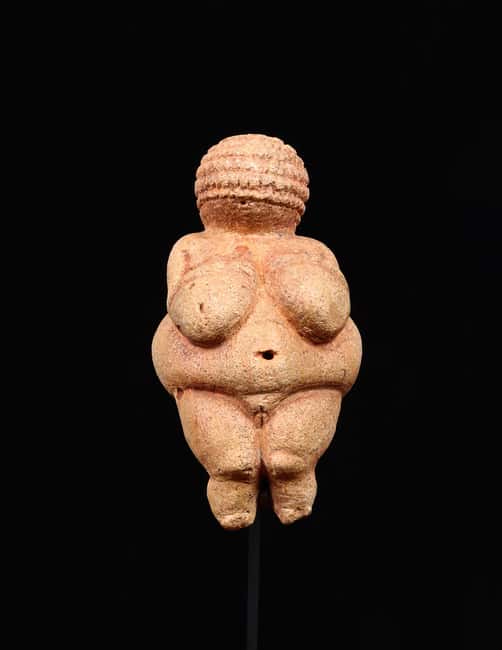
One room is basically your shortcut to the museum’s reputation: the Venus Cabinet.
Inside, you can see the Venus of Willendorf, a world-famous figurine dated at about 29,500 years old. This piece is widely recognized for a reason: it’s small, but it hits hard because it represents a human-made symbol from deep time. You’re not just looking at a prehistoric object; you’re looking at how people expressed meaning so long ago.
Even better, the cabinet includes the Venus of Galgenberg, about 36,000 years old, described as the oldest known human figure made of stone. That creates a powerful comparison in one stop: similar idea, different age, different context.
How to enjoy it: don’t race through this cabinet. Give yourself time to notice details, and then step back mentally. The best part of this exhibit isn’t only what the objects are—it’s the fact that they’re placed where they can be understood as part of larger human prehistory.
Deeper into old Vienna



Gold Cabinet and Hallstatt: Prehistoric Treasure Meets Salt-Mine Reality
If you like prehistoric objects that feel grounded in real archaeology, you’ll enjoy the museum’s two linked themes: precious metal finds and the long-term evidence left by mining.
In the Gold Cabinet, you’ll find prehistoric gold and silver treasures, including the second oldest gold find in the world. That’s a specific claim, and it’s exactly the kind of detail that makes this museum more than a pretty building with glass cases. These objects show how early societies worked with materials and value.
Then there’s a whole room dedicated to finds from the prehistoric mine and burial ground in Hallstatt. The connection is salt—7,000 years of uninterrupted salt mining left behind a wealth of archaeological traces. Hallstatt isn’t just a name on a map here. The museum uses the evidence to explain how a resource shaped a place and its people over a huge stretch of time.
What I like about this stop is the shift in perspective. You go from holding your attention on famous objects (Venus, meteorites, fossils) to understanding the practical mechanics of life back then: what people extracted, what they valued, and how they left remains behind.
Practical tip: if you feel stretched between “science” and “history,” this is where the museum bridges them for you.
Upper Floor Animal World: Rare Mounted Specimens and Extinct Species
The upper floor is built around the diversity of the animal world—from simple marine organisms to more developed mammals. This is a great counterbalance to the heavy Earth-history feeling of the lower floor.
What you’ll likely appreciate here:
- Mounted specimens that show anatomy and form clearly
- Rare and extinct amphibians and reptiles
- Mammals and birds, including specimens treated as historical treasures
You’ll get a different kind of emotional reaction than in the fossil galleries. Fossils are about time after death; mounted animals are about how scientists preserved and cataloged life. The result is a museum experience that feels like both a science lab and a visual story book.
If you’re traveling with kids (or if you’re just a kid at heart), this floor is often the easiest to enjoy without overthinking it. You can look, ask questions, and let the variety do the work.
Rooftop Guided Tour Option: The View That Changes How You See Vienna
One of the best “end of day” perks is the rooftop guided tour opportunity. If your timing works, it’s worth treating as a bonus round.
The museum says you can enjoy a fantastic view of Vienna’s city center and the magnificent buildings along the Ringstrasse. That matters because it gives your museum day a clean landing: you spend hours inside a palace of natural science, then you step up and see the human city around it.
How I’d do it: don’t save the rooftop for the very last second. Instead, decide early where you can realistically finish. If you run late, you’ll miss the chance even if you love views.
What the $21 Ticket Really Buys You
At $21 per person for admission, the value is tied to scale and depth.
You’re paying for entry into:
- a building with a major historical identity (1889, Semper and Hasenauer),
- an exhibition program across two floors and 39 halls,
- and a collection described as holding over 30 million objects.
That’s the key: this museum isn’t just one or two famous rooms. Even if you focus on your top highlights, the rest of the museum keeps offering satisfying context. You’ll notice the difference between a museum that wants to show off and a museum that functions like a research institution translated for the public.
Also worth mentioning: the museum has 60 scientists working on human, earth, and life sciences, with research that connects to environmental and climate questions. While much of that work stays behind the scenes, the knowledge feeds into the public exhibits. It’s a nice way to feel that what you’re seeing has current scientific grounding, not just old display cases.
Timing and Pacing: How to Survive a One-Day Science Marathon
You’ve got one day and a museum that covers Earth history, human prehistory, and life science. That combination can be amazing, but it can also turn into information overload if you rush.
Here’s a pacing plan I recommend:
- Morning: Start with the lower floor anchors (minerals/meteorites/fossils) and then move toward the Venus Cabinet when you’re warmed up.
- Midday: Shift into the Venus Cabinet and then the Hallstatt/Gold Cabinet areas, because those rooms are where you’ll feel the strongest “story” connection.
- Afternoon: Finish on the upper floor animal world, when you’re ready for variety and visual clarity.
- Optional rooftop: If it’s offered during your visit window, slot it in before you lose steam.
Don’t worry if your route isn’t perfect. The museum’s organization is thematic, so you won’t feel completely lost if you move in a slightly different order.
One more practical thought: if you’re someone who hates long walks, consider doing shorter loops. Stop, look carefully, move on. Trying to cover everything end-to-end can feel exhausting.
Who This Ticket Fits Best (and Who Might Find It Too Much)
This ticket is ideal if you:
- love natural science, fossils, and meteorites,
- want famous objects like the Venus of Willendorf in a serious setting,
- enjoy museums that mix science with prehistory and anthropology,
- want a Vienna activity that isn’t only art and architecture, even though the building is gorgeous.
You might want to be selective if you:
- prefer small museums where every room feels equally short and focused,
- dislike spending time reading labels and absorbing detail,
- want a super quick, minimal-walking experience.
For me, the sweet spot is someone who can handle a big museum day as long as they prioritize the rooms they care about most.
Should You Book This Natural History Museum Ticket?
Yes—if you’re booking one museum day in Vienna and you want the kind that delivers both scale and meaning. The admission price is reasonable for a collection this large, and the famous anchors (especially the Venus Cabinet and the Hallstatt room) make it easy to get a great experience even if you can’t see everything.
If your priority is only a short checklist, you may feel like there’s too much. But if you like science that connects to human history—and you’re willing to plan a simple route—this is a strong buy.
One last tip: choose your top three must-sees before you arrive. Then let the rest of the museum work like bonus chapters.
FAQ
How long is this experience?
It’s valid for 1 day, based on availability for starting times.
What’s included in the ticket?
The ticket includes admission to the Museum of Natural History, Vienna.
What are the main highlights I should plan around?
The big names are the Venus of Willendorf and the museum’s exhibits on natural artifacts, prehistory, and anthropology, along with major Earth-science displays like fossils and meteorites.
Is the Venus of Willendorf the only Venus figure on display?
No. The Venus Cabinet also features the Venus of Galgenberg.
What can I expect on the lower floor?
The lower floor includes gemstones and minerals, rare fossils and giant dinosaurs, the museum’s meteorite collection, exhibits on the origin and development of mankind, and special exhibitions. It also includes major cabinets and a Hallstatt-focused room.
What can I expect on the upper floor?
The upper floor focuses on the diversity of the animal world, from marine organisms to mammals, with mounted specimens including rare and extinct species.
Does the museum have rooftop tours?
The museum offers the opportunity for a guided tour to the rooftop with a view over Vienna’s city center and the Ringstrasse buildings.
Who designed the museum building, and when did it open?
It was designed by Gottfried Semper and Carl von Hasenauer and opened on August 10, 1889, by Emperor Franz Joseph I.
Can I cancel for a refund?
Yes. You can cancel up to 24 hours in advance for a full refund.
Is the museum wheelchair accessible?
Yes, the activity is wheelchair accessible.
Old Vienna, Corner by Corner
- Vienna: Time Travel and Magic Vienna History Tour
★ 4.6 · 3,879 reviews - Vienna: World War II Historical Walking Tour
★ 4.8 · 1,772 reviews - Vienna Historic Center Small Group Walking Tour
★ 5.0 · 1,746 reviews - Time Travel-Magic Vienna History Tour Ticket
★ 4.5 · 1,099 reviews - Skip-the-Line Schonbrunn Palace Guided Tour and Vienna Historical City Tour
★ 3.5 · 940 reviews
More Tickets in Vienna
- Vienna: Classic Ensemble Vienna in St. Peter’s Church Ticket
★ 4.7 · 4,819 reviews - Vienna Kunsthistorisches Museum Day Admission Ticket
★ 4.6 · 3,690 reviews - Vienna: Tickets for Mozarthaus Vienna with Audio Guide
★ 4.2 · 2,344 reviews - Vienna: Skip-the-Line Entrance Ticket to the Danube Tower
★ 4.5 · 2,303 reviews - Tickets for the Albertina Exhibitions
★ 4.7 · 2,126 reviews
More Tour Reviews in Vienna
- Vienna: Vivaldi’s Four Seasons Concert in Karlskirche
★ 4.7 · 14,951 reviews - Vienna: Schönbrunn Palace & Gardens Skip-the-Line Tour
★ 4.7 · 7,739 reviews - Vienna: Light of Creation Votive Church Immersive Light Show
★ 4.8 · 6,779 reviews - Vienna Spanish Riding School Guided Tour
★ 4.7 · 6,765 reviews - Vienna: Classical Concert in the World-Famous Musikverein
★ 4.6 · 6,673 reviews
Just In: New Vienna Reviews





Historical Tours, compared.
 ★ 4.6Time Travel and Magic Vienna History TourFrom $273,879 reviews
 ★ 4.8World War II Historical Walking TourFrom $311,772 reviews
 ★ 5.0Vienna Historic Center Small Group Walking TourFrom $721,746 reviews
 ★ 4.5Time Travel-Magic Vienna History Tour TicketFrom $271,099 reviews
 ★ 3.5Skip-the-Line Schonbrunn Palace Guided Tour and Vienna Historical City TourFrom $82940 reviews
 ★ 4.5Vienna Mozart Concert in Historical Costumes at the MusikvereinFrom $83888 reviews
 ★ 5.0Historical Hitler Walking Tour of ViennaFrom $32887 reviews
 ★ 4.9Essential History Walking TourFrom $34633 reviews
Browse the lists this tour appears in